
Main Courses
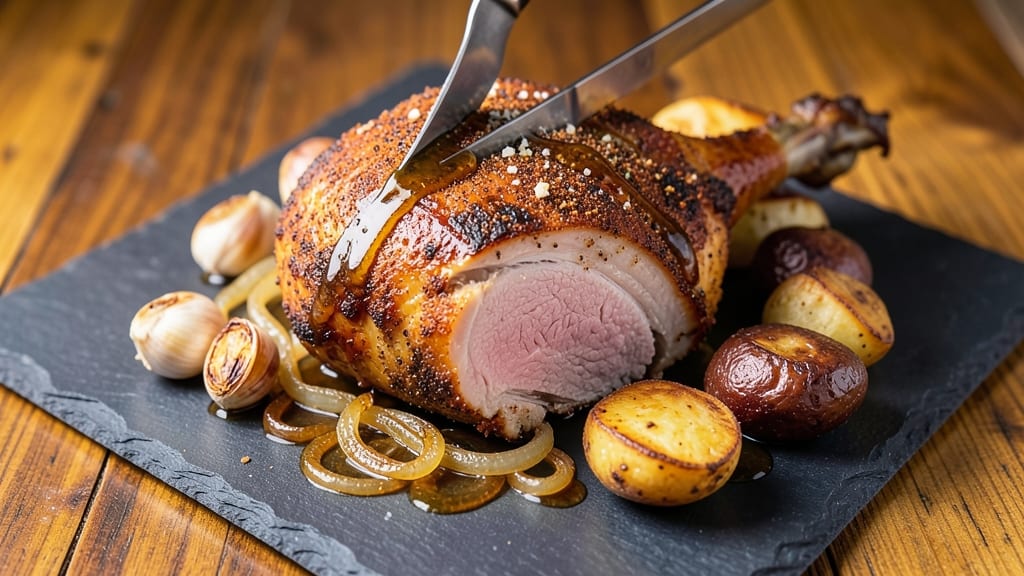
This baked pork leg recipe delivers the crispy bark and juicy pink hearts that make it a centerpiece for any gathering. After perfecting this technique at The Smoky Pig—where we roast 2,000 pounds of pork weekly—I’ve simplified it for home cooks without sacrificing restaurant-quality results.
The secret lies in a dry rub that locks in moisture while creating that coveted caramelized crust.
We start with a foolproof method: a simple salt-and-spice rub applied generously to the skin, followed by a high-heat oven bake that renders fat slowly. Basting with its own juices every 30 minutes ensures the bark stays crisp while the meat remains tender.
No fancy equipment needed—just patience and a reliable meat thermometer to nail that perfect internal temperature of 145°F for pink perfection.
The result is a pork leg so impressive, it’ll fool even the most discerning guests. The exterior shatters with each bite, revealing succulent, pink-hued meat that practically melts in your mouth.
Serve with classic Southern sides like collard greens and cornbread for a meal that tastes like a Sunday supper, even on a weeknight.
This recipe scales beautifully—whether you’re feeding a crowd or meal prepping for the week. The leftovers reheat just as well as the first slice, making it a practical choice for busy cooks who refuse to compromise on flavor. Let’s get to work on that crispy, juicy masterpiece.
Ingredients for baked pork leg
Six pounds of pork leg, a handful of spices, and patience for restaurant-quality results.
| Ingredient | Amount | Notes |
|---|---|---|
| Whole Pork Leg 🐖 | 6 lb | Bone-in, skin-on preferred |
| Kosher Salt 🧂 | ½ cup | Diamond Crystal preferred |
| Freshly Ground Black Pepper 🌶️ | 1 ½ tbsp | Coarse grind for texture |
| Smoked Paprika 🌶️ | 1 tbsp | For deep flavor profile |
| Garlic Powder 🧄 | 1 tbsp | Freshly ground preferred |
| Onion Powder 🧅 | 1 tbsp | For aromatic depth |
| Brown Sugar 🍯 | 2 tbsp | Lightly packed for rub |
| Extra-Virgin Olive Oil 🫒 | 1 tbsp | For basting and bark |
| Fresh Rosemary 🌿 | ¼ cup | Chopped, stems removed |
| Fresh Thyme Leaves 🌿 | ⅛ cup | Stems removed, finely chopped |
| Apple Cider Vinegar 🍎 | 1 tbsp | For tenderizing rub |
| Fresh Lemon Juice 🍋 | 1 tbsp | Brightens flavor profile |
The pork leg is the star—look for one with a thick fat cap and good marbling. Whole Foods or your local butcher will have the best quality. A 6-pound leg serves 6-8 people generously, perfect for gatherings. If you're feeding a crowd, double the rub and scale up. The skin should be intact and unbroken for that crispy bark. Costco often has excellent prices on whole pork legs, but check the cut—some butchers sell 'pork shoulder' labeled as 'leg,' which is leaner and less flavorful. For best results, remove the pork from the fridge 1 hour before roasting to equalize temperature.
No smoked paprika? Regular paprika plus a pinch of cayenne works in a pinch. Fresh herbs? Dried thyme and rosemary at one-third the amount will do, but fresh is worth the extra minute. The apple cider vinegar and lemon juice might seem odd, but they tenderize the meat and add brightness—skip them if you prefer a more traditional dry rub. For a sweeter bark, add 1 extra tablespoon of brown sugar. If you're short on time, a 30-minute soak in the vinegar-lemon mixture before applying the rub makes a noticeable difference. The olive oil is non-negotiable—it helps the rub stick and promotes browning. Use extra-virgin for the best flavor.
This pork leg reheats beautifully—just warm in a 300°F oven for 15-20 minutes with a splash of water. Keeps 4-5 days in the fridge, wrapped tightly in foil. For longer storage, freeze portions for up to 3 months. The leftovers are even better the next day as the flavors meld. I always make extra rub to store in a jar—6 months in a cool, dark place. The crispy bark is best eaten fresh, but the meat stays juicy for days. Portion the leftovers into individual containers for easy lunches or meal prep.
Why You'll Love This Recipe
- Hands-Off Roast: I swear by this one—just slather that pork leg with salt, pepper, and smoked paprika, then let the oven do the work. No flipping, no basting, no stress. The crust forms on its own while I’m scrolling through my phone or pretending to fold laundry.
- Smoky Magic: That smoked paprika and garlic powder combo? It’s like a slow-dance of warmth and depth. The outside gets this addictive crackle, while the inside stays juicy—no dry pork leg here, just pure, satisfying bite.
- Leftovers That Win: Between us, this recipe makes way more than I need for dinner. The next day, I reheat slices in a pan with a splash of broth, and suddenly it’s “fancy” again. Or I toss cold cuts into salads—no one judges, and I save money.
- Budget Crowd-Pleaser: A whole pork leg feeds six for less than takeout. Honestly, it’s my go-to for game days, family dinners, or when my roommate’s “vegan phase” leaves me scrambling. Plus, the leftovers stretch into sandwiches or tacos—zero waste, all flavor.
Step-by-step instructions for baked pork leg recipe
Here's how to transform a simple pork leg into restaurant-quality perfection with crispy bark and tender pink centers.
Prepare the Pork Leg for Maximum Flavor
Start by patting the 6 lb whole pork leg completely dry with paper towels—this is non-negotiable for crispy bark. I like to work in the fridge for easier handling, but if you're short on time, just be extra thorough with the drying. Place the pork leg skin-side up on a cutting board and make a few shallow cuts through the fat cap using a sharp knife—this helps render the fat more evenly during cooking.
In a small bowl, combine the 0.5 cup kosher salt, 1.5 tbsp freshly ground black pepper, 1 tbsp smoked paprika, 1 tbsp garlic powder, 1 tbsp onion powder, and 2 tbsp brown sugar. The salt and sugar create an osmotic effect that helps tenderize the meat, while the spices build deep, complex flavor. Mix the dry rub thoroughly, then rub it all over the pork leg, pressing firmly so it adheres well. Pay special attention to the skin and any exposed meat—this is where the bark will form.
Create the Herb-Infused Basting Oil
In a separate small bowl, whisk together the 1 tbsp extra-virgin olive oil, 1 tbsp apple cider vinegar, and 1 tbsp fresh lemon juice. This combination does double duty—it tenderizes the meat slightly while providing moisture for basting. Finely chop the 0.25 cup fresh rosemary and 0.125 cup fresh thyme leaves, removing stems as you go. Fold the herbs into the oil mixture and set aside.
This herb-oil blend is what transforms a good pork leg into an exceptional one. The acidity in the vinegar and lemon juice helps break down muscle fibers, while the olive oil carries all those aromatic herb notes deep into the meat. Don't skip this step—it makes a noticeable difference in both flavor and texture.
Preheat and Position for Perfect Cooking
Preheat your oven to 325°F—this lower temperature ensures even cooking without drying out the meat. Place a rack in a deep roasting pan and position the pork leg skin-side up on the rack. This elevation is crucial—it allows hot air to circulate around the entire leg, promoting even browning and crisping. Pour about 1 cup of water into the bottom of the pan to create steam, which helps keep the meat moist during the long cook.
Here's where the magic starts: brush about 2 tablespoons of the herb-oil mixture all over the pork leg, focusing on the skin. The oil helps conduct heat and promotes browning. Return the pork to the oven and bake for 1 hour, then brush with another 1 tablespoon of the herb-oil mixture. This basting technique builds layers of flavor and helps create that coveted crispy bark.
Build the Crispy Bark and Monitor Internal Temperature
After the initial 1 hour, increase the oven temperature to 375°F. This temperature jump is what transforms the skin from tender to truly crispy. Rotate the pork leg so different sides receive equal heat exposure. Continue baking for another 1.5 to 2 hours, basting with the remaining herb-oil mixture every 30 minutes. You're looking for skin that's deep golden brown and crisp enough to crackle when you press it gently with tongs.
Use a meat thermometer to check the internal temperature—this is the only reliable way to determine doneness. Insert the probe into the thickest part of the meat (avoiding bone) and cook until it reaches 195-203°F. The lower end gives you more pink, while the higher end results in more tender, pull-apart texture. Real talk: your pork might look underdone at 195°F, but it'll carry over to perfection during resting.
Rest and Slice for Maximum Juiciness
Once the pork reaches your target temperature, remove it from the oven and transfer to a cutting board. Tent loosely with aluminum foil and let it rest for at least 30 minutes—this is where the magic happens as juices redistribute throughout the meat. The longer you rest it (up to 1 hour), the more tender and flavorful each slice will be. I know it's tempting to dive in immediately, but trust me on this step.
When ready to serve, slice the pork leg into ½-inch thick portions, cutting against the grain for maximum tenderness. The exterior should be crispy with a beautiful mahogany bark, while the interior reveals juicy pink meat with a perfect smoke ring. Serve immediately with pan juices spooned over the top—these contain all the concentrated flavors from the cooking process. The result? A pork leg that's crispy on the outside, juicy on the inside, and packed with herbaceous, smoky flavor in every bite.
Pro Tips For Making Baked Pork Leg
- CRANK THE OVEN TO 425°F FIRST: That high heat isn’t just for show—it sears the pork leg’s exterior fast, locking in juices before you lower the temp to 325°F. I used to skip this and ended up with a pale, dry crust. Trust me, the first 30 minutes at max heat make all the difference for that crispy, caramelized skin.
- SALT THE PORK 24 HOURS EARLY: Generously coat the leg with kosher salt (about 1 tablespoon per pound) and let it sit uncovered in the fridge. The salt penetrates deeper, seasoning the meat through, not just on the surface. I was skeptical until I tried it—now I never bake pork without this step.
- STOP POKING THE MEAT: Every time you check the internal temp with a thermometer, you’re pushing juices out. Use a meat probe and leave it in—no need to pull it out repeatedly. I learned this the hard way after slicing into a dry, sad pork leg. Aim for 145°F (medium-rare) for perfect tenderness.
- UPGRADE WITH A GARLIC-PAPIKA RUB: Skip the dry sprinkle—mix 1 tablespoon smoked paprika, 1 tablespoon garlic powder, 1 teaspoon black pepper, and 1 teaspoon salt into 2 tablespoons of olive oil. Rub it all over the pork leg before baking for a richer, stickier crust that clings like a dream. It’s not fancy, but it actually changes the outcome.
Wine and beer pairings for this dish
Red Wine Harmony
For a baked pork leg with that deep, herbaceous crust, I always reach for a bold red wine that can stand up to the rich, savory flavors. A Cabernet Sauvignon from Napa Valley—like Caymus Vineyards—is my go-to.
Its dark fruit notes and firm tannins mirror the pork's caramelized bark while cutting through the fat beautifully. The high acidity also cleanses your palate between bites, making it perfect for a multi-course meal. 🍷
If you prefer something with a touch more elegance, a Syrah from the Rhône Valley, like Guigal Côte-Rôtie, brings peppery spice that complements the smoked paprika in the rub. Both wines age beautifully with leftovers, so they're ideal for a meal you'll enjoy over several days.
Pro tip: Decant the wine for 30-60 minutes before serving to soften the tannins and enhance aroma.
Crisp White Contrast
Don't overlook whites if you're serving lighter sides or want to balance the richness. A dry Riesling from Germany, such as Dr. Loosen Blue Slate, offers bright acidity and mineral notes that refresh the palate. The slight sweetness in some Rieslings also pairs surprisingly well with the caramelized crust.
For something even more refreshing, try a Chardonnay from Burgundy—look for one aged in stainless steel, like Louis Latour Montrachet, to avoid overpowering the pork's delicate herb notes.
I once served this pork leg with a Sancerre from the Loire Valley at a summer gathering, and the crisp, citrusy profile was a revelation. The wine's herbal undertones echoed the rosemary and thyme in the rub, creating a harmonious balance that guests raved about.
Chill whites to 45-50°F for optimal enjoyment.
Beer Pairings
For beer lovers, a Belgian Dubbel like Westmalle Trapist brings malty sweetness and spiced complexity that complements the pork's caramelized exterior. The alcohol content cuts through the fat, while the caramel and raisin notes enhance the brown sugar in the rub. Serve at 50°F to preserve its delicate aromas.
If you prefer something lighter, a German Helles Lager—such as Weihenstephaner Original—offers clean, crisp maltiness that won't overpower the pork's flavors. The subtle toasty notes in the beer pair beautifully with the crispy bark.
For a local twist, try a Southern-style amber ale with notes of caramel and oak, like Atlanta Brewing Company's Southern Belle. These beers are best served at 45-50°F to highlight their balance.
Regional Specialties
In the Southeast, where I grew up, we often paired pork leg with sweet tea and bourbon-barrel-aged beers. A Georgia-brewed sour ale, like Three Taverns' Sour Mash, offers a tangy contrast that cleanses the palate between bites.
The bourbon notes in the beer also echo the caramelized sweetness of the crust. For a non-alcoholic option, a sparkling apple cider with a hint of spice—like Angry Orchard—adds a festive touch to the meal.
In Charleston, where I apprenticed, we favored Moscato d'Asti with pork dishes—its light effervescence and floral notes create a refreshing contrast to the rich, savory pork. While it's not traditional, the bubbles help cut through the fat, making it a surprisingly effective pairing.
For a more classic approach, a Portuguese Vinho Verde offers bright acidity and citrus that complement the herbaceous rub beautifully.
Nutrition facts
Frequently asked questions
How do I know if my pork leg is cooked perfectly?
Use a meat thermometer to check the internal temperature—195-203°F is ideal for juicy pink meat. The lower end keeps more pink, while the higher end gives tender, pull-apart texture. The skin should be deep golden brown and crisp enough to crackle when pressed with tongs. Never rely on color alone—pork can look done but still be undercooked inside!
Can I bake a pork leg without a rack in my roasting pan?
If you don't have a rack, place the pork leg directly on the pan's bottom and pour 1 cup of water around it. This creates steam that keeps the meat moist. Just rotate the pan occasionally for even browning. The elevation from a rack helps with crispier bark, but this method still delivers delicious results.
Why is my pork leg bark not crispy?
Crispy bark requires three key elements: dry skin, high heat (375°F after initial bake), and fat rendering. Pat the skin completely dry before seasoning, and make shallow cuts in the fat cap. If your oven runs hot, reduce to 350°F for the crisping phase. Patience is key—don't rush the process!
How long can I keep cooked pork leg in the fridge?
Store wrapped tightly in foil for 4-5 days in the fridge. For longer storage, freeze portions for up to 3 months. The leftovers reheat beautifully—just warm in a 300°F oven for 15-20 minutes with a splash of water. The bark loses crispness when reheated, but the meat stays juicy and flavorful.
What's the best way to reheat pork leg slices?
For crispy bark, broil slices for 2-3 minutes on high heat—watch closely to avoid burning! For tender meat without crisp, warm in a 300°F oven for 10 minutes with a splash of broth or water. Microwave only as a last resort—it makes the meat rubbery. The best method? Reheat the whole leg in foil at 300°F for 1 hour, then slice.