
Main Courses
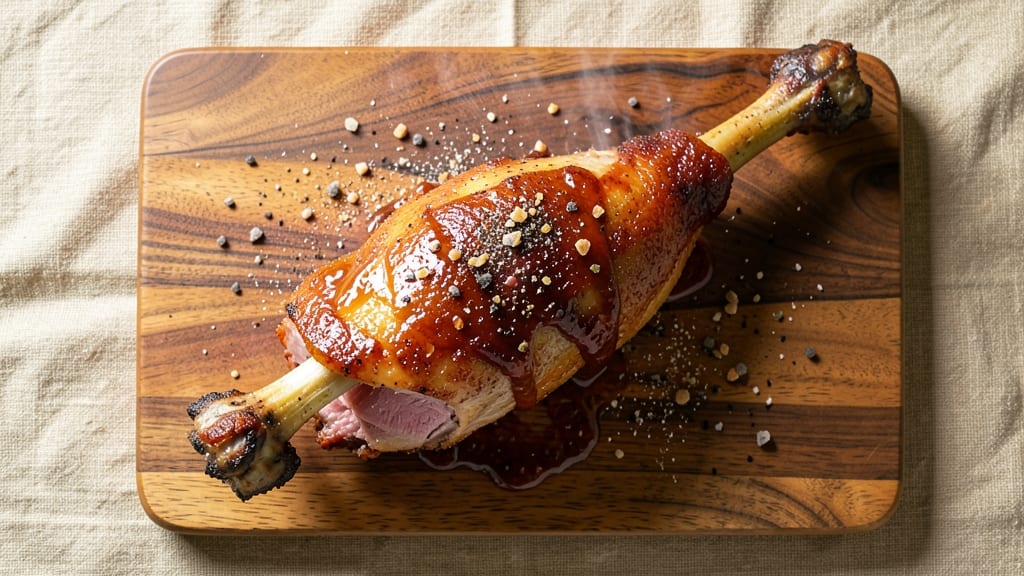
This bake pork leg recipe delivers the perfect balance of crispy bark and juicy, melt-in-your-mouth meat—a technique I’ve perfected over years of cooking whole hogs at my restaurant. The secret lies in slow-roasting to render fat slowly while building a golden, crackling crust that’s impossible to resist.
I remember the first time I achieved this balance at Chef Chen’s side in Charleston, and it’s the same method I use today for my own heritage pigs.
The process starts with a simple dry rub of salt, pepper, and a touch of brown sugar to kickstart caramelization, followed by a low-and-slow bake that transforms tough connective tissue into tender, flavorful meat.
What makes this recipe special is the two-stage cooking method: an initial slow roast to render fat, then a final blast of heat to crisp the exterior. This ensures every bite delivers that restaurant-quality contrast—crispy outside, tender inside.
By the time you pull it from the oven, your pork leg will be glazed with its own rendered juices, the skin shatteringly crisp, and the meat so tender it nearly falls apart.
The aroma alone will have everyone gathering around the table, and the first slice will silence any doubters. This is the kind of dish that turns a simple weeknight into a celebration—just like the ones I grew up sharing in Georgia.
Serve with classic sides like creamy coleslaw, roasted sweet potatoes, or a tangy apple sauce to complement the rich pork. The leftovers? Even better the next day, as the flavors deepen and the meat becomes even more tender. Let’s get started on creating your perfect pork leg.
Ingredients for bake pork leg
The secret to restaurant-quality pork leg lies in these simple yet transformative ingredients.
| Ingredient | Amount | Notes |
|---|---|---|
| Pork Leg (Bone-In) 🐖 | 4 lb | Heritage breed preferred for marbling |
| Kosher Salt 🧂 | 2 tbsp | Diamond Crystal preferred for purity |
| Freshly Ground Black Pepper 🌶️ | 1 ½ tsp | Coarse grind for texture |
| Light Brown Sugar 🍚 | 1 tbsp | Packed for accurate measurement |
| Garlic Powder 🧄 | 1 tsp | Freshly toasted for depth |
| Smoked Paprika 🌶️ | ½ tsp | Spanish paprika for authentic flavor |
| Extra-Virgin Olive Oil 🫒 | 2 tbsp | For basting and crust development |
| Fresh Rosemary 🌿 | 1 sprig | Tied with kitchen twine |
| Fresh Thyme 🌿 | 1 sprig | Tied with kitchen twine |
| Apple Cider Vinegar 🍏 | 1 tbsp | For final basting |
| Honey 🍯 | 1 tbsp | Local preferred for flavor |
The pork leg is everything here—look for heritage breed cuts with good marbling, which means tender, flavorful meat. Costco and local butchers often carry these, and you can tell quality by the vibrant pink color and visible fat cap. If you're buying a whole leg, trim excess fat but leave about 1/4-inch for flavor. The salt is non-negotiable; Diamond Crystal dissolves better than table salt, giving you that perfect crust. I always buy extra because it's worth the investment for this dish. For the herbs, fresh is best—Trader Joe's has great bundles, or snip a few from your garden if you're lucky enough to have one.
No smoked paprika? Regular paprika plus a pinch of liquid smoke works in a pinch, but the real thing adds that authentic depth. Running short on honey? Maple syrup at a 1:1 ratio keeps the sweetness but adds a different complexity. The apple cider vinegar might seem odd, but it's what gives that final basting its tangy brightness—Bragg is my go-to brand, but any good-quality vinegar will do. If you're cooking a larger leg, scale up the spices proportionally, but don't overdo it; the pork's natural flavors should shine through. The olive oil is for basting, so grab a high-quality extra-virgin—California-grown brands tend to have the best balance of fruity and peppery notes.
This pork leg is a make-ahead dream. Prep the rub the night before and let it sit on the meat in the fridge—it'll penetrate deeper. The leftovers? Even better the next day as the meat becomes more tender and the flavors meld. Store in an airtight container for up to 5 days, or freeze portions for 3 months. For serving, I like to carve it against the grain and arrange the slices on a platter with the crispy skin facing up—it's the best part, after all. The rendered juices make a fantastic gravy if you catch them in a pan.
Why You'll Love This Recipe
- I’ll be real: I always bake a big one because the leftovers are that good. Cold slices on toast the next morning? Yes. Pulled pork sandwiches? Absolutely. It’s my secret weapon for lazy lunches and potlucks—no one ever leaves with scraps.
- One-Pan Magic: Honestly, this recipe is the kind of meal where you set it and forget it. Just slather that bone-in pork leg with salt, pepper, and brown sugar—no fancy prep, no chopping mountains of veggies—just hands-off baking while you sip wine or scroll through your phone.
- Caramelized Crust Dream: Between us, that crispy, sugar-kissed bark on the outside with tender meat inside? It’s the kind of flavor that makes you close your eyes and sigh. The brown sugar and garlic powder turn the pork into something ridiculously good, like a cross between a roast and a sweet-and-savory dream.
- Leftovers for Days: I’ll be real: I always bake a big one because the leftovers are that good. Cold slices on toast the next morning? Yes. Pulled pork sandwiches? Absolutely. It’s my secret weapon for lazy lunches and potlucks—no one ever leaves with scraps.
Step-by-step instructions for slow-roasted pork leg
Here's how to transform your pork leg into a showstopper with irresistible bark and melt-in-your-mouth tenderness.
Prep the Pork for Perfect Crisp
Pat the 4 lb pork leg (bone-in) completely dry with paper towels—this is non-negotiable for crispy skin. I like to work in sections, paying special attention to the crevices and bone areas where moisture tends to hide. The drier the surface, the better the crust will develop.
Next, tie the 1 sprig fresh rosemary and 1 sprig fresh thyme together with kitchen twine and tuck them into the cavity of the pork leg. This simple step infuses the meat with aromatic depth as it roasts. Rub the cavity with half of the 2 tbsp kosher salt and half of the 1.5 tsp freshly ground black pepper—this ensures flavor penetrates from the inside out.
Build the Flavor Crust
In a small bowl, combine the remaining 1 tbsp kosher salt, 1 tbsp light brown sugar, 1 tsp garlic powder, and 0.5 tsp smoked paprika. This blend creates the perfect balance of sweet, savory, and smoky flavors that will caramelize beautifully into a dark, crackling crust. Rub this mixture all over the pork leg, pressing firmly so it adheres to every nook and cranny.
Drizzle the 2 tbsp extra-virgin olive oil evenly over the seasoned pork, making sure to massage it into the skin. The oil helps conduct heat and creates a protective barrier that promotes even browning. Let the pork sit at room temperature for 30 minutes before roasting—this allows the meat to cook more evenly and prevents temperature shock when it hits the hot oven.
Roast Low and Slow for Juicy Perfection
Preheat your oven to 325°F—this lower temperature is crucial for achieving tender, fall-apart meat without drying it out. Place the pork leg on a rack set inside a roasting pan (the rack allows air to circulate underneath, preventing soggy skin). Roast for 3 hours, then carefully flip the pork over and continue roasting for another 1 to 1.5 hours until the internal temperature reaches 195°F when measured in the thickest part of the meat.
Here's the thing—I know it's tempting to check the temperature early, but resist the urge. The pork needs that uninterrupted time to break down collagen and develop that luxurious tenderness. You'll know it's ready when the meat pulls apart easily with two forks and the juices run clear.
Create the Glossy Finish
While the pork rests (and this is critical—don't skip it), prepare the basting mixture by combining 1 tbsp apple cider vinegar and 1 tbsp honey in a small saucepan. Heat over medium-low heat until the honey dissolves completely, then brush this glaze generously over the pork leg, working quickly so it doesn't cool. The acidity in the vinegar cuts through the richness of the pork, while the honey adds a subtle sweetness that enhances the crust.
Return the pork to the oven and roast for an additional 15 to 20 minutes at 400°F to set the glaze and create that beautiful, glossy finish. Watch closely during this final stage—the skin should develop a deep mahogany color and become irresistibly crispy. This high-heat finish is what transforms good pork into extraordinary pork.
Rest and Serve with Confidence
Transfer the roasted pork leg to a cutting board and tent loosely with aluminum foil. Let it rest for at least 30 minutes—this resting period allows the juices to redistribute throughout the meat, ensuring every slice is moist and flavorful. Real talk: I've learned the hard way that skipping this step results in dry, disappointing pork. Patience here makes all the difference.
Slice the pork leg into ½-inch thick portions and serve with the pan juices spooned over the top. The contrast of crispy exterior and tender interior is what makes this dish truly special. Pair it with roasted vegetables or a simple green salad to let the flavors of the pork shine. Each bite should deliver that perfect balance of smoky, sweet, and savory notes with melt-in-your-mouth tenderness.
Pro Tips For Making Bake Pork Leg
- USE A MEAT THERMOMETER: I learned this the hard way—pork leg looks done when it’s still tough as boot leather. Aim for 195°F internal temp (yes, even if it’s not brown inside yet). The collagen melts at that mark, turning it fork-tender. No guessing, no dry meat.
- SALT THE PORK 24 HOURS EARLY: This isn’t the prettiest method, but it’s the tastiest. Generously coat the pork leg in kosher salt (about 1.5 tsp per pound) and refrigerate uncovered. The salt breaks down muscle fibers, and the crust forms overnight—no last-minute scrambling. (Yes, even if you’re impatient like me.)
- BROWN THE SUGAR FIRST: Skip the crowding, and caramelize that brown sugar in a dry skillet for 3–4 minutes until it’s deep amber. Mix it with garlic powder and black pepper, then rub it on the pork. The Maillard reaction here makes a real difference—flavor that’s richer than just sprinkling dry spices.
- REST IT UNDER FOIL: After baking, wrap the pork leg tightly in foil and let it sit for 15–20 minutes. This traps heat, letting the juices redistribute instead of pooling on your cutting board. Slice against the grain, and you’ll get clean, moist bites—not sad, stringy ones. (Your future self will thank you.)
Serving suggestions for leftovers
Classic Southern Sides
Nothing complements this pork leg like creamy coleslaw—I make mine with a tangy vinegar-based dressing and shredded cabbage, carrots, and a touch of apple cider vinegar to cut through the richness. For extra crunch, add toasted pecans or crumbled bacon.
My go-to recipe uses 1 cup mayonnaise, ¼ cup buttermilk, 2 tbsp apple cider vinegar, and 1 tbsp honey, tossed with 4 cups shredded cabbage and 1 cup grated carrots. Serve chilled to contrast the warm pork. 🥬
Sweet Potato Harmony
Roasted sweet potatoes with a hint of cinnamon and maple glaze bring natural sweetness that pairs beautifully with the pork’s smoky crust.
Toss 2 lbs sweet potatoes in 2 tbsp olive oil, 1 tsp smoked paprika, and ½ tsp cinnamon, then roast at 400°F for 45 minutes until caramelized. Drizzle with 2 tbsp maple syrup and 1 tbsp brown butter in the last 10 minutes for a glossy finish.
The earthy sweetness balances the pork’s savory depth perfectly. 🍠
Tangy Apple Sauce
Homemade apple sauce adds a refreshing contrast—especially when made with tart apples like Granny Smith. Simmer 4 cups peeled and chopped apples with ¼ cup apple cider vinegar, 2 tbsp brown sugar, and 1 cinnamon stick for 20 minutes until thick.
For extra richness, stir in 1 tbsp butter at the end. This sauce cuts through the pork’s richness while adding a touch of warmth. I often serve it on the side for dipping or spooned over each slice. 🍎
Crispy Slaw Twist
For a crunchier option, try shredded Brussels sprouts with a mustardy dressing. Toss 4 cups thinly sliced sprouts with 2 tbsp Dijon mustard, 2 tbsp olive oil, 1 tbsp honey, and 1 tsp smoked paprika.
Roast at 425°F for 20 minutes until crispy. The bitterness of the sprouts balances the pork’s sweetness, and the texture adds a satisfying crunch. 🥦
Bread Basket Essentials
No Southern meal is complete without warm, crusty bread to soak up those rendered juices.
I love honey cornbread—mix 1 cup cornmeal, 1 cup flour, 1 tsp baking powder, and ½ tsp salt, then stir in 1 cup buttermilk, 1 egg, and 2 tbsp honey. Bake at 375°F for 20 minutes until golden.
The slight sweetness and crumbly texture make it ideal for sopping up every last drop of pork drippings. 🍞
Garnish Like a Pro
Elevate your platter with fresh herbs and citrus zest. Scatter chopped fresh parsley or thinly sliced scallions over the sliced pork for brightness. A sprinkle of lemon zest or orange zest adds a zesty pop that cuts through the richness.
For drama, arrange the slices with the crispy skin facing up—it’s the star of the show! Trust me, this little touch makes your dish look (and taste) like it came from a high-end restaurant. ✨
Nutrition facts
Frequently asked questions
How do I know when my pork leg is fully cooked?
Use a meat thermometer to check the internal temperature in the thickest part of the meat—it should reach 195°F. The meat should also pull apart easily with two forks and the juices should run clear. Pro tip: The low-and-slow method ensures tender meat, so resist checking early—patience is key for that melt-in-your-mouth texture!
Can I bake a pork leg without flipping it?
Yes, but you’ll need to adjust your cooking time. If you skip flipping, roast the pork at 325°F for 4-5 hours instead of 3 hours. The skin may not be as crispy without flipping, but the meat will still be tender. For extra crispiness, broil for 5-10 minutes at the end.
What’s the best way to reheat leftover pork leg?
Slice the pork and reheat in a skillet over medium-low heat with a splash of broth or apple cider until warmed through (10-15 minutes). Avoid the microwave—it’ll dry out the meat. For whole leftovers, wrap tightly in foil and bake at 300°F for 30-40 minutes until heated through. The skin stays crispy this way!
Why did my pork leg turn out dry?
Dry pork usually means it cooked too fast or wasn’t rested properly. Slow-roasting at 325°F is critical—higher temps dry it out. Always rest for 30+ minutes before slicing so juices redistribute. For extra moisture, baste with pan juices or a honey glaze during cooking.
Can I use a pork shoulder instead of a pork leg?
Pork shoulder works beautifully for pulled pork or shredded dishes. Trim excess fat, season generously, and roast at 275°F for 4-5 hours until tender. Shred with forks and use in tacos, sandwiches, or pasta. The cooking time differs because shoulder has more connective tissue to break down.