
Main Courses
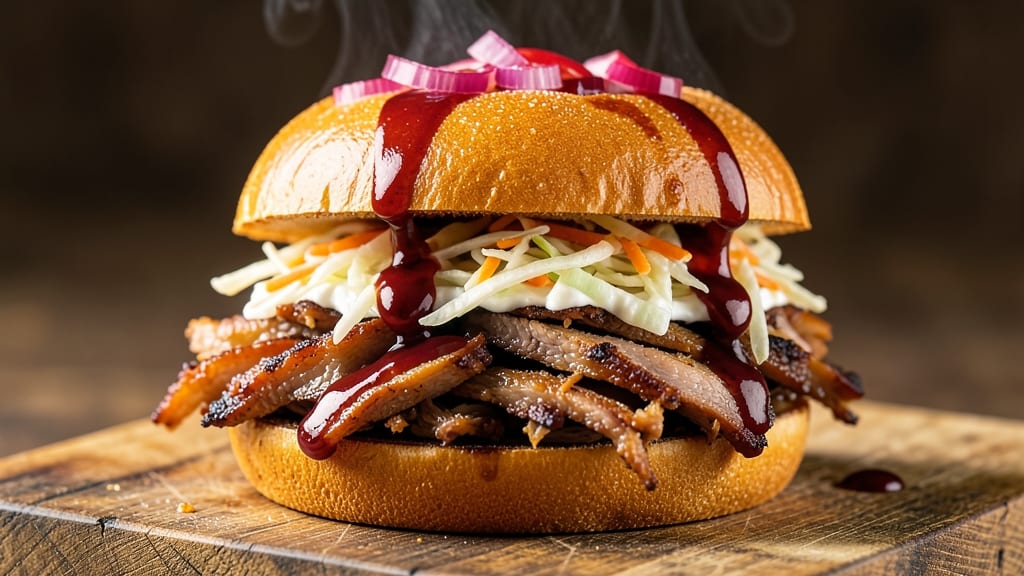
This award-winning pulled pork sandwich recipe delivers the perfect marriage of crispy bark and juicy shreds that’ll have you winning competitions—or at least impressing your dinner guests. 🔥 I’ve spent years perfecting this technique, and the secret lies in slow-smoking the pork shoulder just right, creating a flavorful crust while keeping the meat tender enough to shred effortlessly.
The result? A sandwich so good, it’s earned its place on award-winning menus across the Southeast.
The key to this recipe is patience and precision—low-and-slow cooking transforms tough pork into melt-in-your-mouth perfection, while a simple dry rub builds that irresistible bark.
I use a 3-2-1 method (3 hours of smoke, 2 hours of bark development, and 1 hour of resting) to ensure every bite is packed with flavor and texture.
The sandwich assembly is just as important, with soft brioche buns, tangy coleslaw, and a drizzle of homemade BBQ sauce tying it all together.
What sets this recipe apart is the balance of textures—crispy edges on the pork, soft shreds that fall apart at the touch, and a bun that’s just sturdy enough to hold it all.
The slow-smoking process infuses the meat with deep, smoky flavors, while the final glaze adds a glossy finish that makes it look (and taste) like it belongs on a competition table. This isn’t just pulled pork; it’s a restaurant-quality experience you can recreate at home.
Serve it with classic sides like tangy pickles, crisp apple slaw, or a simple green salad to round out the meal. The leftovers? Even better the next day, as the flavors deepen and the textures soften just enough to make every bite even more satisfying.
Let’s get cooking—your taste buds (and your competition) will thank you.
Ingredients for award winning pulled pork sandwich
Six pounds of pork, a smoky rub, and the patience to slow-smoke perfection.
| Ingredient | Amount | Notes |
|---|---|---|
| Pork Shoulder (Bone-In) 🥩 | 6 lb | Bone-in for best flavor |
| Yellow Onion 🧅 | 1 whole | Cut into large chunks |
| Garlic Cloves 🧄 | 8 cloves | Minced for dry rub |
| Brown Sugar 🍯 | ½ cup | Light brown preferred |
| Smoked Paprika 🌶️ | 2 tbsp | For smoky depth |
| Ground Black Pepper 🌶️ | 1 tbsp | Freshly ground preferred |
| Kosher Salt 🧂 | 1 ½ tbsp | Diamond Crystal preferred |
| Apple Cider Vinegar 🍎 | ¼ cup | For tangy glaze |
| Honey 🍯 | ¼ cup | Wildflower for floral notes |
| Brioche Buns 🥪 | 12 whole | Soft, slightly sweet |
| Yellow Mustard 🍯 | ¼ cup | For sandwich spread |
| Coleslaw Mix 🥬 | 2 cups | Shredded cabbage/carrot |
| Wood Chips (Hickory or Oak) 🌳 | 2 cups | Soaked for smoking |
| Apple Juice Concentrate 🍎 | ¼ cup | For final glaze |
The pork shoulder is your star—bone-in for maximum flavor, not lean cuts. Grab a 3-4 lb bone-in shoulder from Costco or your butcher for the best deal, but any grocery store will have it. Look for good marbling—those little fat streaks melt during cooking, keeping the meat juicy. If you can't find bone-in, bone-out works too, but the flavor won't be quite as rich. The hickory or oak wood chips? Soak them for at least 30 minutes before using—dry chips burn too fast and give a bitter taste. I always double-bag them in a zip-top with a towel inside to keep moisture trapped.
No smoked paprika? Regular paprika plus a pinch of liquid smoke gets you close, but the real stuff is worth it. The brown sugar in the rub is non-negotiable—it's what creates that caramelized bark we're going for. Short on apple cider vinegar? White vinegar or lemon juice works, but the apple adds a subtle sweetness that balances the smokiness. The brioche buns? Store-bought is fine—just look for ones with a little egg wash for that golden crust. If you're making this ahead, the pork actually tastes better the next day as the flavors meld. The glaze? Make it fresh—store-bought sauces can't compete with the homemade tang of apple cider vinegar and honey.
Pork keeps 3-4 days in the fridge, wrapped tightly in foil. The buns? Freeze extras—up to 3 months—and toast straight from frozen. For the wood chips, store them in a dry place in a sealed container for up to 6 months. The dry rub? Make a double batch—it keeps in an airtight jar for 3 months and is perfect for any smoked meat. Leftovers? Shred the pork, mix with a little BBQ sauce, and serve on toasted buns for breakfast sandwiches. Trust me, they're even better cold.
Why You'll Love This Recipe
- Sweet-Smoky Magic: That caramelized brown sugar crust? It’s the secret. The smoked paprika gives it depth, but the garlic and onion—cooked low and slow into the meat—make every bite taste like a hug from someone who knows how to cook. Honestly, I’ve had fancy pulled pork for $20, and this beats it every time.
- Leftovers That Beg: This recipe makes way more than I need for one meal, and that’s perfect. The pulled pork keeps for days in the fridge, so I can throw it into tacos, sandwiches, or even pasta without breaking a sweat. My kids actually ask for leftovers—rare, but true.
- Budget-Friendly Feast: A bone-in pork shoulder is cheaper than chicken thighs, and it stretches across multiple meals. Plus, the onions and garlic are pantry staples, so I’m not digging deep for extra cash. For the price of one takeout order, I feed my whole family with food that tastes like it cost a fortune.
Step-by-step instructions for slow-smoked pulled pork sandwiches
Here's how to create melt-in-your-mouth pulled pork with a perfect smoky bark and tender texture.
🔥 Step 1: Prepare the Pork and Dry Rub
Start by trimming any excess fat from the 6 lb pork shoulder (bone-in), leaving about ¼-inch of fat cap for flavor and moisture. Pat the meat completely dry with paper towels—this helps the rub stick and creates that coveted bark. In a bowl, mix together the 0.5 cup brown sugar, 2 tbsp smoked paprika, 1 tbsp ground black pepper, and 1.5 tbsp kosher salt. Rub this generously all over the pork, pressing it into the meat so it adheres well. Let the pork sit at room temperature for 30 minutes while you prep the smoker.
Pro tip: I like to press the rub into the meat with my fingertips—this ensures even coverage and prevents clumping. The sugar will caramelize during smoking, creating that beautiful crust we're after.
🔥 Step 2: Smoke the Pork Low and Slow
Soak the 2 cups wood chips (hickory or oak) in water for 30 minutes to prevent flare-ups. Set up your smoker for 225°F using these soaked chips. Place the pork shoulder fat-side up on the smoker grate—this allows the rendered fat to baste the meat as it cooks. Close the lid and resist the urge to peek! Every time you open it, you lose heat and extend cook time.
Smoke the pork for 6-8 hours until the internal temperature reaches 165°F and the bark is deep mahogany. You'll notice a "stall" around 160°F—this is normal as moisture evaporates. Don't panic; just keep smoking. The pork is ready when it pulls apart easily with two forks and has a beautiful smoke ring.
🥘 Step 3: Make the Apple Cider Glaze
While the pork smokes, combine the 0.25 cup apple cider vinegar and 0.25 cup honey in a small saucepan. Bring to a simmer over medium heat and cook for 5-7 minutes until slightly thickened. Stir in the 0.25 cup apple juice concentrate and remove from heat. This tangy-sweet glaze adds depth to the pulled pork and balances the smoky flavor.
Here's the thing—this glaze needs to be slightly sticky but not syrupy. If it's too thick, add 1 tablespoon water at a time until it reaches the right consistency. Keep it warm until you're ready to use it.
🍳 Step 4: Shred and Mix with Glaze
Transfer the smoked pork to a cutting board and let it rest for 15 minutes. Then, shred the meat using two forks or your hands, pulling it apart against the grain. Return the shredded pork to the smoker or a warm oven-safe dish and pour the apple cider glaze over it. Toss gently to coat evenly, then let it sit for 10 minutes to absorb the flavors.
This resting step is crucial—it allows the juices to redistribute and the glaze to meld with the meat. You'll notice the pork becomes even more tender and flavorful as it sits. If you're short on time, you can skip the resting and just toss the glaze in at the end, but the flavor will be slightly less developed.
🥘 Step 5: Assemble the Sandwiches
Toast the 12 whole brioche buns lightly in a skillet or under a broiler until golden brown. Spread each with 1 tablespoon yellow mustard—this adds a nice tangy contrast to the rich pork. Pile the shredded pork high on each bun, then top with 2 tablespoons coleslaw mix for crunch and freshness.
Serve immediately while the pork is hot and the buns are soft. The combination of smoky, juicy pork with the sweet glaze, tangy mustard, and crisp coleslaw is what makes this sandwich truly award-winning. Each bite delivers perfect texture contrast and flavor balance.
Pro Tips For Making Award Winning Pulled Pork Sandwich
- CRANK THE HEAT FIRST: That pork shoulder needs a screaming-hot start—250°F for the first hour isn’t enough. Blast it at 300°F for 90 minutes to render fat fast and kickstart the crust. I learned this the hard way after a batch that took 12 hours and still tasted greasy.
- CHOP ONIONS LIKE A PRO: Skip the big chunks—this isn’t stew. Dice those yellow onions into ¼-inch pieces so they caramelize evenly with the garlic. Too big? They’ll turn mushy. Too small? They’ll burn before the pork’s done. Aim for consistent, even exposure.
- DON’T PEEK OR TOUCH: Resist the urge to check the temp early. Every time you open that smoker or oven, you’re losing heat and moisture. Wait until the internal temp hits 165°F—then let it rest 20 minutes before shredding. Trust the thermometer, not your eyes.
- SWAP THE SUGAR MIDWAY: Add half the brown sugar with the rub, then sprinkle the rest over the meat at the 4-hour mark. This prevents a sticky, burnt crust and lets the smoky flavors develop first. Sounds weird, but it works—no more bitter aftertaste.
Serving suggestions for award winning pulled pork sandwich
Bun Selection Matters
Brioche buns are my go-to for pulled pork sandwiches—their buttery richness and slight sweetness complement the smoky pork beautifully. I recommend Texas Toast brioche buns from the bakery section, or Stacy's brand if you're near a grocery store.
For a lighter option, toast potato rolls until crispy—their sturdy texture holds up to the juicy pork. 🥪
Classic Side Pairings
No pulled pork sandwich is complete without tangy coleslaw—I use a simple mix of shredded cabbage, carrots, and a creamy dressing (mayo + apple cider vinegar).
For extra crunch, add thinly sliced jicama or red bell peppers. A handful of pickled jalapeños adds heat, while cornbread muffins balance the richness.
Glaze Variations
The apple cider glaze is my signature, but I love experimenting with other tangy-sweet options. Try a BBQ sauce reduction (simmer 1 cup store-bought sauce until thickened) or a honey-mustard glaze (mix ¼ cup honey + 2 tbsp Dijon mustard).
For a smoky twist, add 1 tsp liquid smoke to the glaze before tossing with the pork.
Presentation Pro Tips
For an award-worthy look, arrange the pork in a high pile on the bun, letting some shreds spill over the edges. Drizzle extra glaze around the plate, and sprinkle with chopped scallions or crushed peanuts for texture.
Serve on a wooden board with a side of pickles and a cold sweet tea for the full Southern experience.
Make-Ahead Magic
Shredded pork tastes even better the next day—store it in an airtight container in the fridge for 3-4 days. Reheat gently in a skillet with a splash of water or apple juice to maintain moisture.
Assemble sandwiches just before serving so the buns stay soft. For a quick meal, keep shredded pork in the freezer for up to 3 months—thaw overnight in the fridge before reheating.
Regional Twists
In North Carolina, swap the apple glaze for a vinegar-pepper sauce (vinegar, hot sauce, and black pepper). For a Texas-style version, add diced white onions and a sprinkle of crushed red pepper flakes.
In Georgia, serve with a side of collard greens and a peach cobbler for a true Southern feast.
Nutrition facts
Frequently asked questions
Can I use a slow cooker instead of a smoker for this recipe?
While smoking creates that authentic bark, a slow cooker works well for tender pulled pork. Use 6-8 hours on low with 1 cup apple juice or broth in the bottom to prevent drying. Add a 1 tbsp apple cider vinegar and 1 tsp smoked paprika to the liquid for extra flavor. The texture will be slightly softer than smoked pork, but still delicious.
How do I know when the pork is done without a meat thermometer?
Look for these visual cues: the bark should be deep mahogany, and the meat should pull apart easily with two forks. The pork will also have a slight springiness when pressed. If you're unsure, cut into the thickest part—if it's opaque and juices run clear (not pink), it's done. For extra safety, cook until the internal temp reaches 165°F.
What's the best way to reheat leftover pulled pork?
Reheat gently to avoid drying it out. Place shredded pork in a skillet with 1 tablespoon apple juice or water per pound, cover, and warm on low heat for 5-7 minutes. For microwave reheating, sprinkle with 1 teaspoon water, cover with a damp paper towel, and heat in 30-second intervals until warm. Never reheat dry—this ruins the tender texture.
Can I substitute pork shoulder with another cut?
Pork shoulder is ideal for its fat content and collagen, but you can use pork butt (they're practically the same) or pork loin in a pinch. Avoid lean cuts like tenderloin—they won't render enough fat for juicy pulled pork. If using pork loin, trim more fat and add 1 extra hour to the cooking time to compensate for the leaner meat.
Why did my pulled pork turn out dry?
Dry pulled pork usually happens from overcooking or insufficient fat. Check your cooking method: smoking at 225°F is ideal, but if you went higher, the meat cooks faster and dries out. Always leave ¼-inch fat cap on the pork—this bastes the meat as it cooks. For extra moisture, add 1 cup apple juice to the smoker tray during the last 1-2 hours of cooking.