
Main Courses
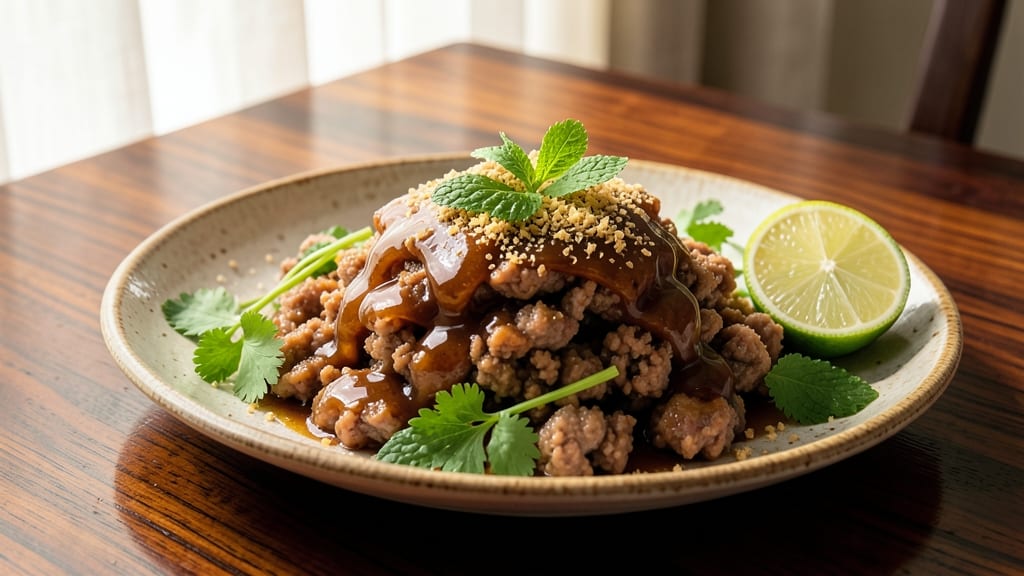
This authentic Thai pork larb recipe brings the vibrant flavors of street markets to your kitchen table—minty, herby, and tangy with just 20 minutes of active time. 🌿 After years of perfecting this dish, I've distilled the essential techniques: pounding the pork with a mortar for tender texture, balancing sweet, sour, and spicy flavors, and finishing with fresh herbs that make every bite sing.
The magic lies in the preparation: finely minced pork marinated with fish sauce, lime juice, and palm sugar, then tossed with cilantro, mint, and Thai basil.
This isn't just a recipe—it's a sensory experience that captures the essence of Northern Thai cuisine, where larb is traditionally served with crisp lettuce cups, fresh herbs, and chili slices for dipping. The secret? Using fresh, high-quality herbs and a proper balance of sweet, salty, and umami.
What you'll achieve is a dish that's restaurant-quality at home—juicy, aromatic, and perfectly balanced. The pork stays tender while absorbing the bright, herby marinade, and the finishing touches of lime and chili add that signature Thai tang.
This is the kind of recipe that transforms a simple meal into a cultural experience, served with steamed rice or lettuce cups for the full effect.
Whether you're hosting a dinner party or craving a taste of Thailand, this larb delivers bold, authentic flavors without the fuss. The techniques are straightforward, but the result is anything but ordinary—each bite is a celebration of Thai street food tradition. Let's get started!
Ingredients for authentic thai pork larb
Fresh pork, aromatic herbs, and zesty lime create this vibrant Thai street food masterpiece.
| Ingredient | Amount | Notes |
|---|---|---|
| Ground Pork Shoulder 🥩 | 1 ½ lb | Freshly ground, lean to fatty ratio |
| Thai Fish Sauce 🍶 | ½ cup | Red Boat brand preferred |
| Palm Sugar 🍯 | ¼ cup | Or light brown sugar substitute |
| Fresh Lime Juice 🍋 | ¼ cup | Freshly squeezed, seeds strained |
| Fresh Cilantro 🌿 | ½ cup | Stems and leaves chopped |
| Fresh Mint Leaves 🌿 | ½ cup | Stems removed, loosely packed |
| Thai Basil Leaves 🌿 | ¼ cup | Or holy basil substitute |
| Garlic Cloves 🧄 | 6 cloves | Minced, aromatic variety |
| Shallots 🧅 | 4 whole | Finely minced, 0.5 cup yield |
| Bird's Eye Chilies 🌶️ | 4 whole | Seeds removed for less heat |
| Ice ❄️ | 1 cup | Crushed, for chilling |
| Diamond Crystal Kosher Salt 🧂 | ½ tsp | For seasoning balance |
| Sesame Oil 🫒 | 1 tbsp | Toasted, for aroma |
| Steamed Jasmine Rice 🍚 | 2 cups | For serving, cooked separately |
| Butter Lettuce Leaves 🥬 | 12 whole | For serving, crisp variety |
The pork quality is non-negotiable—ground shoulder gives the best texture, though ground pork works in a pinch. Red Boat fish sauce is the gold standard, but any reputable brand will do. Palm sugar adds authentic sweetness, but light brown sugar works if you can't find it. Look for vibrant, fresh herbs at Asian markets—the cilantro and mint should smell bright and clean, not wilted. Bird's eye chilies can be found frozen at Trader Joe's or in the international aisle of most grocery stores; remove seeds for less heat. Shallots add depth, so don't skip them—4 whole shallots yield about 0.5 cup when finely minced.
No fish sauce? Soy sauce plus a dash of sugar mimics the umami, though it won't be identical. Running out of palm sugar? Honey or agave works, but the flavor profile shifts slightly. Fresh herbs are ideal, but dried herbs at half the amount can substitute if needed—though texture suffers. The ice is crucial for chilling the mixture quickly; crushed ice works better than cubes. For serving, butter lettuce is traditional, but any crisp green (like romaine or iceberg) works. The sesame oil should be toasted—heat it gently in a pan until fragrant, then cool before using.
This dish shines when made fresh, but the components keep well for 24 hours in the fridge. Store the marinade separately from the herbs and serve them together to preserve their vibrant colors. The cooked pork holds for 3 days refrigerated, though flavor peaks on day one. For a crowd, double the recipe—just be sure to serve immediately after tossing with herbs. The lime juice can be made ahead, but add it last to prevent the herbs from wilting. Freeze the marinade (without herbs) for up to 3 months—thaw and finish with fresh herbs when ready.
Why You'll Love This Recipe
- No Chopping Nightmare: I swear by this recipe because the pork shoulder is ground—no mincing, no dicing, just toss it in raw. The real work is measuring fish sauce and sugar, which takes all of 5 minutes.
- Umami Bomb Combo: That first bite? The fish sauce and lime juice hit like a flavor grenade—salty, sweet, and tangy all at once. The cilantro adds a freshness that balances it perfectly, even if I sometimes forget to add enough.
- Leftover Magic: This keeps so well in the fridge for days. I’ll make a big batch on Sunday, toss it in lettuce cups for lunches, or even mix it into rice bowls—it never gets boring, and it’s always a hit.
- Budget Hero: Ground pork shoulder is cheap, and a little goes a long way. I stretch it with rice or veggies, and the fish sauce and sugar cost pennies. Honestly, it’s one of those recipes where you feel fancy without spending a fortune.
Step-by-step instructions for authentic Thai pork larb
Here's the traditional method—bold flavors, precise technique, and restaurant-quality results.
👨🍳 Step 1: Prepare the Herb and Aromatic Base
In a large mixing bowl, combine the 0.5 cup fresh mint leaves, 0.5 cup fresh cilantro, 0.25 cup Thai basil leaves, 6 cloves minced garlic, 4 whole finely minced shallots, and 4 whole seeded bird's eye chilies. Use your hands to gently bruise the herbs and aromatics—this releases their essential oils and maximizes flavor infusion. The mixture should look vibrant and slightly oily from the crushed herbs.
Here's the thing—don't over-chop the herbs. You want them to retain some texture so they contribute both flavor and visual appeal to the final dish. I like to keep the mint leaves whole and just tear them slightly to release their aroma without turning them into a paste.
🍳 Step 2: Cook the Pork with Essential Aromatics
Heat a large skillet over medium-high heat and add the 1.5 lb ground pork shoulder. Break it apart with a wooden spoon as it cooks, working it into smaller pieces for even cooking. Cook for 5-6 minutes until the pork loses its raw color and begins to brown in spots—this develops deep, meaty flavors through the Maillard reaction.
Add the 1 tbsp toasted sesame oil and the herb mixture to the skillet. Stir vigorously for 2-3 minutes until the pork is fully cooked through and the herbs are wilted but still vibrant. The pork should be 85-90% cooked at this stage—it will finish cooking when mixed with the sauce. Watch the heat carefully; you don't want to burn the delicate herbs.
🥘 Step 3: Create the Signature Larb Sauce
Transfer the cooked pork mixture to a large bowl. In a separate small bowl, whisk together the 0.5 cup Thai fish sauce, 0.25 cup palm sugar, and 0.25 cup fresh lime juice until the sugar dissolves completely. This sauce is the heart of authentic larb—salty, sweet, and tangy all at once.
Here's where it gets critical: taste the sauce before adding it to the pork. The balance should be perfect—salty from the fish sauce, sweet from the palm sugar, and bright from the lime. If it needs more depth, add a pinch of the 0.5 tsp Diamond Crystal kosher salt. If it's too sweet, add a splash more lime juice. This is the moment that matters: getting that perfect equilibrium.
🥘 Step 4: Combine and Chill for Maximum Freshness
Pour the sauce over the pork mixture and use your hands to thoroughly combine everything. The pork should be completely coated in the sauce, with herbs evenly distributed throughout. This is where the magic happens—the herbs release their oils into the warm pork, creating that signature aromatic punch.
Add the 1 cup crushed ice to the mixture and stir gently. The ice will immediately begin to melt, creating a refreshing, slightly chilled texture that's essential for authentic larb. The final mixture should be cool to the touch but not icy—just enough to balance the richness of the pork. If it's too warm, add a few more ice cubes.
🍽️ Step 5: Serve Traditionally with Essential Components
Spoon the pork larb mixture onto the 12 whole butter lettuce leaves, dividing it evenly among them. The lettuce acts as an edible bowl, adding a crisp contrast to the rich pork. Serve immediately alongside the 2 cups steamed jasmine rice—this combination is traditional and ensures you have both the textural and flavor balance needed for an authentic experience.
Real talk: don't skip the rice. The starch helps balance the bold flavors of the larb, and the contrast of temperatures (warm rice with cool larb) creates the perfect bite. Garnish each serving with additional fresh herbs if desired, but trust that the mixture already contains plenty of aromatic goodness.
Pro Tips For Making Authentic Thai Pork Larb
- Cook Pork Fast: Hit the pork with a screaming-hot pan—no simmering, no slow cooking. You’re not making meatballs; you want it just until it loses its raw edge, about 2-3 minutes max. Overcooking turns it dry, and no one wants sad larb.
- Toast the Sugar: Melt the palm sugar in the pan before adding the pork. Let it caramelize just enough to coat the bottom—this deepens the flavor and cuts through the fish sauce’s salt. I used to skip it, and the dish always tasted flat.
- Juice Lime Last: Add lime juice after the pork is off the heat. The acid cooks the meat further if you mix it in too early, and you’ll end up with a mushy texture. A squeeze at the end keeps the pork tender and bright.
- Pile the Cilantro High: Chop the cilantro fine and add it in two batches—half while the pork cooks, half at the end. The first batch softens slightly, blending into the sauce, while the second adds that fresh crunch. Skip the half-measure, or you’ll miss the texture contrast.
Perfect pairings for authentic thai pork larb
Lettuce Wraps
Serve your pork larb in butter lettuce cups for that classic street food experience. I use 12 large leaves per serving—just spoon 1-2 tablespoons of larb into each leaf. The crisp, cool lettuce contrasts beautifully with the warm, herby pork.
For extra flair, add a few Thai basil leaves or a sprinkle of toasted sesame seeds before serving. 🥬
Steamed Jasmine Rice
This dish pairs perfectly with steamed jasmine rice—it's the traditional way to enjoy larb in Thailand. I recommend using 2 cups per serving, cooked to a slightly sticky texture. The rice soaks up the bold flavors while adding a comforting, neutral base.
For extra authenticity, serve the rice in a banana leaf-lined bowl if you can find them at an Asian market.
Spicy Chili Dipping Sauce
No Thai meal is complete without a spicy dipping sauce. Mix 2 tablespoons Thai fish sauce, 1 tablespoon lime juice, 1 teaspoon palm sugar, and 1-2 sliced bird's eye chilies (adjust to taste).
Serve it on the side for those who want extra heat. I like to add a pinch of crushed black pepper for depth. 🌶️
Fresh Vegetable Sticks
For a lighter option, serve crisp cucumber, carrot, or bell pepper sticks alongside the larb. These veggies add a refreshing crunch and balance the richness of the pork.
I often slice 1 cucumber into matchsticks and serve it in a small bowl for easy grabbing. The cool, fresh flavors cut through the bold pork perfectly.
Herb Garnishes
Finish each serving with a sprinkle of fresh mint, cilantro, or Thai basil for that restaurant-quality touch. I like to tear the herbs by hand and scatter them over the top—it adds both color and an extra burst of freshness.
A drizzle of toasted sesame oil or a squeeze of lime elevates the dish even more.
Drink Pairings
For the full Thai experience, pair your larb with a Thai iced tea or a coconut water to cleanse the palate. I love Thai iced tea (made with strongly brewed Ceylon tea, sweetened condensed milk, and ice) for its creamy, slightly bitter contrast.
If you prefer something lighter, sparkling lime soda works wonderfully too. 🍹
Nutrition facts
Frequently asked questions
Can I substitute ground pork with another meat for this recipe?
Yes, you can use ground chicken or turkey for a lighter option, but pork is traditional for its rich, fatty texture. If using chicken, reduce cooking time slightly to avoid drying out. For beef, use lean ground chuck and increase fish sauce by 1 tablespoon to compensate for the stronger flavor. Never use pre-cooked meats—they lack the fresh, tender texture essential for authentic larb.
What's the best way to find fresh Thai basil if I can't find it locally?
Look for holy basil as a substitute—it has a similar peppery flavor. If neither is available, use regular basil plus a pinch of black pepper to mimic the profile. For the best results, check Asian grocery stores or order online from specialty herb vendors. If using dried herbs, reduce the amount by half and rehydrate them in warm water for 5 minutes before using.
How do I adjust the heat level in this recipe?
For less heat, remove all seeds from the bird's eye chilies before mincing. For more heat, keep the seeds in or add 1 extra chili. If you're sensitive to spice, reduce the fish sauce slightly (0.4 cup) and add 1 tablespoon lime juice to balance. Always taste before serving—you can adjust heat at the table with extra chili slices or a spicy dipping sauce.
Can I make this pork larb ahead of time?
Prepare the marinade (pork + sauce) up to 24 hours ahead and store it in the fridge. Keep the fresh herbs separate until serving to preserve their vibrant color and texture. When ready to serve, toss the chilled pork with the herbs and ice. The flavors will meld beautifully overnight, but the herbs should always be added fresh. For best results, serve within 6 hours of adding the herbs.
What's the secret to getting the perfect texture?
The key is using ground pork shoulder (not lean pork) and cooking it just until 85-90% done before adding the sauce. The ice chills the mixture quickly, preventing the pork from becoming tough. For extra tenderness, pound the pork with a mortar and pestle for 2-3 minutes before cooking—this breaks down muscle fibers. Always use crushed ice (not cubes) to ensure even cooling.