
Main Courses
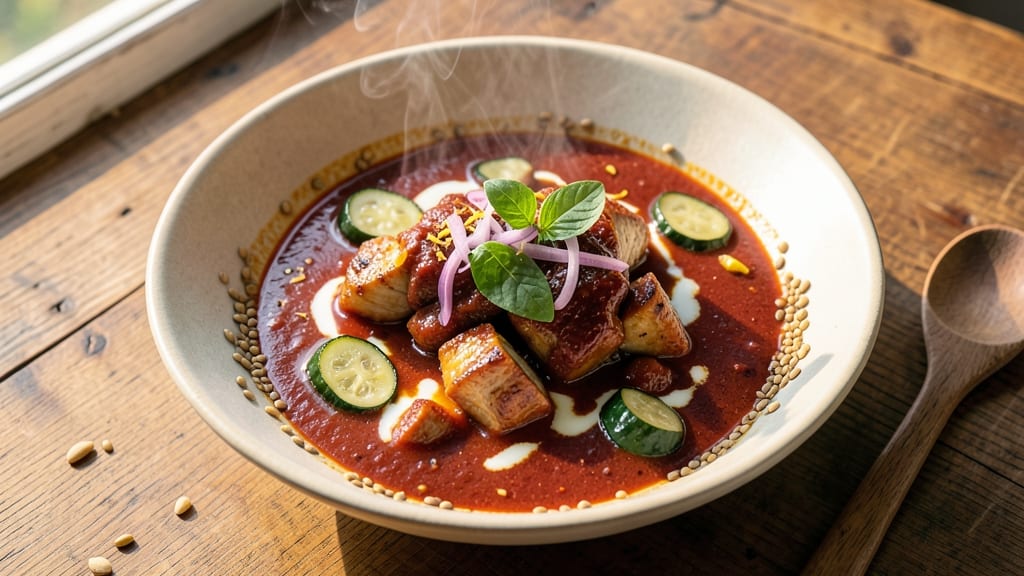
This authentic Thai red curry pork recipe brings the bold flavors of Bangkok to your kitchen with balanced heat and velvety coconut depth. ✨ I've perfected the technique over years of cooking in Southeast Asian kitchens, where the secret lies in proper curry paste toasting and layering aromatics.
The result is a restaurant-quality dish that delivers complex flavors in every spoonful.
The foundation starts with high-quality red curry paste, toasted until fragrant to deepen its flavors before adding coconut milk and tender pork. I use a combination of sweet, sour, and spicy elements—fish sauce, lime, and fresh herbs—to create that signature Thai balance.
This method ensures the curry develops rich, layered flavors rather than just a spicy coconut sauce.
By the end, you'll have perfectly tender pork swimming in a vibrant red curry sauce that's creamy yet bright, with just the right amount of heat. The dish is completed with fresh Thai basil, lime wedges, and cilantro for that restaurant-fresh presentation.
Each bite delivers the perfect harmony of textures and flavors that makes this curry so irresistible.
Serve with steamed jasmine rice to soak up every last drop of that fragrant sauce. The recipe scales beautifully for both weeknight dinners and special gatherings. Let's get cooking—this curry is worth every minute of preparation time.
Ingredients for authentic thai red curry pork
High-quality Thai ingredients that transform into restaurant-style red curry pork with balanced heat.
| Ingredient | Amount | Notes |
|---|---|---|
| Red Curry Paste 🌶️ | 2 tbsp | High-quality, not pre-mixed |
| Pork Shoulder 🥩 | 1 ½ lb | Cut into 1-inch cubes |
| Coconut Milk 🥥 | 1 can | Full-fat, 13.5 oz can |
| Fish Sauce 🐟 | 2 tbsp | Red Boat preferred |
| Lime Juice 🍋 | 2 tbsp | Freshly squeezed |
| Galangal Slices 🌿 | 2 pieces | Fresh, about 1-inch each |
| Thai Basil Leaves 🌿 | ¼ cup | Fresh, stems removed |
| Cilantro Leaves 🌿 | ¼ cup | Fresh, chopped |
| Green Onions 🧅 | 3 whole | White and green parts |
| Garlic Cloves 🧄 | 4 cloves | Minced |
| Shallots 🧅 | 2 whole | Minced |
| Jasmine Rice 🍚 | 1 ½ cups | Uncooked |
| Vegetable Oil 🫒 | 2 tbsp | For toasting |
| Sugar 🍚 | 1 tbsp | White granulated |
| Salt 🧂 | ½ tsp | Adjust to taste |
The Red Boat fish sauce and Thai Kitchen red curry paste are non-negotiable for authentic flavor. Grab both at Asian markets—they carry fresh galangal too, which is key for that signature earthy kick. If you can't find galangal, ginger at half the amount works in a pinch, though it won't be identical. The pork should be well-marbled for tenderness, and Costco or Whole Foods usually have great cuts. Toast the curry paste in oil until fragrant—that step unlocks all the flavors.
No fresh Thai basil? Regular basil plus a pinch of lemongrass gets you close, though the anise notes are different. The coconut milk must be full-fat—light versions won't give that creamy texture. Thai Kitchen brand is reliable, but any canned full-fat works. For the galangal, peel it like ginger and slice thinly. If you're short on time, pre-minced garlic and shallots from the jar save steps, though fresh is always better. The lime juice should be freshly squeezed—bottled juice lacks that bright punch.
Store leftovers in airtight containers for 3-4 days—the flavors actually improve as they meld. Freeze portions for up to 3 months if you're making a big batch. I always double the recipe because it disappears fast. The rice? Cook it separately and keep it warm in a rice cooker—it soaks up the sauce perfectly. For extra authenticity, serve with Thai iced tea or a simple cucumber salad.
Why You'll Love This Recipe
- One-Pot Magic: I swear by this—just toss the pork in a pot with curry paste, coconut milk, and a splash of fish sauce, then let it simmer. No chopping, no fuss, and the flavors meld together like they’ve been cooking all day.
- Umami Bomb: That first spoonful? Chef’s kiss. The pork shoulder gets tender while soaking up the deep, smoky-sweet curry paste, and the fish sauce cuts through the richness with just the right salty punch. (Yes, even my picky husband asks for seconds.)
- Leftovers That Don’t Suck: Between us, most curries turn into sad, watery meals after day two. Not this one. The coconut milk stays creamy, the pork stays juicy, and I’ve reheated this for breakfast burritos—yes, really—without judgment.
- Budget Stretch: Pork shoulder is cheap, and a jar of red curry paste lasts forever. I make this for date nights, lazy Sundays, and even when my college-aged kid calls begging for dinner. (She’s not wrong—it’s her favorite.)
Step-by-step instructions for authentic Thai red curry pork
Here's how to build a curry that balances heat, sweetness, and coconut richness—just like street-side Thai kitchens.
🍳 Step 1: Toast Aromatics Until Fragrant
Heat the 2 tablespoons vegetable oil in a heavy-bottomed pot over medium heat. Add the 2 whole minced shallots and 4 cloves minced garlic, cooking for 2 minutes until they're just golden and smell heavenly. Here's the thing—don't let them brown or they'll turn bitter.
Add the 2 pieces galangal slices and cook for another 1 minute, stirring occasionally. Galangal has a peppery kick—this step unlocks its full flavor. You'll know it's ready when the aromatics release their oils and the pot smells like a Thai market. Keep the heat at medium—too high and you'll burn these delicate ingredients.
🔥 Step 2: Bloom the Curry Paste
Immediately add the 2 tablespoons red curry paste to the pot and stir continuously for 2-3 minutes over medium heat. This is where the magic happens—the paste's spices will bloom and deepen in flavor. You'll see the paste darken slightly and release its complex aroma.
Watch carefully—if the paste starts to darken too quickly or smoke, reduce heat to medium-low. The goal is to develop the flavors without burning the spices. After 2-3 minutes, you should see the paste transform from raw to aromatic and slightly oily. This step builds the curry's foundation—don't rush it.
🍳 Step 3: Cook the Pork Until Browned
Add the 1.5 lb pork shoulder cut into 1-inch cubes to the pot. Increase heat to medium-high and brown the pork for 5-6 minutes, stirring occasionally. You want those cubes to develop a deep golden crust—this adds texture and flavor that raw pork can't match.
Don't crowd the pot—work in batches if needed. The pork should release from the bottom easily when ready. Here's a pro tip: press down gently on the pork cubes during the first 2 minutes—this prevents them from curling and ensures even contact with the pan. Once browned, reduce heat to medium and stir in 1 tablespoon sugar and 0.5 teaspoon salt. The sugar helps caramelize the pork juices.
🥘 Step 4: Simmer with Coconut Milk
Pour in the 1 can full-fat coconut milk and bring to a gentle simmer. Partially cover the pot and cook for 20-25 minutes until the pork is tender. You'll notice the coconut milk will separate—this is normal. Stir occasionally to prevent sticking, but don't over-stir or you'll break up the pork.
The curry should reduce slightly, coating the pork in a rich, creamy sauce. If it gets too thick, add 2-3 tablespoons water to loosen it. Here's what to watch for: the pork should be fork-tender with no resistance when pierced. The sauce should cling to the pork rather than pool at the bottom.
🍽️ Step 5: Finish with Herbs and Lime
Remove the pork from the heat and stir in the 2 tablespoons fish sauce, 2 tablespoons lime juice, 0.25 cup chopped cilantro leaves, and 0.25 cup Thai basil leaves. Taste and adjust seasoning—you might need a bit more fish sauce for saltiness or lime for brightness. The herbs should wilt slightly but still be vibrant.
Let the curry rest for 5 minutes before serving. This allows the flavors to meld completely. Garnish with 3 chopped green onions (white and green parts) for freshness. Serve over 1.5 cups cooked jasmine rice—the rice should be fluffy and slightly sticky to soak up that incredible sauce.
Pro Tips For Making Authentic Thai Red Curry Pork
- Bloom the Paste First: Toss your red curry paste into the dry pan for 30 seconds before adding oil—it’ll sizzle and release those deep, toasty aromas. I used to skip this, and my curry always tasted flat until I realized the paste needs that quick burst of heat to wake up the spices.
- Cut Pork Evenly: Slice the pork shoulder into 1-inch chunks, not thin strips—this keeps it tender without falling apart. After burning through three batches of shredded pork, I learned consistency matters more than speed.
- Simmer, Don’t Boil: Once the coconut milk hits the pan, drop the heat to a gentle simmer and let it cook uncovered for 15 minutes. Rushing this turns the sauce grainy, and no one wants curdled coconut in their curry.
- Balance with Lime Last: Stir in lime juice only at the very end—it brightens the flavors but can also make the sauce separate if added too early. Taste first, then adjust: a squeeze of lime makes all the difference, but too much kills the richness.
Flavor customization for this authentic thai red curry pork
Spice Level Control
Thai red curry can range from mild to fiery—adjust the heat to your preference. Start with 1 tbsp red curry paste for mild heat, then increase to 3 tbsp for a spicy kick.
For extra heat, add ½ tsp chili flakes or 1 tsp sambal oelek at the end. I often make a double batch: one mild for kids and one spicy for adults. 🌶️
If your curry is too spicy, balance it with 1 extra tbsp lime juice or ½ cup coconut milk. The acidity and creaminess will mellow the heat while keeping the dish vibrant. Trust me, this trick works like magic.
Sweet and Sour Balance
Thai curry thrives on the interplay of sweet, sour, and spicy flavors. For extra sweetness, add 1 tsp palm sugar (or regular sugar) during the pork browning step. For tanginess, increase lime juice to 3 tbsp or add 1 tbsp tamarind paste for depth.
I love using red Boat fish sauce—its umami richness ties all the flavors together.
For a brighter finish, stir in 1 tsp fresh lemongrass juice (blend a stalk) or ½ cup pineapple juice during the last 5 minutes of cooking. This adds a tropical twist that pairs perfectly with the pork. The key is to taste as you go—adjust gradually!
Protein Swaps
While pork shoulder is traditional, this curry works beautifully with other proteins. Swap for chicken thighs (bone-in for flavor) or shrimp (add in the last 5 minutes to avoid overcooking). For a vegetarian version, use firm tofu or mushrooms—simmer them longer for tenderness.
I once made this with beef short ribs and slow-cooked them for 2 hours for fall-apart texture.
For extra richness, marinate proteins in 1 tbsp soy sauce and 1 tbsp brown sugar for 30 minutes before cooking. This step adds depth that balances the coconut milk.
If using shrimp, reserve 2 tbsp shrimp juice from the poaching liquid to fold into the finished curry for extra umami. 🍤
Vegetable Add-Ins
Thai red curry is versatile—add vegetables that complement the flavors. Bell peppers, bamboo shoots, and Thai eggplant hold up well to long cooking. For freshness, stir in ½ cup bean sprouts or sliced cucumber in the last 5 minutes.
I love adding 1 cup snap peas for a pop of color and crunch.
For heartier versions, include 1 cup chopped zucchini or ½ cup corn kernels. If using leafy greens like spinach or bok choy, add them only at the end—they wilt quickly in the hot sauce.
Pro tip: Blanched green beans add texture without overpowering the dish. The key is to choose veggies that won’t turn mushy during simmering.
Coconut Milk Variations
Full-fat coconut milk is traditional, but you can experiment with lighter versions. Use ½ can full-fat + ½ can light coconut milk for a lighter texture while keeping richness. For a dairy-free twist, substitute with ½ cup coconut cream (thicker than milk) plus ¼ cup water.
I’ve also used cashew cream (blend soaked cashews with water) for a nutty depth.
For extra creaminess without coconut, blend ½ cup Greek yogurt with ¼ cup water and stir it into the finished curry. This adds protein and tanginess. If you prefer a thinner sauce, replace ¼ cup coconut milk with chicken or vegetable broth.
The broth adds complexity while keeping the dish lighter. Always taste as you go—adjust to your preference!
Nutrition facts
Frequently asked questions
Why does authentic Thai red curry need toasting?
Toasting the curry paste in oil for 2-3 minutes deepens its flavors by blooming the spices and releasing their aromatic oils. This step transforms raw paste into a fragrant, complex base that forms the heart of your curry. Skipping it results in a flatter, less vibrant dish. Think of it as waking up the spices—just like grinding whole spices fresh!
Can I use regular ginger instead of galangal?
Yes, but with adjustments! Use half the amount of ginger (about 1-inch piece) since it's milder. Galangal's peppery, citrusy notes are unique, but ginger adds warmth. For extra authenticity, add ½ teaspoon citric acid or a splash of lime juice to mimic galangal's tang. The dish will still taste delicious—just slightly different!
How do I fix a curry that's too thick or too thin?
For a thick curry, stir in 2-3 tablespoons water or coconut milk gradually until creamy. For a thin curry, simmer uncovered for 5-10 minutes to reduce. If it's still too thin, make a quick roux with 1 tbsp flour and 1 tbsp oil, then whisk into the sauce. Always taste as you go—adjust slowly to avoid overcorrecting!
What's the best way to store leftovers?
Store in an airtight container in the fridge for 3-4 days or freeze for 3 months. The flavors actually improve over time as they meld! To reheat, warm gently on the stove with 1-2 tablespoons water to restore creaminess. Avoid microwaving—it can make the sauce greasy. For extra freshness, add a splash of lime juice when reheating.
Can I make this curry ahead for a party?
This curry tastes even better the next day. Make it 1 day ahead and reheat gently. For a crowd, double the recipe—it's easy to scale. Serve with steamed rice and Thai iced tea for an authentic spread. Pro tip: Keep the rice and curry separate until serving to prevent sogginess. Garnish with fresh herbs just before serving for maximum freshness!