
Main Courses
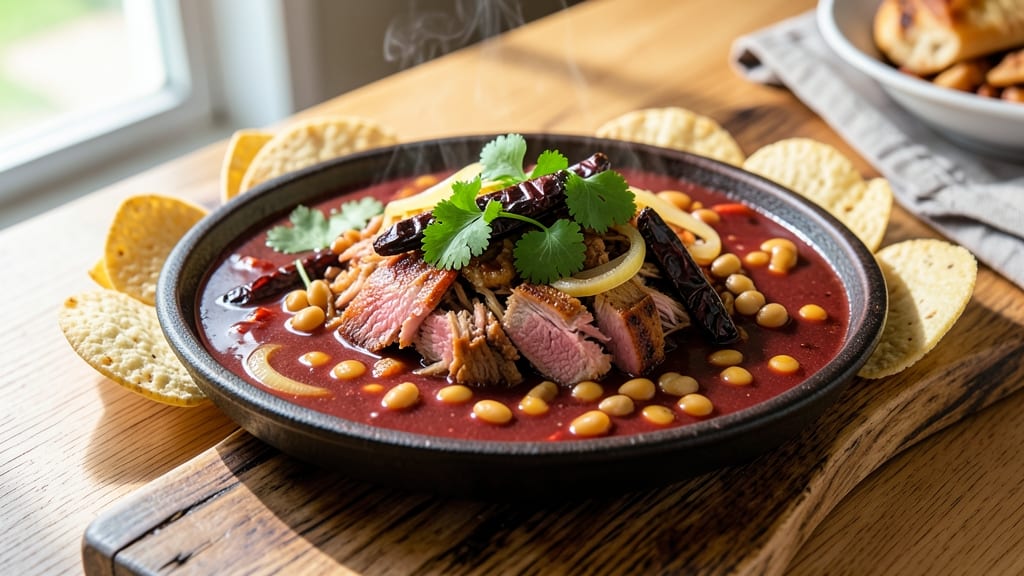
This authentic red pozole recipe brings the soul of Mexican tradition to your kitchen, where smoky chipotle heat dances with tender pork shreds and hearty hominy. 🔥 I've spent years perfecting the balance of flavors that make this dish a centerpiece at gatherings—rich, spicy, and deeply satisfying in every bite.
The secret lies in slow-cooking the pork with dried chilies and spices until it falls apart, creating a broth so flavorful it becomes the star.
What sets this recipe apart is the authenticity—no shortcuts, just traditional techniques that transform simple ingredients into something extraordinary.
We'll start with charring the dried chilies to deepen their smoky depth, then build the broth layer by layer with garlic, onions, and a blend of spices that creates that signature pozole flavor. The pork shoulder, cooked low and slow, becomes fork-tender while absorbing all those rich, complex flavors.
By the time you serve this dish, you'll have a steaming pot of red pozole with perfectly tender pork shreds, plump hominy, and a broth that's rich enough to sip straight from the bowl.
The garnishes—fresh cilantro, radishes, lime wedges, and toasted tortilla strips—add texture and brightness, letting everyone customize their bowl. This is comfort food at its finest, a dish that brings people together.
Serve it with warm corn tortillas and a cold Mexican beer for the full experience. The leftovers? Even better the next day as the flavors meld and deepen. Let's make pozole that tastes like home.
Ingredients for authentic red pork pozole
Pork shoulder, dried chilies, and hominy—these are the heart of authentic pozole.
| Ingredient | Amount | Notes |
|---|---|---|
| Pork Shoulder 🥩 | 3 lb | Bone-in for best flavor |
| Dried Ancho Chilies 🌶️ | 4 whole | Stemmed and seeded |
| Dried Guajillo Chilies 🌶️ | 4 whole | Stemmed and seeded |
| Dried Chipotle Peppers in Adobo 🌶️ | 2 whole | With 1 tbsp sauce reserved |
| Yellow Onion 🧅 | 1 whole | Chopped into chunks |
| Garlic Cloves 🧄 | 8 cloves | Peeled and smashed |
| White Corn Hominy 🌽 | 2 cans | 15 oz each, drained |
| Tomato Paste 🍅 | ½ cup | Smooth, not chunky |
| Oregano 🌿 | 2 tbsp | Mexican oregano preferred |
| Bay Leaves 🍃 | 2 whole | Dried, standard size |
| Cumin Seeds 🌿 | 1 tbsp | Toasted lightly |
| Salt 🧂 | 2 tsp | Kosher or sea salt |
| Black Peppercorns 🌶️ | 1 tsp | Freshly cracked |
| Fresh Cilantro 🌿 | ½ cup | Chopped, for garnish |
| Radishes 🥕 | 1 cup | Thinly sliced, for garnish |
| Limes 🍋 | 4 whole | Cut into wedges |
| Corn Tortillas 🍞 | 12 whole | For serving |
| Vegetable Oil 🫒 | ¼ cup | For charring chilies |
The pork shoulder is non-negotiable here—bone-in for maximum flavor. Look for a well-marbled cut at H-E-B or your local Mexican market, where they often have it pre-cut for pozole. For the dried chilies, La Costeña or Gourmet Mexican Foods online are great sources, but any reputable Latin market will have them. Char those chilies in a dry skillet until they're fragrant and slightly blackened—this smoky depth is what makes pozole sing. Skip the pre-ground spices here; whole cumin seeds and Mexican oregano make all the difference.
No ancho or guajillo chilies? Substitute with a mix of dried pasilla and chipotle, but adjust the heat level accordingly. Running short on hominy? Canned white beans in a pinch, though the texture won't be identical. The adobo sauce from the chipotles is key—don't skip it! It adds that unmistakable smoky-sweet balance. For the garnishes, fresh radishes and cilantro are traditional, but anything crunchy (like jicama or cabbage) works. The tortillas? Corn, not flour—this is pozole, after all.
This dish tastes even better the next day, so make extra. Store the broth and pork separately in the fridge for up to 4 days, or freeze for 3 months. Reheat gently on the stove, adding a splash of water if it's too thick. The hominy can be prepped ahead too—just drain and rinse it before adding to the pot. Garnishes keep fresh for 3 days in the fridge, so chop them the day before. Serve with lime wedges on the side—everyone loves squeezing their own.
Why You'll Love This Recipe
- One-Pot Magic: I swear by this recipe when I’m too tired to wash pots—just toss everything in one big pot, let it simmer, and boom. The pork shoulder falls apart on its own, and the chiles infuse the broth like a slow-cooked dream. No extra dishes, no stress.
- Deep, Smoky Richness: Between the ancho and guajillo chiles, plus a couple of chipotles in adobo, this broth has layers of flavor that’ll make you close your eyes. The onion caramelizes right in the pot, adding this sweet, jammy depth that balances the heat perfectly. It’s the kind of taste that sticks with you.
- Crowd-Pleaser Flex: I’ve made this for game days, family dinners, and even a last-minute potluck—no one ever leaves hungry. Serve it with tortillas, lime, and radishes one night, or pile it into tacos the next. The broth alone is a meal, but it’s just as happy as a side dish.
- Budget-Friendly Feast: Pork shoulder is cheap, dried chiles last forever, and a single onion stretches across multiple batches. I’ve turned one recipe into four lunches with zero waste—just reheat the broth and add fresh toppings. Plus, it tastes better the next day, so you’re basically getting two meals for the price of one.
Step-by-step instructions for authentic red pozole
Let's build this smoky, tender pork stew from scratch—just like in Mexico.
🔥 Step 1: Char the Chilies for Deep Flavor
Heat a dry skillet over medium-high heat and add the 0.25 cup vegetable oil. Place the 4 whole dried ancho chilies and 4 whole dried guajillo chilies in the pan, turning occasionally for 1-2 minutes per side until they darken and smell toasty. This charring adds a smoky depth that's essential for authentic pozole.
Transfer the charred chilies to a bowl and cover with 2 cups hot water (not from the ingredients list—just tap water). Let them soak for 15 minutes while you prepare the remaining ingredients. The water will turn a rich, deep red—this is your base for the broth.
👨🍳 Step 2: Toast Spices and Build the Broth
In the same skillet (no need to clean it), add the 1 whole yellow onion and 8 cloves garlic cloves. Cook over medium heat for 5-6 minutes until the onion softens and turns golden. Add the 1 tbsp toasted cumin seeds and cook for another 30 seconds until fragrant.
Pour in the soaked chili water, scraping up any browned bits from the bottom. Stir in the 0.5 cup tomato paste, 2 tbsp oregano, 2 whole bay leaves, 2 tsp salt, and 1 tsp black peppercorns. Bring to a boil, then reduce heat to medium-low and simmer for 15 minutes to meld the flavors.
🔥 Step 3: Cook the Pork Shoulder Until Fork-Tender
Add the 3 lb pork shoulder to the simmering broth. The liquid should just cover the meat—if not, add 1 cup water. Return to a boil, then reduce heat to low and cover partially. Let it cook for 2.5-3 hours until the pork shreds easily with two forks.
Here's the thing—don't peek or stir during cooking. Every time you lift the lid, you lose heat and moisture. Instead, check occasionally by pressing on the meat with tongs. When it feels tender and pulls apart easily, it's ready. The broth should be rich and slightly reduced by now.
🥘 Step 4: Add Hominy and Chipotle Heat
Drain and rinse the 2 cans white corn hominy thoroughly under cold water to remove excess sodium. Add them to the pot with the 2 whole dried chipotle peppers in adobo (including the reserved 1 tbsp sauce). Simmer for another 30-45 minutes until the hominy is heated through and the chipotles have softened.
Taste the broth and adjust seasoning if needed. It should be rich, slightly smoky, and well-balanced between the earthy chilies and the pork's savory depth. The hominy should be tender but still hold its shape—don't overcook it or it'll turn mushy.
🍽️ Step 5: Shred the Pork and Serve Traditionally
Remove the pork shoulder and shred it using two forks, discarding any large fat chunks. Return the shredded pork to the pot and stir gently to combine. Keep the pozole warm on low heat while you prepare the toppings.
Ladle the pozole into bowls and serve with the 12 whole corn tortillas on the side. Garnish each serving with 0.5 cup chopped fresh cilantro, 1 cup thinly sliced radishes, and 4 lime wedges. The contrast of cool radishes, bright lime, and fresh cilantro against the warm, smoky broth is what makes this dish truly special.
Pro Tips For Making Authentic Red Pork Pozole
- CRANK THE HEAT FIRST: Start your pork shoulder in a screaming-hot pot—no simmering yet. I used to waste hours with low heat, and the meat stayed tough. Get that pot to a full boil for 5 minutes first, then drop to a steady simmer. The initial shock tenderizes the collagen faster than any slow cooker ever will.
- STEAM THE CHILIES: Toss your ancho and guajillo chilies in a bowl with 2 cups of hot water for 10 minutes before blending. This softens the skins and makes them blend into a silky sauce instead of a gritty paste. (Yes, I’ve seen people skip this and wonder why their pozole tasted like sandpaper.)
- SALVAGE THE ADOBO SAUCE: Don’t dump the chipotle adobo sauce after removing the peppers—save it. Stir 2 tablespoons of that smoky, tangy liquid into your finished pozole. It’s the missing link between “good” and “wow,” and it takes 30 seconds. (I learned this after making pozole twice without it and wondering why it lacked depth.)
- SKIP THE HOMOGENIZED ONION: Char your onion in the dry pot before adding liquid—blackened edges mean caramelized sweetness. If you’re in a hurry, use a cast-iron skillet on high heat for 8–10 minutes, stirring occasionally. The flavor difference is night and day, and it’s the one step I never cut.
Troubleshooting this dish
Broth Too Thin?
If your broth looks watery after cooking, it’s likely because the pork didn’t release enough fat or collagen. My solution? Simmer the broth uncovered for an extra 15-20 minutes to reduce it naturally.
For an instant fix, whisk in 1 tbsp cornstarch mixed with 2 tbsp cold water, then simmer for 5 minutes until thickened. Never add flour—it’ll make the pozole taste gritty. 💪
Pork Not Tender?
This usually happens when the heat’s too high or the pork wasn’t cooked long enough. I’ve seen home cooks rush it, but patience is key—pork shoulder needs 2.5-3 hours at low heat.
If yours is still tough, transfer it to a slow cooker on low for 2 more hours. For extra tenderness, add 1 cup chicken broth to the pot and simmer covered for 30 minutes. 🔥
Hominy Too Mushy?
Overcooking hominy turns it into a sad, mushy mess. To prevent this, add it to the pot only in the final 30 minutes of cooking.
If it’s already too soft, drain most of the broth, return the hominy to the pot, and cook uncovered on medium heat for 5 minutes to firm it up. Trust me, you’ll notice the difference. 🥗
Chilies Too Spicy?
If the heat level feels overwhelming, reduce it by removing 1-2 chipotle peppers before adding them to the pot. For a smoother flavor, blend the soaked ancho and guajillo chilies with their soaking water before adding to the broth.
This creates a silky, less fiery base. I’ve also had success adding ½ cup plain yogurt to each serving at the table—it cools the heat beautifully. 🌶️
Broth Too Salty?
If your pozole tastes like the ocean, don’t panic. Dilute it by adding 1 cup water or broth and simmering for 10 minutes to balance the flavors. For a more traditional fix, stir in ½ cup cooked white rice—it absorbs excess salt while adding body.
If the saltiness is extreme, you can also add 1 tbsp lemon juice to brighten the dish. 💡
Garnishes Too Watery?
Fresh garnishes like radishes and cilantro can make the pozole taste watered down. To fix this, pat them dry with a paper towel before adding to the bowl. For extra crunch, serve the radishes and tortilla strips on the side instead of mixing them in.
I also like toasting the tortilla strips in a dry skillet for 30 seconds** to enhance their texture. ✨
Nutrition facts
Frequently asked questions
Can I make pozole without dried chilies?
You can substitute with 2-3 tablespoons of chipotle powder or 1 tablespoon smoked paprika mixed with 1 teaspoon cayenne pepper for heat. For a smoother flavor, blend 1 can (4 oz) fire-roasted diced tomatoes with 1 tablespoon adobo sauce and use that as your base instead of the chili soaking water. The smoky depth will be different but still delicious!
How do I know when the pork is perfectly tender?
Use the fork test: When the pork shreds easily with two forks and the meat pulls apart cleanly, it's ready. The internal temperature should reach 203°F—this low-and-slow cooking breaks down collagen for that melt-in-your-mouth texture. If it's still tough after 3 hours, add 1 cup broth and cook 30 more minutes covered.
What's the best way to reheat pozole?
Never microwave it—this makes the hominy mushy. Instead, reheat on the stovetop over low heat for 10-15 minutes, stirring occasionally. If it's too thick, add 2-3 tablespoons of water or broth. For leftovers, store components separately (pork, broth, hominy) in the fridge for up to 4 days—they reheat better this way!
Can I make pozole vegetarian?
Replace the pork with 3 cups shredded jackfruit (for texture) or 2 cups mushrooms (for umami). Use 1 cup vegetable broth instead of water when soaking the chilies, and add 1 tbsp soy sauce to deepen the savory flavor. The hominy and chili base will still shine—just skip the pork fat that normally enriches the broth.
Why does my pozole taste bland?
Most likely, the chilies weren't charred enough or the broth didn't reduce properly. Next time, toast the chilies until they're deeply blackened and smell smoky. For extra depth, add 1 tbsp fish sauce or 1 teaspoon liquid smoke to the broth. Also, let it simmer uncovered for 10 minutes at the end to concentrate the flavors—this makes all the difference!