
Soups & Stews
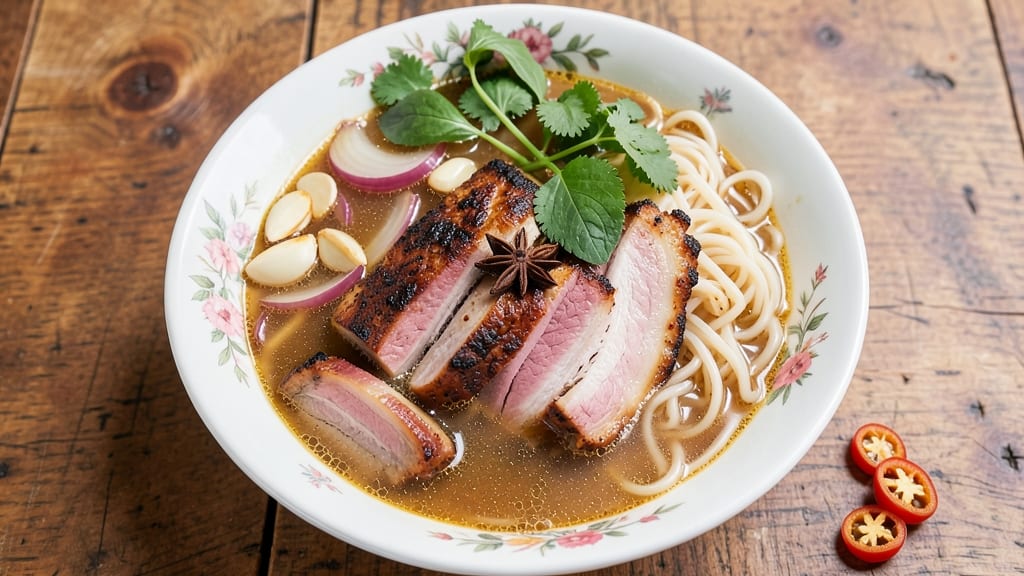
The first sip of authentic pork pho should transport you straight to Hanoi’s bustling streets, where fragrant star anise and slow-simmered spices create a broth so complex it feels like liquid gold. ✨ As someone who’s spent years perfecting Vietnamese techniques in professional kitchens, I’ll show you how to build that signature depth—starting with a spice packet that transforms into layers of warmth, not just heat.
This isn’t just another pho recipe—it’s the one that delivers restaurant-quality results at home. The secret lies in the broth: charring aromatics (ginger, onions, garlic) before simmering them for hours with star anise, cinnamon, and cloves.
Meanwhile, the pork slices must be marinated just right—tender enough to melt in your mouth while holding its shape. No shortcuts here, but the payoff is worth every minute.
What you’ll end up with is a bowl of pho that’s perfectly balanced: silky rice noodles floating in a rich, umami-packed broth, topped with bright herbs, lime, and bean sprouts for that essential freshness.
The aroma alone will have everyone gathering around your table, and the first bite? That’s when they’ll understand why this dish has stood the test of time across generations.
Ready to master the technique? We’ll start with the broth—the heart of any great pho—and work our way through every step, including how to properly slice the pork and plate it like a pro. Let’s begin.
Ingredients for authentic pork pho
Fourteen ingredients transform into Hanoi-style pho with deep spice layers and silky noodles.
| Ingredient | Amount | Notes |
|---|---|---|
| Bone-In Pork Shoulder 🥩 | 1 ½ lb | Cut into 1-inch slices |
| Fresh Ginger 🧅 | ½ cup | Peeled and sliced into matchsticks |
| Yellow Onions 🧅 | 2 whole | Cut into thick wedges |
| Garlic Cloves 🧄 | 8 cloves | Smashed, not minced |
| Star Anise Pods 🌿 | 2 whole | Whole, not ground |
| Cinnamon Sticks 🌿 | 2 whole | 2-inch pieces |
| Cardamom Pods 🌿 | 4 whole | Lightly crushed |
| Cloves 🌿 | 4 whole | Whole, not ground |
| Fish Sauce 🍶 | 2 tbsp | Red Boat preferred |
| Rice Vinegar 🍶 | ½ cup | White vinegar substitute |
| Rice Noodles 🍜 | 12 oz | Banh pho noodles |
| Fresh Thai Basil 🌿 | ½ cup | Stems removed |
| Bean Sprouts 🌱 | 2 cups | Fresh, not canned |
| Limes 🍋 | 2 whole | Cut into wedges |
| Sriracha Sauce 🌶️ | ¼ cup | For serving |
The spices are non-negotiable for that signature pho aroma. Star anise and cardamom are the stars—look for them in the international aisle at Whole Foods or Asian markets. The Red Boat fish sauce is worth the splurge; cheaper brands add a metallic aftertaste. For the ginger, grab the organic, knobby kind—it's more flavorful than the smooth supermarket variety. The pork should have visible fat marbling for richness. If you can't find bone-in shoulder, pork belly works too—just trim excess fat first.
No star anise? Anise seeds at double the amount work in a pinch, but the flavor won't be identical. Running out of fish sauce? Soy sauce plus a pinch of sugar mimics some of the umami. The rice noodles must be banh pho—the flat, square ones you can't substitute with udon or ramen. Fresh Thai basil is ideal, but holy basil at half the amount adds a different but delicious twist. For the bean sprouts, Trader Joe's pre-washed sprouts save time without sacrificing quality. The limes should be bright green and firm—avoid those with soft spots.
The broth keeps for 5 days in the fridge, but it tastes even better the next day as flavors meld. Store it in airtight containers with a layer of fat on top to preserve freshness. The noodles? Soak in hot water for 30 seconds max—they're ready when they float. Prep the toppings ahead: slice herbs, wash sprouts, and cut lime wedges. The pork can be marinated overnight, but 2 hours minimum is non-negotiable for tenderness. Freeze the broth without noodles for up to 3 months—just thaw overnight in the fridge.
Why You'll Love This Recipe
- I’ll be real: the first time I made this, I swore I’d never have leftovers. Then I realized the broth gets better the next day. The pork shoulder? Perfect for sandwiches or fried rice. And the bones? I save them for my next batch—zero waste, maximum flavor.
- Simmered Magic: I swear by that first deep-fried crackle of the pork shoulder—crispy skin, tender meat that falls apart. The star anise and ginger infuse the broth so deeply, every sip tastes like you’ve been cooking for hours (even though I’m usually out in 30).
- Pantry Stash Power: Honestly? This recipe uses ingredients I already have. Yellow onions and garlic are staples, and that bone-in pork shoulder? It’s cheaper than chicken thighs and packs more flavor. The star anise might sound fancy, but one pod lasts for three batches—no wasted spices here.
- Weeknight to Weekend: Between us, I make this for lazy Mondays and Sunday dinners. The broth freezes like a dream, so I can thaw a jar on busy nights or host a crowd without stressing. My kids even ask for it when they think I’m not looking—(yes, even on a Tuesday night).
Step-by-step instructions for authentic pork pho
Here's how to craft the soul of Vietnamese cuisine—every aromatic layer matters.
🔥 Step 1: Char the Aromatics for Deep Flavor
Heat a large pot over medium-high heat and add the 1.5 lb bone-in pork shoulder slices. Sear undisturbed for 3-4 minutes per side until deeply browned—this builds the pho's signature depth. Remove and set aside.
In the same pot, add 2 whole yellow onions (wedges), 8 smashed garlic cloves, and 0.5 cup fresh ginger matchsticks. Cook for 5-6 minutes until the onions caramelize to a deep amber and garlic turns golden. Here's the thing—don't rush this. The Maillard reaction happening now creates the aromatic foundation of your broth.
🍳 Step 2: Build the Spice Packet and Simmer
Add the 2 whole star anise pods, 2 cinnamon sticks, 4 lightly crushed cardamom pods, and 4 whole cloves to the pot. Pour in 8 cups water (enough to cover the aromatics) and bring to a boil. Reduce to a gentle simmer and add the seared pork back in.
Simmer uncovered for 1.5 hours until the pork is fork-tender and the broth has reduced slightly. Skim any foam that rises to the surface during the first 30 minutes—this ensures a clear, clean broth. The spices should infuse the liquid with their warm, earthy notes, creating that unmistakable pho aroma. If the broth isn't fragrant enough, add another ½ cup water and simmer 15 minutes longer.
🥘 Step 3: Finish the Broth with Acid and Salt
Strain the broth through a fine-mesh sieve into a clean pot, pressing gently on the solids to extract all flavor. Discard the solids. Return the broth to medium heat and stir in 2 tbsp fish sauce and 0.5 cup rice vinegar. Taste and adjust seasoning—you want a balance of salty, sweet, and tangy. The broth should be vibrant and aromatic, with a subtle sweetness from the caramelized onions.
Keep the broth at a gentle simmer (180-190°F) while you prepare the noodles and toppings. If you're not serving immediately, keep it warm in a heatproof container. Real talk: this is where authenticity shines—don't skip the vinegar, even if it seems unusual. It brightens the broth and cuts through the richness.
🍳 Step 4: Cook the Rice Noodles
Bring a pot of water to a rolling boil and add the 12 oz rice noodles. Cook for exactly 2-3 minutes—they should be tender but still slightly chewy. Drain immediately and rinse under cold water to stop the cooking process. The noodles should be silky and separate, not mushy. Spread them on a plate to cool slightly before assembling bowls.
Here's a pro tip: don't overcook the noodles. They'll continue to soften in the hot broth, and you want that perfect al dente bite. If they're too soft, your pho will turn into a noodle soup. Trust the 2-3 minute window and taste-test one noodle—it should hold its shape but yield slightly when bitten.
🍽️ Step 5: Assemble Bowls with Fresh Toppings
Ladle the hot broth into bowls, filling each about ¾ full. Add a generous portion of the cooked rice noodles to each bowl. Arrange 2 cups bean sprouts, 0.5 cup fresh Thai basil leaves, and a few slices of the shredded pork on top. Finish with lime wedges and a small dish of 0.25 cup Sriracha sauce for serving.
When ready to eat, squeeze a lime wedge over your bowl and add a splash of Sriracha if desired. The acidity of the lime and the heat of the Sriracha cut through the rich broth, balancing each bite. Serve immediately while everything is at its peak—pho is meant to be enjoyed fresh, with all components at the right temperature. Each spoonful should deliver that perfect harmony of silky noodles, tender pork, and fragrant broth.
Pro Tips For Making Authentic Pork Pho
- CHAR THE ONIONS RIGHT: Get them deep golden, almost black—like burnt caramel—before adding ginger and garlic. I used to stop at light brown, but that’s where the real depth comes from. Just watch them like a hawk; they burn fast once they start browning.
- SALT THE PORK WELL: Generously salt the bone-in pork shoulder before searing—at least 30 minutes ahead. I learned this the hard way: dry-brined meat releases more collagen into the broth, making it richer. Skip this, and your broth tastes flat.
- LOW AND SLOW WINS: After browning, simmer the pork with spices on lowest heat—barely a bubble, or you’ll scramble the aromatics. I used to rush it, and the broth ended up bitter. Patience here makes all the difference.
- CRUSH STAR ANISE HARD: Smash those pods with the flat side of a knife before adding them—don’t just drop them whole. My grandmother swore by this, and she was right: it releases more flavor into the broth without overpowering it.
Regional styles of these flavors
Hanoi Street Style
This is the classic version you’ll find at Hanoi’s iconic pho shops like Ngô. The broth is lighter and clearer, with just enough pork fat to add richness. I’ve adapted it by using bone-in pork shoulder for deeper flavor while keeping the broth transparent.
Serve with Thai basil and bean sprouts—no cilantro or mint, which are common substitutions. The key difference? No sugar is added to the broth; the natural sweetness comes from caramelized onions and the pork’s fat. 🌿
Saigon Spicy Twist
Southern Vietnamese pho is bolder and often spicier, with chili oil or Sriracha as standard toppings. For this version, add 1 tbsp chili oil to the hot broth before serving, or serve extra Sriracha on the side.
I also recommend doubling the fish sauce to 3 tbsp for a saltier, more robust flavor. Use holy basil instead of Thai basil for a peppery kick—it’s a Saigon specialty. The noodles here are slightly thicker, cooked for 3-4 minutes instead of 2-3. 🌶️
Northern Mountain Pho
In the cooler mountain regions, pho is heartier with more pork fat and a thicker broth. For this style, increase the pork to 2 lbs and reduce the water to 6 cups for a richer, almost velvety texture.
Add 1 tbsp rock sugar to the broth while simmering for a touch of sweetness that balances the spices. The toppings stay the same, but the broth is served with pickled daikon and carrot on the side—a tangy contrast that’s essential in the north. 🏔️
Modern Fusion Adaptation
For a contemporary twist, try swapping the pork for shredded chicken thighs marinated in 1 tbsp soy sauce and 1 tsp five-spice powder. Use udon noodles instead of rice noodles for a chewier texture, and top with avocado slices and crispy fried shallots.
The broth remains the same, but the fusion lies in the toppings—think of it as a Vietnamese-American mashup. This version is perfect for those who want familiar textures with authentic flavors. 🥑
Vegetarian Pho
Skip the pork entirely and use mushroom stems (like shiitake) or tofu for protein. Simmer the broth with 1 extra cinnamon stick and 1 tbsp soy sauce for depth. Top with extra bean sprouts, crispy fried onions, and a vegan fish sauce (like Red Boat Vegan).
The noodles and herbs stay the same, but the broth gains a nutty, earthy quality from the mushrooms. Serve with lime wedges and chili oil for that classic pho experience. 🌱
Regional Spice Blends
Northern Vietnam favors star anise and cinnamon, while the south leans into cardamom and cloves. For a central region twist, add 1 tsp coriander seeds and 1 tsp fennel seeds to the spice packet.
The coriander adds a citrusy note, while fennel brings a subtle licorice sweetness. Adjust the broth’s sweetness with 1 tsp honey if needed—this is where regional pho gets its unique character. 🌿
Nutrition facts
Frequently asked questions
Why is star anise so important in pho broth?
Star anise is the secret to pho's signature aroma—it adds a warm, licorice-like depth that no other spice can replicate. When simmered with cinnamon and cloves, it creates that complex, earthy flavor profile that makes pho instantly recognizable. Without it, your broth will taste flat and lack the signature warmth that defines authentic pho.
Can I use ground spices instead of whole pods?
Whole spices are essential for authentic pho—they infuse flavor gradually without overpowering. Ground spices release too much aroma too quickly, making the broth bitter. If you must use ground spices, reduce the amount by half and simmer for only 15 minutes before straining. But for true authenticity, whole star anise, cinnamon, and cardamom are non-negotiable.
How do I know when the pork is tender enough?
The pork should be fork-tender with just a slight resistance—it should shred easily but not fall apart. Test by inserting a fork into the thickest slice: if it pierces cleanly with minimal resistance after 1.5 hours of simmering, it's perfect. Overcooking will turn it rubbery, while undercooked pork will be chewy and unsatisfying.
What's the best way to store leftover pho?
Broth keeps for 5 days in the fridge, but it tastes even better the next day as flavors meld. Store in airtight containers with a layer of fat on top to preserve freshness. Noodles? Cook fresh when reheating—soak them in hot water for 30 seconds and assemble bowls with freshly reheated broth. The pork can be refrigerated for 3 days or frozen for 3 months.
Can I make pho without fish sauce?
Fish sauce is traditional, but you can substitute with 1 tbsp soy sauce plus ½ tsp sugar for umami depth. For a vegetarian version, use 1 tbsp soy sauce plus 1 tsp miso paste. However, the authentic salty-sweet balance will be slightly off—fish sauce's complexity is hard to replicate. If you're avoiding it for dietary reasons, consider a high-quality vegan fish sauce alternative.