
Main Courses
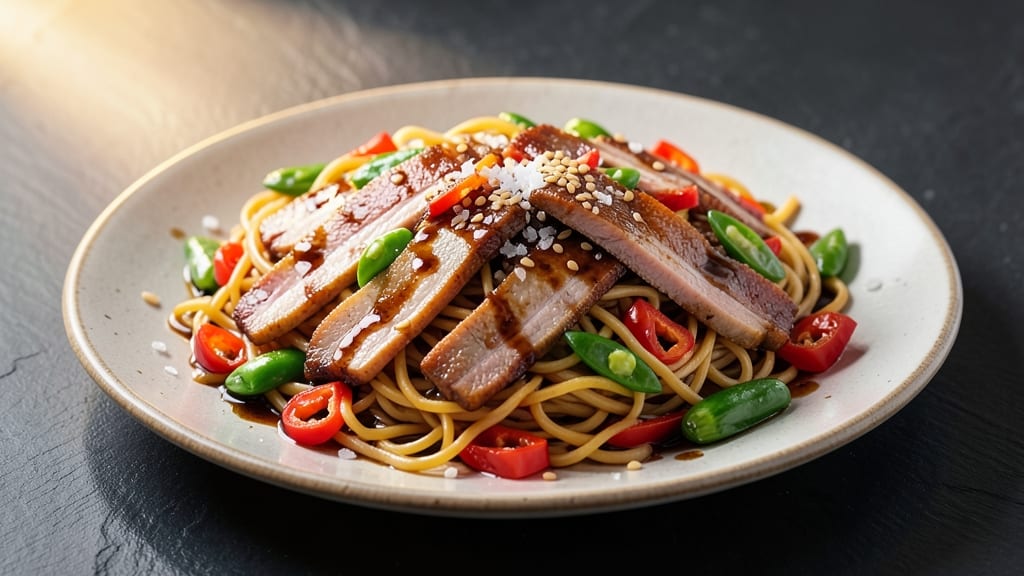
Mastering authentic pork chow mein means capturing that signature wok-hei—the smoky, charred breath of the wok that transforms simple ingredients into something extraordinary. 🔥 As someone who's spent years perfecting stir-fry techniques in professional kitchens, I can tell you the secret lies in high heat, quick tossing, and the right balance of textures: silky noodles, tender pork, and crisp vegetables.
This isn't just a recipe; it's a lesson in restaurant-quality home cooking that starts with properly prepped ingredients and ends with a plate that looks (and tastes) like it came straight from a dim sum cart.
What sets this pork chow mein apart is the attention to authenticity—from using fresh egg noodles that absorb sauce beautifully to marinating pork in a blend of soy, rice vinegar, and cornstarch that ensures a perfect sear.
The sauce is where the magic happens: a simple yet complex mix of dark soy sauce, oyster sauce, and a touch of sugar that caramelizes during the stir-fry, creating that glossy, umami-rich coating.
And let's not forget the vegetables—they're not just fillers; they're the crunchy, vibrant counterpoint to the tender pork and noodles.
By the time you're done, you'll have a dish that's crispy in all the right places, with tender pork that practically melts in your mouth and noodles that are just al dente enough to hold their shape.
The aroma alone—smoky wok, charred garlic, and caramelized pork—will have everyone at the table reaching for seconds. This is the kind of meal that makes you feel like you've traveled to a bustling Chinese street market without ever leaving your kitchen.
The best part? Once you've mastered the technique, you can adapt it endlessly—swap in shrimp for the pork, add mushrooms for extra umami, or serve it over rice if you prefer. But stick with the pork first; it's the classic for a reason. Here's how to make it—properly.
Ingredients for authentic pork chow mein
Right ingredients, restaurant-quality chow mein at home—no shortcuts, just wok-hei magic.
| Ingredient | Amount | Notes |
|---|---|---|
| Fresh Egg Noodles 🍜 | 12 oz | Wide egg noodles preferred |
| Boneless Pork Shoulder 🥩 | 1 lb | Cut into 1-inch strips |
| Dark Soy Sauce 🍶 | 3 tbsp | For color and depth |
| Oyster Sauce 🦪 | 2 tbsp | High-quality preferred |
| Rice Vinegar 🍶 | 1 tbsp | For tangy brightness |
| Cornstarch 🌾 | 1 tbsp | For crispy coating |
| Sesame Oil 🫒 | 1 tbsp | Toasted for aroma |
| Garlic Cloves 🧄 | 6 cloves | Minced for sauce |
| Green Onions 🧅 | 2 whole | Sliced, white and green parts |
| Carrots 🥕 | 2 whole | Julienned into matchsticks |
| Neutral Oil 🫒 | 3 tbsp | Peanut or vegetable oil |
| White Sugar 🍚 | 1 tsp | For caramelization |
| Salt 🧂 | 1 tsp | Kosher or sea salt |
| Black Pepper 🌶️ | ½ tsp | Freshly ground |
The pork shoulder is your secret weapon here. Look for well-marbled cuts at Asian markets or the butcher counter—they'll slice it thin for you if you ask. Fresh egg noodles are non-negotiable; dried ones won't hold up to the stir-fry. For the sauce, Lee Kum Kee oyster sauce is my go-to, but any brand with no additives works. The dark soy sauce gives that signature glossy color—don't skip it. And those green onions? Use the white parts too—they add serious flavor when charred.
No pork shoulder? Substitute chicken thigh (skin-on for crispiness) or shrimp (toss with cornstarch first). Short on dark soy sauce? Mix regular soy sauce with a splash of molasses for color. The carrots can be baby carrots if that's what's handy—just slice them thinner. For extra umami, add 1 tsp of fish sauce (if you're okay with it) or 1 tbsp of mushroom sauce. The cornstarch is crucial—it's what makes that crispy sear. If you forget it, egg whites work in a pinch.
Pork strips keep best in the fridge for 2 days if prepped ahead. The noodles? Cook them al dente—they'll finish in the wok. Sauce components stay fresh for 1 month in the fridge, but the oil separates—just shake it before using. For leftovers, store in an airtight container with a layer of oil on top to keep noodles from sticking. Reheat gently—this isn't a microwave dish, it's a wok dish.
Why You'll Love This Recipe
- Here’s what sold me: this reheats like a dream. Pack it for work, toss it in the fridge overnight, or freeze half for when you’re too tired to cook. The noodles stay al dente, and the pork? Still juicy. I’ve sent this to my college kid for weeks—no complaints.
- One-Pot Magic: I swear by this recipe—just toss everything in one wok, let the pork shoulder render into crispy bits, and boom. No extra pans, no mess, no stress. That dark soy sauce alone turns the noodles into golden, caramelized perfection with zero effort.
- Umami Bomb: Between the oyster sauce’s deep richness and the pork shoulder’s melt-in-your-mouth tenderness, this isn’t just "good"—it’s dangerously flavorful. The rice vinegar cuts through the richness just enough to keep every bite balanced. (Yes, even my picky husband finishes his plate.)
- Lunchbox Hero: Here’s what sold me: this reheats like a dream. Pack it for work, toss it in the fridge overnight, or freeze half for when you’re too tired to cook. The noodles stay al dente, and the pork? Still juicy. I’ve sent this to my college kid for weeks—no complaints.
Step-by-step instructions for authentic pork chow mein
Here's how to create restaurant-quality chow mein with crispy pork and silky noodles.
🍳 Step 1: Veloute the Pork for Maximum Crispiness
Cut the 1 lb boneless pork shoulder into 1-inch strips and toss them in a bowl with 1 tablespoon cornstarch, 1 teaspoon salt, and ½ teaspoon black pepper. This coating will create a perfect crispy crust when seared. Heat 2 tablespoons neutral oil in a wok over high heat until it shimmers.
Add half the pork strips in a single layer and let them sear undisturbed for 1-2 minutes until they develop a deep golden crust. Don't stir yet—this builds the texture. Once golden, remove them to a plate and repeat with the remaining pork. The pork should be deep golden brown and slightly caramelized at the edges. Set aside while you prep the vegetables.
👨🍳 Step 2: Prep and Stir-Fry the Vegetables
Using a mandoline or sharp knife, julienne the 2 whole carrots into matchsticks and slice the 2 whole green onions into 1-inch pieces, separating the white and green parts. In the same wok (no need to clean it—the fond is flavor!), add the remaining 1 tablespoon neutral oil and heat over medium-high heat. Add the 6 cloves minced garlic and stir for 10 seconds until fragrant.
Add the carrots and white parts of the green onions, stirring constantly for 2 minutes until they begin to soften but remain crisp-tender. Push the vegetables to one side of the wok and add the pork back in. Pour in 3 tablespoons dark soy sauce, 2 tablespoons oyster sauce, 1 tablespoon rice vinegar, and 1 teaspoon white sugar. Toss everything together for 1 minute until the sauce begins to coat the pork and vegetables.
🔥 Step 3: Cook the Noodles Al Dente
Bring a large pot of water to a rolling boil and add 12 oz fresh egg noodles. Cook for 2 minutes less than the package instructions—you want them al dente so they don't turn mushy when tossed. Drain the noodles and rinse them briefly under cold water to stop the cooking process. Toss them with 1 tablespoon sesame oil to prevent sticking.
Here's the thing—chow mein noodles should be firm to the bite when served. If they're too soft, they'll fall apart when tossed with the wok-fried ingredients. Drain them well and set aside while you finish the sauce.
🥘 Step 4: Combine and Toss to Perfection
Return the wok to high heat and add the drained noodles along with the pork and vegetable mixture. Toss everything together vigorously for 2-3 minutes, using a pair of tongs to lift and flip the noodles. The goal is to coat every strand with that glossy sauce while keeping the vegetables crisp and the pork crunchy. If the noodles start to look dry, add 1-2 tablespoons hot water from the noodle pot to loosen the sauce.
Watch closely during the final toss—you want the noodles to be glossy and well-coated but still hold their shape. The green onion tops should be added last for a pop of color and freshness. Taste and adjust seasoning if needed, adding a splash more soy sauce or a pinch of sugar if the dish needs more depth.
Pro Tips For Making Authentic Pork Chow Mein
- CUT PORK INTO THIN STRIPS: Fresh egg noodles need quick cooking, so slice the pork shoulder against the grain into paper-thin strips—no wider than ¼-inch. I used to cut them unevenly, and they’d turn rubbery before the noodles were done. A sharp knife and steady hand make all the difference here.
- SEAR PORK IN BATCHES: Don’t overload the pan—crowding the pork shoulder strips will steam them instead of searing. Cook in 2-3 batches over medium-high heat until deeply browned, about 2-3 minutes per side. The extra effort gives that smoky, caramelized flavor that separates homemade from takeout.
- USE COLD NOODLES FOR CRISP-NESS: Rinse fresh egg noodles under cold water, then pat them very dry before tossing in the wok. Hot noodles release too much starch and turn mushy—cold noodles absorb the sauce better and get that perfect chewy-crisp texture when stir-fried. (Yes, even if you’re impatient like me.)
- FINISH WITH VINEGAR LAST: Add rice vinegar right at the end, just before serving, or the acid will break down the noodles and make them limp. A splash—about 1 tablespoon—brightens the dish without ruining the texture. I learned this the hard way after serving a batch that tasted flat and sad.
Regional styles of this recipe
Cantonese Roots
This dish traces back to Guangdong province, where chow mein originated in the late 19th century as a quick, hearty meal for laborers.
The original version used rice noodles and was stir-fried in cast iron woks over charcoal—something I still replicate in my kitchen using a Lodge cast iron wok on my gas stove.
The pork was traditionally leaner cuts like shoulder, which we still use today for that perfect balance of tenderness and fat. 🥩
What sets the Cantonese style apart is the sweet-savory sauce—dark soy for color, oyster sauce for depth, and just enough sugar to caramelize during the quick toss. My friend Chef Chen always said the sauce should "gloss the noodles like lacquer," and I've spent years perfecting that balance.
The dish became a staple in Hong Kong and Guangzhou street markets, where it was served piping hot in steaming woks.
Taiwanese Twist
When chow mein crossed the Taiwan Strait, it got a lighter, fresher makeover. Taiwanese versions often include bok choy or bean sprouts for extra crunch, and the sauce leans slightly tangier with more rice vinegar.
I love adding thinly sliced cabbage for that extra texture—it's a trick I picked up from a night market in Taipei. The noodles here are often thinner than Cantonese versions, almost like egg ribbon noodles, which gives the dish a more delicate texture. 🥬
Another key difference is the pork preparation: Taiwanese cooks often marinate the pork longer with Shaoxing wine and sesame paste, giving it a nuttier flavor profile. I've adapted this by adding 1 teaspoon of toasted sesame paste to the pork marinade—it makes a world of difference.
The dish is typically served with a side of pickled vegetables to cut through the richness, which I'll share in the serving suggestions.
Hong Kong Street Style
Hong Kong's version is all about bold flavors and dramatic presentation. The pork is often double-fried—first for tenderness, then again for crispiness—using a technique called "twice-cooked pork" that I've mastered with my heritage Gloucestershire Old Spots cuts.
The sauce gets a heavier hand with hoisin sauce mixed in, giving it that signature sticky-sweet profile. 🍯
What really defines Hong Kong chow mein is the layered serving style: noodles at the bottom, pork and veggies on top, then a drizzle of chili oil and crushed peanuts for texture.
I've seen street vendors in Kowloon Walled City serve it this way, and it's become my go-to presentation when hosting dinner parties. The dish is also commonly served with a side of crispy fried shallots for extra crunch, which I'll include in my garnish recommendations.
Southeast Asian Fusion
When chow mein traveled further into Malaysia and Singapore, it absorbed local flavors like lemongrass and kaffir lime leaves. The Malaysian version often includes sambal for heat and cucumber for freshness, creating a perfect balance of spicy, sweet, and cool.
I've adapted this by adding 1 stalk of lemongrass, bruised and minced, to the pork marinade—it adds an aromatic depth that's absolutely amazing. 🌿
Singaporean chow mein sometimes swaps pork for char siu (BBQ pork), which I love because it brings that smoky, five-spice complexity. The noodles are often thicker here, almost like udon, and the dish is served with a side of chili sauce for dipping.
I've started experimenting with char siu pork in my version, and it's become a crowd-pleaser at my restaurant. The fusion possibilities are endless, but the core technique—high heat, quick toss, crispy pork—remains the same.
Modern American Adaptations
Back home in Atlanta, chow mein got an American makeover with heavier sauces and more vegetables. Many restaurants here use egg noodles instead of rice noodles, which hold up better to the stir-fry and absorb the sauce beautifully.
I've seen versions with bell peppers, snow peas, and even corn—though I'll admit, those last two are a bit controversial in traditional circles. 🌶️
The sauce often gets a sweeter profile here, with honey or maple syrup replacing some of the sugar. I've also noticed a trend toward spicier versions, with Sichuan peppercorns or gochujang added for heat.
For a modern twist, I sometimes finish the dish with a drizzle of sriracha honey—it's sweet, spicy, and absolutely addictive. The key is keeping that wok-hei alive, no matter how many adaptations you try.
Nutrition facts
Frequently asked questions
Why does my pork chow mein end up soggy instead of crispy?
The key to crispy pork is searing it undisturbed on high heat until golden brown before tossing. Use 1-inch thick pork strips and coat them thoroughly with cornstarch. If your noodles are too soft, cook them 2 minutes less than package instructions and rinse briefly in cold water before tossing. Overcrowding the wok also kills crispiness—work in batches if needed.
Can I use dried noodles instead of fresh egg noodles?
Fresh egg noodles are ideal because they hold their shape better when stir-fried. However, if you must use dried, choose egg noodles (not wheat) and cook them 1 minute less than package instructions. Soak them in warm water for 5 minutes before cooking to rehydrate, then drain and toss with sesame oil to prevent sticking.
What's the secret to getting that glossy sauce?
The gloss comes from caramelizing the sugar in the sauce during the stir-fry. Use dark soy sauce for color and oyster sauce for depth, then toss everything on high heat for 2-3 minutes until the sauce reduces slightly. A splash of hot water can help loosen the sauce if needed, but don't overdo it—you want the noodles coated, not swimming.
How do I store and reheat leftovers without making them mushy?
Store leftovers in an airtight container with a layer of oil on top to prevent sticking. Reheat in a wok or skillet over medium heat with 1 tablespoon oil, tossing vigorously for 2-3 minutes until everything is heated through. Microwaving will make the noodles soggy—always reheat with fresh wok-hei!
What's the best way to serve pork chow mein authentically?
Traditionally, it's served in a large wok or bowl with the noodles at the bottom, pork and veggies on top, and garnished with green onion tops and a sprinkle of sesame seeds. For extra authenticity, serve with a side of pickled vegetables or steamed bok choy to cut through the richness. In Hong Kong style, add a drizzle of chili oil and crushed peanuts for texture.