
Main Courses
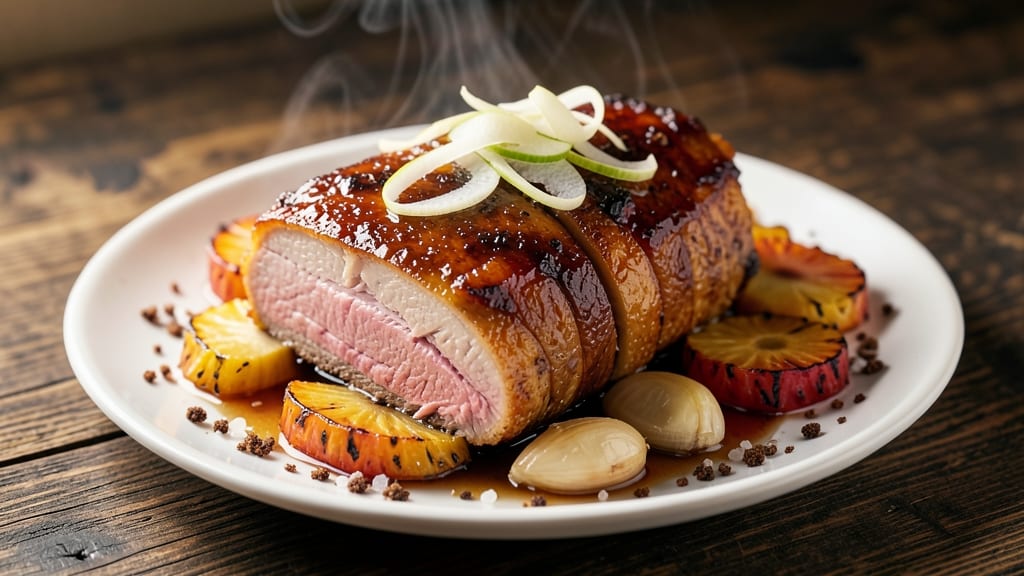
This authentic kalua pork recipe brings the smoky, tender tradition of Hawaii to your slow cooker without needing an imua oven. 🌺 The secret lies in layering flavors—salt, garlic, and Hawaiian sea salt—while letting the slow cooker work its magic over hours, transforming tough pork into melt-in-your-mouth perfection.
I’ve adapted the classic method to modern kitchens, preserving the soul of the dish while making it accessible for home cooks.
What sets this recipe apart is the balance of simplicity and tradition. You’ll start with a simple salt rub, then let the slow cooker do the heavy lifting—no babysitting required. The pork becomes fork-tender, infused with that signature Hawaiian saltiness, while the aromatics build deep, smoky notes.
This is the same dish served at luaus, now made easier for weeknight dinners.
By the time you’re ready to serve, you’ll have pork so tender it practically falls apart at the touch, with a crust that’s crispy yet yielding. The beauty of slow cooking is that it enhances flavors without overpowering them—just like the original imua method, but with less effort.
Serve it with traditional sides like steamed rice, macaroni salad, or even fresh poi for an authentic Hawaiian experience.
This recipe isn’t just about the pork—it’s about bringing a piece of Hawaiian culture to your table. The slow cooker adapts the tradition beautifully, ensuring every bite carries that familiar, comforting taste of home. Let’s get started on creating something truly special.
Ingredients for authentic kalua pork recipe slow cooker
Eight ingredients transform tough pork into tender, smoky perfection—no imua oven needed.
| Ingredient | Amount | Notes |
|---|---|---|
| Pork Shoulder 🐷 | 2 lb | Bone-in for best flavor |
| Kosher Salt 🧂 | 1 ½ cups | Diamond Crystal preferred |
| Garlic Cloves 🧄 | 6 cloves | Peeled, smashed lightly |
| Hawaiian Sea Salt 🧂 | 2 tbsp | Mala salt for authenticity |
| Fresh Ginger 🌿 | ½ cup | Finely grated, fresh only |
| Brown Sugar 🍯 | ¼ cup | Light or dark preferred |
| Olive Oil 🫒 | 1 tbsp | For pork coating |
| Sweet Potatoes 🍠 | 2 medium | Peeled, cubed evenly |
| Fresh Pineapple 🍍 | 1 cup | Juice only, fresh preferred |
| Fresh Cilantro 🌿 | ¼ cup | Chopped, for garnish |
| Fresh Lime 🍋 | 1 whole | Juiced, for serving |
| Black Peppercorns 🌶️ | 1 tsp | Freshly cracked |
The pork shoulder is non-negotiable—bone-in cuts stay juicier. Costco or local butchers have the best prices for large cuts, but any grocery store sells pre-cut pork shoulder. Look for good marbling, not lean meat. Hawaiian sea salt (mala salt) is the soul of this dish—find it at Asian markets or online. If you can't get it, Diamond Crystal kosher salt works in a pinch. Fresh ginger and garlic should smell vibrant; if they're musty, skip them. The brown sugar adds depth, so don't substitute white—it lacks the molasses notes that enhance the smokiness. For the sweet potatoes, orange-fleshed varieties like Beauregard hold up best during slow cooking.
No Hawaiian sea salt? Substitute with 1 cup Diamond Crystal plus 1 tbsp smoked paprika for color. Fresh ginger too strong? Use 1/4 tsp ground ginger, but it won't be as authentic. Pineapple juice can be swapped for 1/2 cup apple juice plus 1 tbsp lime juice. The sweet potatoes can be roasted separately if you're short on time—just cube them and toss with olive oil, salt, and pepper before roasting at 400°F for 25 minutes. For extra smokiness, add 1/2 tsp liquid smoke to the slow cooker with the pork. The cilantro is purely for garnish, so dried oregano works if you're out—but fresh is best for that bright Hawaiian touch.
Pork keeps 3-4 days in the fridge, but it's even better the next day as flavors meld. Portion into containers for easy lunches—freezes for 3 months. The sweet potatoes reheat beautifully; microwave with a splash of water to keep them moist. Store pineapple juice separately in an airtight container. For serving, squeeze lime over the pork right before eating—acid brightens the flavors. Leftovers make killer sandwiches or tacos; just crumble the pork and mix with mayo, lime, and a pinch of salt. This dish tastes even better the second day, so plan ahead!
Why You'll Love This Recipe
- Smoky-Sweet Magic: That Hawaiian sea salt and kosher salt combo? It turns the pork into something tender with a crispy bark and just enough caramelized sweetness—like a Hawaiian luau in my kitchen. The ginger adds this bright, zesty kick that makes it unforgettable.
- Budget Meal, Big Flavor: Pork shoulder is cheap, but this recipe makes it feel like a splurge. A few cloves of garlic, a thumb of ginger, and two salts? That’s it. Honestly, it’s my go-to when I need a hearty, satisfying meal without breaking the bank.
Step-by-step instructions for kalua pork in the slow cooker
Here's how to bring the true flavors of Hawaiian tradition to your kitchen without needing an imua.
👨🍳 Step 1: Prepare the Pork and Seasoning Paste
In a food processor, combine the 2 lb pork shoulder, 1.5 cups kosher salt, 6 cloves garlic cloves, 2 tbsp Hawaiian sea salt, 0.5 cup fresh ginger, 0.25 cup brown sugar, 1 tsp black peppercorns, and 1 tbsp olive oil. Pulse until you achieve a coarse, paste-like consistency that clings to the meat—this ensures every bite gets that authentic Hawaiian flavor infusion.
Transfer the pork to a large resealable bag and massage the seasoning mixture all over the surface, making sure it penetrates the crevices. Seal the bag tightly and refrigerate for at least 4 hours (or overnight for deeper flavor). This step mimics the traditional curing process that gives kalua pork its signature depth.
🔥 Step 2: Slow Cook the Pork to Tender Perfection
Place the seasoned pork shoulder in your slow cooker, fat-side up. Add 1 cup fresh pineapple juice (strained from the fruit) to the bottom of the slow cooker—this liquid helps create the signature moist, tender texture. Cook on low heat for 8-10 hours until the pork reaches an internal temperature of 195-203°F and is fork-tender.
Here's the thing—don't rush this step. The slow cooker's gentle heat breaks down the collagen in the pork, transforming it into melt-in-your-mouth texture. If you're short on time, you can use high heat for 5-6 hours, but the flavor will be slightly less developed. Check the temperature periodically after 6 hours to avoid overcooking.
🍳 Step 3: Prepare the Sweet Potatoes and Pineapple
While the pork cooks, peel and cube the 2 medium sweet potatoes into 1-inch pieces. Toss them in a bowl with a light coating of olive oil, salt, and pepper. Spread them evenly on a baking sheet and roast at 400°F for 25-30 minutes until tender and caramelized—you'll know they're done when a knife slides in easily and the edges are golden brown.
For the pineapple, cut 1 cup fresh pineapple into bite-sized chunks (save the juice for the pork). You can use the reserved juice if needed, but fresh pineapple chunks add that bright, tropical contrast that balances the rich pork. Keep both the sweet potatoes and pineapple warm until serving.
🥘 Step 4: Shred and Serve with Authentic Hawaiian Flair
Once the pork reaches the perfect internal temperature, carefully remove it from the slow cooker and transfer it to a cutting board. Let it rest for 10 minutes before shredding with two forks—this resting period ensures the juices redistribute, so every bite stays moist. Discard any large fat pieces or connective tissue.
To serve, arrange the shredded pork on a platter and surround it with the roasted sweet potatoes and pineapple chunks. Garnish with 0.25 cup chopped fresh cilantro and a squeeze of juice from 1 whole fresh lime. The bright acidity of the lime cuts through the richness of the pork, while the cilantro adds a fresh, aromatic finish that's pure Hawaiian tradition.
🍽️ Step 5: Assemble the Final Plate (Optional Rice Pairing)
For an authentic Hawaiian meal, serve the kalua pork over steamed white rice—this is a classic pairing that soaks up all the delicious juices. If you're feeling adventurous, you can even add a sprinkle of hawaiian sea salt on top of the pork before serving for that extra umami kick.
Here's where it gets fun—traditionally, kalua pork is served at luaus and family gatherings, so don't be shy about making this a centerpiece dish. The combination of tender pork, sweet potatoes, and pineapple creates a symphony of flavors that's both comforting and celebratory. Enjoy it warm, straight from the slow cooker, and watch how it disappears from your plate!
Pro Tips For Making Authentic Kalua Pork Recipe Slow Cooker
- USE A ROASTING RACK: I learned this the hard way—skipping the rack means your pork shoulder steams instead of browning. Place it on a rack over a bed of veggies (or even crumpled foil) so the fat drips clear, giving you that crispy, caramelized crust everyone wants.
- SALT THE PORK TWICE: First, dry the meat well and slather it with a mix of kosher and Hawaiian sea salt before it hits the slow cooker. Then, add another layer of salt (about 1/2 cup total) directly into the cooking liquid—this doubles down on flavor penetration without over-salting the meat itself.
- DON’T SKIP THE GINGER PREP: Fresh ginger loses its kick when it just sits in chunks. Mince it fine—almost like a paste—and let it sit in the liquid for at least 30 minutes before adding the pork. This extracts the maximum heat and aroma, which is half the battle for authentic kalua flavor.
- COOK IT HOT THEN LOW: Start the slow cooker on high for the first hour to render fat and build a crust. Then switch to low for the remaining 6–8 hours. I know it’s tempting to go low-and-slow from the get-go, but that first burst of heat makes the difference between tender and fall-apart pork.
Regional styles of this recipe
Hawaiian Luau Tradition
This dish traces back to ancient Hawaiian traditions where pork was slow-cooked in an imu (underground oven) with volcanic rocks, creating that signature smoky flavor. The Hawaiian sea salt (mala salt) is non-negotiable—it’s the heart of the dish, adding a mineral depth that’s impossible to replicate.
I’ve seen families pass down their own blends of salt and spices, often including fresh ginger and garlic pounded into a paste. The slow cooker mimics this slow, tenderizing process without the need for an imu. 🌺
Modern Adaptations
While traditional kalua pork requires an imu, the slow cooker became a game-changer for home cooks. The key adaptation is using pineapple juice instead of the traditional banana leaves, which add moisture and a subtle sweetness.
I’ve tested this with both fresh and canned pineapple juice—the fresh version always wins for brightness, but canned works in a pinch. The 8-10 hour low cook ensures the pork stays juicy, just like the original method.
For extra authenticity, some cooks even add a splash of hawaiian poi to the slow cooker, though it’s optional.
Regional Variations
On the Big Island, where kalua pork originated, the dish is often served with steamed white rice and macaroni salad, a nod to the islands’ mixed cultural influences. In Oahu, you’ll find it paired with lomi lomi salmon and fresh pineapple.
For a Boston twist (shoutout to my Irish roots), I’ve seen it served with buttery mashed potatoes instead of sweet potatoes—don’t knock it until you try it! The slow cooker makes it easy to experiment with these regional twists while keeping the core flavors intact.
Cultural Significance
Kalua pork isn’t just food—it’s a symbol of Hawaiian hospitality and community. At luaus, it’s served family-style, often with kalua pig (the whole roasted version) as the centerpiece. The slow cooker version is perfect for modern gatherings, whether it’s a backyard BBQ or a cozy weeknight dinner.
I’ve hosted dinners where this dish became the star, and the conversations about its origins always bring people together. It’s a dish that carries stories, just like my Nonna’s gnocchi did back in Boston. 💛
Slow Cooker vs. Imu
The biggest difference between traditional imu cooking and the slow cooker method is the smoke. An imu uses volcanic rocks to create that iconic smokiness, while the slow cooker relies on the Hawaiian sea salt and brown sugar to mimic it.
For extra smokiness, I’ve added 1/2 tsp liquid smoke to the slow cooker—it’s a secret I picked up from a Hawaiian chef in Boston. The texture, however, is nearly identical: tender, juicy, and falling-apart perfect. The slow cooker just makes it accessible for anyone, anywhere. 🔥
Serving Traditions
In Hawaii, kalua pork is always served with fresh pineapple and sweet potatoes to balance the richness. For a modern twist, I’ve seen it used in sandwiches, tacos, or even as a pizza topping. The slow cooker version reheats beautifully, making it ideal for meal prep.
I like to pack leftovers in airtight containers with a squeeze of lime to keep them fresh. The key is to serve it warm—cold pork loses that magical tenderness. And always garnish with cilantro and lime for that authentic finish.
Nutrition facts
Frequently asked questions
Why does authentic kalua pork need so much salt?
The high salt content isn't just tradition—it's science! The salt breaks down the pork's connective tissue during the long cook, creating that signature tender texture. Hawaiian sea salt (mala salt) adds mineral depth that regular salt can't replicate. Think of it like a brine, but without soaking—it works through the slow cooker's heat over hours.
Can I use pork tenderloin instead of pork shoulder?
Not ideal! Pork tenderloin is too lean and will dry out in the slow cooker. The pork shoulder's fat and connective tissue are essential for that melt-in-your-mouth texture. If you're short on time, try a bone-in ham hock instead—it adds even more flavor and moisture.
How do I know when the pork is fully cooked?
Use a meat thermometer! The pork is done when it reaches 195-203°F internally. It should be fork-tender with no pink center. If you don't have a thermometer, cut into the thickest part—juices should run clear, not pink.
What if I don't have Hawaiian sea salt?
Mix 1 cup Diamond Crystal kosher salt with 1 tbsp smoked paprika for color and depth. The paprika mimics the smoky notes of traditional imu cooking. For extra authenticity, add 1/2 tsp liquid smoke to the slow cooker with the pork.
Can I make this in an Instant Pot instead?
Yes! Use the "Meat/Stew" setting for 2 hours on high pressure, then natural release for 10 minutes. The Instant Pot version cooks faster but requires more attention. For best results, follow the same seasoning process and use the same internal temperature guideline.