
Main Courses
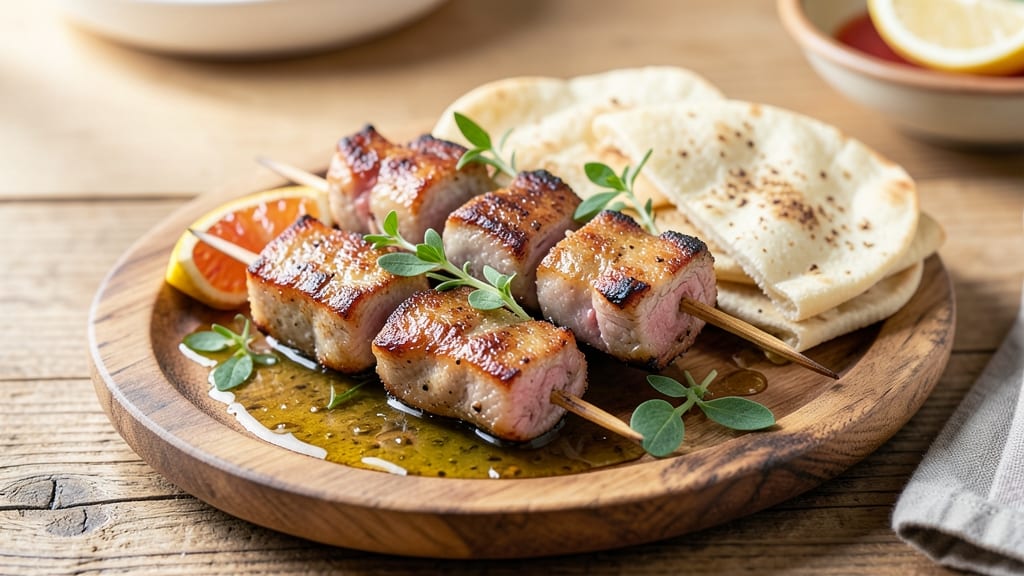
This authentic Greek pork souvlaki recipe brings the vibrant flavors of a Greek taverna straight to your grill. 🔥 After years of perfecting the technique—from the lemon-oregano marinade to the charcoal sear—I’ve mastered the art of transforming simple pork into tender, smoky skewers that rival any Greek street food stand.
The secret lies in the balance of acidity and herbs, which tenderize the meat while building layers of flavor that develop as it grills.
The marinade is where the magic begins: a bright blend of lemon juice, olive oil, garlic, and fresh oregano that infuses the pork with that signature Greek tang. Skewering the meat properly ensures even cooking and easy serving—no more falling-apart skewers.
I use thick-cut pork shoulder for maximum flavor and juiciness, though chicken or lamb work beautifully too. The key is letting the marinade work its magic for at least 4 hours, preferably overnight, so every bite is bursting with that authentic Greek taste.
When you fire up the grill, the real transformation happens. The pork sears over hot charcoal, developing a caramelized crust while staying tender inside.
Serving it with warm pita, a dollop of tzatziki, and a squeeze of fresh lemon takes it to the next level—just like a meal from a Greek island. This isn’t just a recipe; it’s an experience that brings the sun-soaked streets of Athens to your backyard.
The best part? Leftovers reheat beautifully, making this perfect for meal prep or entertaining. Whether you’re grilling for a crowd or treating yourself to a taste of Greece, this authentic souvlaki delivers restaurant-quality results with a technique that’s simpler than it looks. Let’s get cooking!
Ingredients for authentic greek pork souvlaki
Simple ingredients, big Greek flavors. Everything you need for juicy, smoky pork skewers right off the grill.
| Ingredient | Amount | Notes |
|---|---|---|
| Pork Shoulder 🍖 | 1 ½ lb | Thick-cut, boneless, trimmed |
| Fresh Lemon Juice 🍋 | ½ cup | Freshly squeezed from lemons |
| Extra-Virgin Olive Oil 🫒 | ⅓ cup | Light, fruity variety preferred |
| Garlic Cloves 🧄 | 6 cloves | Peeled, minced for marinade |
| Fresh Oregano 🌿 | ¼ cup | Chopped, Greek variety if possible |
| Dried Oregano 🌿 | 1 tbsp | For backup if fresh unavailable |
| Salt 🧂 | 1 ½ tsp | Diamond Crystal preferred |
| Ground Black Pepper 🌶️ | ½ tsp | Freshly ground for best flavor |
| Wooden Skewers 🪵 | 12 whole | Soaked in water for 30 minutes |
| Lemon Zest 🍋 | 1 tbsp | From 1 large lemon |
| Fresh Parsley 🌿 | ⅛ cup | Chopped, for garnish |
| Charcoal Briquettes 🔥 | 2 lbs | Or lump charcoal for hotter heat |
The pork shoulder is non-negotiable here—thick-cut, boneless, and well-trimmed gives you that perfect balance of juiciness and caramelized crust. Costco or Whole Foods usually carry the best cuts, but any grocery store should have it labeled as 'pork shoulder for roasting.' If you can't find thick-cut, ask the butcher to trim it for you. The marinade does most of the work, so don't stress about perfect cuts—just make sure it's evenly sized pieces. For the oregano, Greek or Mediterranean markets often carry the freshest, but any grocery store's herb section will do in a pinch. The key is using fresh oregano—dried works, but fresh gives that authentic taverna flavor.
No fresh oregano? Dried at half the amount works, but trust me, it's worth hunting down the fresh stuff. Running low on lemon juice? Substitute with lime juice, though it'll have a slightly different tang. The olive oil matters too—light, fruity varieties like Kalamata or Greek olive oil keep the flavor bright. If you're short on time, marinate for at least 4 hours—overnight is ideal, but even 2 hours will give you great flavor. For the skewers, soak them in water for 30 minutes to prevent burning. And if you're feeling fancy, toothpick the meat first so it doesn't fall off while grilling.
The marinade keeps in the fridge for 2 days, so make it ahead if you're grilling later. The pork itself? Cook within 2 days of marinating for best results. Leftovers reheat beautifully—just warm them on the grill or in a skillet for a few minutes. Store them in an airtight container with a splash of the marinade to keep them juicy. And if you're grilling for a crowd, double the recipe—these skewers disappear fast. The charcoal? Light it 20 minutes before grilling to get it hot and ready for that perfect sear.
Why You'll Love This Recipe
- One-Pan Magic: I swear by this recipe because it’s that simple—just cube the pork, toss it in a bowl with olive oil, lemon, and crushed garlic, then let the grill or skillet work its magic. No marinade mess, no fancy prep, just hands-off flavor.
- Juicy & Charred: That crispy exterior with tender, juicy pork? It’s all in the pork shoulder—fat marbled just enough to stay moist while the outside gets that smoky, slightly charred bite. The oregano and lemon brighten every bite like a Greek summer breeze.
- Weeknight or Party: Make a double batch and you’ve got dinner covered for the week, or double it again for a crowd—it’s my go-to for BBQs or potlucks. Serve with pita, tzatziki, or even over salads, and suddenly you’re the hero of any meal.
- Budget-Friendly Feast: Pork shoulder stretches far, and the ingredients? Basic pantry staples. I’ve fed four people for under $15 with leftovers that taste just as good reheated (yes, even on toast the next morning). Practical? Absolutely. Delicious? Ridiculously so.
Step-by-step instructions for authentic Greek pork souvlaki
Here's how to nail those smoky, citrus-kissed skewers—just like from a Greek taverna.
👨🍳 Step 1: Marinate the Pork Shoulder for Maximum Flavor
In a large bowl, combine the 1.5 lb pork shoulder (cut into 1-inch chunks), 0.5 cup fresh lemon juice, 0.33 cup extra-virgin olive oil, 6 minced garlic cloves, 0.25 cup chopped fresh oregano, 1 tbsp dried oregano, 1.5 tsp salt, 0.5 tsp ground black pepper, and 1 tbsp lemon zest. Mix everything thoroughly with your hands—this ensures the marinade coats every piece of meat.
Here's the thing—Greek souvlaki marinades work best when they penetrate deeply. Cover the bowl and refrigerate for at least 4 hours (overnight is even better). The acidity from the lemon will tenderize the meat while the olive oil keeps it juicy. Give it a stir halfway through if you can—this helps distribute the flavors evenly.
🔪 Step 2: Prep the Skewers and Assemble
Soak the 12 wooden skewers in water for 30 minutes—this prevents them from burning on the grill. Meanwhile, drain the pork from the marinade (reserve ¼ cup marinade for basting later) and thread the chunks onto the skewers, leaving a little space between each piece. I like to arrange them in a spiral pattern for even cooking.
Don't overcrowd the skewers—this ensures they cook quickly and thoroughly. If any marinade drips onto your hands, just wipe them on a paper towel. That's pure flavor you don't want to waste!
🔥 Step 3: Set Up the Charcoal Grill for Smoky Perfection
Light the 2 lbs charcoal briquettes and let them burn until they're covered with a thin layer of white ash (about 15-20 minutes). Spread the coals evenly in your grill, creating a two-zone fire—hot coals on one side for searing and cooler coals on the other for finishing. This gives you control over the cooking process.
When the coals are ready, you'll see clean, blue flames with minimal smoke. This is your signal that the grill is hot enough. Place the skewers over the hot coals and close the lid. The goal is to get those skewers searing hot—you should hear a satisfying sizzle within 30 seconds.
🍳 Step 4: Grill to Juicy, Charred Perfection
Grill the skewers for 8-10 minutes, turning occasionally, until they're deep golden brown with a nice char on all sides. You'll know they're ready when the internal temperature reaches 145°F (use a meat thermometer to check). The pork should be juicy inside but firm to the touch.
During the last 2 minutes of grilling, brush the skewers with the reserved ¼ cup marinade to add extra flavor and prevent them from drying out. Watch them closely—they cook fast once the marinade hits the hot grill. If you see any flare-ups, just move the skewers to the cooler side of the grill for a minute to let things settle.
🥘 Step 5: Rest and Serve with Fresh Herbs
Transfer the skewers to a cutting board and let them rest for 5 minutes (this keeps the juices inside the meat). While they rest, chop the 0.125 cup fresh parsley and sprinkle it over the top of each skewer. This adds a fresh, bright finish that cuts through the richness of the pork.
Slice the pork directly off the skewers and serve immediately with warm pita bread, a Greek salad, and a squeeze of extra lemon. The contrast of the smoky charred meat with the bright lemon and fresh herbs is what makes this dish truly authentic. Enjoy your homemade Greek feast!
Pro Tips For Making Authentic Greek Pork Souvlaki
- Cut Against the Grain: Slice your pork shoulder thinly but lengthwise—not across the grain—so it stays tender and doesn’t turn to mush when grilling. I used to fight this step, but trust me: the fibers need to stretch, not snap.
- Marinate Overnight (No Excuses): The acid in lemon and olive oil needs at least 8 hours to break down the pork’s toughness. I skipped this once and ended up with chewy skewers—now I set the marinade the night before and let the fridge do the work.
- Don’t Overcrowd the Skewers: Two chunks per skewer max, or they’ll steam instead of sear. I learned this after watching my first batch turn soggy—now I space them out like a pro, even if it means extra skewers.
- Sear Over High Heat: Get your grill or pan ripping hot—pork shoulder needs that initial crust to lock in juices. I used to hover over it like a nervous parent, but now I crank the heat, sear 2 minutes per side, then pull back. That’s when the magic happens.
Serving suggestions for this recipe
Warm Pita Bread
Fresh, warm pita is non-negotiable for authentic souvlaki. I love using store-bought pita from the Mediterranean aisle (like Sara Lee or Trader Joe's)—just brush with 2 tbsp olive oil and toast on the grill for 1 minute per side until puffed.
For extra authenticity, add a sprinkle of sesame seeds before serving. 🥖
Classic Tzatziki
This cool yogurt sauce balances the smoky pork perfectly. Mix 1 cup Greek yogurt with 1 tbsp lemon juice, 1 tbsp grated cucumber, 1 minced garlic clove, 1 tbsp chopped dill, and a pinch of salt.
Chill for 30 minutes before serving to let flavors meld. I sometimes add a drizzle of olive oil for richness. 🥄
Greek Salad
A crisp Greek salad adds freshness and color. Toss 4 cups chopped romaine with ½ cucumber (sliced), 1 tomato (wedged), ¼ red onion (thinly sliced), ¼ cup Kalamata olives, and 2 tbsp feta cheese.
Dress with 2 tbsp olive oil and 1 tbsp red wine vinegar. The acidity cuts through the richness of the pork beautifully. 🥗
Lemon Wedges
Fresh lemon wedges are essential for that final burst of brightness. Squeeze them over the skewers just before eating—it’s the Greek taverna touch that makes all the difference. I also keep a small bowl of lemon wedges on the table so everyone can add their own tang. 🍋
Extra Garnishes
For a restaurant-worthy finish, garnish with chopped fresh parsley or thinly sliced red onion. A sprinkle of crumbled feta adds a salty contrast. I also like serving with hot sauce (like Greek skordalia) for those who want extra heat. 🌿
Drink Pairings
Cool your palate with a crisp Assyrtiko white wine from Santorini or a refreshing Ouzo cocktail (mix 2 oz Ouzo with 4 oz sparkling water and ice). For non-alcoholic options, try sparkling lemonade or ayran (yogurt drink). The effervescence cleanses the palate between bites. 🍷
Nutrition facts
Frequently asked questions
Can I use chicken or lamb instead of pork for authentic souvlaki?
Chicken works beautifully for a lighter option, while lamb gives a richer, gamey flavor. For chicken, use 1.5 lb boneless thighs (they stay juicier than breast) and marinate for 2-4 hours instead of overnight. For lamb, 1.5 lb shoulder or leg works best—just reduce marinating time to 2 hours max to prevent over-tenderizing. The cooking times stay similar, but lamb benefits from an extra 2 minutes on the grill for deeper char.
How do I prevent the meat from falling off the skewers while grilling?
Start by soaking wooden skewers in water for 30 minutes to prevent burning. Then, secure the meat by threading it in a spiral pattern (fat side out) and using toothpicks to hold pieces together if needed. For extra stability, poke the meat with a toothpick before skewering—this creates channels that hold the marinade and prevent shifting. If using metal skewers, avoid overcrowding to allow proper airflow and even cooking.
What's the best way to reheat leftover souvlaki?
Reheat gently to avoid drying out the meat. Place skewers on a grill pan over medium heat for 3-4 minutes, basting with a splash of the reserved marinade. For oven reheating, cover with foil and warm at 350°F for 10 minutes. Never microwave—it turns the meat rubbery. If storing leftovers, keep them in an airtight container with a drizzle of olive oil to maintain moisture for up to 3 days.
Can I make this recipe on a gas grill or stovetop?
Yes, but charcoal gives the most authentic flavor. For gas grills, preheat to high heat and use the sear zone—aim for 450°F+ for that signature char. On a stovetop, use a cast-iron skillet over high heat with a splash of olive oil. Cook for 4-5 minutes per side until golden brown. The key is maintaining high heat—gas and stovetop can't replicate charcoal's smoky depth, but they'll still deliver delicious results with proper technique.
Why does my souvlaki turn out dry?
Dry souvlaki usually means overcooking or under-marinating. First, check your marinating time—4+ hours is critical for tenderizing. Second, use a meat thermometer and remove skewers at 145°F (pork) or 165°F (chicken). Third, avoid overcrowding on the grill—this traps steam and slows cooking. For extra moisture, brush with reserved marinade during the last 2 minutes of grilling. Finally, let the meat rest for 5 minutes before slicing to redistribute juices.