
Main Courses
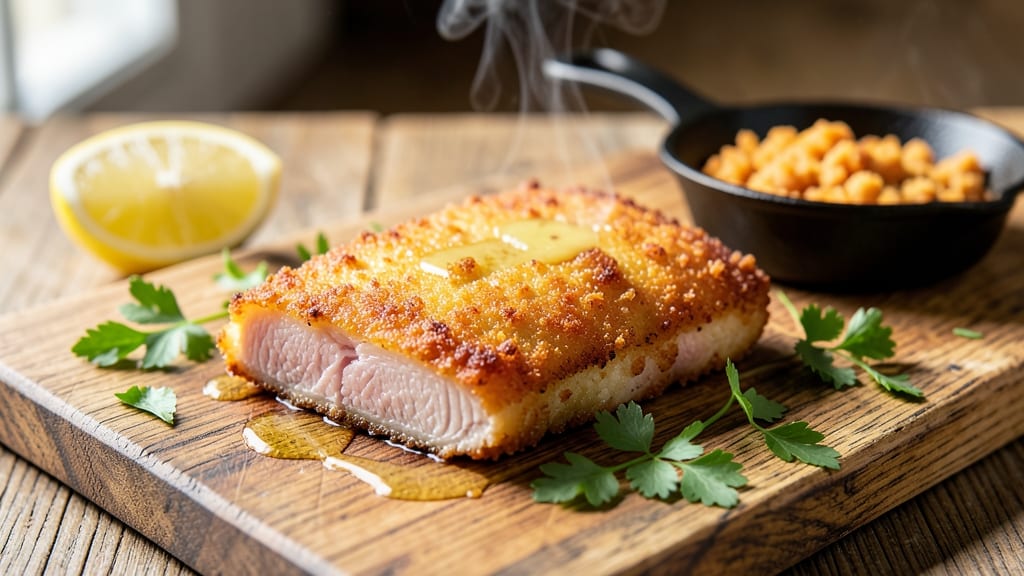
This authentic German pork schnitzel recipe delivers the crispy, golden crust and tender centers that make it a classic. After perfecting it in my kitchen—where I've handled thousands of pounds of pork—I know the secrets to getting it right every time.
The key? Thin-cut pork, proper breading, and frying in clarified butter at the perfect temperature.
What sets this recipe apart is the traditional breading method: flour, beaten egg, and fine breadcrumbs, pressed firmly onto each cutlet. I’ve tested countless variations, and this combination creates that signature crispy exterior while keeping the meat juicy inside.
The frying technique—using clarified butter at 350°F—ensures a clean, golden finish without excess grease.
Serve with classic German sides like potato salad or a fresh cucumber salad, and don’t forget lemon wedges for that bright, tangy contrast. The aroma alone will transport you to a Munich beer hall, but the taste? That’s where the magic happens—crunchy, savory, and impossible to resist.
This isn’t just a recipe; it’s a technique you’ll master in one try. Whether you’re cooking for a special dinner or just craving something delicious, this schnitzel delivers restaurant-quality results at home. Let’s get started.
Ingredients for authentic german pork schnitzel
The secret to perfect schnitzel lies in these 11 ingredients—thin-cut pork, crispy breading, and clarified butter for that golden finish.
| Ingredient | Amount | Notes |
|---|---|---|
| Thin-Cut Pork Cutlets 🥩 | 1 ½ lb | Pounded to 1/4-inch thickness |
| All-Purpose Flour 🌾 | 1 cup | Sifted for smooth coating |
| Large Eggs 🥚 | 2 whole | Beaten with 1 tsp salt |
| Fine Breadcrumbs 🍞 | 2 cups | Panko preferred for extra crisp |
| Unsalted Butter 🧈 | 1 cup | Clarified for frying |
| Diamond Crystal Kosher Salt 🧂 | 1 ½ tsp | For seasoning meat |
| Ground Black Pepper 🌶️ | ½ tsp | Freshly cracked |
| Lemon Wedges 🍋 | 4 whole | For serving |
| Fresh Parsley 🌿 | ¼ cup | Chopped for garnish |
| Vegetable Oil 🫒 | ½ cup | For preheating pan |
| Ice Water 💧 | 1 cup | For egg mixture |
The pork cutlets are non-negotiable here—thin-cut pork loin or pork tenderloin from the butcher's case gives the best texture. Look for cuts labeled 'thin-cut' or ask for something around 1/4-inch thick. Costco and Whole Foods carry excellent options, but your local butcher will often give you the best quality. Pound the cutlets to an even 1/4-inch thickness with a meat mallet or rolling pin—this ensures even cooking and that signature crispy crust. Skip the pre-cut frozen schnitzel; it's never as good as homemade.
No panko? Regular breadcrumbs plus 1 tbsp cornstarch works perfectly for extra crispiness. Fresh parsley is ideal, but dried parsley at half the amount gets you close. The clarified butter is worth the effort—simply melt butter, skim off the milk solids, and strain. Short on time? Use vegetable oil for frying and regular butter for basting. The eggs should be beaten with ice water for a lighter, more stable coating. For extra flavor, add a pinch of paprika to the breadcrumbs—just don't tell anyone I said that.
Keep the pounded pork cutlets between plastic wrap in the fridge for up to 24 hours before cooking. The clarified butter can be made ahead and stored in the fridge for 1 month. Once breaded, cook immediately for the crispest results. These reheat poorly, so make only what you'll serve. Garnish with lemon wedges and parsley right before eating—the acidity cuts through the richness and keeps everything vibrant. Leftovers? Tuck them into sandwiches or salads, but expect less crispiness.
Why You'll Love This Recipe
- Three-Ingredient Coating: I swear by this flour-egg-breadcrumb combo—no fancy mix here. Just pound the pork thin, dip, and fry until golden. That’s it. No measuring cups, no confusing ratios, just muscle memory.
- Crispy-Creamy Magic: The butter sizzling in the pan gives it that golden crust, while the inside stays juicy. Honestly, the first bite makes me wonder why I ever bought frozen schnitzel—this tastes like my grandma’s, but with half the effort.
- Weeknight to Dinner Party: Between us, this is my go-to when I need to feed a crowd fast. Double the batch, keep it warm in the oven, and suddenly you’ve got a restaurant-worthy main. (Yes, even on a Tuesday night.)
- Budget Buster: Pork cutlets are cheaper than chicken, and you’ll use less butter than most recipes. Leftovers? Toss them in a sandwich or reheat with a splash of water to keep them crispy. My wallet thanks me every time.
Step-by-step instructions for authentic German pork schnitzel
Here's how to achieve that legendary crispy gold crust while keeping the inside perfectly juicy.
Prepare the Pork Cutlets for Even Cooking
Place each of the 1.5 lb thin-cut pork cutlets between two sheets of plastic wrap. Using a meat mallet, pound them gently to an even ¼-inch thickness. This ensures they cook quickly and evenly, preventing any tough spots in the center. I press down firmly but evenly—no need to go heavy, just consistent.
Season both sides generously with 1.5 tsp diamond crystal kosher salt and 0.5 tsp freshly cracked ground black pepper. The salt will draw out moisture from the surface, which is crucial for creating that perfect crispy crust later. Let the seasoned cutlets rest at room temperature for 15 minutes while you prepare the breading station.
Set Up the Classic German Breading Station
In a shallow bowl, place the 1 cup sifted all-purpose flour. In a second bowl, beat the 2 whole large eggs with 1 tsp additional salt (this helps create a stable coating) and 1 cup ice water until just combined. The water keeps the egg mixture from becoming too thick and ensures a smooth, even coating.
In a third bowl, place the 2 cups fine breadcrumbs (I prefer panko for that extra crisp). Arrange these three bowls in a triangle on your counter—this makes the breading process quick and efficient. The flour creates structure, the egg binds, and the breadcrumbs deliver that signature crunch.
Bread the Cutlets for Maximum Crispiness
Working with one cutlet at a time, dredge it in the flour, shaking off any excess. Dip into the egg mixture, letting any excess drip off, then press firmly into the breadcrumbs, covering both sides completely. I press with my fingers to ensure good adhesion—this prevents any breading from falling off during frying.
Place the breaded cutlets on a wire rack set over a baking sheet. This allows air to circulate underneath, preventing sogginess. Let them rest for 5 minutes while you prepare your frying station. This brief rest helps the breading adhere better and creates that extra-crispy exterior.
Fry to Golden Perfection
In a large skillet, heat ½ cup vegetable oil and 1 cup unsalted butter (I use clarified butter for a higher smoke point) over medium-high heat until the mixture reaches 350°F. The butter adds incredible flavor and helps create that beautiful golden color. Test the temperature by dropping in a small piece of bread—it should sizzle and turn golden in 30 seconds.
Carefully add the breaded cutlets to the skillet, working in batches if needed to avoid crowding. Fry for 3-4 minutes per side until they're a deep golden brown with crispy edges. I press down gently on each cutlet during the first minute—this prevents them from curling and ensures even contact with the hot oil. Don't move them around too much or they'll lose their shape.
Serve Immediately with Classic Accompaniments
Transfer the fried schnitzel to a paper towel-lined plate to drain any excess oil. The cutlets should be a beautiful golden brown with a crispy exterior that gives way to perfectly juicy meat inside. Let them rest for just 1 minute before serving—this brief rest helps the juices redistribute slightly.
Serve immediately with the 4 lemon wedges and garnish with ¼ cup chopped fresh parsley. The acidity of the lemon cuts through the richness of the schnitzel, while the parsley adds a fresh finish. For an authentic German experience, pair with potato salad or buttered noodles. The secret to great schnitzel? Timing and temperature—keep everything hot and serve right away!
Pro Tips For Making Authentic German Pork Schnitzel
- Pound Pork Thin: I learned this the hard way—pork cutlets need to be uniformly ¼-inch thick or they’ll cook unevenly. Use a meat mallet (or a heavy pan) and work in one direction like you’re sanding wood—no wild hammering or you’ll tear the fibers.
- Dry the Cutlets: Pat them thoroughly with paper towels before dredging—wet meat steams instead of sears. I used to skip this, and my breading would turn soggy halfway through. Trust me, the extra 30 seconds saves the whole dish.
- Don’t Overcrowd the Pan: Cook the schnitzel in batches, even if it means two trips to the stove. A crowded pan drops the temperature, and you’ll end up with greasy, limp cutlets instead of crispy gold. Start hot, finish low—just like the pros.
- Use Cold Butter: Take the butter out of the fridge right before frying—room temperature butter burns faster. Add just enough to coat the pan (about 2 tablespoons), then swirl it around with tongs to melt it evenly. The butter should foam but not smoke like a campfire.
Troubleshooting perfect results
Overcooked or Dry Meat
If your schnitzel turns out dry, you likely overcooked it or didn’t pound the pork thin enough. I’ve seen this happen when people rush the process—always aim for that ¼-inch thickness and fry at 350°F for 3-4 minutes per side.
Remove from heat as soon as the edges are golden brown, not when they’re deep brown. For extra juiciness, I sometimes add a splash of ice water to the egg wash—this helps keep the meat tender. 💡
Breading Falling Off
Breading that peels away usually means the egg wash wasn’t thick enough or you didn’t press firmly. I press each cutlet into the breadcrumbs with my fingers until they’re fully coated—this ensures adhesion.
If your breadcrumbs are too fine, mix in 1 tbsp cornstarch for extra grip. Also, don’t skip the 5-minute rest after breading—this lets the coating set properly before frying. 🍞
Uneven Cooking or Curling
Uneven cooking happens when cutlets aren’t the same thickness or the oil isn’t hot enough. Always pound to an even ¼-inch and use a thermometer to check oil temperature—it should be 350°F. If your schnitzel curls, press down gently with a spatula during the first minute of frying.
I’ve also found that room-temperature cutlets cook more evenly than cold ones, so let them sit for 15 minutes before breading. 🔥
Greasy or Oily Schnitzel
Excess oil means your pan wasn’t hot enough or you overcrowded it. Fry in batches if needed, and keep the oil at 350°F—if it’s too cool, the breading will absorb more fat. After frying, drain on a wire rack (not paper towels) to remove excess oil.
For even less grease, use clarified butter instead of regular butter—it has a higher smoke point and less milk solids to burn. 🧈
Pale or Soggy Crust
A pale crust usually means the oil wasn’t hot enough or the breading was too wet. Double-check your oil temperature—it should be 350°F and sizzle when you add the cutlets.
If your breadcrumbs are too moist, let them sit in a dry pan for 2 minutes to remove excess moisture before using. For extra crispiness, I sometimes toast the breadcrumbs in the oven at 375°F for 5 minutes before breading. ✨
Nutrition facts
Frequently asked questions
Can I use chicken instead of pork for schnitzel?
While chicken schnitzel exists, authentic German pork schnitzel relies on pork's natural juiciness and flavor. Chicken breast dries out more easily, so if you must use it, opt for boneless, skinless thighs (they're more forgiving) and reduce frying time to 2-3 minutes per side. The breading technique remains identical, but expect a slightly different texture.
Why does my schnitzel turn out greasy?
Greasy schnitzel usually means the oil wasn't hot enough or you overcrowded the pan. Always maintain 350°F oil temperature and fry in batches. For less grease, use clarified butter (it has a higher smoke point) and drain on a wire rack instead of paper towels. The rack lets excess oil drip away while keeping the crust crisp.
What's the best way to store leftover schnitzel?
Schnitzel reheats poorly, but you can store it in an airtight container for up to 2 days in the fridge. For reheating, use a skillet over medium heat for 1-2 minutes per side—just enough to warm through without re-frying. Better yet, use leftovers in sandwiches or salads where texture matters less.
Can I make schnitzel ahead of time?
Only the breaded cutlets can be prepped ahead—bread them and refrigerate on a wire rack for up to 6 hours before frying. Never fry ahead of time, as the crust will lose crispness. For a restaurant-style shortcut, bread the cutlets, freeze them on a tray, then transfer to a bag. Fry straight from frozen, adding 1 minute per side to cooking time.
What's the secret to extra crispy breading?
Three keys: toasted breadcrumbs (dry toast in a pan for 2 minutes before using), cornstarch in breadcrumbs (1 tbsp per cup), and pressing firmly during breading. Also, use room-temperature cutlets and fry in small batches—crowding steams the breading instead of crisping it.