
Main Courses
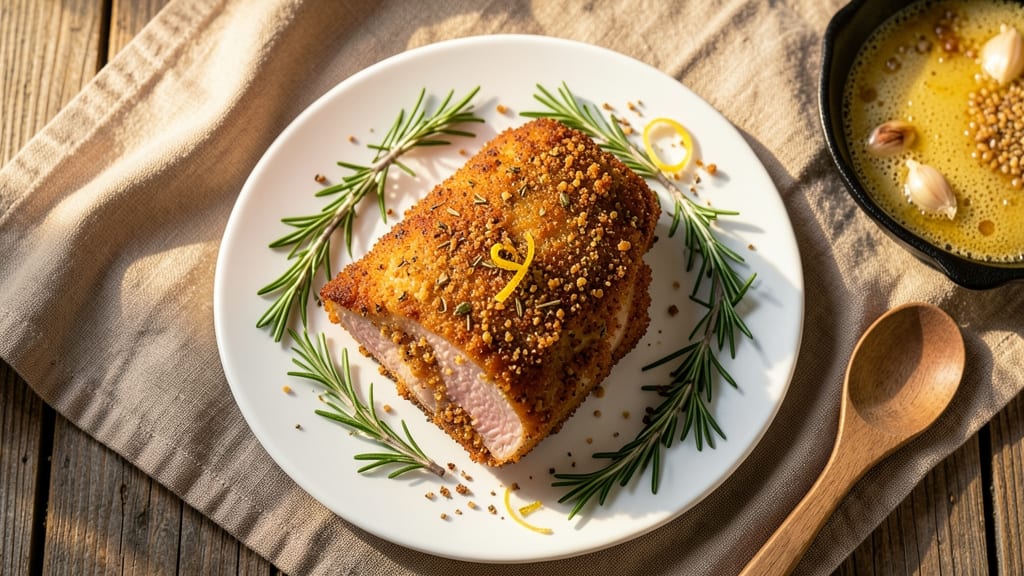
This baked breaded pork tenderloin delivers the perfect balance of crispy golden crust and juicy pink centers—a technique I perfected after years of cooking pork for thousands at The Smoky Pig.
The secret lies in a precise breading sequence and oven temperature control that transforms even the leanest tenderloin into a restaurant-worthy main course. My heritage farm-raised pork never fails to impress, but the method works with any quality cut.
The process starts with a dry flour dredge and egg wash, then a double breading that locks in moisture while creating that signature crunch. Baked at 400°F for just 20-25 minutes, the pork emerges with an exterior that shatters at first bite while maintaining tender, melt-in-your-mouth meat underneath.
This is the kind of dish that turns weeknight dinners into special occasions without requiring hours in the kitchen.
What makes this recipe truly foolproof is the combination of a high-heat bake followed by a brief rest period—critical for carrying through those juices. The result is pork that's crispy enough to stand up to applesauce or gravy but tender enough to slice cleanly.
I've served this at everything from family dinners to catered events, and it consistently earns rave reviews.
Pair with roasted seasonal vegetables or a simple green salad for a complete meal, or serve with classic sides like mashed potatoes and sautéed green beans. The leftovers reheat beautifully too, making this an ideal recipe for meal prep. Let's get started on creating your perfect pork tenderloin.
Ingredients for baked breaded pork tenderloin
Pantry staples meet premium pork for the ultimate crispy-tender masterpiece.
| Ingredient | Amount | Notes |
|---|---|---|
| Pork Tenderloin 🐖 | 1 ½ lb | Center-cut, trimmed of fat |
| All-Purpose Flour 🌾 | 1 cup | For dry dredge |
| Large Eggs 🥚 | 2 whole | Room temperature for even coating |
| Panko Breadcrumbs 🍞 | 1 ½ cups | Japanese-style for extra crunch |
| Italian Seasoned Breadcrumbs 🍞 | ½ cup | For final breading layer |
| Unsalted Butter 🧈 | 2 tbsp | Melted for basting |
| Garlic Powder 🧄 | 1 tbsp | For seasoning |
| Onion Powder 🧅 | 1 tbsp | For seasoning |
| Ground Black Pepper 🌶️ | 1 tsp | Freshly cracked |
| Diamond Crystal Kosher Salt 🧂 | 1 tsp | For seasoning |
| Vegetable Oil 🫒 | 2 tbsp | For greasing baking dish |
| Fresh Parsley 🌿 | ¼ cup | Chopped, for garnish |
The pork tenderloin is your star—look for center-cut pieces with good marbling at Whole Foods or your local butcher. Heritage farm-raised pork has more flavor, but any quality cut works. Trim excess fat to keep it tender. Costco often carries pre-trimmed tenderloins, which saves time. The flour should be all-purpose—bread flour gets too dense. Panko breadcrumbs are non-negotiable for that signature crunch, but if you're in a pinch, regular breadcrumbs toasted in a dry pan work too.
No panko? Crush regular bread into fine crumbs—it won't be as light, but still delicious. Italian seasoning blend can be swapped for 1 tsp dried oregano plus 1/2 tsp dried basil. For extra crispiness, add 1 tbsp cornstarch to the breadcrumbs. The eggs should be room temperature—cold eggs make the coating uneven. If you're prepping ahead, store the breaded tenderloin in the fridge for up to 6 hours before baking, but bring it to room temperature first for even cooking.
This reheats beautifully—just pop in the oven at 375°F for 10 minutes with a splash of water in the pan. Leftovers keep for 4 days in the fridge or 3 months frozen. I always make double batches because it's perfect for meal prep. The crispy crust softens slightly when reheated, so I like to broil for 2 minutes at the end to restore that shatter. Garnish with fresh parsley right before serving—it adds a pop of color and freshness.
Why You'll Love This Recipe
- Same recipe, different vibes: toss it on a sheet pan for a lazy Tuesday or dress it up with a balsamic glaze for guests. My kids eat it straight from the pan; my in-laws ask for the recipe.
- No-Fuss Crispy Magic: I swear by this method—just pat the pork dry, slap on flour, dip in egg, and coat with panko and Italian seasoning. The breading sticks like glue, and the oven does all the heavy lifting while I sip my coffee.
- Double-Crunch Delight: That first bite? Crunchy panko gives way to tender pork, then the Italian seasoning adds this warm, herby finish. Honestly, it’s the kind of flavor combo that makes people pause mid-chew and go, “What’s in this?”
- Weeknight to Dinner Party: Same recipe, different vibes: toss it on a sheet pan for a lazy Tuesday or dress it up with a balsamic glaze for guests. My kids eat it straight from the pan; my in-laws ask for the recipe.
Step-by-step instructions for baked breaded pork tenderloin
Here's how to achieve that perfect golden crust while keeping the inside juicy and tender.
Prepare the Pork and Seasoning
Start by preheating your oven to 400°F. Pat the 1.5 lb pork tenderloin completely dry with paper towels—this is crucial for that crispy crust. In a small bowl, mix together 1 tbsp garlic powder, 1 tbsp onion powder, 1 tsp ground black pepper, and 1 tsp Diamond Crystal kosher salt. Rub this seasoning blend all over the pork, pressing it into the surface so it adheres well.
Let the pork sit at room temperature for 15-20 minutes before breading. This ensures even cooking and prevents cold spots that can lead to uneven browning. While it rests, melt 2 tbsp unsalted butter in a microwave-safe bowl for 20-30 seconds—you'll use this later to baste the pork during baking.
Create the Breading Station
Set up three shallow dishes: one with 1 cup all-purpose flour, one with 2 whole large eggs beaten until frothy, and one with a mixture of 1.5 cups panko breadcrumbs and 0.5 cup Italian seasoned breadcrumbs. This triple breading creates layers of texture—crispy panko on the outside and a flavorful Italian crumb finish.
Dredge the pork first in the flour, shaking off any excess. Then dip it into the egg wash, letting any excess drip off. Finally, press the pork into the breadcrumb mixture, coating it evenly on all sides. For extra crispiness, I like to press down firmly on the breading so it sticks well. Place the breaded pork on a wire rack set over a baking sheet to allow air circulation on all sides.
Bake with Basting for Maximum Crisp
Carefully transfer the breaded pork to a greased baking dish (use 2 tbsp vegetable oil brushed on the bottom). Bake at 400°F for 25 minutes. Here's the secret: after 15 minutes, remove the pork from the oven and brush it generously with the melted butter. Return it to the oven and bake for another 10 minutes until the breading is deep golden brown and crispy.
You'll know it's done when the internal temperature reaches 145°F (use a meat thermometer) and the crust is golden with no white spots. The butter basting creates that restaurant-quality shine and extra crispiness. If you see the breading browning too quickly, tent with foil for the last 5 minutes to prevent burning.
Rest and Garnish
Remove the pork from the oven and let it rest for 5-10 minutes before slicing. This resting period allows the juices to redistribute, ensuring each bite stays juicy. While it rests, chop 0.25 cup fresh parsley finely and set it aside for garnish.
Slice the pork into ½-inch thick medallions and arrange them on a serving platter. Drizzle any accumulated pan juices over the top and sprinkle with the chopped parsley. The contrast of crispy breading with tender, juicy pork makes this dish truly special. Serve immediately with your favorite sides like roasted vegetables or mashed potatoes.
Pro Tips For Making Baked Breaded Pork Tenderloin
- Pat the pork dry: I learned this the hard way—wet pork won’t crisp. Grab paper towels and press hard on all sides, especially the ends, before dredging. The flour won’t stick properly otherwise, and your crust will turn soggy instead of golden.
- Mix egg + milk: Skip the water—use half-and-half or whole milk mixed with your eggs (about ¼ cup total). The fat helps the breading cling better and creates a richer crust. I was skeptical until I tried it.
- Start high, finish covered: Bake at 425°F for the first 10 minutes to blast the breading into a crisp. Then lower to 375°F, tent loosely with foil, and bake another 15-20 minutes. This prevents burning while keeping the inside juicy.
- Layer the breadcrumbs: For extra crunch, dip the floured pork in egg, then coat in half Panko, half Italian seasoned breadcrumbs. Press firmly so it sticks—no gaps. The Italian adds flavor, and the Panko gives texture without overwhelming it.
Flavor customization for this baked breaded pork tenderloin
Spicy Cajun Twist
For a bold kick, add 1 tbsp Cajun seasoning (like Tony Chachere's) to your Italian seasoned breadcrumbs. I like to mix it with ½ tsp smoked paprika for depth.
The heat penetrates the breading beautifully, while the smokiness balances the crispy crust. Serve with a cooling side like creamy coleslaw to tame the spice. 🌶️
Honey Mustard Glaze
After baking, brush the pork with a mixture of 2 tbsp Dijon mustard, 1 tbsp honey, and 1 tsp apple cider vinegar. This glaze adds sweetness that caramelizes during the final 5 minutes in the oven at 425°F.
The tangy-sweet contrast elevates the dish to restaurant-quality. I've used this glaze at catered events—it's always a crowd-pleaser.
Herb-Infused Breading
Swap the Italian seasoning for 2 tbsp fresh rosemary and 1 tbsp fresh thyme, finely chopped, mixed into the panko. The herbs add an earthy aroma that pairs perfectly with the crispy crust.
For extra flavor, infuse the melted butter with 3 minced garlic cloves before basting. This variation feels like a Mediterranean-inspired twist on a Southern classic.
Smoky BBQ Rub
Replace the garlic and onion powders with a homemade rub of 1 tbsp brown sugar, 1 tbsp smoked paprika, and ½ tsp cayenne pepper. Press this onto the pork before the flour dredge.
After baking, serve with a homemade BBQ sauce drizzle. This version tastes like it came straight from a Southeast BBQ competition—my farm-raised pork handles the smoky flavors beautifully.
Sweet and Tangy Asian Fusion
Mix 1 tbsp soy sauce, 1 tbsp honey, and 1 tsp grated ginger into your egg wash. Use Japanese-style panko for the breading and finish with a sprinkle of sesame seeds. The umami from the soy sauce pairs perfectly with the crispy crust.
Serve with a side of stir-fried bok choy for a complete fusion meal. This version reminds me of my time apprenticing in Charleston—where Asian and Southern flavors blend seamlessly. 🍜
Cheesy Breaded Crunch
Add ½ cup shredded Gruyère cheese to the final breadcrumb layer. The cheese melts slightly during baking, creating a gooey, flavorful interior. For extra richness, mix 1 tbsp melted butter into the cheese before adding it to the breadcrumbs.
This version feels indulgent but still maintains the crispy texture. Pair with a white wine reduction for a sophisticated touch.
Nutrition facts
Frequently asked questions
Why does my breaded pork tenderloin turn out soggy instead of crispy?
Soggy breading usually happens from one of three issues: moisture getting trapped during baking, insufficient drying before breading, or overcrowding in the oven. Always pat the pork completely dry before breading, and place it on a wire rack over a baking sheet for even air circulation. Also, avoid stacking breaded pieces—they need space to crisp properly. The butter basting should happen only after 15 minutes of baking, not before.
Can I use regular breadcrumbs instead of panko?
Yes, but the texture will be denser and less crispy. For best results with regular breadcrumbs, toast them in a dry skillet over medium heat for 3-4 minutes until golden, then mix with 1 tbsp cornstarch before using. Panko's light, airy structure creates that signature shatter, but toasted regular breadcrumbs work in a pinch. The Italian seasoning blend remains key for flavor.
How do I adjust the recipe for a larger group?
For every additional 1 lb of pork, increase all dry ingredients (flour, breadcrumbs) by ⅓ cup and eggs by 1 extra. Double the butter and seasonings proportionally. Use two baking sheets to prevent overcrowding, and add 5 minutes to baking time. The key is maintaining the same thickness (½-inch) for even cooking. For 6 servings, scale up to 3 lbs pork.
Is it safe to bake this pork to well-done?
While pork is safe at 145°F, baking to well-done (160°F) will dry it out significantly. The breading may also become rubbery instead of crispy. For medium-rare (140°F), remove 2-3 minutes early. If you prefer fully cooked pork, consider brining the tenderloin for 30 minutes before breading to retain moisture, but expect a slightly firmer texture.
What's the best way to reheat leftovers without losing crispiness?
Reheat in a 400°F oven for 8-10 minutes with a splash of water in the pan to create steam. For extra crispiness, broil for 2 minutes at the end. Microwaving makes breading soggy—avoid it. Store leftovers in an airtight container and refrigerate for up to 4 days. Freeze for 3 months by wrapping tightly in plastic wrap before a freezer bag.