
Main Courses
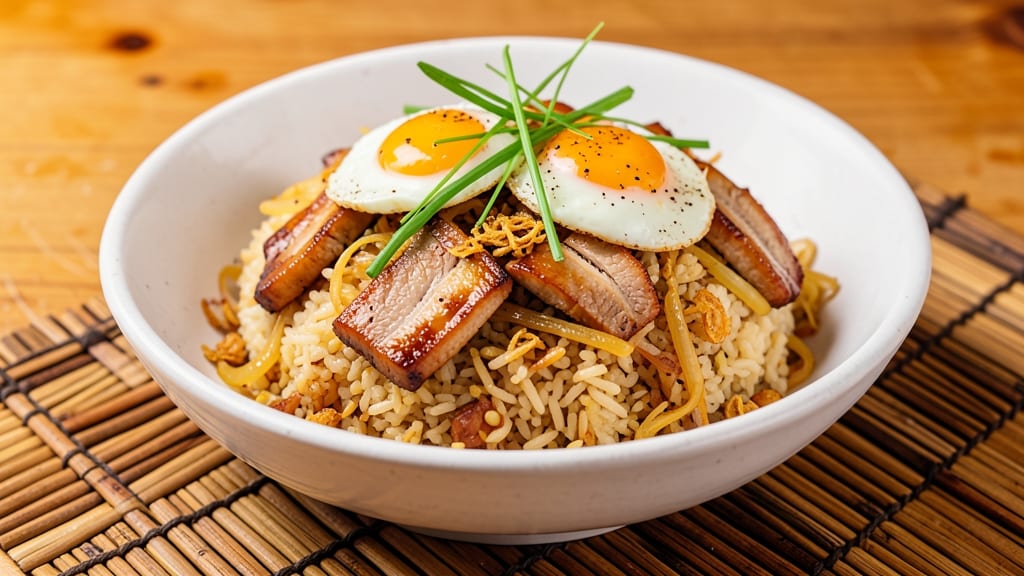
This authentic Chinese pork fried rice delivers the smoky wok hei flavor and chewy eggy bites that make it a restaurant staple. The secret lies in high-heat stir-frying and precise seasoning—techniques that transform day-old rice into a fragrant, savory dish with tender pork and crisp vegetables.
I've refined this recipe over years of testing, ensuring every bite captures the balance of umami, salt, and subtle sweetness that defines Cantonese home cooking.
The foundation starts with properly cooked rice (day-old works best) and a well-marbled pork cut, like shoulder or belly, that stays juicy during the quick stir-fry.
We'll use a classic wok technique—searing the pork first to render fat, then building layers of flavor with garlic, ginger, and scallions—while keeping the rice slightly sticky for that signature texture. The eggs are scrambled separately for those perfect, chewy curds that hold up through every bite.
What you'll end up with is a dish that's both restaurant-quality and deeply comforting—golden-fried rice with tender pork pieces, bright green vegetables, and eggs that stay intact yet tender. The aroma alone will transport you to a bustling Chinese kitchen, where the sizzle of the wok signals dinner is ready.
This recipe delivers on authenticity without requiring hard-to-find ingredients, making it accessible for home cooks.
Serve it as a main dish with a side of soy sauce or chili oil, or pair it with a simple cucumber salad for balance. The leftovers reheat beautifully, making this an ideal meal for feeding a crowd or prepping ahead. Let's get started on creating this flavorful classic.
Ingredients for authentic chinese pork fried rice
Day-old rice, marbled pork, and aromatic spices transform into restaurant-quality fried rice.
| Ingredient | Amount | Notes |
|---|---|---|
| Day-Old Cooked White Rice 🍚 | 4 cups | Cold or room temperature |
| Boneless Pork Shoulder 🥩 | 1 lb | Fat marbled for juiciness |
| Large Eggs 🥚 | 4 whole | Room temperature for scrambling |
| Yellow Onion 🧅 | 1 whole | Thinly sliced, white and green parts |
| Fresh Garlic Cloves 🧄 | 6 cloves | Minced, aromatic intensity |
| Fresh Ginger 🌿 | 2 tbsp | Finely grated, aromatic |
| Scallions 🧅 | 4 whole | Thinly sliced, white and green |
| Frozen Peas 🌱 | ½ cup | Thawed, bright green color |
| Light Soy Sauce 🥢 | 3 tbsp | High-quality, low-sodium preferred |
| Dark Soy Sauce 🥢 | 1 tbsp | For color and depth |
| Sesame Oil 🫒 | 1 tbsp | Toasted, aromatic finish |
| Vegetable Oil 🫒 | ½ cup | High smoke point for wok |
| White Sugar 🍚 | 1 tbsp | Balances umami flavors |
| Salt 🧂 | 1 tsp | Kosher or sea salt |
| Black Pepper 🌶️ | ½ tsp | Freshly ground for heat |
The pork cut matters most—shoulder or belly with visible fat marbling stays juicy through the high-heat stir-fry. Ask your butcher for a well-marbled cut if pre-cut options are lean. For ginger and garlic, fresh is non-negotiable—dried powders lack the aromatic depth. I source mine from Asian markets where they're often sold pre-grated for convenience. The day-old rice should have a slight stickiness; if yours is too dry, a quick spray with water and 5 minutes in the microwave revives it perfectly.
No frozen peas? Fresh peas or snap peas work too, but they cook faster so add them later. Short on dark soy sauce? Add 1 tsp of molasses to light soy for color depth. The sesame oil is crucial for that authentic aroma—toast it in the wok first to release its nutty fragrance. For the pork, trim excess fat but leave some marbling—this renders during cooking and keeps the meat moist. If using pre-cut pork, pat it dry with paper towels before cooking to ensure a good sear.
Store leftovers in airtight containers for 3-4 days in the fridge. Reheat in a wok or skillet over medium heat with a splash of water to restore crispiness. The pork reheats beautifully—add a few drops of soy sauce to keep it tender. For freezer storage, portion into single servings and freeze for up to 3 months. Thaw overnight in the fridge before reheating. This dish tastes even better the next day as flavors meld.
Why You'll Love This Recipe
- Here’s what sold me: this dish begs to be made in bulk. The rice stays dry and separate, so reheating it later is a breeze—just a quick stir-fry in the pan, and it’s like it was just made. (Yes, even on a Tuesday night when you’re scrambling for lunch.) My freezer’s full of portions, and trust me, they’re just as good cold as they are hot.
- One-Pan Magic: I swear by this recipe because it’s all about that wok hei—no fancy gear needed. Toss everything onto one hot pan (or skillet, no judgment), and let the pork sizzle until it’s caramelized at the edges. That’s where the flavor lives, and honestly? It’s the kind of dish that makes you want to skip the takeout run.
- Umami Bomb: The pork shoulder is the star—chewy, slightly fatty, and packed with deep flavor after it’s seared and chopped. Then there’s that garlic-onion base, fried until it’s just shy of crispy, and the eggs? Soft-yolked perfection that ties it all together. Between us, this isn’t just fried rice; it’s a full-on taste experience.
- Leftover Hero: Here’s what sold me: this dish begs to be made in bulk. The rice stays dry and separate, so reheating it later is a breeze—just a quick stir-fry in the pan, and it’s like it was just made. (Yes, even on a Tuesday night when you’re scrambling for lunch.) My freezer’s full of portions, and trust me, they’re just as good cold as they are hot.
Step-by-step instructions for authentic Chinese pork fried rice
Here's the method to recreate restaurant-quality pork fried rice with proper wok hei and eggy texture.
Prepare the Pork Shoulder for Maximum Flavor
Cut the 1 lb boneless pork shoulder into ½-inch thick slices. The fat marbling should remain intact—this ensures juicy meat and rich flavor. Use a sharp knife to cut against the grain for tender pieces. Toss the pork slices with 1 tbsp light soy sauce and ½ tsp black pepper, then set aside for 10 minutes to marinate while you prep other ingredients.
This initial marinade jumpstarts the flavor development. The soy sauce begins breaking down the meat fibers slightly, while the pepper adds depth that will complement the wok-heated aromatics later. Don't skip this step—it makes a noticeable difference in the final dish.
Prep All Ingredients for Efficient Cooking
Thinly slice the 1 whole yellow onion into ¼-inch strips, keeping the white and green parts separate. Mince the 6 cloves fresh garlic cloves and finely grate the 2 tbsp fresh ginger. Thinly slice the 4 whole scallions, separating the white and green portions. Thaw the ½ cup frozen peas by placing them in a colander under warm running water for 1 minute.
Organize everything on a large plate or tray—this is proper mise en place. Having all ingredients prepped and ready ensures you can cook each component at its optimal time without waiting. The onions should be translucent when sliced properly, the garlic should be minced to a paste consistency, and the ginger should resemble fine sand. Keep the scallion whites and greens separate for different cooking times.
Cook the Pork and Aromatics in High Heat
Heat 0.25 cup vegetable oil in a wok or large skillet over high heat until shimmering. Add the marinated pork and cook undisturbed for 2-3 minutes until the edges are golden brown. Stir-fry for another 3-4 minutes until the pork is cooked through but still retains moisture.
Remove the pork and set aside. In the same wok, add 0.125 cup vegetable oil and stir-fry the white parts of the onions for 1 minute until softened. Add the garlic, ginger, and green onion whites, cooking for 30 seconds until fragrant. This sequence builds flavor layer by layer—each component should be cooked just until aromatic without browning.
Scramble the Eggs and Combine Ingredients
Push the aromatics to one side of the wok and add 0.125 cup vegetable oil. Pour in the 4 whole large eggs and scramble quickly over medium-high heat until just set but still slightly moist—about 1 minute. Combine with the aromatics and cook for 30 seconds to blend flavors.
Add the 4 cups day-old cooked white rice, breaking up any clumps with a spatula. Stir-fry for 2 minutes until the rice is heated through and begins to separate. This is where the magic happens—the rice should be hot but not mushy. If it sticks, add a splash of water and keep stirring vigorously.
Finish with Seasoning and Garnish
Add the thawed ½ cup frozen peas, 1 tbsp light soy sauce, 1 tbsp dark soy sauce, 1 tbsp white sugar, 1 tsp salt, and remaining 0.125 cup vegetable oil. Stir-fry for 1-2 minutes until everything is well combined and heated through. The dish should be glossy from the sauces and oil.
Turn off the heat and immediately drizzle with 1 tbsp sesame oil. Garnish with the reserved green scallion tops. Serve immediately while hot—authentic pork fried rice should be eaten right away when all the flavors are at their peak. The texture should be slightly crispy around the edges from the high heat, with tender pork pieces and perfectly scrambled eggs throughout.
Pro Tips For Making Authentic Chinese Pork Fried Rice
- PREP PORK SMALL: Cut the pork shoulder into ½-inch cubes—no bigger, or they’ll turn tough and chewy. I learned this the hard way after serving rubbery chunks to a skeptical friend who now demands this dish every week.
- SCRAMBLE EGGS FAST: Crack eggs directly into the hot wok with a splash of water (1 tablespoon), then stir constantly until just set. This keeps them tender and prevents that dry, overcooked texture I used to hate.
- CRISP RICE FIRST: Spread the cold rice in a single layer on the wok and stir-fry for 30 seconds before adding anything else. This gets it crispy at the edges—where all the flavor hides—before it soaks up the pork juices.
- SALT THE RICE: Toss the day-old rice with ½ teaspoon salt before frying—it’ll make the grains stick together just enough for that perfect chewy bite. My grandmother swore by this, and she was right: the texture changes completely.
Dietary considerations for this recipe
Gluten-Free Adaptations
For a gluten-free version, replace the light and dark soy sauces with 3 tbsp gluten-free tamari or coconut aminos. I recommend San-J Tamari for its rich umami flavor. The sugar can stay as white sugar, but if you prefer, use coconut sugar for a more natural option.
Always check labels on sesame oil and frozen peas to ensure they're gluten-free processed.
Dairy-Free Considerations
This recipe is naturally dairy-free, but if you're adding extra toppings like sesame seeds or chili oil, verify they're dairy-free. Some chili oils contain milk powder as a thickener, so check the label. For extra richness, I sometimes add a drizzle of toasted sesame oil instead of any dairy-based garnishes.
Vegetarian Swaps
To make this vegetarian, replace the pork with ½ lb shiitake mushrooms or firm tofu. For mushrooms, slice them thinly and cook them with the aromatics. For tofu, press and cube it, then pan-fry until crispy before adding to the rice.
Use the same marinade of 1 tbsp tamari and ½ tsp black pepper on the tofu.
Lower Sodium Options
To reduce sodium, use a low-sodium soy sauce or half the amount of regular soy sauce and add 1 tsp rice vinegar for acidity. I also recommend omitting the salt entirely and relying on the soy sauce for seasoning.
If you need extra flavor, add a pinch of white pepper or a dash of fish sauce (just ½ tsp) for depth without extra salt.
Allergen-Friendly Tips
For egg allergies, replace the eggs with ¼ cup silken tofu or chickpea flour omelet. The tofu should be crumbled and cooked until slightly crispy. If you're allergic to sesame, omit the sesame oil and use avocado oil instead for finishing.
Always double-check all ingredients, especially frozen peas and soy sauces, for potential cross-contamination warnings.
Nutrition facts
Frequently asked questions
Why does authentic Chinese pork fried rice use day-old rice?
Day-old rice has dried out slightly, making it less sticky and perfect for stir-frying. Freshly cooked rice releases too much moisture, turning the fried rice soggy. The slight dryness also helps the rice absorb flavors better while maintaining that signature crispy texture around the edges. Pro tip: If you don't have day-old rice, spread freshly cooked rice on a tray and refrigerate for 1 hour before using.
What's the secret to getting those perfect chewy egg bits?
Scramble the eggs separately over medium-high heat until just set but still slightly moist—about 1 minute. The key is to stop cooking them completely when they're added to the rice mixture. This keeps them tender yet chewy, with those signature curds that hold up through every bite. Never overcook the eggs or they'll turn rubbery.
Can I make this with ground pork instead of pork shoulder?
While possible, ground pork won't give you the same texture or flavor. The fat marbling in pork shoulder renders beautifully during cooking, creating rich flavor and keeping the meat juicy. If you must use ground pork, look for 80/20 fat ratio and cook it separately until browned before adding to the rice. The texture will be more like pork fried rice than the traditional version.
How do I get that smoky wok hei flavor at home?
Wok hei (breath of the wok) comes from cooking over high heat in a well-seasoned wok. Use a carbon steel or cast iron wok if possible, and heat it until it's smoking before adding oil. Keep the heat high throughout cooking and work quickly—this creates those signature smoky aromas. If you don't have a wok, a heavy-bottomed skillet works, but you'll need to monitor the heat carefully to prevent burning. Stir-fry in batches if needed to maintain high heat.
What should I do if my fried rice turns out too dry?
Add a splash of water or chicken stock and stir-fry for another 30 seconds to restore moisture. The rice should be hot but not mushy—just slightly sticky. If it's still too dry, add a bit more liquid and keep stirring. For prevention, don't overcook the rice initially and keep your wok properly heated. The rice should be hot but still slightly firm when done.