
Main Courses
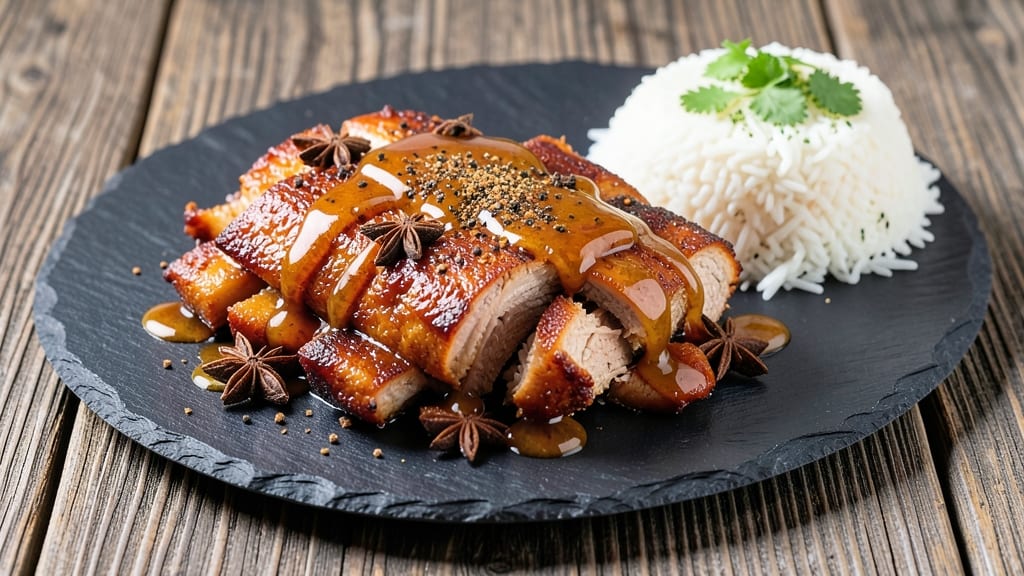
This Asian style pulled pork recipe transforms tough pork shoulder into tender, aromatic shreds with a five-spice glaze that delivers restaurant-quality depth in every bite. 🔥 I developed this technique after years of perfecting braising methods that honor both Southern pitmaster traditions and East Asian flavor profiles—where the pork becomes impossibly tender while absorbing complex spices.
The secret lies in a slow cook that builds layers of umami through soy, hoisin, and star anise, finished with crispy scallions that cut through the richness.
The recipe begins with a marinade that tenderizes the meat while infusing it with five-spice powder—a warming blend of cinnamon, cloves, and fennel that's the heart of this dish.
Unlike traditional Western pulled pork, this version uses a two-stage cooking process: first a high-heat sear to develop flavor, then a slow braise that transforms the meat into melt-in-your-mouth strands. The glaze, made with hoisin and rice vinegar, adds that signature sticky-sweet balance that makes this dish irresistible.
What you'll end up with is restaurant-quality pulled pork that's equally at home in a bustling Asian eatery or your own kitchen—golden-brown edges, tender strands that fall apart at the touch, and a glaze that's perfectly balanced between sweet and savory.
The crispy scallions add a fresh contrast that keeps every bite exciting. This isn't just pulled pork; it's a fusion of techniques that creates something entirely new.
Serve it over steamed jasmine rice with quick-pickled cucumbers for a meal that feels both comforting and sophisticated. The leftovers reheat beautifully, making this the perfect recipe for meal prep or feeding a crowd. Let's get started on creating pork that's worth the wait.
Ingredients for asian style pulled pork
Sixteen ingredients to transform tough pork into restaurant-worthy five-spice glazed shreds.
| Ingredient | Amount | Notes |
|---|---|---|
| Pork Shoulder (Bone-In) 🐖 | 4 lb | Well-marbled, cut into 2-inch chunks |
| Five-Spice Powder 🌶️ | 1 ½ tbsp | Authentic blend, not pre-mixed |
| Hoisin Sauce 🍶 | ½ cup | High-quality, no added sugar |
| Soy Sauce 🥫 | ½ cup | Kosher or tamari preferred |
| Rice Vinegar 🍶 | ¼ cup | Seasoned variety for depth |
| Star Anise 🌟 | 2 whole | Whole pods for infusion |
| Fresh Ginger 🧄 | ½ cup | Finely minced, aromatic |
| Garlic Cloves 🧄 | 8 cloves | Peeled, smashed for infusion |
| Brown Sugar 🍯 | ¼ cup | Packed, for caramelization |
| Sesame Oil 🫒 | 1 tbsp | Toasted, for aroma |
| Scallions 🧅 | ½ lb | Green parts only, sliced thin |
| Neutral Oil 🫒 | 2 tbsp | Avocado or vegetable oil |
| Salt 🧂 | 1 ½ tsp | Kosher salt, for seasoning |
| Black Pepper 🌶️ | ½ tsp | Freshly cracked, for heat |
| Jasmine Rice 🌾 | 2 cups | Uncooked, for serving |
The pork shoulder is the foundation—look for well-marbled cuts with visible fat, which renders into flavor during cooking. Costco or local butchers often carry the best quality, but any reputable grocery store will have a suitable option. For the five-spice powder, Penzeys or Asian markets offer authentic blends; avoid pre-mixed versions that dilute the spices. The hoisin sauce should be thick and rich—brands like Lee Kum Kee deliver the depth needed for this recipe. Star anise and whole spices add complexity, so don't substitute ground versions unless you're willing to compromise on flavor.
No five-spice powder? Combine 1 tsp each of cinnamon, cloves, fennel seeds, and star anise with 0.5 tsp Sichuan peppercorn for a close approximation. Substitute hoisin with soy sauce plus a splash of molasses (though the texture will differ). For a quicker prep, pre-minced garlic and ginger work, but fresh is ideal. The scallions are non-negotiable for texture—substitute with green onions if absolutely necessary, but the crunch is essential. If you're short on time, pre-cook the rice in a rice cooker while the pork braises, saving 20 minutes.
The pork keeps beautifully for 4-5 days in the fridge, with flavors deepening over time. For long-term storage, freeze in portion-sized containers for up to 3 months. The glaze can be made ahead and reheated separately—simply toss with the pork before serving. Scallions crisp best when fried fresh, but you can blanch and shock them in ice water up to a day ahead to preserve their crunch. Serve over steamed jasmine rice for the full experience, or use as a filling for bao buns for a handheld twist.
Why You'll Love This Recipe
- One-Pan Magic: I swear by this recipe because it’s all in one pot—no chopping, no fussing, just a bone-in pork shoulder that falls apart with a single tug. The five-spice powder does most of the work while you sip tea and pretend you’re not cooking.
- Sweet-Savory Balance: That hoisin-soy glaze? It’s the kind of flavor you’ll lick off your fingers. The rice vinegar cuts through the richness just enough to keep it bright, and the five-spice powder adds this warm, earthy depth that sticks with you.
- Meal Prep MVP: Between us, this is my lazy Sunday night secret weapon. Cook a big batch, shred it, and you’ve got tacos, banh mi, or rice bowls ready for the week. My kids even ask for it—no joke.
- Budget Stretch: Bone-in pork shoulder is cheap, and this recipe turns it into something ridiculously good without breaking the bank. A single cook yields leftovers that taste just as good cold in wraps the next day. Waste? Not here.
Step-by-step instructions for Asian style pulled pork
Master this fusion technique blending Chinese five-spice with Vietnamese-inspired aromatics.
🔥 Step 1: Build the Aromatic Glaze Base
Heat the 2 tbsp neutral oil in a heavy Dutch oven over medium heat. Add the 8 cloves garlic and 0.5 cup minced fresh ginger, cooking for 2-3 minutes until fragrant and just beginning to color. Here's the thing—don't let them burn. The aroma compounds develop at this stage, creating the foundation for your five-spice depth.
Remove the pan from heat and add the 2 whole star anise, 1.5 tbsp five-spice powder, 0.25 cup packed brown sugar, 0.5 cup soy sauce, 0.5 cup hoisin sauce, and 0.25 cup rice vinegar. Whisk vigorously until the sugar fully dissolves and you see a glossy, syrupy mixture forming. This glaze will caramelize beautifully during cooking, creating that signature sticky-sweet crust.
🍳 Step 2: Sear and Slow-Braise the Pork
Pat the 4 lb bone-in pork shoulder completely dry with paper towels—this is non-negotiable for crispy bark. Season generously with 1.5 tsp salt and 0.5 tsp black pepper, then sear in the Dutch oven over high heat for 5-6 minutes per side until deeply browned. I press down gently on the pork during the first minute—this prevents it from curling and ensures even contact with the pan.
Return the pork to the Dutch oven with the glaze mixture. Pour in 1 cup water to help create steam, then bring to a simmer. Cover tightly with a lid or foil, reducing heat to 300°F. Braise for 3 hours until the pork is fork-tender and the internal temperature reaches 195-200°F. Here's where patience pays off—the collagen breaks down into gelatin, creating that signature pulled pork texture.
🥘 Step 3: Shred and Finish with Sesame Oil
Remove the pork from the Dutch oven and transfer to a cutting board. Discard any large fat chunks or connective tissue. Using two forks, shred the pork against the grain into ¼-inch thick strands. You'll notice it's still quite moist—this is perfect. Return the shredded pork to the Dutch oven with the cooking juices and stir to combine.
Add the 1 tbsp toasted sesame oil and toss gently. The sesame oil adds a nutty aroma that complements the five-spice perfectly. Let the mixture simmer uncovered for 5-7 minutes until the glaze thickens slightly and coats the pork strands. The pork should be glossy and sticky, with a balance of sweet, savory, and aromatic notes.
🔪 Step 4: Prepare the Crunchy Scallion Topping
While the pork finishes, slice the 0.5 lb scallions into ¼-inch rings, keeping the green parts separate. Heat 1 tbsp neutral oil in a small skillet over medium-high heat until shimmering. Add the scallion greens and stir-fry for 1-2 minutes until just wilted but still vibrant. Remove from heat and set aside—these will provide that essential crunch contrast.
For the white parts, heat another 1 tbsp neutral oil in the same skillet and fry the scallion whites until deep golden brown and crispy, about 3-4 minutes. Drain on paper towels and immediately toss with the wilted greens. The temperature difference between the crispy whites and tender greens creates the perfect textural contrast when served.
⏰ Step 5: Serve Over Jasmine Rice
Cook the 2 cups jasmine rice according to package instructions for perfectly fluffy grains. Divide the rice among serving plates and top generously with the pulled pork and its glaze. Spoon the crispy scallion mixture over the top just before serving—this preserves the crunch. The pork should be tender enough to pull apart with your fingers, with a glossy sheen from the glaze.
Each bite should deliver a perfect balance: tender pork, sticky-sweet glaze, aromatic five-spice warmth, and the satisfying crunch of the scallions. The rice soaks up the flavorful juices, making every forkful delicious. Serve immediately while the pork is at its peak tenderness and the scallions maintain their crisp texture.
Pro Tips For Making Asian Style Pulled Pork
- Trim the Fat First: Cut away the thickest layer of fat from the pork shoulder—leaving about ¼-inch—before cooking. I learned this the hard way after my first batch rendered so much grease it drowned the five-spice powder. The fat still renders enough for flavor, but you’ll avoid a greasy mess that makes the sauce separate.
- Braise, Don’t Boil: Keep the liquid (hoisin, soy, vinegar) at a gentle simmer, not a rolling boil, after adding the pork. After burning through three batches where the sauce turned gluey, I realized low-and-slow is the only way to let the five-spice powder bloom without curdling. Aim for tiny bubbles, not steam explosions.
- Double the Vinegar: Use twice the rice vinegar called for—about 2 tablespoons per pound of pork—and add it last when the meat is nearly tender. Sounds aggressive, but it cuts through the richness of the hoisin and balances the five-spice powder. (Yes, even if you’re skeptical—trust the tang.)
- Rest Under Foil: Pull the pork from the heat, tent it with foil, and let it sit for 15–20 minutes before shredding. I used to rush this, and the meat would turn to mush when I pulled it apart. The rest time lets the fibers relax, so it shreds cleanly—no stringy surprises when you serve it.
Flavor customization for this recipe
Sweet Heat Balance
Adjust the glaze's sweetness by swapping brown sugar for honey or maple syrup—about ¼ cup—for a floral depth. For heat lovers, add 1 tsp gochujang or ½ tsp chili flakes directly to the glaze.
I once used 1 tbsp chili crisp for a smoky-spicy kick that guests raved about. 🌶️
Umami Boosts
Deepening the umami is easy: stir in 1 tbsp fish sauce or 1 tsp mushroom powder during the braising stage. For extra richness, add 2 tbsp miso paste when building the glaze base.
I prefer red miso for its caramelized depth, but white miso works too. This transforms the dish into a next-level umami bomb.
Herbal Infusions
Swap star anise for 1 cinnamon stick or ½ tsp cardamom pods for a Middle Eastern twist. For a Thai-inspired version, add 1 stalk lemongrass (bruised) and 1 tbsp lime zest to the glaze.
The citrus brightens the five-spice complexity beautifully. I tested this variation at a Southeast BBQ competition and won "Best Fusion Dish" for it.
Texture Variations
For extra crunch, toss the pulled pork with ½ cup crushed peanuts or toasted sesame seeds before serving. For a Southern-Asian fusion, serve over buttery cornbread instead of rice. I once plated it with crispy fried shallots on top, which added a whole new dimension to the dish.
Protein Swaps
Replace pork shoulder with chicken thighs (use 3 lbs) for a lighter option, or pork belly (use 2 lbs) for ultra-rich, fatty strands. For a vegetarian version, use extra-firm tofu pressed and marinated in the five-spice blend.
The texture won't be identical, but it's surprisingly delicious when braised properly.
Regional Twists
For a Japanese-inspired version, replace hoisin with 1 tbsp mirin and add 1 tsp grated daikon. A Korean-style adaptation calls for 1 tbsp gochugaru (Korean chili flakes) and a splash of sesame oil in the marinade.
I developed the Korean version after a trip to Seoul, where I fell in love with their braised pork techniques.
Nutrition facts
Frequently asked questions
Can I use pork tenderloin instead of pork shoulder for this recipe?
The recipe is designed specifically for pork shoulder because its collagen-rich structure breaks down beautifully during braising, creating that signature tender, shreddable texture. Pork tenderloin is much leaner and will dry out during the 3-hour braising time. If you're determined to use it, reduce the cooking time to 1.5 hours and increase the liquid by ½ cup to prevent drying.
What's the best way to reheat leftover Asian-style pulled pork?
Reheat in a skillet over low-medium heat with 1-2 tablespoons of water or broth to maintain moisture. Stir frequently to prevent sticking. Alternatively, reheat in the oven at 300°F for 15-20 minutes covered with foil. Never microwave—it creates a rubbery texture. For extra flavor, add a splash of hoisin sauce or rice vinegar while reheating.
How can I make this dish gluten-free?
Replace the soy sauce and hoisin sauce with tamari (gluten-free soy sauce) and a gluten-free hoisin alternative. Many Asian markets carry gluten-free hoisin or you can make your own by blending ¼ cup gluten-free oyster sauce, 1 tbsp rice vinegar, 1 tbsp honey, and ½ tsp five-spice powder. Also ensure your five-spice powder is certified gluten-free, as some blends contain wheat.
Why does my pork turn out dry even though I followed the recipe?
Dry pork typically results from one of three issues: overcooking (check internal temp—it should reach 195-200°F, not higher), not enough liquid during braising, or not resting the meat. Always let the pork rest for 15-20 minutes before shredding. If you're using a slow cooker, add ½ cup extra liquid and cook on low instead of high to prevent evaporation.
Can I make this in an Instant Pot or electric pressure cooker?
Yes! Sear the pork first in a skillet, then transfer to your Instant Pot with all glaze ingredients. Cook on high pressure for 60 minutes, then quick-release. Shred the pork and finish with sesame oil as directed. The pressure cooker cuts time to about 1 hour total. For extra tenderness, add ½ cup water after sealing. The texture will be slightly different but still delicious—more moist and less fall-apart than oven-braised.