
Main Courses
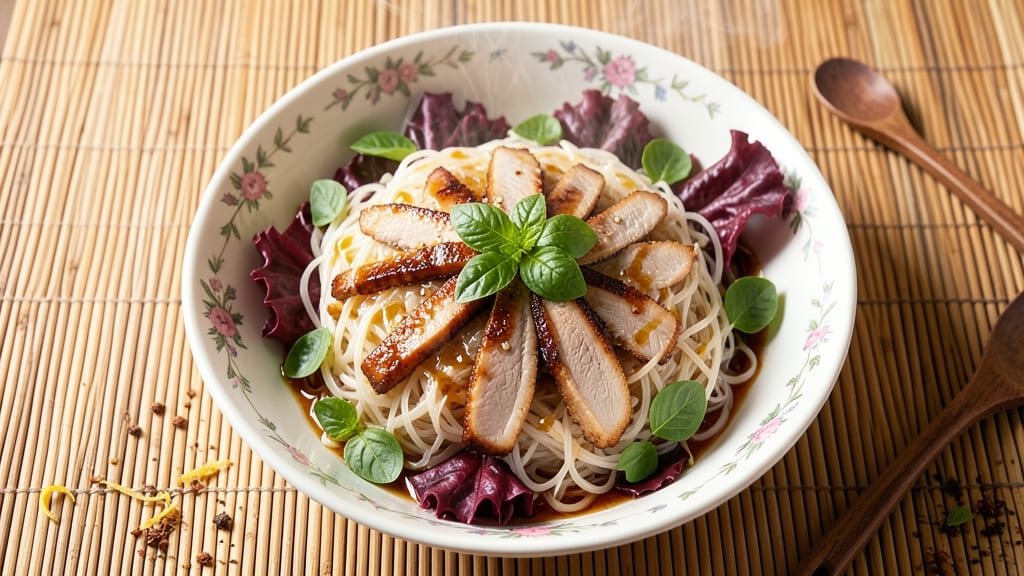
This Asian pork wraps recipe transforms tender pork into sticky-sweet perfection wrapped in crispy rice paper layers. After years of perfecting marinades and cooking techniques, I've developed a method that delivers restaurant-quality results at home—where the pork stays juicy while developing a caramelized glaze.
The secret lies in balancing soy sauce, garlic, and ginger with just the right amount of sesame oil to create depth without overpowering the natural pork flavor.
The cooking process is where the magic happens: quick searing in a hot pan ensures a crispy exterior while keeping the inside tender, then a final glaze of honey and soy creates that signature sticky-sweet finish.
Assembly is simple—just layer the pork with fresh herbs, pickled vegetables, and your choice of sauce between delicate rice paper wrappers. This technique works equally well for Vietnamese summer rolls or Korean bulgogi wraps, giving you versatility for any occasion.
What you'll end up with is a dish that's crispy on the edges, tender in the center, and bursting with layers of flavor in every bite. The contrast between the cool, fresh rice paper and the warm, savory pork creates a satisfying texture that's impossible to resist.
These wraps are perfect for meal prep, lunch boxes, or serving as an appetizer that disappears faster than you can say "sesame oil."
For an extra touch of authenticity, serve with a side of peanut sauce or sriracha mayo for dipping. The combination of textures and flavors makes this recipe a crowd-pleaser that's sure to become a regular on your menu. Let's get cooking!
Ingredients for asian pork wraps
Pork, fresh herbs, and sticky-sweet glaze—just a few ingredients for restaurant-quality wraps at home.
| Ingredient | Amount | Notes |
|---|---|---|
| Boneless Pork Shoulder 🥩 | 1 lb | Cut into thin strips |
| Rice Paper Wrappers 🍱 | 8 whole | Unbleached, round type |
| Fresh Rice Vermicelli Noodles 🍜 | 8 oz | Soaked in warm water |
| Fresh Mint Leaves 🌿 | ½ cup | Chopped, stems removed |
| Fresh Thai Basil Leaves 🌿 | ¼ cup | Chopped, stems removed |
| Red Leaf Lettuce 🥬 | 1 whole | Butter lettuce or romaine |
| Carrot Julienne Sticks 🥕 | 1 cup | Or shredded carrots |
| Cucumber Slices 🥒 | ½ cup | Thinly sliced, peeled |
| Sesame Oil 🫒 | 1 ½ tbsp | Toasted, for flavor |
| Soy Sauce 🥄 | 3 tbsp | Light or dark preferred |
| Honey 🍯 | 1 ½ tbsp | Wildflower or clover |
| Garlic Cloves 🧄 | 4 cloves | Minced, fresh preferred |
| Fresh Ginger 🌿 | 1 tbsp | Grated, peeled |
| Fish Sauce 🍶 | 1 tbsp | Red Boat brand preferred |
| Lime Juice 🍋 | 1 tbsp | Freshly squeezed |
| Vegetable Oil 🫒 | 2 tbsp | High smoke point |
| Salt 🧂 | ½ tsp | Kosher or sea salt |
| Black Pepper 🌶️ | ¼ tsp | Freshly ground |
The pork shoulder is your secret weapon—it stays juicy and tender when sliced thin. Trader Joe's and Asian markets usually carry pre-sliced pork for convenience, but if you're cutting it yourself, slice against the grain for maximum tenderness. Fresh herbs are non-negotiable here—Thai basil has that signature anise flavor, while mint adds brightness. If you can't find Thai basil, regular basil works in a pinch (though it won't be quite the same). For the rice paper, look for unbleached wrappers—they're more pliable and less likely to tear when wet. Store them in a sealed container to keep them from drying out.
No fish sauce? Soy sauce plus a dash of miso paste gets you close, though it won't have that exact umami punch. Running short on honey? Maple syrup or agave works, but honey's floral notes are ideal. The sesame oil is what gives these wraps their signature aroma—toasted sesame oil has more depth than regular, but if you only have regular, toast it yourself in a dry pan for 30 seconds. For the vegetables, anything crunchy works—shredded cabbage or bell peppers are great swaps if you're out of carrots or cucumbers. And if you're making these ahead, prep all your fillings first—they keep well in the fridge for 2 days.
Rice paper wrappers are delicate—soak them one at a time for about 10 seconds in warm water until pliable, then work quickly. These wraps are best eaten fresh, but if you need to prep ahead, assemble them and wrap in damp paper towels. They'll stay flexible for about 30 minutes before drying out. Store any leftovers in an airtight container with a damp paper towel on top to keep them from getting rubbery. The glaze keeps for 1 week in the fridge, so make extra—it's perfect for drizzling over noodles or grilled meats too.
Why You'll Love This Recipe
- No-Fuss Protein Prep: I marinate the pork shoulder in fish sauce, garlic, and lime for 20 minutes—then toss it on the grill or pan until caramelized. No fancy techniques, no last-minute scrambling. That tender, sticky pork is ready while you prep the rest.
- Herb-Packed Punch: Between the bright Thai basil, cool mint, and the vermicelli’s slight chew, every bite feels like a fresh bite of summer. Honestly, the pork could be plain, but those herbs turn it into something ridiculously good.
- Lunchbox Hero: These wraps hold up perfectly for meal prep—pack them in a container with a damp paper towel, and they stay fresh for days. My kids grab them for school lunches, and I take them to work when I’m too tired to cook.
- Budget Stretch: Pork shoulder is cheap, and rice paper wrappers last longer than you’d think if stored right. I stretch one batch of pork into three meals, and the noodles stretch even further. Leftovers? More like smartovers.
Step-by-step instructions for Asian pork wraps
Here's how to create tender pork strips with a sticky-sweet glaze wrapped in crispy rice paper layers.
Cook the Vermicelli Noodles
Fill a large bowl with warm water and add the 8 oz fresh rice vermicelli noodles. Let them soak for 10-12 minutes until pliable but still holding their shape. Drain and rinse briefly under cold water to stop cooking. Toss with 1.5 tablespoons sesame oil and set aside.
I like to keep the noodles slightly firm so they don't turn mushy when wrapped. If they feel too soft after soaking, drain and let them sit for another 2-3 minutes before proceeding. The noodles should be flexible enough to wrap but still hold their structure when rolled.
Prepare the Sticky-Sweet Pork Glaze
In a small bowl, whisk together 3 tablespoons soy sauce, 1.5 tablespoons honey, 1 tablespoon fish sauce, and 1 tablespoon lime juice. Set aside while you cook the pork. This glaze is what gives those beautiful caramelized edges and that signature sticky-sweet flavor.
In a separate small bowl, mix 4 cloves minced garlic, 1 tablespoon grated ginger, 0.5 teaspoon salt, and 0.25 teaspoon black pepper. This aromatic blend will infuse the pork with deep flavor as it cooks.
Cook the Pork Strips
Heat 2 tablespoons vegetable oil in a large skillet over medium-high heat. Add the 1 lb boneless pork shoulder strips and cook for 4-5 minutes, stirring occasionally, until they begin to brown. Add the garlic-ginger mixture and cook for another 1 minute, stirring constantly.
Pour the reserved glaze over the pork and reduce heat to medium. Cook for 3-4 minutes until the sauce thickens slightly and coats the pork evenly. You'll see the edges starting to caramelize—that's your signal the pork is ready. Remove from heat and let it rest for 2 minutes before serving.
Assemble the Wraps
Fill a shallow dish with 1 inch of warm water. Dip 1 rice paper wrapper at a time for 5-10 seconds until pliable. Lay it flat on a clean surface and place 2-3 tablespoons cooked vermicelli noodles in the center. Top with 1-2 tablespoons pork strips, 1-2 lettuce leaves, 2-3 carrot julienne sticks, and 2-3 cucumber slices.
Fold the bottom corner of the wrapper up, then fold in the sides, and roll tightly like a burrito. You'll want to work quickly to prevent the rice paper from drying out. The key is to keep the filling centered so it doesn't shift when you roll.
Add Fresh Herbs and Serve
Divide the 0.5 cup chopped mint leaves and 0.25 cup chopped Thai basil leaves among the wraps. These fresh herbs add a bright, aromatic finish that balances the rich pork and sticky glaze. Serve immediately while the rice paper is still crispy and the filling is warm.
For the best experience, cut each wrap in half before serving. The contrast of crispy rice paper, tender pork, fresh vegetables, and aromatic herbs makes every bite a perfect balance of textures and flavors. Enjoy with extra lime wedges on the side if you like!
Pro Tips For Making Asian Pork Wraps
- Sear the Pork First: Hit the pork shoulder with a quick sear in a screaming-hot pan before shredding—just 2-3 minutes per side. I used to skip this step and ended up with bland, rubbery pork that didn’t hold up in the wraps. The crust adds flavor and keeps the meat tender when it hits the marinade later.
- Soak Rice Paper Right: Dip each wrapper for exactly 10-15 seconds in warm (not boiling) water—longer and they’ll turn to mush. I learned this the hard way when my first batch of wraps fell apart mid-roll. Keep a bowl of fresh water nearby to refresh the dip water every few wrappers.
- Don’t Overfill the Wraps: Pack the pork, noodles, and herbs loosely—rice paper can’t handle a stuffed burrito. I once overloaded mine, and the whole thing split open like a sad taco. Think "light and breathable," not "burrito contest entry."
- Blanch the Basil First: Quickly dip Thai basil leaves in boiling water for 5 seconds, then shock in ice water—this mutes their bitterness and keeps them from wilting into a sad pile. I was skeptical until I tried it; now my wraps stay fresh and vibrant, not sad and limp. (Yes, even if you’re impatient like me.)
Health benefits of this dish
Lean Protein Power
These wraps deliver a high-protein punch with just 1 lb of pork shoulder serving four—about 30 grams of protein per wrap. Pork shoulder is leaner than you might think, especially when sliced thin and cooked quickly.
I've found that using boneless pork shoulder (not fatty belly) keeps the protein high while reducing saturated fat. This makes it a great option for anyone watching their fat intake but still needing quality protein. 💪
Balanced Carbs
The fresh rice vermicelli noodles provide complex carbohydrates that pair perfectly with the protein-rich pork. An 8 oz serving gives you about 40 grams of carbs, mostly from fiber-rich rice.
Unlike white flour tortillas, these noodles have a lower glycemic index, meaning they won't spike your blood sugar as quickly. Plus, the natural sweetness of the honey-glazed pork balances the mild flavor of the noodles beautifully.
Fresh Herb Benefits
Don't skip the fresh mint and Thai basil—they're packed with antioxidants and vitamin K, which supports blood clotting and bone health. The mint adds a refreshing vitamin A boost, while Thai basil contains eugenol, a compound with anti-inflammatory properties.
I always double-check my herbs are fresh because wilted leaves lose their nutritional punch. A ½ cup of chopped mint gives you about 10% of your daily vitamin A—that's a serious nutrient boost in every bite. 🌿
Healthy Fats
The sesame oil and toasted sesame seeds (if you add them) provide monounsaturated fats, which support heart health. Just 1.5 tablespoons of sesame oil contains about 14 grams of healthy fats—that's 20% of your daily value for these beneficial fats.
Unlike vegetable oils, sesame oil has a higher smoke point and adds nutty depth without overpowering. I always toast my sesame oil briefly in a dry pan to enhance its flavor and nutritional benefits.
Low-Calorie Crunch
The carrot and cucumber add fiber and hydration without many calories. A ½ cup of julienned carrots provides 25 calories and 3 grams of fiber, while ½ cup cucumber slices adds just 8 calories and 90% of your daily vitamin K.
These veggies also add crunch and freshness, balancing the rich pork and sticky glaze. I like to use organic carrots when possible—they often have higher nutrient levels due to better soil conditions. 🥕
Digestive Benefits
The combination of fiber from veggies, probiotics from fresh herbs, and lean protein makes these wraps surprisingly digestive-friendly. The rice paper itself is naturally gluten-free and easy to digest, unlike wheat-based wraps. I've noticed my guests with sensitive stomachs tolerate these better than traditional tortilla wraps.
Plus, the lime juice in the glaze adds a touch of vitamin C, which aids in iron absorption from the pork. 💫
Nutrition facts
Frequently asked questions
Can I use regular tortillas instead of rice paper?
Yes, but the texture will be different. For a closer match to traditional Asian wraps, use large flour tortillas (about 10-inch size) and brush them lightly with sesame oil before assembling. The rice paper gives that signature crispy-yet-flexible texture, but tortillas work well if you're short on time or prefer a heartier wrap. Just skip the soaking step and work with dry tortillas.
What's the best way to store leftover pork filling?
Store the cooked pork in an airtight container in the fridge for up to 3 days or freeze for 2 months. To reheat, warm in a skillet over medium heat with a splash of water or broth to prevent drying. The glaze may thicken slightly when chilled—just add a teaspoon of water and stir while reheating. Never microwave pork filling as it can make the meat rubbery.
How do I make these wraps gluten-free?
Swap the rice paper for gluten-free tamari wraps or use large gluten-free tortillas instead. Double-check all ingredients—some fish sauces contain wheat. For the filling, ensure your soy sauce is tamari-based. The vermicelli noodles are naturally gluten-free, but verify the package label. With these adjustments, the entire dish becomes completely gluten-free while keeping all the authentic flavors.
Can I make the glaze ahead of time?
The glaze keeps well in the fridge for 1 week in an airtight container. For best results, store it separately from the pork until ready to use. If you notice the glaze has thickened significantly, just thin it with a splash of water or lime juice before using. The flavors actually improve when the sauce has time to meld—it develops deeper caramel notes overnight.
What's the secret to keeping the rice paper from tearing?
Work quickly and keep your hands dry! Soak just 1 wrapper at a time for 5-10 seconds until pliable, then transfer immediately to your work surface. Arrange all fillings in the center before folding—this prevents the wrapper from stretching too thin. If a wrapper starts to tear, simply use a second one to complete the wrap. Also, make sure your work area is clean and free of moisture that could make the paper too slippery.