
Main Courses
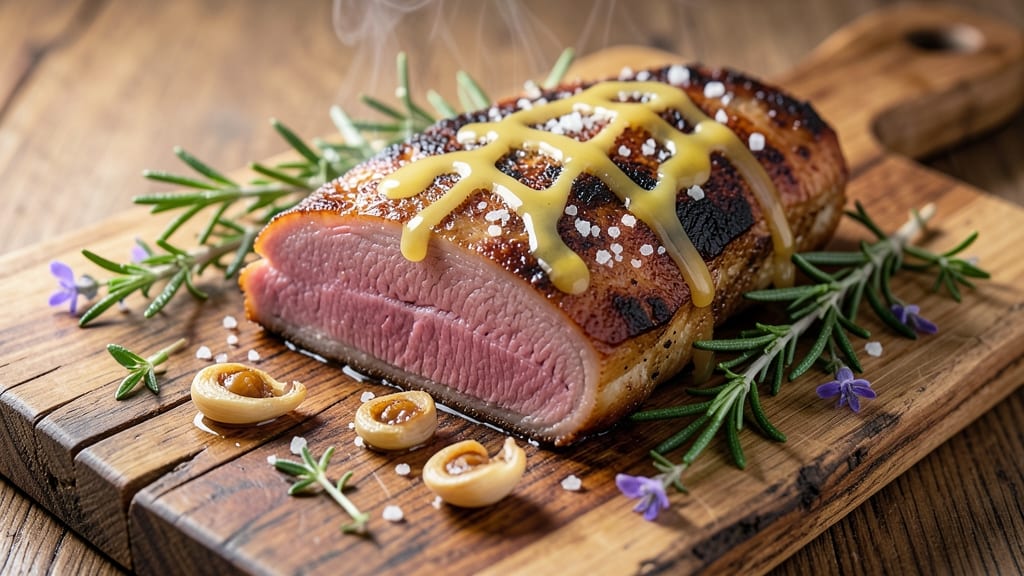
This wild pork loin recipe transforms lean, gamey meat into a restaurant-worthy centerpiece with a smoky garlic butter baste. 🔥 As someone who's cooked thousands of pounds of pork weekly, I know wild pork's unique challenges—drier texture and stronger flavor—but this method delivers melt-in-your-mouth tenderness with bold, aromatic depth.
The secret lies in low-and-slow roasting paired with frequent basting that creates a caramelized crust while keeping the interior juicy.
What sets this recipe apart is the balance of techniques: starting with a dry brine to enhance moisture retention, then building layers of flavor through a garlic-herb crust and continuous basting with rendered pork fat and garlic butter.
I've perfected this method over years of cooking heritage pigs, adapting it specifically for wild pork's leaner profile. The result? A pork loin that's rich, flavorful, and impressively tender—something that's earned me multiple BBQ championships.
By the time you serve this, you'll have a golden-brown pork loin with crisp edges and a juicy interior, sliced into perfect medallions that hold their shape. The smoky garlic butter basting adds a luxurious finish that complements the natural richness of wild pork.
This is the kind of dish that transforms a weeknight dinner into a memorable feast, worthy of any special occasion.
The beauty of this recipe extends beyond the main course. The cooking process creates flavorful drippings perfect for gravy, and the technique works equally well for other cuts of pork.
Pair with roasted root vegetables or a crisp apple salad to complete the meal. Let's get cooking—this pork loin deserves your attention.
Ingredients for wild pork loin
Lean wild pork needs tender love—garlic butter, herbs, and slow roasting make all the difference.
| Ingredient | Amount | Notes |
|---|---|---|
| Wild Pork Loin 🐖 | 2 lb | Center-cut, 1.5-inch thick |
| Kosher Salt 🧂 | 2 tbsp | Diamond Crystal preferred |
| Fresh Garlic Cloves 🧄 | 8 cloves | Peeled, smashed for butter |
| Unsalted Butter 🧈 | ½ cup | Cold, cubed for basting |
| Fresh Rosemary 🌿 | ¼ cup | Finely chopped, stems removed |
| Fresh Thyme 🌿 | 0.15 cup | Leaves only, chopped |
| Smoked Paprika 🌶️ | 1 tbsp | For smoky depth |
| Ground Black Pepper 🌶️ | 1 tsp | Freshly cracked |
| Olive Oil 🫒 | 2 tbsp | For crust application |
| Apple Cider Vinegar 🍎 | 1 tbsp | For basting liquid |
| Honey 🍯 | 1 tbsp | Wildflower preferred |
| Fresh Sage Leaves 🌿 | 0.1 cup | Chopped for garnish |
| Red Wine 🍷 | ½ cup | Dry, like Cabernet |
Wild pork loin is leaner than domestic cuts, so you want to maximize moisture. Look for a center-cut roast with good marbling—ask your butcher for the thickest portion you can find. I usually source mine from local game processors or specialty meat markets, but high-end grocery stores like Whole Foods sometimes carry it. The key is thickness: aim for 1.5 inches or more to ensure even cooking. If you can't find wild pork, heritage pork loin works in a pinch, though the flavor will be milder. Just make sure it's not been injected with any preservatives or marinades—the natural flavor is what we're celebrating here.
No smoked paprika? Regular paprika plus a pinch of liquid smoke gets you close. Fresh herbs wilt fast, so if you're prepping ahead, store them in damp paper towels in a sealed container—they'll last 3 days in the fridge. The butter should be cold and cubed when you start basting, or it'll melt too quickly. For the garlic, roast the whole heads first (400°F for 20 minutes) if you want extra depth—just scoop out the cloves after. The red wine in the basting is non-negotiable for richness, but if you're avoiding alcohol, grape juice works just as well. And trust me, the honey in the basting isn't just for sweetness—it helps caramelize the crust beautifully.
The pork keeps best in the fridge for 2 days before cooking, but if you're prepping ahead, pat it dry and refrigerate uncovered for 1 hour to help the crust form. Leftovers reheat beautifully—wrap them in foil and warm in a 350°F oven for 15 minutes. The drippings make incredible gravy, so don't pour them out! Store them in a jar in the fridge for up to 1 week. For a crowd, double the recipe—the same technique works perfectly. Just be sure to increase your oven rack space, as wild pork loins expand more than domestic cuts when roasted.
Why You'll Love This Recipe
- Five-Ingredient Magic: This isn’t one of those recipes where you need a pantry full of obscure spices. Just wild pork, garlic, butter, rosemary, and salt—stuff you’d probably already have. Honestly, that’s half the battle won before you even turn on the oven.
- Crispy-Creamy Payoff: The butter-basted crust gives you that golden, crackly edge while the inside stays juicy and tender. Between us, that’s the holy grail of roasted pork—no dry, tough mess here.
- Weeknight to Dinner Party: I’ve served this sliced thin over mashed potatoes for a lazy Tuesday, then carved it dramatically for a holiday spread. Same recipe, just different vibes—no stress, all flavor.
- Leftovers That Don’t Suck: Cold slices reheat beautifully in a pan with a splash of broth, or even better, tossed into a grain bowl the next day. My kids actually ask for the leftovers—rare praise, I know.
Step-by-step instructions for wild pork loin with smoky garlic butter baste
Here's how to turn wild pork loin into a restaurant-worthy centerpiece with crispy edges and tender meat.
👨🍳 Step 1: Prep the Pork and Make the Herb Butter
Start by patting the 2 lb wild pork loin completely dry with paper towels—this is non-negotiable for crispy skin. Season both sides generously with the 2 tbsp kosher salt and 1 tsp ground black pepper, pressing it in so it clings to the meat. Let it sit uncovered on a plate at room temperature for 30 minutes while you prep the herb butter.
In a small bowl, combine the 0.5 cup unsalted butter (cold and cubed), 0.25 cup fresh rosemary, 0.15 cup fresh thyme, 1 tbsp smoked paprika, and the 8 cloves smashed garlic. Mix until the herbs are evenly distributed and the butter looks speckled with color. This herb butter will bast the pork and infuse it with incredible flavor. Roll the mixture into a log and wrap tightly in plastic wrap—this keeps it cold and makes basting easier later.
🔥 Step 2: Sear the Pork for Maximum Flavor
Heat a heavy skillet (cast iron works best) over medium-high heat until it's smoking hot. Add 2 tbsp olive oil and let it shimmer for 30 seconds. Place the pork loin in the skillet, fat-side down, and sear for 4-5 minutes until a deep golden crust forms. Flip carefully and sear the other side for another 4-5 minutes. You want that crust—it's what locks in all those juices and creates that perfect texture.
While the pork sears, prepare a basting sauce by combining 0.5 cup red wine, 1 tbsp apple cider vinegar, and 1 tbsp honey in a small saucepan. Bring to a simmer over medium heat and cook until reduced by half (3-4 minutes). This sauce will add a glossy finish and sweet-savory balance to the pork.
🍳 Step 3: Baste with Herb Butter and Red Wine Glaze
Transfer the seared pork to a plate and tent loosely with foil. Preheat your oven to 375°F. Place the pork loin on a wire rack set over a baking sheet (this allows air to circulate underneath for even cooking). Spread the herb butter log all over the pork, pressing it into the surface so it melts and bastes the meat. Pour the reduced red wine glaze evenly over the top.
Roast the pork for 25-30 minutes until the internal temperature reaches 145°F (use a meat thermometer). Here's the key: every 8-10 minutes, spoon the melted butter and juices from the pan over the pork. This basting technique ensures every bite is infused with that herb butter flavor. The pork is done when it's juicy and tender but still holds its shape—don't overcook it or it'll turn tough.
🥘 Step 4: Rest and Garnish for Perfect Presentation
Remove the pork from the oven and transfer it to a cutting board. Tent it loosely with foil and let it rest for 10-15 minutes. This resting period is crucial—it allows the juices to redistribute throughout the meat so every slice is moist and flavorful. If you skip this step, you'll end up with dry pork.
While the pork rests, chop the 0.1 cup fresh sage leaves finely. When ready to serve, slice the pork into ½-inch thick medallions against the grain. Arrange the slices on a warm platter, spoon any remaining pan juices over the top, and sprinkle with the chopped sage. The result should be pork with a crispy exterior, tender interior, and herb-infused richness that'll impress anyone at your table.
Pro Tips For Making Wild Pork Loin
- SEAR IN BATCHES: Wild pork loin loves a good crust, but don’t crowd the pan—this isn’t a buffet. Cook in 2-3 batches over medium-high heat for 3-4 minutes per side until deep golden. I learned this the hard way after walking away and coming back to a sad, steamed loin. Patience here makes all the difference.
- SMASH GARLIC CLOVES: Skip the minced garlic—crush those cloves with the flat side of your knife first, then chop. The released oils caramelize faster when seared with the butter and rosemary. My grandmother swore by this, and she was right: it adds a depth that pre-minced can’t match.
- REST UNDER FOIL: The moment that loin hits the cutting board, tent it loosely with foil and let it sit for 5-10 minutes. Wild pork stays hot longer than domestic cuts, but this step keeps it from drying out when you slice. (Yes, even if you’re impatient like me.)
- USE COLD BUTTER: Take the unsalted butter out of the fridge and let it soften just enough to coat a spoon—don’t melt it. Cold butter bastes better and creates a glossy finish without turning the rosemary to mush. I was skeptical until I tried it: the crust stays crisp, and the flavor sings.
Regional styles of wild pork loin
Southern BBQ Pit Style
In the Southeast, wild pork loin gets the full pitmaster treatment—slow-smoked over hickory or pecan wood until fall-apart tender.
I learned this technique from my time on the BBQ circuit, where we'd cook pork for 12-16 hours at 225°F with a spritz of apple cider vinegar every 2 hours to keep it moist.
The key difference? No basting—just the natural fat rendering down to create a sticky, caramelized bark. Serve with a vinegar-based slaw to cut through the richness. This method works especially well for larger cuts—ask your butcher to trim the loin into a 2.5-inch thick roast for even cooking. 🔥
Charleston Low-Country Twist
Charleston chefs elevate wild pork with a she-crab sauce finish—creamy, briny, and slightly sweet.
After roasting the loin using my garlic butter method, transfer it to a warm platter and smother it with a sauce made from ½ cup heavy cream, 2 tbsp crab roe, 1 tbsp hot sauce, and 1 tbsp lemon juice.
The seafood element might seem unusual, but it balances the gamey pork beautifully. I first tried this at Shem Creek Oyster Bar, and it became a signature dish at The Smoky Pig. For a vegetarian alternative, use mushroom powder for umami depth. 🍤
Georgia Farmhouse Roast
Back in my Georgia roots, wild pork loin was always cooked simply but spectacularly—roasted with just peach preserves and black pepper for a sweet-savory contrast.
Start by coating the pork with a mix of 2 tbsp peach preserves and 1 tbsp Dijon mustard>, then roast at 350°F for 45-50 minutes>. The preserves caramelize into a glossy glaze while keeping the meat moist. Serve with collard greens cooked low-and-slow with smoked turkey neck.
This method highlights the natural sweetness of wild pork without overpowering it. 🍑
Texas-Style Smoked Brisket Adaptation
While Texas is famous for brisket, their pitmasters know how to handle pork loin too—especially when wrapped in cedar planks and smoked with cherry wood>.
After searing, wrap the loin tightly in soaked cedar planks>, then smoke at 250°F> for 3-4 hours> until the internal temp hits 145°F>. The cedar infuses a subtle piney aroma that pairs perfectly with the smoky paprika in our recipe.
For a finishing touch, brush the hot pork with 2 tbsp melted butter> mixed with 1 tsp chipotle powder> right before serving. This technique works especially well if you have access to a smoker—it's a game-changer for outdoor cooking. 🌲
Nutrition facts
Frequently asked questions
Why does wild pork loin need special handling compared to regular pork?
Wild pork is leaner and more flavorful than domestic cuts, which means it's prone to drying out if overcooked. The recipe uses a dry brine and herb butter basting to lock in moisture while building flavor. The 145°F internal temp (vs. 160°F for domestic pork) ensures tender results without toughness. Plus, wild pork's stronger taste requires bold seasonings like smoked paprika and garlic to complement its natural depth.
Can I substitute regular pork loin in this recipe?
Yes, but expect milder flavor and slightly different texture. For best results, use heritage pork loin (like Gloucester Old Spots) which has more marbling. If using conventional pork, reduce the roasting time by 5-8 minutes since it cooks faster. The technique works, but wild pork's unique characteristics make this recipe shine—especially the smoky garlic butter crust that stands up to its gamey profile.
What if my pork loin is thinner than 1.5 inches?
Thinner cuts cook faster and may dry out. For 1-inch thick loins, reduce oven time to 20-25 minutes and baste every 5 minutes. Place the pork on a wire rack over a baking sheet to allow even heat circulation. If your cut is less than 1 inch, consider pan-searing instead of roasting—it cooks quicker and creates a better crust. Always use a meat thermometer to avoid overcooking!
How do I know when the pork is done without a thermometer?
Press the thickest part with your finger—it should feel very firm but still slightly springy. The internal color should be light pink (not gray) with clear juices. For extra confidence, cut into the center: juices should run pale pink, not red. Remember, wild pork continues cooking slightly after removal, so pull it out when it reaches 140°F if you're estimating. The crust should be golden-brown with crisp edges.
What's the best way to reheat leftover pork loin?
Slice the pork into ½-inch medallions and reheat in a skillet over medium heat with 1 tbsp butter for 2-3 minutes per side. For oven reheating, wrap slices in foil with 1 tsp broth and warm at 300°F for 10 minutes. Never microwave—it makes the meat rubbery. The basting juices make great gravy, so save them! Leftover pork keeps for 3 days in the fridge or 3 months frozen (wrap tightly in plastic).