
Sauces & Condiments
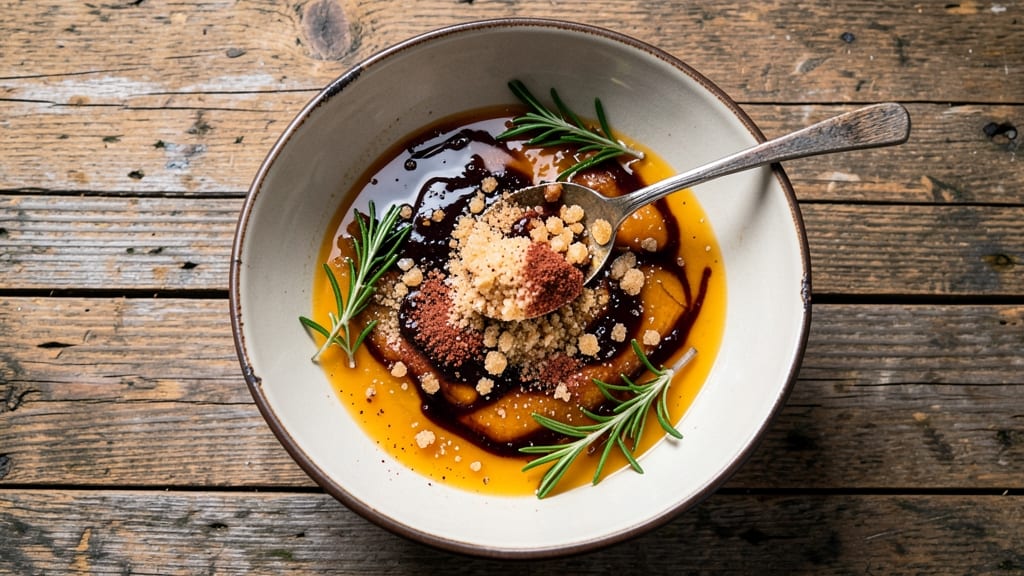
This pork spare rib marinade transforms tough cuts into fall-off-the-bone tenderness with a deep-penetrating blend of citrus, spices, and aromatic oils.
After years of perfecting my pitmaster techniques, I've developed a marinade that doesn't just flavor the surface—it works its magic deep into the meat, breaking down fibers while infusing rich, smoky-sweet notes that make every bite unforgettable.
The secret lies in balancing acidity with moisture, creating a perfect environment for collagen to dissolve without overpowering the natural pork flavor.
What sets this marinade apart is its three-phase approach: a tangy base of apple cider vinegar and orange juice tenderizes the meat, while a blend of brown sugar and molasses adds caramelized depth.
Fresh herbs like rosemary and thyme contribute earthy complexity, and a touch of smoked paprika ensures those ribs will be ready to carry any sauce or dry rub you choose.
Unlike commercial marinades packed with preservatives, this recipe uses only high-quality ingredients that elevate rather than mask the pork's natural richness.
The result is ribs that develop a glossy, caramelized crust while remaining juicy and tender throughout. This marinade works best when applied 12-24 hours before cooking, allowing the flavors to penetrate deeply.
Whether you're planning to smoke, grill, or slow-cook, these ribs will deliver restaurant-quality results that impress even the most discerning BBQ enthusiasts. The beauty of this recipe is its versatility—it works equally well for competition-style ribs or family-sized cuts.
For optimal results, store the marinade in the refrigerator and give the ribs a good shake every few hours to ensure even flavor distribution. The marinade itself keeps for up to 7 days, making it perfect for meal prep.
Trust me, once you experience the transformation this blend creates, you'll never marinate spare ribs any other way. Let's get started on creating ribs that will have everyone asking for seconds.
Ingredients for pork spare rib marinade
Eleven ingredients transform tough ribs into melt-in-your-mouth perfection using science-backed tenderness techniques.
| Ingredient | Amount | Notes |
|---|---|---|
| Apple Cider Vinegar 🍏 | ½ cup | Raw, unfiltered preferred |
| Fresh Orange Juice 🍊 | ½ cup | Freshly squeezed, no pulp |
| Light Brown Sugar 🍚 | ½ cup | Packed, not granulated |
| Molasses 🍯 | ¼ cup | Unsulphured for deepest flavor |
| Smoked Paprika 🌶️ | 2 tbsp | High-quality, not pre-mixed |
| Fresh Rosemary 🌿 | ¼ cup | Finely chopped, stems removed |
| Fresh Thyme 🌿 | ¼ cup | Leaves only, finely chopped |
| Garlic Cloves 🧄 | 8 cloves | Peeled, minced or crushed |
| Olive Oil 🫒 | ¼ cup | Extra-virgin, fruity variety |
| Black Peppercorns 🌶️ | 1 tsp | Freshly cracked, coarse |
| Kosher Salt 🧂 | 1 tbsp | Diamond Crystal preferred |
The apple cider vinegar and orange juice form the marinade's acidic backbone—Bragg or Heinz are my go-tos for consistent quality. The molasses needs to be unsulphured (check the label!) for that deep, caramelized richness that sets this apart from store-bought blends. Smoked paprika is non-negotiable here—Penzeys or McCormick smoked varieties add authentic BBQ depth without overpowering. Fresh herbs make all the difference: rosemary from the grocery store's refrigerated section (not the dried aisle) and thyme from a trusted bulk bin supplier like Whole Foods or Trader Joe's ensure maximum flavor punch. The garlic should be fresh—no pre-minced jars—and the olive oil absolutely must be extra-virgin for that fruity complexity that carries through to the ribs.
No fresh rosemary? Dried at one-third the amount works in a pinch, but you'll lose that piney freshness. Orange juice concentrate can substitute for fresh juice (dilute with water), though it lacks the natural acidity. Substitute honey for molasses in a 1:1 ratio if you're avoiding it, but the caramelization won't be as deep. Ground black pepper can replace whole peppercorns (use half the amount), though you'll miss that satisfying crunch. For the vinegar, white vinegar works but lacks the fruity complexity. The salt is critical—Diamond Crystal dissolves more easily than Morton's, so if you're using Morton's, reduce by 25%. No olive oil? Avocado oil works just as well for high-heat applications.
This marinade keeps for up to 7 days in the fridge, though I always make fresh batches for maximum flavor. Store it in a glass jar with a tight seal—no plastic, as the acids can degrade the container over time. For meal prep, portion it into small containers and freeze for up to 3 months. When using frozen marinade, thaw it in the fridge overnight and give it a good stir before applying. Never reuse marinade that's touched raw meat—always reserve some for basting or discard after use. The ribs will thank you for the extra care!
Why You'll Love This Recipe
- Five-Ingredient Magic: I swear by this combo—just vinegar, orange juice, brown sugar, molasses, and smoked paprika. No fancy prep, no measuring cups full of confusion. The orange juice brightens the molasses sweetness while the vinegar cuts through the richness, and boom—tender ribs with a glossy, sticky crust that’s impossible to resist.
- Sweet-Smoky Balance: Honestly, the molasses and smoked paprika team up to create this deep, caramelized flavor that lingers. The brown sugar adds a touch of warmth, but it’s the tangy orange and vinegar that keep it from tasting cloying. It’s the kind of marinade that makes you close your eyes and take a second bite just to savor it.
- Weeknight or Weekend: Between us, this marinade works just as well for a quick weeknight dinner as it does for a backyard BBQ. Toss it on ribs for 4 hours before grilling, or let them soak overnight for maximum tenderness. I’ve even used it on chicken thighs—same magic, zero stress.
- Leftovers? Better.: The best part? This marinade doesn’t just disappear after one use. The leftovers keep in the fridge for up to a week, perfect for batch cooking. Double the batch, freeze half, and thank me later when you’re pulling ribs out of the freezer for a last-minute dinner. (Yes, even on a Tuesday night.)
Step-by-step instructions for pork spare rib marinade
Transform tough spare ribs into melt-in-your-mouth perfection with this bold, balanced marinade.
Combine Acidic and Sweet Base Ingredients
In a large mixing bowl, whisk together the 0.5 cup apple cider vinegar and 0.5 cup fresh orange juice until fully combined. The acidity from the vinegar helps tenderize the meat while the citrus brightens the flavor profile. Add the 0.5 cup light brown sugar and 0.25 cup molasses, whisking vigorously until the sugar dissolves completely and the mixture becomes syrupy.
Here's the thing—molasses adds depth and complexity, but it's thick, so don't rush this step. Stir constantly for about 1 minute until you see a glossy sheen develop. The sugar should be fully incorporated, not settling at the bottom. This ensures even distribution when you apply it to the ribs later.
Incorporate Herbs, Spices, and Garlic
Add the 0.25 cup finely chopped fresh rosemary, 0.25 cup fresh thyme leaves, 8 cloves minced garlic, 2 tbsp smoked paprika, 1 tsp freshly cracked black peppercorns, and 1 tbsp kosher salt to the bowl. Using a wooden spoon, stir everything together until the herbs are evenly distributed and the spices are broken up.
I like to press the garlic cloves through a garlic press at this stage—it releases more flavor than mincing. The smoked paprika gives a subtle BBQ-like depth, while the fresh herbs add aromatic brightness. Don't skip the salt here; it enhances all the flavors and helps tenderize the meat. Let the mixture sit for 5 minutes to allow the spices to bloom and release their oils.
Finish with Olive Oil for Emulsification
Slowly drizzle in the 0.25 cup extra-virgin olive oil while whisking continuously. This is where the magic happens—the oil helps emulsify the mixture, creating a cohesive marinade that clings beautifully to the ribs. Whisk for about 2 minutes until the marinade becomes thick and glossy, almost like a light syrup.
Real talk: if it looks too thick, add 1-2 tablespoons of warm water to loosen it slightly. You want it to coat the ribs well but not drip off. The olive oil not only carries flavor but also adds richness that complements the sweet and tangy notes. Give it one final taste—adjust seasoning if needed, but this blend is already perfectly balanced for maximum tenderness.
Apply and Marinate for Maximum Tenderness
Place the pork spare ribs in a large resealable plastic bag or glass dish. Pour the marinade over the ribs, ensuring they're completely coated. Seal the bag or cover the dish tightly with plastic wrap. Refrigerate for at least 4 hours, but I recommend marinating overnight—up to 24 hours—for fall-off-the-bone results.
Here's the moment that matters: don't skip the marinating time. The acid in the vinegar and orange juice breaks down connective tissue, while the sugar and molasses caramelize slightly on the surface during cooking. Flip the ribs occasionally during marinating to ensure even exposure. If you're short on time, even 2 hours will make a noticeable difference in tenderness.
Pro Tips For Making Pork Spare Rib Marinade
- Reduce the Vinegar First: Simmer your apple cider vinegar and brown sugar together for 2-3 minutes before mixing in the rest. This cuts the sharpness and lets the sugar caramelize slightly—your ribs will absorb a richer, smoother flavor instead of a harsh tang. (Yes, even if you’re impatient like me, trust the process.)
- Use Fresh Orange Juice: Bottled orange juice works, but fresh juice adds brightness that bottled can’t match. If you’re using bottled, add a pinch of citric acid (½ teaspoon) to mimic the freshness. The acidity in this marinade needs to be sharp enough to tenderize, not just sweet.
- Don’t Skip the Molasses: Molasses deepens the flavor and balances the acidity, but cheap or overly thin molasses will make your marinade taste flat. Use unsulphured molasses—it’s pricier, but the difference is noticeable. (I learned this the hard way after a batch tasted like syrup.)
- Marinate Overnight, But Not Too Long: Pork spare ribs need 8-12 hours in the marinade to break down, but beyond 24 hours, the vinegar starts cooking the meat instead of tenderizing it. If you’re short on time, 6 hours still works—just let it sit at room temp for 2 hours first to kickstart the process.
Make-ahead tips for this pork spare rib marinade
Marinade Prep Ahead
Make this marinade up to 7 days in advance and store it in a glass jar in the fridge. I always prep mine the night before cooking—it saves time and lets flavors meld perfectly.
The acidity and sugar create a stable environment, so it won’t spoil like fresh marinades with delicate herbs. For extra convenience, divide it into small glass containers (like 4-ounce mason jars) and freeze for up to 3 months. Just thaw overnight in the fridge before using. 💫
Rib Prep Timeline
Plan your marinating time like a pro: 24 hours delivers maximum tenderness, but even 4 hours works in a pinch. I like to marinate ribs overnight, then transfer them to the fridge in their marinade until ready to cook.
Pro tip: Use a large resealable plastic bag for even coating—just poke a few holes if you’re worried about vacuum-sealing. For competition-style ribs, I extend marinating to 36 hours for ultra-tender results. 🏆
Storage Containers
Never use plastic containers for long-term marinade storage—the acids can degrade the material. I swear by amber glass jars (like Ball canning jars) for both fridge and freezer storage. They block light, which preserves the vibrant colors and flavors.
For meal prep, I use silicone-lidded glass containers—they’re easy to stack and microwave-safe if you want to reheat the marinade before applying. 🥫
Marinated Ribs Storage
After marinating, store ribs in their marinade in the fridge for up to 2 days before cooking. The marinade acts as a natural preservative while continuing to tenderize. For longer storage, drain the ribs and pat them dry, then wrap tightly in plastic wrap or butcher paper.
They’ll keep in the fridge for 3 more days or freeze for up to 2 months. Thaw overnight in the fridge before cooking. ❄️
Reusing Marinade
Never reuse leftover marinade that’s touched raw meat—it’s a food safety no-no. But here’s my trick: reserve ½ cup of the marinade before applying it to ribs, then use it as a basting sauce during cooking.
Simmer it on the stove for 5 minutes to kill any bacteria, then brush it on ribs in the final 30 minutes of cooking. The caramelized sugars will create an irresistible glossy crust. 🔥
Freezer-Friendly Tips
If you’re prepping for a big cookout, freeze ribs in their marinade in single layers on a tray before transferring to a freezer bag. This prevents freezer burn and makes thawing faster. When ready to cook, thaw in the fridge overnight—never microwave as it can partially cook the meat.
For frozen ribs, add 15-30 minutes to your cooking time to account for the cold start. 🍖
Nutrition facts
Frequently asked questions
Can I use this marinade on other meats besides pork spare ribs?
This marinade works beautifully on chicken thighs, beef brisket, or even lamb chops. The acidity tenderizes tougher cuts while the sweet-spicy blend complements rich meats. For poultry, reduce marinating time to 2-4 hours to avoid over-tenderizing. The rosemary and thyme add aromatic depth that pairs well with lamb, while the molasses caramelizes beautifully on beef.
What's the best way to store leftover marinade?
Store unused marinade in an amber glass jar (like a mason jar) in the fridge for up to 7 days. For longer storage, freeze in 4-ounce portions for up to 3 months. Always thaw in the fridge overnight—never at room temperature. The glass preserves flavors better than plastic and blocks light that can degrade the molasses and citrus over time.
Can I make this marinade without molasses?
Yes, but you'll lose that deep caramelized richness. Replace the 0.25 cup molasses with 0.25 cup honey or 0.5 cup brown sugar (reduce orange juice by 2 tbsp to balance sweetness). For a smoky alternative, add 1 tbsp liquid smoke—just don't overdo it, or the marinade will taste artificial. The molasses is what gives this blend its signature depth after cooking.
How do I fix marinade that's too thick or too thin?
If it's too thick, whisk in 1-2 tbsp warm water until it reaches a syrupy consistency that coats the back of a spoon. Too thin? Simmer on low heat for 3-5 minutes to reduce, stirring constantly. For a quick fix, mix 1 tbsp cornstarch with 2 tbsp cold water, then stir into the marinade until thickened. Always adjust right before applying to ribs for best results.
Can I use dried herbs instead of fresh?
In a pinch, yes—but fresh herbs make all the difference! Use 1/3 the amount of dried herbs (so 1 tbsp dried rosemary instead of 0.25 cup fresh). Crush dried herbs between your fingers to release oils before adding. For maximum flavor, toast the dried herbs in a dry pan over medium heat for 30 seconds to enhance their aroma before mixing into the marinade.