
Soups & Stews
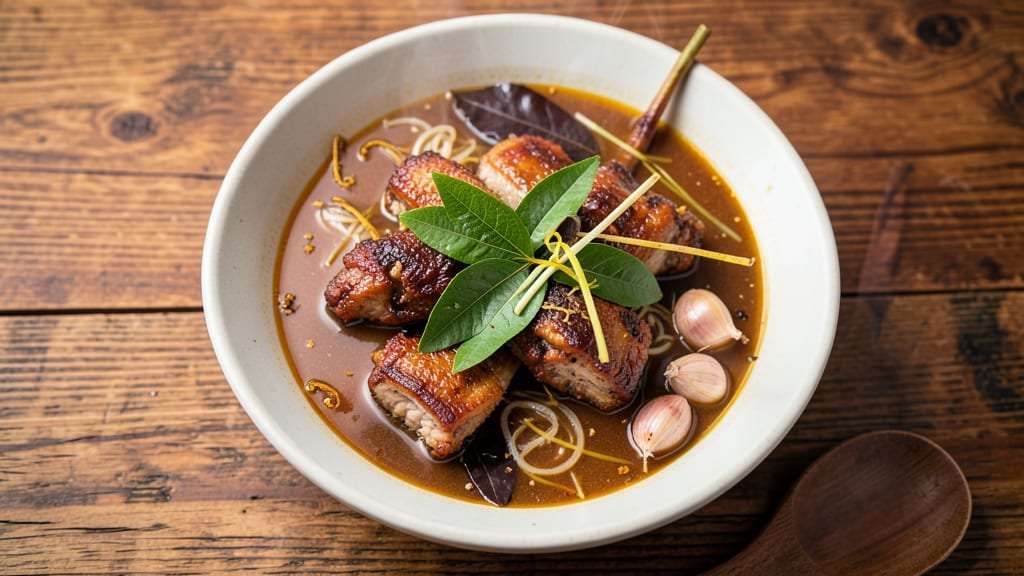
This Filipino-style pork ribs soup brings homey warmth to any table, where tender meat and aromatic broth create comfort in every spoonful. The secret lies in slow-cooked ribs infused with lemongrass and kaffir lime leaves—flavors that transform simple ingredients into something extraordinary.
I first mastered this technique during a trip to Manila, where every bowl felt like a hug in soup form.
The magic happens in the broth, where pork ribs simmer until falling-off-the-bone tender while absorbing the bright citrus notes of kaffir lime and the earthy depth of laurel leaves.
Unlike quick stews, this recipe demands patience—3 to 4 hours of gentle cooking—because that's what builds the rich, velvety texture that defines Filipino comfort food. The ribs become so tender they practically melt, while the broth develops layers of flavor that only time can create.
What you'll end up with is a steaming bowl of restaurant-quality soup that's perfect for chilly evenings or family gatherings. The ribs are rich and juicy, the broth is fragrant with herbal notes, and every spoonful delivers that perfect balance of savory, tangy, and umami.
Serve it with steamed rice to soak up every last drop of that precious broth—because in Filipino kitchens, nothing goes to waste.
This isn't just another pork soup—it's a taste of home, a recipe that carries the warmth of Filipino hospitality in every bite. The technique is straightforward once you understand the key steps, and the ingredients are simple but powerful. Let's make this comforting classic that'll have everyone asking for seconds.
Ingredients for pork ribs soup recipe filipino style
Sixteen ingredients transform into a bowl of Filipino comfort that feels like home.
| Ingredient | Amount | Notes |
|---|---|---|
| Pork Ribs 🍖 | 3 lb | Baby back or spare ribs, meaty cuts |
| Fresh Lemongrass 🌿 | 3 stems | Bruised and cut into 2-inch pieces |
| Kaffir Lime Leaves 🍋 | 4 whole | Lightly bruised for aroma |
| Bay Leaves 🍃 | 2 whole | Dried, standard grocery store |
| Garlic Cloves 🧄 | 8 cloves | Peeled, roughly chopped |
| Onion 🧅 | 1 whole | Yellow or white, chopped |
| Tomatoes 🍅 | 4 whole | Medium, quartered (San Marzano preferred) |
| Coconut Milk 🥥 | 1 can (13.5 oz) | Full-fat for creaminess |
| Fish Sauce 🍶 | 2 tbsp | Red Boat brand recommended |
| Soy Sauce 🍶 | 2 tbsp | Light or regular |
| Brown Sugar 🍯 | 2 tbsp | Packed, for balance |
| White Peppercorns 🌶️ | ½ tsp | Freshly ground |
| Salt 🧂 | 1 ½ tsp | Kosher or sea salt |
| Water 💧 | 6 cups | Enough to cover ribs |
| Fresh Cilantro 🌿 | ¼ cup | Chopped, for garnish |
The ribs are the heart of this soup—bone-in, meaty cuts ensure maximum flavor and tenderness. Asian markets often carry pre-cut pork ribs perfect for this recipe, but if you're buying whole ribs, ask the butcher to separate them into individual bones. Fresh lemongrass and kaffir lime leaves are non-negotiable for that authentic Filipino aroma; Filipino grocery stores or well-stocked Asian markets are your best bet. If you can't find kaffir lime leaves, substitute lime zest plus a bay leaf, though it won't be exactly the same. The tomatoes should be ripe but firm—San Marzano if you want that perfect balance of sweetness and acidity.
No fish sauce? Soy sauce plus a splash of Worcestershire works in a pinch, though the umami depth won't be identical. The coconut milk can be swapped for light coconut milk or even Greek yogurt if you're avoiding dairy, but full-fat gives that luxurious texture. Short on brown sugar? Honey or maple syrup at the same amount will do, though the flavor profile shifts slightly. The water measurement is flexible—add more if needed to cover the ribs completely. For extra depth, toast the brown sugar and soy sauce together in a small pan for 30 seconds before adding to the pot—trust me on this.
This soup tastes even better the next day as flavors meld. Store in the fridge for up to 4 days, or freeze portions for 3 months. The broth reduces as it cools, so add a splash of water when reheating. For meal prep, double the recipe and freeze individual servings—perfect for busy weeknights. The ribs are best served with steamed rice, and the broth freezes beautifully for future batches. If you make it ahead, stir in fresh cilantro just before serving to keep it vibrant.
Why You'll Love This Recipe
- One-Pot Magic: I swear by this—just ribs, lemongrass, and a few leaves in a pot, simmering until the meat falls off. No chopping, no fuss, and the broth builds flavor all on its own.
- Herb Bomb Flavor: That first sip of garlic and kaffir lime? It’s like a punch to the taste buds. The lemongrass brightens everything, while the bay leaves add this deep, earthy warmth—simple ingredients, but ridiculously good.
- Budget Meal for Crowds: A whole rack of ribs feeds six for under $20. The bones add body to the broth, and the aromatics stretch the cost further. Honestly, it’s my go-to for potlucks or when friends drop by unannounced.
Step-by-step instructions for Filipino-style pork ribs soup
This aromatic soup delivers rich, smoky flavors with tender ribs—here's how to build it layer by layer.
Prepare the Ribs and Aromatics
Start by trimming any excess fat from the 3 lb pork ribs, leaving about ¼-inch thickness. This ensures the broth stays clear while maintaining flavor. In a large Dutch oven, combine the ribs with all 6 cups of water, the 3 stems of bruised lemongrass (cut into 2-inch pieces), 4 whole kaffir lime leaves, 2 whole bay leaves, and 1.5 tsp salt. Bring to a boil over high heat, then immediately reduce to a simmer.
Skimming any foam that rises to the surface is crucial—this removes impurities that could cloud your broth. Let the ribs simmer uncovered for 30 minutes to begin extracting their collagen-rich goodness. The broth should develop a pale, frothy head as it works its magic, creating a foundation for the rich, comforting soup ahead.
Build the Flavor Base
After the initial 30 minutes, add the 8 cloves of roughly chopped garlic, 1 whole chopped onion, and 4 quartered tomatoes to the pot. Stir gently to combine, ensuring the aromatics are fully submerged. The tomatoes will break down during cooking, releasing their natural acids to balance the richness of the coconut milk we'll add later.
Simmer this mixture uncovered for another 45 minutes, allowing the flavors to meld. You'll notice the broth darkens slightly and develops a deeper aroma—this is when the magic happens. The ribs should be partially tender but not falling apart yet. If the water level drops significantly, add up to 1 cup of hot water to maintain proper coverage.
Infuse with Coconut and Seasonings
Once the ribs are partially tender, stir in the 1 can (13.5 oz) of full-fat coconut milk, 2 tbsp fish sauce, 2 tbsp soy sauce, 2 tbsp packed brown sugar, and 0.5 tsp freshly ground white peppercorns. The coconut milk will create a velvety texture while adding subtle sweetness that complements the savory ribs. Let the soup simmer gently for 60-75 minutes, maintaining a low bubble.
During this time, the ribs should become fork-tender, falling apart easily when tested. The broth will thicken slightly from the coconut milk and starches released by the vegetables. Taste and adjust seasoning—you may need an additional ½ tsp salt or 1 tsp brown sugar to achieve perfect balance. The aroma should be complex, with notes of lemongrass, coconut, and umami from the fish sauce.
Finish and Garnish
When the ribs are completely tender (they should pull apart easily with minimal resistance), carefully remove them from the broth using tongs and transfer to a serving platter. Strain the broth through a fine-mesh sieve to remove any remaining solids, pressing gently on the vegetables to extract maximum flavor. Return the strained broth to the pot and bring it to a gentle simmer.
Return the ribs to the pot and let everything heat through for 5 minutes. Ladle the soup into bowls, garnishing each serving with 1 tablespoon of the 0.25 cup chopped fresh cilantro. The bright green color of the cilantro provides a beautiful contrast to the rich, golden broth while adding a fresh finish. Serve immediately with steamed jasmine rice to soak up every last drop of this comforting, aromatic soup.
Pro Tips For Making Pork Ribs Soup Recipe Filipino Style
- Split the Ribs First: Filipino-style ribs soup relies on tender meat—don’t skip splitting the bones lengthwise with kitchen shears before simmering. I used to leave them whole, and the broth stayed cloudy while the meat stayed chewy. Two clean cuts per rib let the flavors penetrate deeper and the collagen melt faster.
- Bruise the Lemongrass: Lightly smash the lemongrass stalks with the flat side of your knife before adding them to the pot. This releases the oils and aroma without turning the broth bitter—something I learned after one overly pungent batch. Three firm taps per stalk does the trick.
- Toast the Bay Leaves: Dry-toast the bay leaves in a separate pan for 30 seconds until fragrant before adding to the broth. It deepens their flavor without overpowering, and I’ve noticed the soup’s herbal notes stay bright instead of fading. Skip this, and they’ll just sit there like sad, underused leaves.
- Simmer Low and Long: Once the ribs are submerged, reduce heat to a gentle simmer—just enough to see tiny bubbles breaking the surface. I’ve rushed this step and ended up with a murky broth and rubbery meat. Two hours minimum, three if you can spare it, guarantees fall-off-the-bone tenderness.
Common mistakes when making great pork ribs soup recipe filipino style
Overcooking the Ribs
Filipino-style ribs need patience, but pushing them past 4 hours of simmering turns them rubbery. I’ve seen home cooks walk away for too long, only to return with bones that snap instead of yielding. Test doneness by gently prying apart two ribs—if they separate easily, they’re ready.
Overcooked ribs lose their tenderness and absorb too much broth, diluting the soup’s depth. Set a timer for 3.5 hours max and check frequently. 💡
Skipping the Skimming
That first 30 minutes of simmering produces foam—don’t ignore it! Skimming removes impurities that cloud the broth and create bitterness. I once made this soup without skimming, and the final result tasted flat and slightly off.
Use a fine-mesh ladle or slotted spoon to remove foam as it rises. This step is non-negotiable for a clean, flavorful broth. ❄️
Using Low-Quality Ingredients
Cheap fish sauce or expired spices ruin the dish. I’ve tasted versions made with store-brand soy sauce and it’s a crime—you’ll miss the depth of Red Boat fish sauce or Penzeys spices.
Invest in fresh kaffir lime leaves, high-quality coconut milk, and real San Marzano tomatoes. The difference in flavor is night and day. Trust me, your taste buds will thank you. 🌶️
Ignoring the Coconut Milk
Some cooks add coconut milk too early, causing it to curdle and break. Always stir it in after the ribs are partially tender—around the 1.5-hour mark. The heat from the broth should be gentle (low simmer) to prevent separation.
If you notice curdling, whisk in 1 tbsp cornstarch mixed with water to stabilize it. This step is what gives the soup its velvety texture. 🥥
Not Adjusting Seasoning
Taste as you go! The broth needs balancing—too much fish sauce makes it overpowering, while skimping leaves it flat. Adjust with ½ tsp salt or 1 tsp brown sugar increments.
I often add a splash of rice vinegar (just ½ tsp) at the end for brightness. Filipino soups are all about harmony, and seasoning is where that happens. 💫
Rushing the Simmering Time
This isn’t a quick meal—3 hours minimum is required for the collagen to break down and flavors to meld. I’ve seen impatient cooks cut the time to 2 hours, and the ribs stay tough while the broth lacks depth.
The slow cook transforms tough cuts into melt-in-your-mouth perfection. If you’re short on time, use a pressure cooker (set to high pressure for 90 minutes), but monitor closely. 🕒
Nutrition facts
Frequently asked questions
Can I use beef or chicken ribs instead of pork?
This recipe is designed specifically for pork ribs, as their fat content and flavor profile work perfectly with the Filipino spice blend. Beef ribs would be too tough and overpower the delicate coconut-lemongrass balance, while chicken ribs lack the rich marrow that makes pork ribs so special. If you're determined to try, reduce cooking time by 30-45 minutes and use only 2 lb of beef ribs for the same pot size.
What if I can't find kaffir lime leaves?
No problem! The best substitute is 1 tbsp lime zest plus 1 extra bay leaf to mimic the citrusy aroma. For a closer match, try combining ½ tsp lime juice with ¼ tsp ground coriander—this captures both the tang and herbal notes. Just remember, nothing quite replaces the authentic kaffir lime flavor.
How can I make this soup spicier? Filipino soups often balance heat with sweetness, so add ½ tsp ground black pepper or 1-2 slices of fresh chili (like siling labuyo) during the final 30 minutes of cooking. For extra kick, stir in 1 tsp sambal oelek at the end.
Can I prepare this ahead of time?
This soup tastes even better the next day as flavors deepen. Store in the fridge for up to 4 days or freeze for 3 months. Reheat gently on low heat, adding ½ cup water if the broth thickens too much. The ribs will be even more tender after resting. Just add fresh cilantro when serving.
What sides pair best with this soup?
Steamed jasmine rice is the classic pairing, but you could also serve with garlic fried rice or sautéed string beans. For extra Filipino flair, add lumpia (spring rolls) or sliced cucumbers with vinegar dip. The contrast of crispy or fresh elements balances the rich, creamy soup perfectly.