
Main Courses
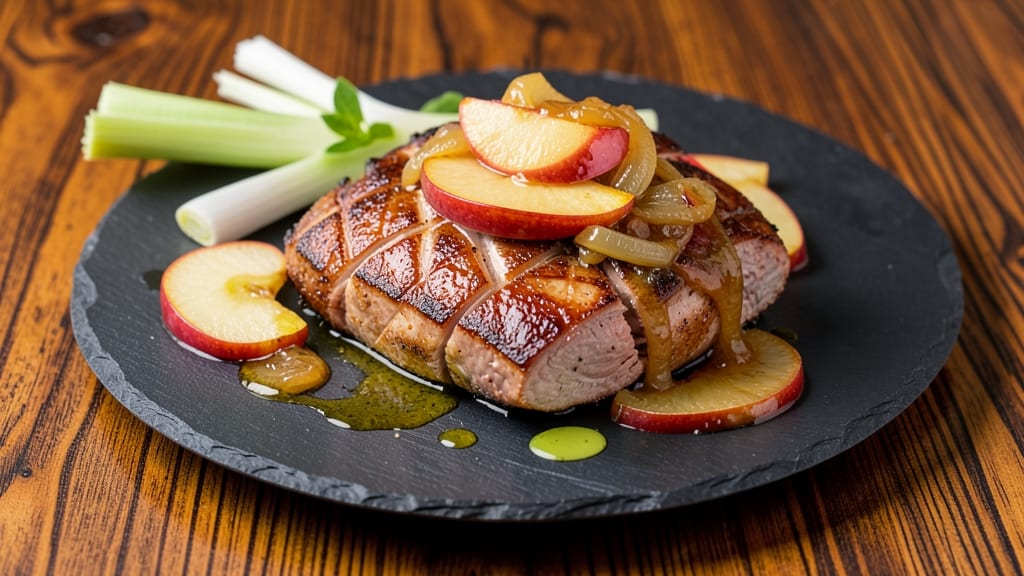
This pork loin recipe with apples and onions delivers a perfect balance of sweet, savory, and crispy textures that will transform your weeknight dinner into something special. The secret lies in the caramelized apples and onions that create a sticky, flavorful glaze while the celery crowns add a delightful crunch.
I've perfected this method over countless dinner parties, ensuring the pork stays juicy and tender every time.
What makes this recipe truly foolproof is the combination of simple techniques and quality ingredients. You'll start by searing the pork loin to lock in those juices, then slow-roast it until it reaches the ideal temperature.
Meanwhile, the apples and onions caramelize beautifully, creating a natural glaze that coats the meat with every bite. The crispy celery crowns add an unexpected but welcome texture that keeps the dish exciting.
The result is a restaurant-quality pork loin that's tender on the inside and perfectly cooked through, all wrapped in a sweet-tart glaze that's impossible to resist. This dish pairs wonderfully with roasted potatoes or a simple green salad, making it versatile enough for any occasion.
The best part? It's simple enough for weeknights but impressive enough for guests.
Ready in about 90 minutes, this recipe delivers maximum flavor with minimal effort. The key is patience—letting the apples and onions caramelize slowly while the pork roasts to perfection. Trust me, once you try this method, you'll never go back to plain pork loin again. Let's get cooking!
Ingredients for pork loin recipe with apples and onions
Quality pork loin, crisp apples, and aromatic onions create a restaurant-worthy dish with minimal effort.
| Ingredient | Amount | Notes |
|---|---|---|
| Bone-In Pork Loin 🥩 | 2 lb | Center-cut, 1.5-inch thick |
| Honeycrisp Apples 🍎 | 4 medium | Peeled, cored, sliced |
| Yellow Onions 🧅 | 2 large | Thinly sliced, 1/4-inch |
| Celery Stalk 🥬 | 2 whole | Cut into 2-inch crowns |
| Unsalted Butter 🧈 | ½ cup | Cold, cubed for searing |
| Extra-Virgin Olive Oil 🫒 | 2 tbsp | High smoke point preferred |
| Apple Cider Vinegar 🍶 | 2 tbsp | For tangy balance |
| Fresh Thyme 🌿 | ½ tsp | Leaves only, finely chopped |
| Fresh Rosemary 🌿 | ¼ tsp | Needles finely chopped |
| Granulated Garlic 🧄 | 1 tsp | For aromatic depth |
| Diamond Crystal Kosher Salt 🧂 | 1 ½ tsp | For seasoning and curing |
| Freshly Ground Black Pepper 🌶️ | ½ tsp | Coarse grind preferred |
| Brown Sugar 🍚 | 1 tbsp | Lightly packed |
| Fresh Sage Leaves 🌿 | 6 whole | For garnish and aroma |
The pork loin should be center-cut and bone-in for even cooking and maximum flavor. Look for thick-cut, well-marbled pork at your local butcher or high-end grocery store like Whole Foods or Costco. If using a thinner cut, tie it with kitchen twine to maintain even thickness. The Honeycrisp apples are ideal for their balance of sweetness and tartness, but Fuji or Gala work well too. Thinly slice the onions and apples uniformly—they'll caramelize more evenly. For the celery crowns, avoid the stringy base and use the crisp, pale green sections for maximum crunch.
No Honeycrisp apples? Fuji or Gala provide a similar texture, though slightly less tart. Substitute apple cider for the vinegar if needed, though the acidity helps balance the sweetness. Fresh herbs are non-negotiable here—dried thyme or rosemary can be used at one-third the amount, but the fresh versions elevate the dish. For the butter, European-style unsalted (like Plugrá) melts beautifully and adds richness. If you're short on time, olive oil works in a pinch, though the flavor profile shifts slightly. The brown sugar adds depth to the glaze, but maple syrup can substitute in a pinch for a different sweetness profile.
The pork loin should rest 15-20 minutes before slicing to retain juices. Store any leftovers in an airtight container for up to 4 days in the refrigerator. The caramelized onions and apples can be prepped ahead and refrigerated for 2 days, though they're best used fresh. For meal prep, slice the pork and store it separately from the glaze—reheat gently to avoid drying. The celery crowns lose crispness quickly, so add them fresh when serving. This dish reheats beautifully—165°F internal temperature ensures safety while preserving tenderness.
Why You'll Love This Recipe
- One-Pan Magic: I swear by this for nights when I’d rather not scrub a million dishes—just sear the pork, toss in the apples and onions, and let the butter do the work. The celery adds that subtle crunch without extra effort, and honestly? I’ve never met a sheet pan I didn’t love.
- Sweet-Savory Crunch: That first bite where the crispy pork meets the caramelized Honeycrisp apples? It’s like autumn in your mouth. The onions turn golden and jammy, and the butter ties it all together—rich but not heavy. My kids still fight over the last slice, and I’m not even sorry.
- Weeknight to Weekend: Make it for a rushed Tuesday dinner or bring it to a potluck—this dish handles both. The apples keep it light enough for summer but hearty enough for chilly evenings. (Yes, even on a Tuesday night.) Plus, the leftovers reheat like a dream, so you’re not stuck eating it twice in one sitting.
- Budget-Friendly Feast: Bone-in pork loin stretches further than you’d think, and Honeycrisp apples are often on sale. The onions and celery bulk it up without breaking the bank, and the butter? A little goes a long way. I’ve fed six people for under $20 with this—no complaints, just happy stomachs.
Step-by-step instructions for sweet-tart pork loin with crispy celery crowns
This method delivers perfectly balanced flavors—caramelized apples, crispy pork, and tender celery crowns.
Prepare the Pork Loin for Even Cooking
Pat the 2 lb bone-in pork loin dry with paper towels, removing any surface moisture. This ensures maximum browning and crispiness. Place it on a cutting board and score the fat cap in a crosshatch pattern with a sharp knife, being careful not to cut into the meat itself. The scoring helps render the fat and creates crispy edges.
In a small bowl, combine the 1.5 tsp diamond crystal kosher salt, 0.5 tsp freshly ground black pepper, 1 tsp granulated garlic, 0.5 tsp fresh thyme, and 0.25 tsp fresh rosemary. Rub this mixture evenly over the entire surface of the pork loin, pressing it into the scored fat cap. Let the seasoned pork rest at room temperature for 30 minutes before cooking—this allows the seasoning to penetrate and the meat to cook more evenly.
Sear the Pork Loin for Maximum Flavor
Heat a large oven-safe skillet over medium-high heat. Add the 0.5 cup unsalted butter and 2 tbsp extra-virgin olive oil, allowing the butter to melt and foam to subside. Once the butter is bubbling but not smoking, carefully place the pork loin in the skillet, fat-side down. Sear for 4-5 minutes until the fat cap is golden brown and crispy.
Flip the pork loin and continue searing for another 3-4 minutes until the opposite side develops a deep golden crust. The internal temperature should reach 145°F when measured with an instant-read thermometer. Remove the pork from the skillet and place it on a plate, tenting loosely with foil to keep it warm. This searing step creates the foundational crispiness that carries through the entire dish.
Caramelize Apples and Onions for Sweet-Tart Glaze
In the same skillet, reduce heat to medium and add the 2 large yellow onions, sliced into 1/4-inch pieces. Cook for 5-6 minutes until softened and beginning to caramelize. Add the 4 medium honeycrisp apples, peeled and sliced, and cook for another 4-5 minutes until they begin to soften and release their juices.
Stir in the 2 tbsp apple cider vinegar, 1 tbsp brown sugar, and the 6 whole fresh sage leaves. Increase heat to medium-high and let the mixture simmer for 3-4 minutes until the apples are tender and the liquid has reduced slightly, creating a thick, glossy glaze. Remove from heat and set aside—this sweet-tart mixture will later coat the pork and celery crowns.
Roast the Pork Loin to Perfect Doneness
Preheat your oven to 375°F. Return the pork loin to the skillet and place it in the preheated oven. Roast for 20-25 minutes, or until the internal temperature reaches 145°F. The pork should be tender but still slightly pink in the center. Remove from the oven and let it rest for 10 minutes before slicing—this resting period allows the juices to redistribute, ensuring each slice remains moist.
During the resting time, prepare the celery crowns by tossing the 2 whole celery stalks, cut into 2-inch crowns, with 1 tbsp extra-virgin olive oil, 0.5 tsp kosher salt, and a pinch of black pepper. Spread them on a baking sheet and roast at 400°F for 12-15 minutes until crispy and golden brown, flipping halfway through.
Assemble and Serve with Glazed Elements
Slice the rested pork loin into 1-inch thick medallions. Return the pork to the skillet with the apple and onion glaze and spoon the mixture evenly over the slices. Let it heat through for 2-3 minutes until the pork absorbs the flavors and the glaze becomes sticky and glossy.
Serve the pork immediately, accompanied by the crispy celery crowns and any remaining glaze spooned over the top. The combination of crispy pork, sweet-tart apples, and caramelized onions creates a harmonious balance of textures and flavors. Garnish with additional fresh sage leaves for an aromatic finish.
Pro Tips For Making Pork Loin Recipe With Apples And Onions
- SEAR THE LOIN FIRST: The bone-in pork loin needs color before it hits the apples and onions. Sear it skin-side down in a cold pan for 8-10 minutes until deep brown—don’t rush this, or you’ll end up with bland meat. I used to skip this step and wondered why my dish always tasted underwhelming.
- PEEL AND CHOP APPLES LAST: Honeycrisp apples oxidize fast, turning mushy and dull. Keep them whole until you’re ready to toss them in the pan—even a quick soak in lemon water won’t save them if you prep them too early. Peel and slice just before adding to the pan so they stay crisp and bright.
- DON’T OVERCROWD THE PAN: Too many apples and onions in one go means steaming instead of caramelizing. Work in batches if needed—sauté the onions and celery until soft, then push them to the sides before adding the apples. This ensures they get that golden, jammy texture instead of turning into a sad, watery mess.
- USE BUTTER IN STAGES: Add half the butter at the start for flavor, but save the rest for the end. When the apples soften and the pork is nearly done, toss in another pat of butter and let it foam up—this coats everything in rich, glossy goodness. I was skeptical until I tried it, and now I never skip it.
Troubleshooting your pork loin recipe with apples and onions
Pork Too Dry?
If your pork loin turns out dry, it’s usually from overcooking or skipping the rest. Always use a meat thermometer—145°F internal temperature is perfect for juicy pork. I’ve found that bone-in cuts stay moist longer because the bone conducts heat differently.
Also, never skip the 10-minute rest after roasting; this lets juices redistribute throughout the meat. 💧
Glaze Too Thin?
The glaze should be thick and glossy, not watery. If yours is too thin, reduce the heat slightly and let it simmer uncovered for 2-3 extra minutes to evaporate excess liquid.
I’ve also had success adding ½ tsp cornstarch mixed with 1 tsp water to thicken it up. Stir in the last minute of simmering—this works like a natural slurry. 🍯
Apples Not Sweet Enough?
If your apples taste bland, they might not have caramelized enough. Try cooking them at a slightly lower heat (medium-low) for 5-6 minutes longer to deepen their flavor. For extra sweetness, add ½ tsp cinnamon or ¼ tsp ground cardamom when you stir in the vinegar.
Honeycrisp apples are my go-to, but Braeburn or Granny Smith (for tartness) can work too if you balance with more sugar. 🍎
Celery Crowns Too Soft?
Celery crowns lose crispness quickly, so roast them at 400°F for 12-15 minutes—no longer! For extra crunch, toss them with 1 tbsp cornstarch before roasting. I also recommend adding them to the baking sheet in a single layer so they don’t steam.
If they’re already soft, sprinkle with 1 tsp lemon juice and a pinch of salt to brighten their flavor. 🥬
Skillet Too Hot?
If your skillet gets too hot and burns the apples or onions, reduce the heat to medium-low and give them time to cook gently. I like to use a 12-inch cast-iron skillet because it distributes heat evenly.
If your pan is too small, spread the onions and apples in a single layer to prevent overcrowding. A splash of apple cider can also help deglaze and prevent sticking. 🔥
Pork Not Crispy Enough?
For extra crispiness, score the fat cap more aggressively and sear the pork until the edges are deep golden brown. If your pork isn’t crispy enough after roasting, broil it for 1-2 minutes at the end—just watch it closely to avoid burning.
I also recommend using a mix of butter and olive oil for searing, as the fat helps create a better crust. 🥓
Nutrition facts
Frequently asked questions
Can I use boneless pork loin instead of bone-in?
Yes, but you'll need to adjust the cooking time slightly. Boneless pork loin cooks faster—aim for 135°F internal temperature instead of 145°F and reduce roasting time by about 5-7 minutes. The bone helps regulate heat, so boneless versions can dry out more quickly. For extra moisture, wrap it loosely in foil during roasting.
What's the best way to store leftovers?
Store sliced pork in an airtight container with the glaze for up to 4 days in the fridge. Reheat gently in a skillet over medium-low heat with a splash of water or apple cider to restore moisture. The celery crowns are best eaten fresh, but you can reheat them in a dry skillet for 1-2 minutes to revive crispness. Freeze portions without the glaze for up to 3 months.
Can I make this recipe in a slow cooker?
Sear the pork first, then place it in the slow cooker with sliced apples, onions, vinegar, and spices. Cook on low for 6-7 hours or high for 3-4 hours. The pork will be tender but less crispy. For extra flavor, add ½ cup chicken broth to the slow cooker. The glaze will be more like a sauce—serve with roasted potatoes or crusty bread to soak it up.
What's the best apple variety for this dish?
Honeycrisp is ideal for its perfect sweet-tart balance, but Fuji, Braeburn, or Gala work well too. Avoid overly tart varieties like Granny Smith unless you add extra sugar (½ tsp more) to balance. For maximum caramelization, choose firm apples that hold their shape during cooking. If using softer apples, reduce cooking time by 1-2 minutes to prevent mushiness.
How do I adjust this for a crowd?
Double the recipe and use a 14-inch cast-iron skillet or roasting pan. For 8 servings, increase pork to 4 lbs and apples/onions proportionally. Cook in batches if needed—sear half first, then roast while prepping the second batch. The celery crowns can be made in batches too, tossing them with oil and salt before roasting. Keep everything warm in a 200°F oven while finishing.