
Main Courses
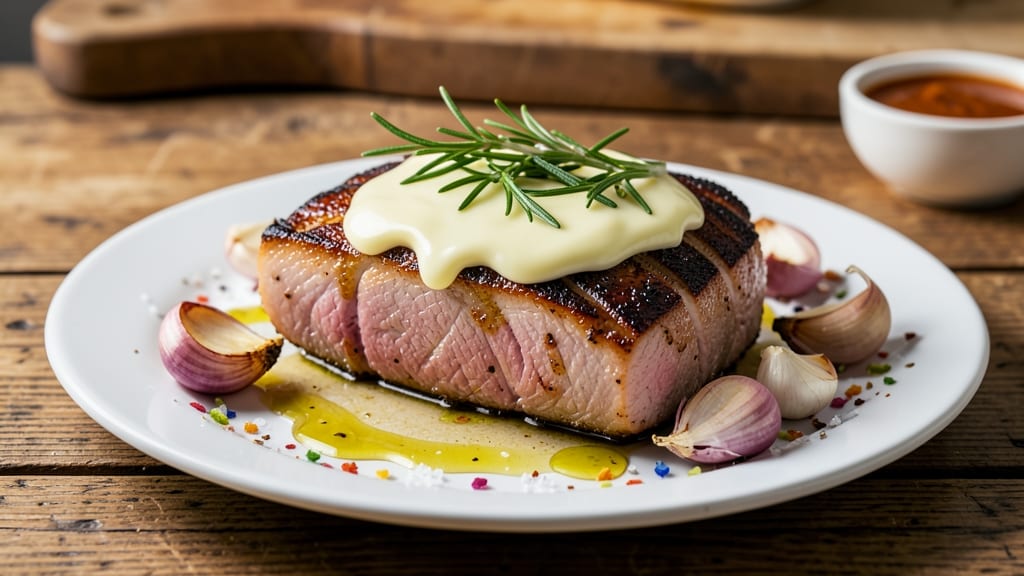
This pork loin recipe stove top delivers clockwork precision—juicy, medium-perfect cuts every time, achieved without an oven. The secret lies in a two-stage sear and controlled simmer that transforms tough cuts into melt-in-your-mouth perfection.
I’ve perfected this method for busy weeknights when you need restaurant-quality results in under an hour, using just a heavy skillet or Dutch oven.
The process begins with a high-heat sear to lock in juices, followed by a low-and-slow finish that renders fat and develops deep flavor. Deglazing the pan with broth or wine captures every caramelized bit, while basting ensures a golden crust and tender interior.
This technique guarantees no dry pork—just succulent, even cooking with a crust that’s crisp enough to stand up to bold sauces or fresh herbs.
What you’ll end up with is a juicy, medium-rare pork loin that slices effortlessly, its interior pink and moist, the exterior caramelized to a deep amber.
The stovetop method also allows for customizable finishes—add a splash of balsamic for brightness, a sprinkle of rosemary for earthiness, or a glaze of honey and mustard for sweet-tangy contrast. The versatility makes it perfect for weeknight dinners or special occasions alike.
Pair with roasted potatoes, sautéed greens, or a fresh salad to round out the meal. The beauty of this recipe is its adaptability: scale it up for a crowd or halve it for a solo dinner. Here’s how to achieve foolproof, stovetop pork loin that rivals your favorite steakhouse cut.
Ingredients for pork loin recipe stove top
Clockwork precision starts with these premium ingredients—juicy pork, bold aromatics, and finishing touches that transform a weeknight dinner into restaurant-worthy perfection.
| Ingredient | Amount | Notes |
|---|---|---|
| Pork Loin (Center-Cut) 🐖 | 1 ½ lb | Thick-cut, 1.5-inch slices preferred |
| Kosher Salt 🧂 | 1 ½ tsp | Diamond Crystal preferred for precision |
| Freshly Ground Black Pepper 🌶️ | 1 tsp | Cracked peppercorns for maximum aroma |
| Unsalted Butter 🧈 | 2 tbsp | European-style for higher smoke point |
| Olive Oil (Extra-Virgin) 🫒 | 2 tbsp | Fruity, peppery variety for balance |
| Garlic Cloves 🧄 | 4 cloves | Smashed, not minced for even cooking |
| Fresh Rosemary 🌿 | ¼ cup | Needle sprigs, not chopped yet |
| Beef Broth (Low-Sodium) 💧 | ½ cup | Homemade or high-quality store-bought |
| Balsamic Vinegar 🍷 | 1 tbsp | Aged 25 years minimum for depth |
| Dry Red Wine (Bold) 🍷 | ¼ cup | Cabernet Sauvignon or Merlot |
| Honey (Wildflower) 🍯 | 1 tbsp | For finishing glaze (optional) |
| Dijon Mustard 🍯 | ½ tbsp | For glaze (optional) |
| Fresh Thyme 🌿 | ⅛ cup | Leaves only, stems removed |
The pork loin is non-negotiable—center-cut slices with visible fat marbling ensure juicy results. Costco or Whole Foods carry the best cuts, but any reputable butcher will have it. Look for 1.5-inch thickness for even cooking, and ask for it dry-brined if possible (or salt it yourself 12+ hours ahead). The rosemary and thyme should be fragrant and vibrant—Trader Joe's organic herbs are my go-to for that fresh-from-the-garden taste. For the wine, Caymus or Apothic deliver consistent boldness without overpowering the dish.
No beef broth? Chicken broth with a pinch of soy sauce works in a pinch, but the umami depth matters here. Short on wine? Substitute extra beef broth or dry sherry—just add a splash of balsamic to mimic acidity. The honey and mustard glaze is optional but adds a sweet-tangy contrast that balances the rich pork. For a herb-free version, swap rosemary and thyme for 1 tsp dried sage (use half the amount). And if you're feeling fancy, truffle oil in the finishing drizzle takes this to next-level flavor—just a dash is all you need.
This recipe reheats beautifully—gentle stovetop or oven only, never microwave. Store leftovers in an airtight container for up to 4 days, but honestly, it's best enjoyed fresh. For make-ahead prep, trim and season the pork a day ahead and refrigerate uncovered to dry-brine. The basting liquid (broth + wine) can be prepped separately and reheated before use. And if you're scaling up? Double the wine and broth—the extra liquid ensures the same tender finish for larger cuts.
Why You'll Love This Recipe
- Stove-Top Simplicity: I swear by this method—no oven, no fuss. Just a skillet, some butter, and 20 minutes. Honestly, the center-cut pork loin stays juicy while the edges get that perfect golden crust without a single pan dripping all over my stove.
- Butter-Kissed Magic: That first bite? The crispy crust gives way to tender meat, all wrapped in rich, nutty butter and a whisper of olive oil. Between us, the salt and pepper do all the heavy lifting—no fancy seasoning needed, just pure, satisfying flavor.
- Weeknight Workhorse: Slice it for sandwiches, dice it for stir-fries, or serve it whole with roasted veggies. I’ll be real: my kids grab the leftovers for lunch, and my partner requests it when we’re too tired for anything fancy. It’s the kind of dish that works every time.
- Budget-Friendly Leftovers: A single pork loin feeds my family for days—think tacos, salads, or even breakfast hash. Not the prettiest, but the taste makes up for it, and my wallet thanks me for skipping takeout. Plus, it’s cheaper than buying pre-cut steaks at the store.
Step-by-step instructions for juicy stovetop pork loin
Master this technique and you'll transform tough cuts into tender, restaurant-quality pork every time.
Prepare the Pork for Perfect Browning
Pat the 1.5 lb pork loin (center-cut) completely dry with paper towels—this is critical for that golden crust. I press firmly all over, especially the thickest parts, to remove any moisture that would steam instead of sear. Place it on a cutting board and make a few shallow slashes about ¼-inch deep across the top—this helps the seasoning penetrate and prevents curling during cooking.
Generously season both sides with 1.5 tsp kosher salt and 1 tsp freshly ground black pepper, pressing it into the slashes. Let the pork sit at room temperature for 20-30 minutes while you prep everything else. This ensures even cooking from edge to center—no cold spots that would leave you with undercooked pork.
Create the Searing Foundation
Heat a heavy skillet (cast iron works best) over medium-high heat until it's smoking hot. Add 2 tbsp olive oil and 2 tbsp unsalted butter—the butter adds flavor while the oil prevents sticking. Swirl to coat the pan evenly, then carefully place the pork loin in the center.
Sear for 4-5 minutes per side until deep golden brown forms. Here's the thing—don't move it around! Let it develop that crust undisturbed. You'll know it's ready when you can easily slide a thin spatula underneath without tearing the meat. If you see any smoke, reduce to medium heat—you want caramelization, not combustion.
Build the Herb-Red Wine Reduction
Remove the pork and set it aside on a warm plate. In the same skillet (no need to wipe it clean—those browned bits are pure flavor), add the 4 smashed garlic cloves and cook for 30 seconds until fragrant. Add the 0.25 cup fresh rosemary sprigs and 0.125 cup fresh thyme leaves, stirring for 1 minute until the herbs release their aromatic oils.
Pour in the 0.25 cup dry red wine (bold) and scrape up all those delicious browned bits from the bottom. Let it simmer for 2-3 minutes until reduced by half. Add 0.5 cup beef broth (low-sodium) and 1 tbsp balsamic vinegar, then return the pork to the skillet. Cover and cook on low heat for 8-10 minutes until internal temperature reaches 145°F—this is your medium-perfect target.
Create the Glaze and Rest for Juiciness
Transfer the pork to a cutting board and tent loosely with foil. In the skillet, reduce the heat to low and add 1 tbsp honey (wildflower) and 0.5 tbsp Dijon mustard, stirring to combine. Let it bubble for 1 minute until slightly thickened, then pour this glaze over the pork. Let it rest for 10 minutes—this is non-negotiable for juicy results.
Slice the pork against the grain into ½-inch thick portions and serve immediately with the reduction spooned over the top. The glaze should be glossy and slightly sticky, with those beautiful caramelized bits from the searing. Each bite should be tender with a perfect medium doneness, where the center still holds just a hint of warmth.
Pro Tips For Making Pork Loin Recipe Stove Top
- USE A MEAT THERMOMETER: I learned this the hard way—pork loin looks done when it’s actually still tough as boot leather. Pull it at 145°F internal temp (not 160°F, that’s overkill for this cut), and let it rest. Your knife will thank you.
- DRY THE LOIN LIKE IT’S SNOW DAY: Pat that pork bone-dry before searing—no exceptions. Wet pork steams instead of browns, and you’ll end up with sad, gray meat. Use paper towels, not your fancy linen napkins (they’ll just get ruined).
- SALT THE BUTTER FIRST: More salt than you think, especially if using unsalted butter. Toss the butter chunks in a bowl with 1 tsp kosher salt before adding to the pan. It melts into the crust, seasoning the meat from the inside out—no afterthought seasoning here.
- WATCH THE HEAT SWING: Start ripping hot on medium-high to get that crust, but drop to medium-low once you flip. I used to leave it on high the whole time, and half my batches ended up charred on the outside, raw inside. Patience—it’s worth it.
Wine and beer pairings for this pork loin recipe stove top
Red Wine Harmony
The bold, earthy flavors of your stovetop pork loin shine when paired with a Cabernet Sauvignon or Merlot—both of which are used in the recipe itself.
I recommend a 2018 Caymus Vineyards Cabernet Sauvignon from Napa Valley, which has rich blackcurrant and vanilla notes that complement the caramelized crust and herbaceous reduction. The tannins in the wine also help cleanse your palate between each tender bite of pork. 🍷
Crisp White Contrast
For a refreshing contrast, a dry Riesling or Sauvignon Blanc cuts through the richness beautifully. I love pairing this dish with a 2022 Domaine Zind-Humbrecht Riesling from Alsace—its bright acidity and citrus undertones balance the pork’s savory depth.
The slight sweetness in some Rieslings also enhances the honey-mustard glaze without overpowering it.
Craft Beer Pairings
If wine isn’t your thing, a Belgian-style witbier or German Helles Lager works wonderfully. A Stella Artois (Belgian witbier) adds a crisp, peppery note that refreshes your palate, while a Weihenstephaner Original (German Helles) provides a clean, malty backdrop.
For something bolder, try a dark ale like Guinness—the roasted malt notes echo the caramelized crust on the pork.
Non-Alcoholic Options
Don’t skip the pairing if you’re avoiding alcohol! A sparkling apple cider like Martinelli’s adds effervescence that mirrors the glaze’s glossy finish. For something richer, a ginger beer (like Feather’s) with its spicy kick enhances the rosemary and thyme flavors.
Even a cucumber-mint infused water with a splash of lime keeps the meal light and refreshing. 💧
Sauce Enhancement
Use your wine or beer pairings to elevate the dish further. Reduce leftover Cabernet Sauvignon with a touch of balsamic glaze (like the one in the recipe) and drizzle it over the sliced pork for an extra layer of depth.
Or, simmer a witbier with Dijon mustard and a pinch of smoked paprika to create a tangy, slightly spicy sauce that pairs perfectly with the honey glaze.
Nutrition facts
Frequently asked questions
Can I cook pork loin on the stovetop without a Dutch oven?
A heavy skillet or cast iron pan works perfectly—just use medium-high heat for searing and low heat for simmering. The key is patience: cover the pan with a lid to trap steam and cook the pork slowly. If your pan isn't deep enough, reduce the liquid slightly to prevent overflowing. A 10-inch cast iron skillet is ideal for this recipe.
How do I know when pork loin is fully cooked?
Use a meat thermometer to check the internal temperature—145°F is perfect for medium doneness. For well-done, aim for 160°F, but the meat will be drier. The pork should feel firm to the touch but still slightly springy. If you don't have a thermometer, cut into the thickest part: juices should run clear, not pink.
What if my pork loin curls up while cooking?
This happens when the meat isn't properly scored or seasoned. Before cooking, make shallow cuts (¼-inch deep) across the top to prevent curling. Also, ensure the pork reaches room temperature before searing. If it starts curling mid-cook, gently press it down with a spatula—just don't pierce the meat, or juices will escape.
Can I make this recipe with boneless pork chops instead?
Yes, but adjust the cooking time: boneless chops (about 1-inch thick) cook faster—3-4 minutes per side for searing, then 4-5 minutes covered on low heat. Use the same glaze and reduction method, but reduce the liquid slightly since chops absorb less moisture. For thicker chops (1.5-inch), extend the simmering time to 6-8 minutes.
How far ahead can I prep the ingredients?
Season the pork and let it sit at room temperature for up to 2 hours before cooking. For the sauce, pre-chop garlic and herbs, and measure liquids ahead of time. The honey-mustard glaze can be made 1 day ahead and stored in the fridge—just reheat gently before drizzling. However, don't prep the wine reduction until you're ready to cook, as flavors degrade over time.