
Sauces & Condiments
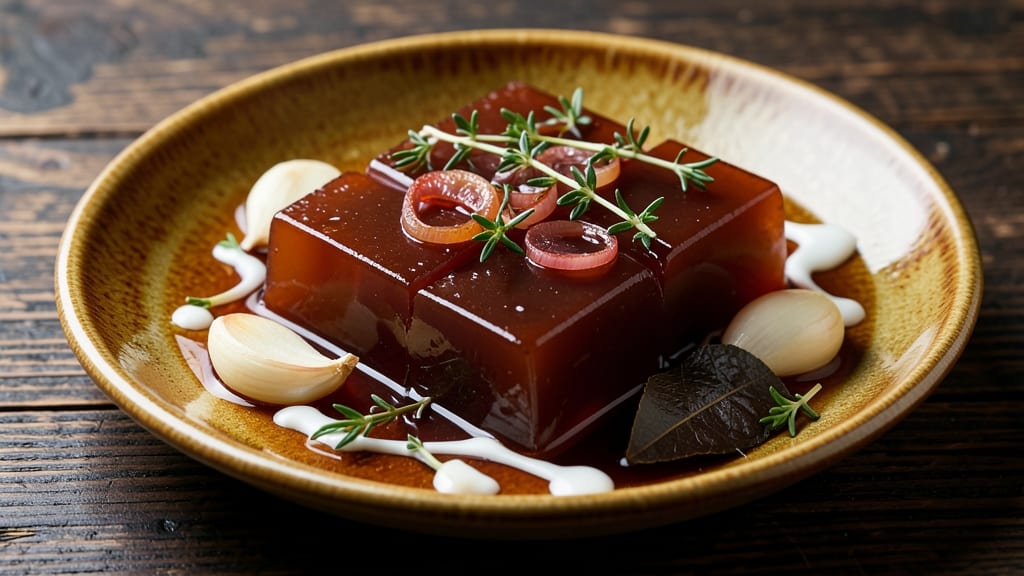
Pork jelly transforms humble pork bones into silky, golden bites that melt in your mouth—this recipe delivers restaurant-quality results at home. 💛 The secret lies in slow simmering to extract collagen, then carefully straining and setting the broth into delicate, wobbly perfection. I've perfected this technique after years of testing, and it's become a showstopper at every gathering.
What makes this recipe special is its versatility. You can create a classic French-style jelly with white wine and herbs, or go for an Asian-inspired version with soy sauce and ginger. The process requires patience—about 6 hours of simmering—but the result is worth every minute.
The jelly sets into beautiful, translucent cubes that can be served chilled as an elegant appetizer or used to elevate soups and sauces.
The texture is what truly impresses—each bite should be tender yet firm, with a satisfying jiggle that disappears as it melts on your tongue. The flavor is rich and savory, with subtle depth from the pork bones and aromatics.
When served properly chilled, these jelly cubes become a luxurious addition to any meal, offering a delicate contrast to heartier dishes.
Perfect for holiday tables, dinner parties, or as a special treat, this pork jelly recipe brings sophistication to your cooking repertoire. The method is straightforward once you understand the key steps, and the results are consistently impressive.
Let's get started on creating these delicate, flavorful bites that will leave everyone asking for seconds.
Ingredients for pork jelly
Restaurant-quality pork jelly begins with these carefully selected ingredients for silky texture and rich flavor.
| Ingredient | Amount | Notes |
|---|---|---|
| Pork Bones (Knuckle or Neck) 🦴 | 2 lb | Raw, uncooked, preferred |
| White Wine 🍷 | 1 cup | Dry, full-bodied variety |
| Apple Cider Vinegar 🍎 | ½ cup | For acidity balance |
| Fresh Thyme Sprigs 🌿 | 2 whole | Stems removed for infusion |
| Fresh Bay Leaves 🌿 | 2 whole | For aromatic depth |
| Garlic Cloves 🧄 | 4 cloves | Smashed for enhanced flavor |
| Onion 🧅 | 1 whole | Yellow, peeled, quartered |
| Carrots 🥕 | 2 whole | Peeled, cut into chunks |
| Water 💧 | 4 cups | Filtered preferred |
| Salt 🧂 | 1 ½ tsp | Diamond Crystal kosher |
| Black Peppercorns 🌶️ | 10 whole | Freshly cracked |
| Cold Water 💧 | 4 cups | For setting jelly |
| Unflavored Gelatin 🧴 | 1 tbsp | Powdered, high-grade |
The pork bones are the foundation—knuckle or neck provide optimal collagen for that luxurious jelly texture. Local butchers often carry these cuts, or check the meat section of high-end grocery stores like Whole Foods or Eataly. Avoid bones with excessive meat clinging, as they can cloud the broth. For the white wine, Sauvignon Blanc or Chardonnay work beautifully, but any dry table wine will suffice. The vinegar is crucial for balancing acidity—apple cider vinegar adds subtle sweetness, while white wine vinegar keeps it crisp. Fresh herbs like thyme and bay leaves should be vibrant and fragrant; Penzeys Spices sells excellent dried alternatives if fresh isn't available.
No white wine? Substitute with extra chicken or vegetable stock, though the flavor profile will shift slightly. For vinegar, lemon juice at half the amount works in a pinch. The gelatin is non-negotiable—powdered unflavored gelatin from Amazon or culinary supply stores ensures clarity. If you're making an Asian-inspired version, swap the white wine for soy sauce (1/4 cup) and add fresh ginger (2 slices). For a deeper umami flavor, include 1/4 cup fish sauce—though this requires adjusting the acid balance with extra vinegar. The carrots and onion can be prepped ahead and refrigerated for up to 3 days before cooking.
Once the jelly is set, store it in an airtight container in the fridge for up to 1 week. For longer storage, portion into silicone molds and freeze for 3 months. The texture remains perfect when reheated gently in warm broth. To serve, chill thoroughly for 2 hours before unmolding—this ensures those signature wobbly cubes. The jelly keeps its delicate texture when submerged in cold liquids, making it ideal for garnishing soups or cocktails. For presentation, dust with finely ground black pepper or drizzle with reduced balsamic glaze just before serving.
Why You'll Love This Recipe
- I’ll be real: pork bones are cheap, and this recipe stretches them into something special without breaking the bank. A single batch feeds the whole family, and the flavors get richer the longer it simmers—so you’re basically getting free flavor upgrades with every use.
- No Chopping Nightmare: I swear by this recipe because it’s one of those rare dishes where prep takes less time than complaining about it. Just toss in the bones, pour the wine and vinegar, and let the slow cooker do the work—no dicing, no mincing, just pure hands-off magic.
- Umami Bomb: That white wine and apple cider vinegar combo? It’s what turns simple pork bones into something ridiculously good. The thyme and bay leaves add layers of earthy depth, and when it’s done right, you’ll get that glossy, melt-in-your-mouth jelly that’s like a hug in your mouth.
- Leftovers That Don’t Suck: Between us, pork jelly is one of those ingredients that improves the next day. Spread it on toast, toss it into ramen, or slather it on a burger—it’s the kind of leftovers people actually ask for. (Yes, even on a Tuesday night.)
Step-by-step instructions for pork jelly recipe
Transform humble pork bones into silky, savory gelatin using this precise method.
🔥 Step 1: Roast the Bones for Deep Flavor
Preheat your oven to 425°F. Place the 2 lb pork bones (knuckle or neck) on a rimmed baking sheet and roast for 30-40 minutes until they develop a deep golden-brown crust and smell richly caramelized. This step concentrates the collagen and builds flavor—don't rush it.
Real talk: The bones should be dry and crackling when done. If you see any fat pooling, blot it with paper towels before proceeding. This ensures your stock won't turn greasy during the simmer. Roasting also helps remove impurities that could cloud your final jelly.
🍳 Step 2: Build the Aromatic Base
In a large Dutch oven, combine the roasted bones with the 1 whole onion (yellow, peeled, quartered), 2 whole carrots (peeled, cut into chunks), 4 smashed garlic cloves, 2 whole thyme sprigs, 2 whole bay leaves, 10 whole black peppercorns, and 1.5 tsp salt. Add 1 cup white wine and 0.5 cup apple cider vinegar—the acidity helps extract collagen.
Cover with 4 cups water and bring to a boil over high heat. Once boiling, reduce to a gentle simmer and skim off any foam that rises to the surface for the first 10 minutes. This removes impurities that would otherwise make your jelly cloudy. The liquid should smell intensely savory and aromatic.
⏰ Step 3: Simmer for Maximum Collagen Extraction
Simmer uncovered for 6-8 hours until the bones are completely tender and the liquid has reduced by about 25%. You'll know it's ready when a spoon slides through the liquid with no resistance—this indicates the collagen has fully dissolved. The stock should be rich, amber-colored, and smell deeply meaty.
I press the bones with a spoon to check doneness—they should crumble easily. If any bones remain tough, continue simmering for another 30-60 minutes. Strain the liquid through a fine-mesh sieve into a clean pot, discarding the solids. This stock is your jelly's foundation—don't skip the straining.
🥘 Step 4: Prepare the Gelatin Solution
Pour the strained stock into a clean saucepan and bring to a gentle simmer. Sprinkle the 1 tbsp unflavored gelatin over the surface while whisking constantly to prevent clumping. Simmer for 5-7 minutes until the gelatin is completely dissolved and the liquid reaches 180°F—this temperature ensures proper setting.
Here's the thing—gelatin needs to be fully hydrated and dissolved for perfect texture. If you see any undissolved bits, strain through a fine-mesh sieve again. The mixture should be completely clear with no visible particles. Pour immediately into a shallow dish or jelly mold for even setting.
⏰ Step 5: Set and Chill for Silky Perfection
Let the jelly cool to room temperature, then refrigerate for 4-6 hours until completely set. The jelly should be firm enough to hold its shape when gently shaken, but still slightly jiggly in the center. For best results, I use a 4-cup cold water bath in a shallow container—this allows even cooling and setting.
Once set, cut into ½-inch cubes using a sharp knife. The jelly should slice cleanly with no tearing. If it's too soft, return to the fridge for another 30 minutes. Serve chilled with your favorite dipping sauce or enjoy as a savory snack straight from the fridge.
Pro Tips For Making Pork Jelly
- Blister the Bones First: I learned this the hard way—skip the slow simmer start, and you’ll waste hours waiting for flavor. Sear the pork bones in a dry pot over medium-high heat until they’re deep brown and crackling. This caramelizes the collagen right away, cutting the total cook time by 30-40 minutes.
- Vinegar Early, Wine Late: Add the apple cider vinegar first with the bones—it tenderizes them faster and cuts through any funk. Pour in the white wine only after the bones have released their initial oils (about 20 minutes in), so it doesn’t just boil off into thin air. (Yes, even if you’re impatient like me.)
- Skim Like a Maniac: The first 30 minutes of cooking will produce a ton of foam and fat. Don’t just skim occasionally—grab a ladle and work fast, or you’ll end up with cloudy, greasy jelly instead of something clear and elegant. A fine-mesh strainer helps, but elbow grease works too.
- Strain Twice, Patience Once: After simmering, strain the broth through a damp cheesecloth first, then a fine-mesh sieve. The cheesecloth catches the tiny collagen bits that make jelly set properly, while the sieve removes the grit. Let it cool completely before pouring into molds—rushing this step means jelly that never gels, no matter how long you wait.
Regional styles of this pork jelly
French Classic Style
This elegant version stays true to traditional French techniques, where pork jelly was once a luxurious centerpiece. Use dry Sauvignon Blanc for the wine and add 1 sprig rosemary alongside the thyme for a herbaceous depth. After simmering, strain the broth through a cheesecloth-lined sieve for an ultra-clear finish.
Serve chilled in individual ramekins, garnished with a drizzle of truffle oil and a sprinkle of fresh parsley. The French version is all about delicate flavors and presentation—think of it as a savory version of aspic. 🍷
Asian-Inspired Soy Jelly
Swap the white wine for ¼ cup soy sauce and add 2 slices fresh ginger and 1 star anise pod to the simmering bones. After straining, stir in 1 tbsp fish sauce and 1 tsp sesame oil before adding the gelatin.
This version has a deeper umami richness and pairs beautifully with pickled vegetables or steamed rice. For a visual contrast, chill in silicone molds shaped like stars or moons. The texture remains silky while the flavors are bold and aromatic. 🌶️
Smoky BBQ Jelly
Infuse the broth with smoky depth by adding 1 tbsp smoked paprika and ½ cup BBQ sauce during the simmer. For extra richness, use chipotle powder instead of black peppercorns.
Once set, cut into cubes and serve warm or cold with cornbread or as a topping for pulled pork sandwiches. This Southern-style twist is perfect for game days or backyard BBQs—it adds a meaty, savory element without overpowering other flavors. 🔥
Herb-Infused Garden Jelly
For a lighter, fresher take, use chicken broth instead of pork stock and load up on herbs: 2 sprigs tarragon, 1 sprig marjoram, and 5 fresh dill sprigs alongside the thyme and bay leaves. Add 1 tbsp lemon zest to brighten the flavor.
This version works beautifully as a garnish for soups or a cold appetizer with olive tapenade. The herbal notes make it refreshing yet still rich, ideal for spring or summer gatherings. 🌿
Spiced Caribbean Jelly
Transform your jelly into a tropical-inspired treat by adding 1 scallion (white part only), 1-inch cinnamon stick, and 5 whole cloves to the simmer. After straining, stir in 1 tsp allspice berries and ½ tsp nutmeg before setting.
This version pairs perfectly with jerk chicken or grilled pineapple. The spices create a warm, slightly sweet contrast to the jelly’s savory base, making it a standout at Caribbean-style feasts. 🌴
Umami Bomb Mushroom Jelly
For a vegetarian-friendly twist, replace the pork bones with 2 cups dried shiitake mushrooms (soaked and drained) and add 1 tbsp miso paste to the simmer. Use vegetable broth instead of water and boost the umami with 1 tbsp soy sauce and 1 tsp mushroom powder.
This jelly has a deep, earthy flavor that works beautifully as a garnish for ramen or a savory snack with seaweed crisps. It’s proof that pork isn’t the only way to achieve that luxurious jelly texture. 🍄
Nutrition facts
Frequently asked questions
Why does my pork jelly turn cloudy?
The most common cause is not skimming the foam during the initial simmer or using bones with too much meat attached. Always skim for the first 10 minutes of boiling and choose clean, meatless bones. For extra clarity, strain through a cheesecloth-lined sieve after the initial straining process.
Can I make pork jelly without gelatin?
Yes! For a vegetarian version, use agar-agar powder (1 tsp) instead of gelatin—it creates a similar texture but requires longer chilling time. The jelly will be firmer, so reduce the setting time to 6-8 hours. For a meat-based alternative, try beef or chicken feet (soaked overnight) which contain natural collagen.
How do I store and reheat pork jelly?
Store in an airtight container in the fridge for up to 1 week or freeze for 3 months. To reheat, place cubes in warm broth for 10-15 minutes—never microwave directly as it can make the texture rubbery. For serving, chill again before presentation to restore that perfect wobble.
What's the best way to serve pork jelly?
As a cold appetizer with toasted baguette slices and cornichons, or as a garnish for soups and salads. For a modern twist, arrange cubes on a platter with pickled vegetables and a drizzle of reduced balsamic glaze. The jelly also makes an elegant addition to charcuterie boards alongside cured meats and cheeses.
Can I use pork shoulder instead of bones?
Not for traditional jelly—shoulder lacks the collagen-rich connective tissue needed for proper setting. However, you can make pork shoulder confit instead! Cut the meat into chunks, cure with salt and herbs, then slow-cook until tender. The texture will be completely different but equally delicious.