
Main Courses
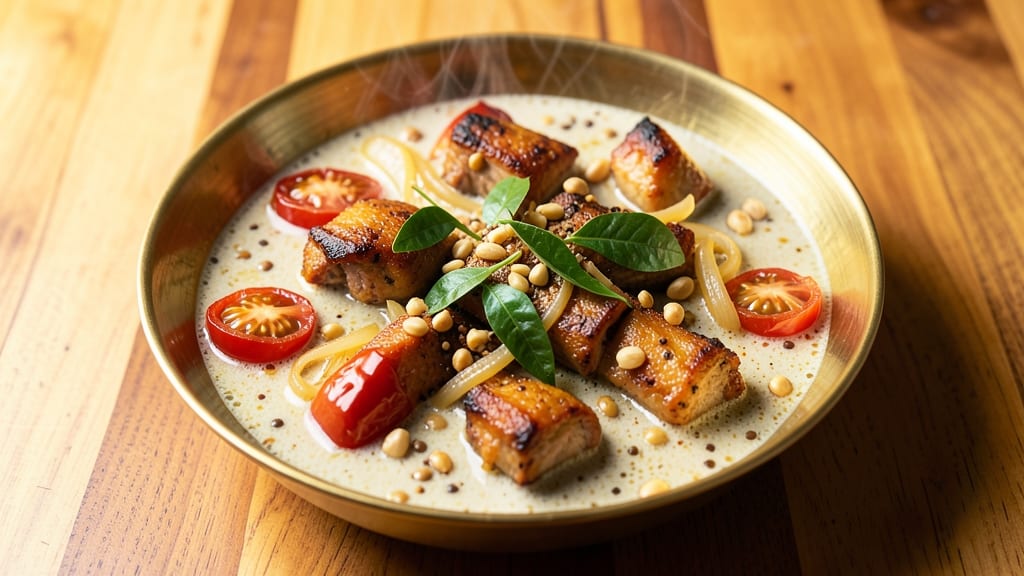
This Kerala-style pork curry recipe delivers the bold, aromatic flavors of South India in every bite. 🌟 The secret lies in the layered spices—black pepper, cardamom, and mustard seeds—tempered with coconut milk and fresh curry leaves for that signature depth.
I first tasted this dish at a family-run restaurant in Kochi, where the slow-cooked pork melted in my mouth while the sauce balanced perfectly between creamy and tangy.
The magic happens in the cooking process: pork simmers until tender, absorbing the rich coconut-spice broth while maintaining its natural juiciness. Traditional techniques like tempering whole spices in coconut oil create an irresistible aroma that fills your kitchen long before the curry is ready.
This isn't just a recipe—it's a taste of Kerala's culinary soul, where every spice plays its part in harmony.
What you'll end up with is restaurant-quality pork curry that's tender yet flavorful, with a sauce that's velvety from coconut milk but brightened by tamarind and lime. The spices—warm, peppery, and subtly sweet—coat each bite, making this curry perfect for serving over steamed basmati rice or with Kerala's famous appam.
The balance of textures and flavors makes it a complete dish that stands alone or pairs beautifully with other South Indian sides.
This recipe stays true to Kerala traditions while being approachable for home cooks. With just a few key ingredients and patience for the slow cooking, you'll achieve that authentic restaurant taste.
The result is a dish that's comforting yet exciting—one that brings a little bit of Kerala to your dinner table. Let's get cooking!
Ingredients for pork curry recipe kerala style
Pork shoulder, coconut milk, and fragrant spices—these are the stars of Kerala's aromatic symphony.
| Ingredient | Amount | Notes |
|---|---|---|
| Pork Shoulder 🥩 | 1 ½ lb | Bone-in for flavor, cut into 1.5-inch cubes |
| Coconut Milk 🥥 | 1 can | Full-fat for creaminess (13.5 oz can) |
| Yellow Onions 🧅 | 1 whole | Medium-sized, finely chopped |
| Roma Tomatoes 🍅 | 4 whole | Medium-sized, roughly chopped |
| Garlic Cloves 🧄 | 6 cloves | Peeled, smashed lightly |
| Fresh Curry Leaves 🌿 | ¼ cup | Torn, not chopped (Indian market preferred) |
| Green Chilies 🌶️ | 2 whole | Slit lengthwise, seeds removed |
| Ginger 🌿 | 1 inch | Fresh, peeled, sliced thin |
| Black Peppercorns 🌶️ | 1 tsp | Crushed lightly, not powdered |
| Cardamom Pods 🌿 | 6 whole | Lightly crushed, seeds exposed |
| Mustard Seeds 🌱 | 1 tbsp | Brown or yellow, whole |
| Coconut Oil 🫒 | 3 tbsp | Unrefined for authentic flavor |
| Tamarind Paste 🍈 | 1 tbsp | Adjust for tartness preference |
| Lime Juice 🍋 | 2 tbsp | Freshly squeezed |
| Salt 🧂 | 1 ½ tsp | Adjust to taste |
The pork shoulder is non-negotiable here—bone-in gives that deep flavor, and cutting it into 1.5-inch cubes ensures even cooking. Indian grocery stores usually carry it pre-cut, but the butcher section at Whole Foods works too. Look for good marbling—it's what keeps the meat juicy during the long simmer. Coconut milk is the heart of this curry, so full-fat is a must. The canned kind from Thai Kitchen or Goya works, but nothing beats fresh coconut milk if you can find it. Fresh curry leaves are the secret weapon—Indian markets sell them dried, but fresh ones (if you can get them) bring an entirely different depth of flavor.
No fresh curry leaves? Dried curry leaf powder works at half the amount, but it's not the same. Green chilies too spicy? Remove seeds completely or use just one. The tamarind paste can be tricky—if it's too sour, balance with a pinch of sugar. Trader Joe's sells a great bottled version if you don't want to deal with blocks. For the spices, Penzeys has excellent whole cardamom and peppercorns, but the grocery store stuff is fine if it's fresh. The mustard seeds should sizzle dramatically when tempered—that's how you know they're doing their job.
This curry tastes even better the next day as flavors meld. Store in an airtight container in the fridge for up to 5 days, or freeze for 3 months. I like to portion it into containers with rice so I have ready-to-heat meals. The pork will get more tender with reheating—just add a splash of water or coconut milk to prevent drying. If you make a big batch, freeze half immediately. The spices lose potency after 6 months, so keep them in a cool, dark place.
Why You'll Love This Recipe
- One-Pot Magic: The pork shoulder practically melts into tender perfection while you stir—no fussing with multiple pans or timers. Just brown the meat, toss in the onions and garlic, then let the coconut milk do its thing. Honestly, I’ve made this on days when I couldn’t be bothered to wash another dish, and it still tastes like a restaurant dish.
- Garlic Bomb Richness: That first hit of minced garlic sizzling in coconut milk? Chef’s kiss. The Kerala-style slow simmer deepens the flavor until every bite has a creamy, aromatic punch—like a hug in curry form. My picky-eater husband actually finishes his plate, and he claims he hates curry.
- Leftover Luxury: This curry tastes even better the next day, which means I can make a big batch on Sunday and have effortless lunches all week. The pork stays juicy, the coconut milk thickens just right, and reheating it is as easy as popping it in the microwave. (Yes, even on a Tuesday night.)
- Budget-Friendly Feast: Pork shoulder is affordable, and a single can of coconut milk stretches to feed four or five. Between us, I’ve served this at potlucks, family dinners, and even a last-minute dinner party—no one ever guessed it wasn’t homemade by a chef. Plus, the leftovers freeze like a dream.
Step-by-step instructions for Kerala-style pork curry
Here's how to create this aromatic curry with tender pork and rich coconut flavors.
🔥 Step 1: Sear the Pork for Deep Flavor
Heat 2 tablespoons of the coconut oil in a heavy pot over medium-high heat. Add the 1.5 lb pork shoulder cubes in batches, being careful not to overcrowd the pan. Let them sear undisturbed for 3-4 minutes per side until they develop a golden-brown crust. This step builds incredible flavor through the Maillard reaction.
Once all pork is browned, remove it from the pot and set aside. You'll want to keep it warm while you build the sauce. If any oil remains in the pot, wipe it out with a paper towel—you want a clean slate for your aromatic base.
👨🍳 Step 2: Build the Aromatic Spice Base
In the same pot, add the remaining 1 tablespoon coconut oil and warm over medium heat. Add the 1 tablespoon mustard seeds and let them pop and sizzle for about 30 seconds. Then add the 6 cardamom pods and 1 teaspoon crushed black peppercorns, letting them toast for 1 minute until fragrant.
Add the 1 whole yellow onion and cook for 5 minutes until softened and golden. Stir in the 1 inch ginger and 6 smashed garlic cloves, cooking for another 2 minutes until the raw smell disappears. This aromatic base forms the flavor foundation of your curry.
🍳 Step 3: Develop the Curry Sauce
Add the 4 whole roma tomatoes and the 0.25 cup fresh curry leaves to the pot. Cook for 5-6 minutes until the tomatoes break down into a rough sauce. Stir in the 1 tablespoon tamarind paste and 1.5 teaspoons salt, letting it cook for another 2 minutes to meld all the flavors together.
Now add the 2 whole green chilies (slit lengthwise) and the seared pork back to the pot. Pour in the 1 can coconut milk, stirring gently to combine. Bring to a gentle simmer, then reduce heat to low and cover partially. Let it cook for 45-50 minutes, stirring occasionally, until the pork is fork-tender and the sauce has thickened slightly.
🥘 Step 4: Finish with Bright Lime and Fresh Herbs
Once the pork is tender, stir in the 2 tablespoons lime juice and adjust the seasoning with additional salt if needed. The acidity from the lime brightens all the flavors and balances the richness of the coconut milk. Taste and adjust the spice level if you prefer more heat—you can add a pinch of cayenne or more green chili.
For the final touch, garnish with additional fresh curry leaves if available. These leaves add a beautiful aroma and visual appeal. Let the curry sit off the heat for 5 minutes before serving to allow all the flavors to meld together perfectly.
Pro Tips For Making Pork Curry Recipe Kerala Style
- BLANCH THE ONIONS FIRST: I learned this the hard way—raw onions in coconut milk curry turn mushy and dull. Slice the yellow onions, then blanch them in boiling water for 30 seconds before adding them to the pan. This keeps them crisp and sweet, balancing the richness of the coconut milk.
- SIMMER THE PORK LOW AND SLOW: Kerala-style curry needs tender pork, not tough. Once the meat turns opaque after the initial sear, drop the heat to a bare simmer. Cover the pot and let it cook for at least 45 minutes—yes, even if the pork looks undercooked at first. The collagen will melt into the sauce, making it velvety.
- GRIND THE TOMATOES, DON’T CHOP: Whole tomatoes in curry? They’ll just sit there like sad, watery guests. Pulse Roma tomatoes in a food processor until smooth, then strain out the seeds. This removes excess liquid and gives the curry a deeper, more concentrated flavor—no one wants a watery coconut stew.
- ADD COCONUT MILK IN STAGES: Pouring all the coconut milk at once dilutes the spices. Start with half, let it reduce slightly, then add the rest. This builds layers of flavor instead of turning the curry into a thin, flavorless soup. If it’s too thick, add a splash of water—but don’t overdo it.
Creative variations of this recipe
Spicy Kerala Fusion
For a fiery twist, add ½ cup grated coconut to the sauce at the end and stir in 1 tsp red chili powder with the lime juice. This creates a Kerala-style coconut chili curry—a local favorite that balances heat with creamy coconut.
I like to finish with 1 tbsp fresh cilantro for brightness. 🌶️
Vegetarian Adaptation
Swap pork for 1.5 lb firm tofu pressed and cubed, or 1.5 lb mushrooms like oyster or king oyster for umami. Simmer tofu for 20 minutes less since it cooks faster.
For extra texture, add ½ cup roasted cashews at the end. This version keeps all the rich coconut-spice flavors while being plant-based.
Slow-Cooker Shortcut
Transfer all ingredients (except lime juice) to a 6-quart slow cooker and cook on low for 6-7 hours. Add lime juice and ½ cup water at the end to adjust consistency.
This hands-off method lets flavors meld perfectly—ideal for busy weeknights. I use my Hamilton Beach slow cooker for even heat distribution.
Coconut Curry Leaf Sauce
For a lighter but equally flavorful version, replace half the coconut milk with 1 can light coconut milk and add 1 tbsp coconut cream at the end. This keeps the dish rich while reducing calories slightly. Garnish with extra curry leaves for that authentic touch. 🌿
Appam Pairing
Serve with Kerala-style appam—soft, lacy rice pancakes—for a complete meal. Mix 1 cup rice flour, ½ cup coconut milk, 1 egg, and a pinch of salt, then cook in a special appam pan.
The crispy edges and creamy center contrast beautifully with the pork curry. I make a big batch and freeze extras for quick breakfasts.
Spiced Yogurt Dip
Serve with a cooling yogurt dip to balance the heat. Mix 1 cup plain yogurt with 1 tsp roasted cumin powder, ½ tsp black pepper, and 1 tbsp chopped mint.
This dip cuts through the richness and adds a refreshing contrast. Store in an airtight container for up to 3 days in the fridge. 🥛
Nutrition facts
Frequently asked questions
What makes Kerala-style pork curry different from other Indian pork dishes?
Kerala-style pork curry stands out thanks to its signature coconut milk base and aromatic spice blend. Unlike North Indian dishes that use yogurt or cream, this curry relies on coconut milk for richness and fresh curry leaves for that distinct aroma. The slow cooking process allows the pork to absorb all the flavors while staying tender.
Can I substitute bone-in pork shoulder with boneless pork chops?
Yes, but the cooking time will change. Boneless pork chops cook faster—aim for 20-25 minutes instead of 45-50 minutes. Cut them into 1-inch cubes for even cooking. The flavor will be slightly less deep since bone-in pork adds extra richness, but it'll still be delicious.
How do I adjust the spice level for kids or sensitive stomachs?
For milder heat, reduce the green chilies to 1 whole chili (seeds removed) or omit them entirely. You can also skip the cayenne if you add extra lime juice (3 tbsp) to balance flavors. The coconut milk naturally mellows the spices, so the dish stays approachable. Always taste as you go!
Why does my curry taste bland after simmering? This usually happens from two things: under-seasoning or overcooking.
Can I make this curry in an Instant Pot?
Sauté the pork and spices as directed, then add all remaining ingredients. Cook on high pressure for 20 minutes, followed by a 10-minute natural release. The Instant Pot's high heat will tenderize the pork faster, but you may need to add 2 tbsp coconut milk at the end for creaminess.