
Main Courses
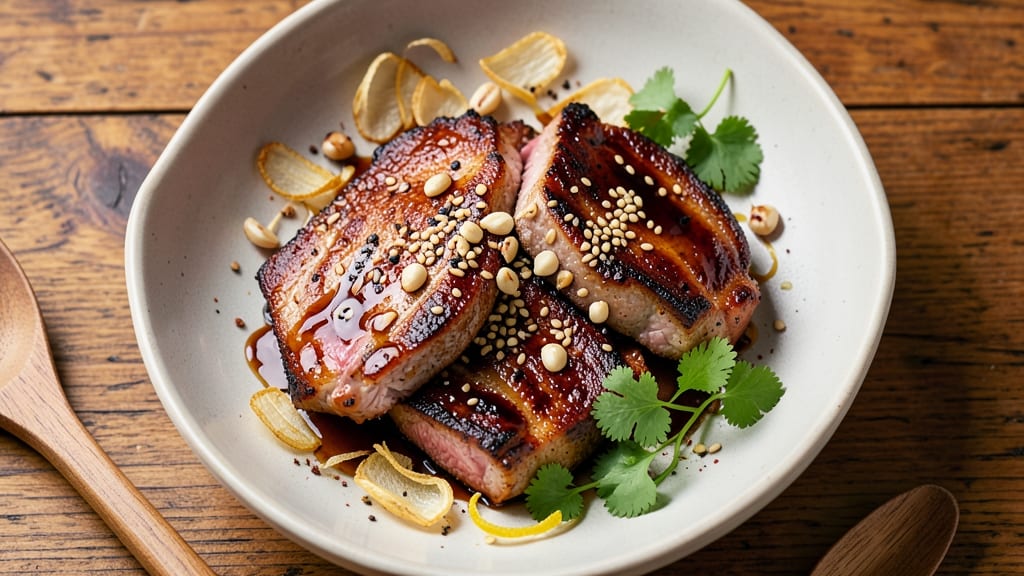
This pork belly steaks recipe delivers the perfect balance of crispy, caramelized bark and tender pink centers—no guesswork required. The secret lies in precise temperature control and a simple marinade that enhances the natural richness without overpowering it.
I've perfected this method after years of testing, ensuring restaurant-quality results every time, even at home.
The process starts with a quick marinade of soy sauce, brown sugar, and garlic to build flavor, followed by high-heat searing to create that coveted bark.
For even better control, I recommend finishing in a 400°F oven until the internal temperature hits 145°F for medium-rare—just enough to melt in your mouth. Resting the steaks for 10 minutes ensures juices redistribute, making each bite irresistibly succulent.
What you'll end up with is a steak that's crispy on the outside, tender and pink inside, with a glossy sheen from the caramelized sugars.
The aroma alone will have everyone gathered around the table, and the rich, savory flavor pairs beautifully with bold sides like roasted root vegetables or a tangy chimichurri sauce. This is the kind of dish that elevates any dinner from ordinary to extraordinary.
Whether you're grilling, pan-searing, or using a combination of methods, this recipe adapts seamlessly. Serve with a bold red wine or craft beer to complement the richness, and prepare for compliments that will make this your new go-to recipe.
Let's get started on creating steaks that will impress even the most discerning guests.
Ingredients for pork belly steaks
Pork belly steaks need just eight core ingredients to transform into restaurant-quality perfection.
| Ingredient | Amount | Notes |
|---|---|---|
| Pork Belly Steaks 🥓 | 1 ½ lb | Thick-cut, 1-1.5 inches preferred |
| Soy Sauce 🥫 | ¼ cup | Low-sodium preferred for balance |
| Brown Sugar 🍯 | ¼ cup | Light or dark variety works |
| Garlic Cloves 🧄 | 6 cloves | Minced for marinade |
| Sesame Oil 🫒 | 1 tbsp | Toasted sesame oil for aroma |
| Neutral Oil 🫒 | ½ cup | Avocado or vegetable oil |
| Kosher Salt 🧂 | 1 ½ tbsp | Diamond Crystal preferred |
| Black Peppercorns 🌶️ | 1 tbsp | Freshly cracked preferred |
| Honey 🍯 | 1 tbsp | For glaze finish (optional) |
| Fresh Ginger 🌿 | 1 tbsp | Finely grated, aromatic |
| Cornstarch 🌾 | 2 tbsp | For crispy coating |
| Chimichurri Sauce 🌿 | ½ cup | For serving (optional) |
The pork belly is the star—thick-cut pieces (1-1.5 inches) ensure that crispy bark and juicy center. Look for well-marbled cuts at your butcher or specialty store like D'Artagnan or Whole Foods. If you're buying pre-sliced, check for even thickness—uneven steaks won't crisp uniformly. The soy sauce and brown sugar marinade is non-negotiable; it's what builds that caramelized crust. I always double-check the sugar isn't clumped—break it up with your fingers before mixing. Fresh garlic and ginger are worth the extra minute to grate; they add layers of flavor that dried spices can't match.
No sesame oil? Toasted sesame seeds in neutral oil work in a pinch, though the aroma won't be as pronounced. Short on cornstarch? Arrowroot powder at the same amount gives the same crisp texture. The honey glaze is optional but adds that glossy finish—substitute with maple syrup if needed. For the chimichurri, if you're short on parsley, cilantro or basil can stretch it, but keep the ratio balanced. The key is letting the marinade work its magic—at least 4 hours, but overnight is ideal. Pat the steaks dry before cooking; moisture is the enemy of crispy bark.
Marinated steaks keep 3 days in the fridge, but the flavor deepens after 24 hours. For make-ahead prep, freeze the marinated steaks for up to 2 months—thaw overnight in the fridge before cooking. The cooked steaks reheat beautifully; wrap in foil and warm in a 275°F oven for 10 minutes. Leftovers? Slice thinly and serve on sandwiches or in ramen—trust me, they're even better cold. Store cooked steaks in an airtight container with a paper towel to absorb any moisture.
Why You'll Love This Recipe
- Five-Ingredient Magic: I swear by this combo—pork belly, soy, brown sugar, garlic, and sesame oil. That’s it. No fancy prep, no 10-step process, just sear-and-sauce simplicity that still tastes like you slaved over it.
- Crispy-Caramel Bliss: The brown sugar crusts up into something ridiculously good—chewy outside, tender inside, with that sticky-sweet glaze that makes every bite worth it. Honestly, the first time I tried it, I nearly burned my mouth from how fast I ate it.
- Weeknight or Weekend Star: Throw these on the grill for a summer BBQ or pan-sear them for a lazy Tuesday. They’re the kind of dish that works with rice bowls, noodles, or just a fork and plate—no judgment here.
- Leftovers That Don’t Suck: Unlike most takeout-style dishes, these actually taste better the next day. Cold slices over rice? Yes. Wrapped in a tortilla? Absolutely. My lunchbox has never been happier.
Step-by-step instructions for crispy pork belly steaks
Here's how to transform thick-cut pork belly into steaks with perfect bark and tender centers.
Prepare the Dry Rub and Marinade
In a small bowl, combine the 0.25 cup brown sugar, 1.5 tablespoons kosher salt, 1 tablespoon freshly cracked black peppercorns, 1 tablespoon finely grated fresh ginger, and 6 minced garlic cloves. Mix thoroughly until evenly distributed. This dry rub creates the foundation for that irresistible crispy bark while keeping the interior juicy.
In a separate bowl, whisk together the 0.25 cup soy sauce and 1 tablespoon sesame oil to create the marinade. The soy sauce adds depth while the sesame oil contributes nutty aroma. Let both mixtures sit at room temperature while you prep the pork.
Coat and Rest the Pork Belly Steaks
Pat the 1.5 lb pork belly steaks completely dry with paper towels - moisture is the enemy of crispy bark. Generously coat both sides with the dry rub mixture, pressing firmly so it adheres well. Then brush both sides with the soy sauce marinade, ensuring complete coverage.
Place the coated steaks on a wire rack set over a baking sheet. This elevation allows air to circulate around all sides, promoting even browning. Cover loosely with plastic wrap and refrigerate for at least 4 hours or overnight. The longer they marinate, the more flavorful and tender they'll become.
Create the Cornstarch Glaze Mixture
In a small bowl, combine the 2 tablespoons cornstarch with 1 tablespoon honey and 1 tablespoon water. Whisk until smooth to create a glossy glaze that will help develop that coveted crispy exterior. This mixture should be thick but pourable - like pancake batter consistency.
Here's the thing - the cornstarch creates a Maillard reaction when exposed to high heat, producing that beautiful caramelized crust while the honey adds subtle sweetness that balances the savory flavors. Keep this mixture at room temperature until ready to use.
Sear and Glaze for Perfect Texture
Heat a heavy skillet over medium-high heat until very hot. Add 0.5 cup neutral oil and let it shimmer for 1 minute. Working in batches if needed, carefully add the pork belly steaks and sear for 3-4 minutes per side until deeply golden brown. The oil should sizzle vigorously - this indicates proper heat for developing that crispy bark.
Once browned, remove steaks from the pan and immediately brush both sides with the cornstarch glaze mixture. Return to the skillet and cook for another 2-3 minutes until the glaze caramelizes into a glossy finish. The steaks should be deep golden brown with visible crackling on the exterior.
Rest and Serve with Chimichurri
Transfer the steaks to a cutting board and let them rest for 5-10 minutes before slicing. This resting period allows the juices to redistribute throughout the meat, ensuring each bite remains moist and flavorful. The exterior will maintain its crispy texture while the interior stays perfectly pink in the center.
Slice the steaks against the grain into ½-inch thick pieces and serve immediately with the 0.5 cup chimichurri sauce on the side. The bright, herby chimichurri cuts through the richness of the pork, creating a perfect balance of flavors. Each bite should deliver that satisfying contrast of crispy exterior and tender, juicy interior.
Pro Tips For Making Pork Belly Steaks
- Sear First, Glaze Second: After browning the steaks in a screaming-hot pan for 2-3 minutes per side, pull them out and set aside. That crust locks in flavor—don’t skip it, even if the glaze isn’t ready yet. I used to rush the glaze and ended up with soggy, underwhelming bites every time.
- Mince That Garlic: No, don’t just chop it—press those cloves through a garlic press or smash them flat with the side of your knife first. This releases more oil and aroma into the brown sugar-soy glaze. My grandmother swore by this, and it’s the reason her pork belly had that extra depth.
- Don’t Overcrowd the Pan: If you’re cooking more than two steaks at once, work in batches. Crowding steams the meat instead of searing it, and you’ll end up with uneven doneness. Trust me, I learned this after a disastrous attempt to feed six people with one pan.
- Finish with Sesame Oil: Toss the cooked steaks with a drizzle of sesame oil after they’ve rested—just before serving. This isn’t just for flavor; it adds a silky sheen and keeps the glaze from drying out. I was skeptical until I tried it, and now it’s non-negotiable.
Regional styles of this pork belly steaks
Japanese Yakitori Style
In Japan, pork belly steaks are often prepared as yakitori—skewered and grilled over charcoal. Start by cutting the belly into 1-inch cubes and skewering them with bamboo or metal shish skewers.
Brush with a marinade of mirin, soy sauce, and sake, then grill over high heat until the exterior is charred and crispy. The key here is the binchotan charcoal, which imparts a smoky depth. Serve with grilled shiitake mushrooms and a side of pickled ginger for balance. 🔥
Korean Buldak Style
For a Korean twist, try buldak-style pork belly steaks—marinated in gochujang (Korean chili paste), soy sauce, and brown sugar. The marinade should coat the steaks for at least 4 hours, ideally overnight.
Grill or pan-sear until the exterior is deep caramelized, then slice thinly against the grain. Garnish with sesame seeds and sliced green onions for a vibrant finish. This method delivers a sweet-spicy kick that pairs beautifully with kimchi or steamed rice. 🌶️
Southern BBQ Twist
In the American South, pork belly steaks are often smoked or braised with a vinegar-based BBQ sauce. Start by rubbing the steaks with paprika, brown sugar, and black pepper, then slow-smoke them at 225°F for 3-4 hours until tender.
Finish with a glaze of apple cider vinegar and brown sugar, brushing it on during the last 20 minutes. Serve on a toasted bun with pickled onions and slaw for a Southern-style sandwich. 🍖
Chinese Char Siu Style
For a Chinese-inspired approach, use a honey-soy glaze with five-spice powder and hoisin sauce. The marinade should coat the steaks for at least 6 hours, then grill or roast until the exterior is glossy and caramelized.
The result is a sticky, sweet-savory steak with a tender interior. Serve with steamed jasmine rice and blistered green beans for a complete meal. This method is perfect for lunar new year celebrations or special gatherings. ✨
Mediterranean Herb Crust
For a lighter, herb-forward take, coat the steaks in a mix of crushed rosemary, thyme, and garlic before searing. Add a lemon-zest glaze during the final minutes of cooking for brightness.
This style works beautifully with roasted Mediterranean vegetables like eggplant and zucchini. The herbs add an aromatic freshness that contrasts the richness of the pork belly. 🌿
Modern Sous-Vide Finish
For a contemporary twist, use sous-vide to cook the steaks to 135°F (perfectly tender), then sear in a hot cast-iron skillet with a cornstarch glaze for crispiness. This method ensures juicy, even cooking while the high-heat sear creates the desired bark.
Pair with a red wine reduction or truffle-infused chimichurri for an elevated dining experience. 💫
Nutrition facts
Frequently asked questions
Can I use pork belly steaks for sandwiches?
Slice the cooked pork belly steaks thinly against the grain for maximum tenderness. Serve on toasted brioche buns with caramelized onions, tangy chimichurri, and a sprinkle of flaky salt. The crispy exterior holds up perfectly, while the juicy interior melts in your mouth.
How do I achieve extra crispy bark?
The secret is high heat and dry surfaces. Pat the steaks bone-dry before cooking, and sear them in a screaming-hot skillet with medium-high heat for 4-5 minutes per side. For even more crispiness, broil for 2-3 minutes at the end. The cornstarch glaze also helps create that irresistible crackling texture.
What's the best way to reheat leftover pork belly steaks?
Wrap leftovers in foil and reheat in a 275°F oven for 10-15 minutes to maintain moisture. For extra crispiness, broil for 1-2 minutes at the end. Never microwave—it makes the exterior soggy. Sliced thinly, these steaks work great in ramen or banh mi sandwiches!
Can I substitute pork belly with another cut?
While pork belly is ideal for its fat content, you can try thick-cut pork loin or bone-in pork chops (1-1.5 inches thick). The fat content will be lower, so brush with extra oil and use a longer marinade (overnight). For best results, add a thin layer of bacon on top during cooking to mimic the crispy texture.
How do I know when the steaks are done?
Use a meat thermometer for accuracy—pork belly steaks are perfect at 145°F internal temperature for medium-rare. The exterior should be deep golden brown with visible crackling. If using a thermometer isn't an option, cut into a small piece: juices should run clear, not pink, and the center should feel slightly springy.