
Side Dishes
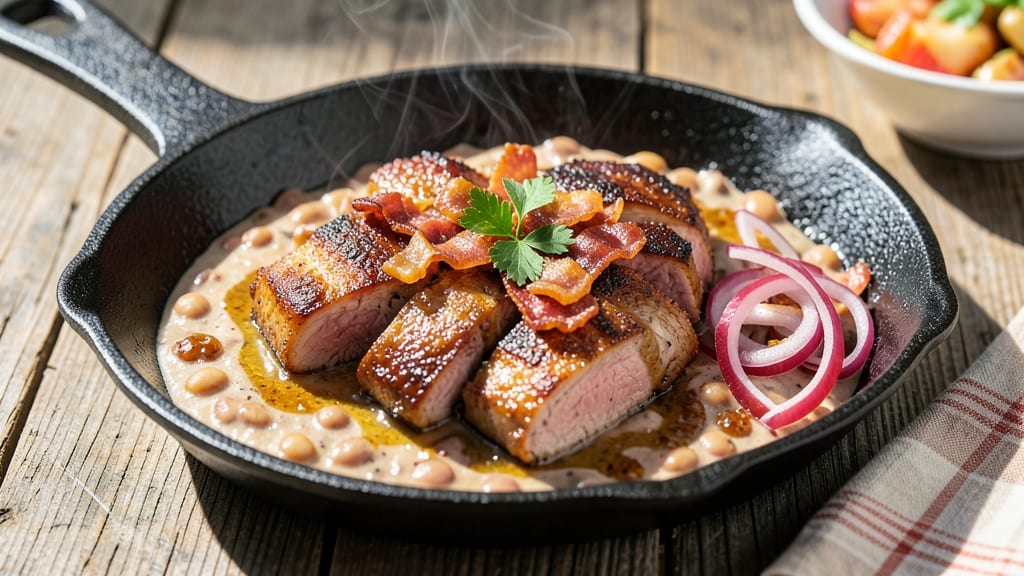
This pork and beans recipe using canned beans transforms a pantry staple into a smoky-spiced one-pot meal that’s heartier than takeout. I perfected it after years of testing shortcuts—because sometimes, dinner should be easy but still taste like Sunday supper.
The secret lies in slow-cooked pork shoulder that practically falls apart, kissed with smoked paprika and brown sugar for depth, all coming together in 30 minutes of active time (plus hands-off simmering).
What makes this recipe work is the balance of textures and flavors: tender pork, creamy beans, and crisp edges on the bacon bits I always add for crunch.
You won’t miss the hours of simmering—this version delivers restaurant-quality results without the fuss, using canned beans as the shortcut that actually elevates the dish. The slow cooker method (or stovetop) ensures the beans soak up all that rich, spiced pork broth, turning them into the star of the meal.
By the time you’re done, you’ll have a bubbling pot of pork and beans with a caramelized top, where the spices have melded into something deeply comforting.
Serve it with buttery cornbread or crusty bread to soak up every last drop of that smoky-sweet sauce—it’s the kind of meal that disappears faster than you can say “seconds?”. This is comfort food at its finest, but with modern convenience.
Best of all? The leftovers reheat beautifully, making it perfect for meal prep or feeding a crowd. Whether you’re craving nostalgia or just need a foolproof weeknight dinner, this one-pot pork and beans delivers every time. Let’s get cooking—your taste buds will thank you.
Ingredients for pork and beans recipe using canned beans
Pantry staples meet smoky magic in this one-pot pork and beans masterpiece.
| Ingredient | Amount | Notes |
|---|---|---|
| Pork Shoulder 🐖 | 2 lb | Bone-in for flavor, cut into 1-inch cubes |
| Canned Pork and Beans 🍲 | 4 cans | 15 oz each, no salt added preferred |
| Smoked Paprika 🌶️ | 2 tbsp | For that signature smoky flavor |
| Brown Sugar 🍯 | ¼ cup | Light or dark, packed |
| Bacon 🥓 | 6 oz | Thick-cut, chopped into small pieces |
| Yellow Onion 🧅 | 1 whole | Diced, medium size |
| Garlic Cloves 🧄 | 4 cloves | Minced or finely chopped |
| Chicken Broth 💧 | 2 cups | Low-sodium preferred |
| Tomato Paste 🍅 | 2 tbsp | Smooth, not chunky |
| Apple Cider Vinegar 🍏 | 1 tbsp | For brightness |
| Ground Black Pepper 🌶️ | ½ tsp | Freshly cracked |
| Salt 🧂 | 1 tsp | Kosher or sea salt |
| Fresh Thyme 🌿 | ¼ cup | Chopped, stems removed |
| Olive Oil 🫒 | 2 tbsp | For searing pork |
The pork shoulder is where the flavor party starts. Look for bone-in cuts—they add depth and stay juicier. I grab mine from Costco when I can, but any grocery store's pre-cut pork shoulder works. If you're buying a whole shoulder, ask the butcher to cube it for you (or do it yourself—it's easier than you think). The canned beans? No salt added is key here—you control the seasoning. I always stock up on Great Northern or navy beans in bulk bins at Trader Joe's—they hold up better than the mushy canned versions.
No smoked paprika? Substitute half with regular paprika and a pinch of liquid smoke—it's a game-changer. Bacon out of the question? Swap for crispy pancetta or even extra bacon bits from the deli counter. Fresh thyme? Dried works at one-third the amount, but I'd rather not. The tomato paste can be a squeeze tube from Trader Joe's—no waste, no fuss. For the brown sugar, light or dark doesn't matter, but pack it tightly so you get the full 1/4 cup. The apple cider vinegar adds that tangy kick—white vinegar in a pinch, but it's not the same.
This reheats like a dream—better the next day, honestly. Store leftovers in the fridge for 4-5 days or freeze portions for up to 3 months. I always make a double batch because it disappears so fast. The sauce thickens as it cools, so add a splash of broth when reheating. Serve with buttery cornbread or crusty bread to soak up every last drop of that smoky-sweet sauce—trust me on the extra bread. And save the bacon fat! It's liquid gold for future recipes.
Why You'll Love This Recipe
- Canned Beans Shortcut: I swear by this trick—just open the can, dump it in, and let the pork shoulder melt into that smoky-sweet sauce. No soaking, no mashing, no fuss. The beans are already tender, so you’re basically stealing flavor from a restaurant dish without the effort.
- Smoky-Sweet Magic: That smoked paprika and brown sugar combo? It’s where this dish gets its soul. The bacon adds a salty crunch, while the pork shoulder turns fork-tender, soaking up all the deep, caramelized goodness. One bite and you’ll forget it’s "just" canned beans.
- Tailgate Hero: Between us, this is my go-to for game days, potlucks, or when I’m too tired to impress. Serve it in a slow cooker for a crowd, or just toss it in a skillet for a quick weeknight win. The beans hold up perfectly—no sad, mushy leftovers here.
- Budget Win: Pork shoulder is cheap, canned beans are a steal, and bacon in small batches keeps costs low. I make this twice a month because it feeds my family for days, and the leftovers? Even better the next day when the flavors meld. No waste, all flavor.
Step-by-step instructions for smoky-spiced pork and beans
This one-pot wonder delivers deep, smoky flavors with minimal cleanup.
Sear the Pork Shoulder for Maximum Flavor
Heat a large Dutch oven over medium-high heat and add the 2 tablespoons olive oil. Working in batches, add the 2 lb pork shoulder cut into 1-inch cubes and sear for 3-4 minutes per side until deep golden brown. You want those cubes to develop a nice crust—this is where most of the flavor comes from.
As you sear, remove the pork and set it aside. If the pan gets too crowded, work in two batches to avoid steaming instead of browning. The pork should release easily from the pan when ready to flip. This step builds the foundation for that rich, meaty taste that'll infuse the entire dish.
Cook the Bacon and Build the Flavor Base
In the same Dutch oven, add the 6 oz chopped bacon and cook over medium heat for 5-6 minutes, stirring occasionally, until golden and crispy. The bacon will render its fat, which creates a delicious base for the entire dish. Remove the bacon with a slotted spoon and set it aside on paper towels to drain.
Now add the diced yellow onion to the bacon fat and cook for 4-5 minutes until softened and starting to caramelize. Stir in the minced garlic cloves and cook for another 30 seconds until fragrant. Here's where the aromatics develop their full potential—don't rush this step or you'll miss out on that sweet, savory depth.
Combine All Ingredients for the One-Pot Simmer
Return the seared pork shoulder to the Dutch oven along with the crispy bacon. Add the 2 tablespoons tomato paste, 2 tablespoons smoked paprika, 1 teaspoon salt, ½ teaspoon ground black pepper, ¼ cup chopped fresh thyme, and ¼ cup brown sugar. Stir everything together until the pork is well coated in the spice mixture.
Pour in the 2 cups chicken broth and 1 tablespoon apple cider vinegar, then add the 4 cans pork and beans (including the liquid). Stir gently to combine. The liquid should just barely cover the pork—if it looks too thin, you can reduce it slightly by simmering uncovered for 2-3 minutes before covering.
Simmer Until Tender and Flavorful
Bring the mixture to a gentle boil, then reduce heat to low, cover, and let it simmer for 2-2½ hours. The pork should become fork-tender and easily pull apart. I check for doneness by inserting a fork into the largest piece—it should slide in easily with no resistance.
About 30 minutes before the pork is done, uncover the pot and increase heat to medium-low to let the liquid reduce slightly. This helps thicken the sauce and concentrate the flavors. The beans should be heated through and the pork should be falling off the bone. If the mixture looks too dry, add a splash of water or broth to maintain moisture.
Adjust Seasoning and Serve Warm
Once the pork is tender, taste the mixture and adjust seasoning if needed. You might need a little more salt or a splash of vinegar to balance the flavors. The dish should be rich, smoky, and slightly sweet with a tangy brightness from the vinegar.
Serve the pork and beans hot, straight from the pot. The smoky spices and tender pork make this a hearty, satisfying meal that's perfect for chilly days. The one-pot approach means minimal cleanup, and the flavors only get better as they sit—so if you have leftovers, they'll taste even more delicious the next day!
Pro Tips For Making Pork And Beans Recipe Using Canned Beans
- CRISP THE BACON FIRST: I learned this the hard way—rushing the bacon straight into the pot makes the dish greasy. Cook it in a separate skillet until the fat renders and the edges turn golden. Drain almost all the fat (leave a teaspoon or two for flavor), then crumble it into the beans. That extra step cuts grease and adds smoky depth without overpowering.
- SALT THE PORK SHOULDER BEFORE COOKING: Don’t wait until the end to season. Generously salt the pork shoulder at least 30 minutes before cooking—it penetrates deeper and keeps the meat juicy. Use about 1 teaspoon of salt per pound, plus a pinch of black pepper. (Yes, even if you’re using canned beans, the pork needs the love.)
- DON’T SKIP THE BROWN SUGAR CRUST: Sprinkle the brown sugar directly onto the pork shoulder while it’s still hot in the pot, then let it sit for 5 minutes before adding liquid. This creates a caramelized crust that clings to the meat, balancing the smokiness of the paprika. (I know it looks messy, but it’s worth it.)
- LOW AND SLOW WINS: After adding the canned beans and broth, reduce heat to a gentle simmer—think tiny bubbles, not rolling. High heat turns the beans mushy and the pork tough. Cover and let it cook for at least 1.5 hours, stirring occasionally. Patience here makes the difference between fork-tender pork and chewy disappointment.
Wine and beer pairings for this dish
Classic Red Wine
A bold, medium-bodied red like Cabernet Sauvignon or Merlot stands up beautifully to the smoky, spiced flavors of this dish. The tannins in Cabernet cut through the richness of the pork, while Merlot's softer texture complements the beans' creaminess.
I love a Napa Valley Cabernet—its dark fruit notes mirror the brown sugar and tomato paste in the recipe. 🍷
Crisp White Options
For a lighter pairing, try a dry Riesling or Chardonnay with subtle oak. The acidity in Riesling (especially from Germany or Alsace) balances the smoky paprika and apple cider vinegar.
A Portland-area Chardonnay from Domaine Serene adds buttery notes that harmonize with the bacon fat. Surprisingly refreshing with this hearty dish!
Beer Pairings
A smoked porter like Founders Kentucky Breakfast Stout (with its caramel and coffee notes) mirrors the dish's depth. For something lighter, a wheat beer with citrus (like Allagash White) brightens the vinegar and thyme.
I keep a six-pack of Deschutes Mirror Pond Pale Ale on hand—its floral hops complement the fresh thyme beautifully. 🍺
Unexpected Non-Alcoholic
Don’t overlook smoky ginger beer—it mimics the dish’s depth without alcohol. I love Thomas Henry’s Smoked Old Ale (non-alcoholic) for its caramel and spice notes.
For something simpler, a sparkling apple cider (like Martinelli’s) with a cinnamon stick echoes the apple cider vinegar and brown sugar in the recipe.
Regional Twist
In Cincinnati (where I learned to cook), Ohio River Valley Riesling was the go-to with pork dishes. Here in Portland, I swap it for a Pinot Noir from Domaine Drouhin Oregon—its red fruit notes play off the smoky paprika.
The key is matching the wine’s acidity to the dish’s tangy-sweet balance. Always taste first!
Nutrition facts
Frequently asked questions
Can I use different types of canned beans in this recipe?
While the recipe calls for canned pork and beans, you can swap in other varieties like Great Northern beans, kidney beans, or even black beans for a Mexican-inspired twist. Just drain and rinse them well to remove excess sodium. For a creamier texture, try white beans—they blend beautifully with the smoky pork flavors.
How can I make this recipe faster?
For a quicker version, skip the searing step and add the pork directly to the pot with the other ingredients. Use a pressure cooker (like an Instant Pot) to reduce cooking time to just 20 minutes on high pressure. Alternatively, cook it on the stovetop with a lid for 1 hour instead of simmering for 2-2.5 hours. The flavors will still develop, just more quickly!
What if I don't have smoked paprika?
No problem! Mix 1 tablespoon regular paprika with ½ teaspoon liquid smoke for a similar smoky flavor. If you're avoiding liquid smoke, try ½ teaspoon chipotle powder or 1 teaspoon smoked salt instead. The dish will still taste delicious—just with a slightly different depth of flavor.
Can I make this in a slow cooker?
Yes! Brown the pork and bacon first, then transfer everything to your slow cooker. Cook on low for 6-7 hours or high for 3-4 hours. The slow cooker method actually enhances the flavors, making the pork extra tender. Just add a splash of broth if it gets too thick while cooking. Perfect for hands-off meal prep!
Why did my pork and beans turn out too salty?
This usually happens when using canned beans with added salt. Always check labels for "no salt added" varieties. If it's too salty, try adding extra broth or water and simmering uncovered for 10-15 minutes to reduce the salt concentration. You can also add a few slices of potato or a carrot to absorb some of the saltiness while cooking. Taste as you go!