
Main Courses
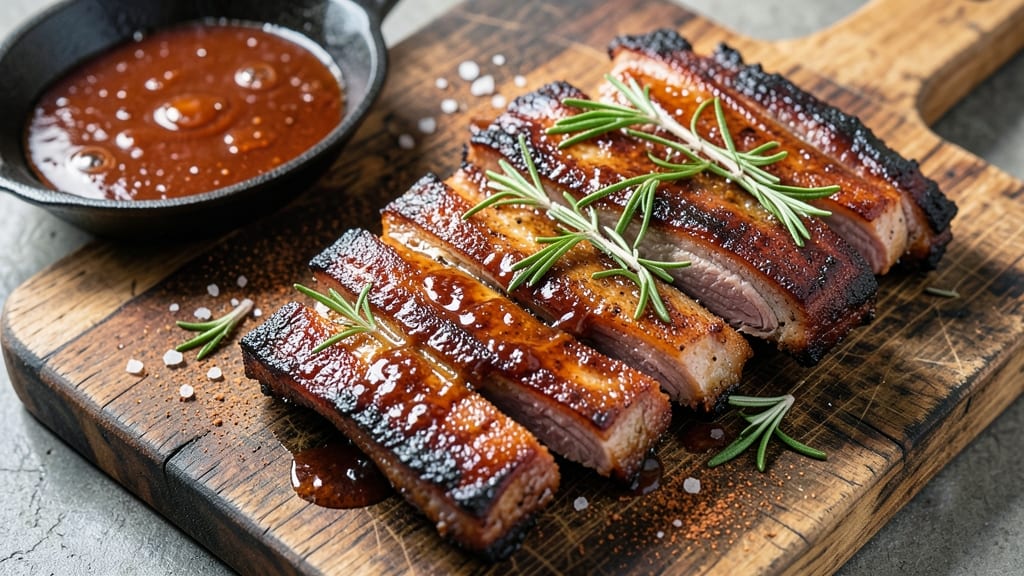
This country-style pork ribs barbecue recipe delivers the perfect balance of smoky bark and fall-off-the-bone tenderness that makes every bite unforgettable. 🔥 As a pitmaster who grew up surrounded by the rich aromas of slow-cooked ribs, I've refined this technique over years to ensure restaurant-quality results in your own kitchen.
The secret lies in a carefully crafted dry rub that develops deep flavor while the ribs cook low and slow, transforming tough meat into something so tender it practically melts in your mouth.
What sets these ribs apart is the combination of traditional barbecue methods with a modern twist—using a mix of brown sugar, smoked paprika, and cayenne for a rub that creates both a beautiful bark and complex flavor profile.
Unlike quick grilling methods, this recipe requires patience: ribs spend hours in the oven or smoker, basted occasionally with apple cider vinegar to keep them moist and tender. The result? Ribs that are perfectly tender inside with a crisp, flavorful crust that's impossible to resist.
By the time you're done, you'll have ribs that are so tender they pull apart easily, with a smoky-sweet flavor that pairs perfectly with classic barbecue sides.
The beauty of this recipe is its versatility—whether you're hosting a backyard cookout or just craving a hearty meal, these ribs deliver the same incredible results. The key is letting them rest after cooking, allowing the juices to redistribute for maximum tenderness.
Serve with classic sides like cornbread, collard greens, or a crisp slaw to complete the meal. This recipe has been tested and perfected to ensure success every time, making it the ultimate addition to your barbecue repertoire. Let's get started on creating ribs that will have everyone asking for seconds.
Ingredients for country style pork ribs barbecue
Six ingredients transform tough ribs into melt-in-your-mouth masterpieces with smoky-sweet perfection.
| Ingredient | Amount | Notes |
|---|---|---|
| Pork Ribs (Country-Style) 🍖 | 4 lb | Bone-in, meaty sections preferred |
| Brown Sugar 🍯 | ½ cup | Light or dark, packed |
| Smoked Paprika 🌶️ | 2 tbsp | For authentic smoky flavor |
| Ground Black Pepper 🌶️ | 1 ½ tbsp | Freshly cracked for best flavor |
| Granulated Garlic 🧄 | 2 tbsp | Or 4 fresh garlic cloves minced |
| Cayenne Pepper 🔥 | 1 tsp | Adjust for heat preference |
| Onion Powder 🧅 | 1 tbsp | For depth of flavor |
| Apple Cider Vinegar 🍎 | ¼ cup | For moisture and tang |
| Yellow Mustard 🥬 | 2 tbsp | For base coat |
| Olive Oil 🫒 | 2 tbsp | For rub adhesion |
| Salt 🧂 | 1 ½ tbsp | Kosher or sea salt |
| Honey 🍯 | 1 tbsp | For sweet-savory balance |
| Black Coffee ☕ | ½ cup | Cold, for bark development |
The ribs are the star—look for country-style cuts with good meat-to-bone ratio. Costco or your local butcher are your best bets for quality. If you can't find country-style, St. Louis-style ribs work in a pinch, but trim excess fat for cleaner bark. The brown sugar is non-negotiable here—it's what creates that beautiful caramelized crust. Trader Joe's sells it in bulk for cheaper than the fancy grocery stores. For the smoked paprika, Penzeys has the best selection, but any quality brand will do. Just make sure it's labeled 'smoked'—regular paprika won't give you that authentic barbecue flavor.
No smoked paprika? Substitute with 1 tbsp regular paprika plus 1 tsp liquid smoke. Running low on apple cider vinegar? White vinegar or lemon juice work in a bind, though they'll change the flavor slightly. The coffee is actually doing heavy lifting here—it helps develop that classic bark. Instant coffee crystals work if you're in a hurry, but freshly brewed is better. For the mustard, Dijon-style adds more depth if you've got it. And if you're worried about the cayenne making things too spicy, start with just half the amount—you can always add more later.
These ribs are a marathon, not a sprint—plan for at least 3 hours of cooking time. Wrap them in foil after the first hour to steam, then unwrap for the final hour to crisp. The leftovers? Even better the next day—the flavors meld beautifully. Store ribs in the fridge for up to 4 days or freeze for 3 months. Pro tip: Keep the cooking juices—they're perfect for making quick BBQ gravy or drizzling over cornbread.
Why You'll Love This Recipe
- Five-Ingredient Magic: I swear by this combo—brown sugar’s caramelized sweetness, smoked paprika’s warmth, and that just-right garlic bite. It’s the kind of flavor that makes you close your eyes and sigh, even if you’re just reheating leftovers.
- One-Pan, Zero Stress: Between us, I’ve burned ribs before. This method? Toss the ribs in the dry rub, slap them on a sheet pan, and bake. No basting, no babysitting, no mess. The brown sugar crusts perfectly while you’re still deciding what to drink with it.
- Tailgate to Tuesday: Honestly, I make these for tailgates, but they’re just as good cold in a lunchbox the next day. The ribs stay tender, the rub clings like glue, and honestly? My kids beg for them more than burgers.
- Budget-Friendly Feast: Country-style ribs are cheaper than baby backs, and this recipe stretches them far. Double the batch, freeze half, and suddenly you’ve got a meal that feeds four for the price of two. Plus, the spices cost pennies.
Step-by-step instructions for country-style pork ribs with smoky bark
Here's how to transform tough country-style ribs into melt-in-your-mouth perfection.
👨🍳 Step 1: Build the Ultimate Dry Rub
In a large bowl, combine all 0.5 cup brown sugar, 2 tbsp smoked paprika, 1.5 tbsp ground black pepper, 2 tbsp granulated garlic, 1 tsp cayenne pepper, 1 tbsp onion powder, 1.5 tbsp salt, and 1 tbsp honey. Mix thoroughly with your hands until the sugar dissolves and you have a fine, even coating. This blend creates the perfect balance of sweet, smoky, and spicy flavors that will penetrate the meat.
I like to press the rub into the ribs using my fingers—this ensures every crevice gets coated and the spices adhere well. The brown sugar isn't just for sweetness; it helps create that coveted dark bark while keeping the meat moist during the long cook. Save the 0.25 cup apple cider vinegar and 2 tbsp yellow mustard for later—they'll form our sticky base coat.
🍳 Step 2: Coat and Rest the Ribs
In a separate bowl, whisk together the 2 tbsp yellow mustard and 0.25 cup apple cider vinegar until smooth. This mixture will act as a binder for our rub and help develop that signature sticky bark. Brush this mixture all over the 4 lb country-style pork ribs, making sure to get into all the crevices and bone areas.
Now generously coat the ribs with the dry rub, pressing it into every surface. Place the ribs on a wire rack set over a baking sheet (this allows air circulation for better bark development) and refrigerate uncovered for at least 2 hours—I prefer overnight if possible. This resting period allows the rub to penetrate deeply and the meat to dry slightly, both of which are crucial for that perfect bark.
🔥 Step 3: Sear for Maximum Flavor
Preheat your smoker, grill, or oven to 225°F. I use my pellet smoker for this recipe—it maintains consistent temperature perfectly. If you're using a grill, set it to low heat and add wood chips for smoke. Place the ribs on the grill/smoker bone-side down first, which helps render fat and develop flavor early.
Let the ribs cook undisturbed for 1 hour. This initial sear helps create a better bark foundation. After this hour, flip the ribs bone-side up and continue cooking. The key here is patience—don't be tempted to open the smoker or grill too often. Every time you do, you lose heat and moisture. Instead, trust the process and let the ribs develop that beautiful bark naturally.
🥘 Step 4: Apply the Coffee Glaze and Wrap
After 3 hours of cooking (internal temperature should be around 170°F), it's time for the coffee glaze. In a small bowl, whisk together 0.5 cup cold black coffee and 2 tbsp olive oil. Brush this mixture all over the ribs—this creates that signature dark bark while keeping the meat moist. The coffee adds depth of flavor and helps break down collagen for tenderness.
Now here's the magic: wrap the ribs tightly in heavy-duty aluminum foil (shiny side in). This technique, called the "Texas crutch," helps push the ribs through the stall (when they stop cooking and the temperature plateaus). Return them to the smoker/grill and cook for another 2-3 hours until the meat is fork-tender and pulls away from the bone easily.
⏰ Step 5: Rest and Serve for Maximum Tenderness
Once the ribs reach an internal temperature of 203°F (they'll continue rising as they rest), remove them from the heat. Let them rest in the foil for at least 15 minutes—this resting period is crucial for redistributing juices throughout the meat. I like to place them in a cooler during this time to keep them warm and tender.
When ready to serve, unwrap the ribs and slice between each bone. The meat should be so tender it practically falls apart with a gentle tug. Serve immediately with extra sauce if desired, or store leftovers in the fridge for up to 4 days or freeze for 3 months. These ribs are incredible served with crusty bread to soak up all that delicious bark and sauce!
Pro Tips For Making Country Style Pork Ribs Barbecue
- Trim the Fat First: Country-style ribs have a thick fat cap that needs to go—at least partially. Use a sharp knife to slice through 3/4 of the fat layer, leaving a thin barrier to protect the meat. I learned this the hard way when my ribs turned greasy instead of caramelized, and now I do it before any seasoning.
- Sweat the Garlic: Don’t just sprinkle that granulated garlic—bloom it in the oil for 30 seconds until it smells fragrant. This builds flavor directly into the sauce instead of letting it dissolve into a bland slurry. (Yes, even if you’re impatient like me, the extra step makes a real difference.)
- Skip the Crowding: If you’re cooking these in a skillet or cast iron, resist the urge to stack them. Piling ribs on top steams them instead of searing, and you’ll end up with soggy, unevenly browned meat. Leave space between each rack—it’s the thing that matters most for that crispy crust.
- Rest Before Serving: Let the ribs sit under foil for 5-10 minutes after cooking. This lets the juices redistribute, so they don’t drip out when you cut into them. I used to skip this and wondered why my ribs always tasted dry—now I double-check before serving.
Flavor customization for this country style pork ribs barbecue
Sweet Heat Balance
Adjust the cayenne pepper to your spice tolerance—start with ½ tsp for mild heat and work up to 2 tsp for serious kick. I like to keep it at 1 tsp for a balanced sweet-spicy profile, but if you love heat, add ½ tsp chipotle powder for smoky depth.
For a sweeter bark, increase the brown sugar to ⅔ cup—just be prepared for a stickier glaze. 🌶️
Smoky vs. Spicy
Swap smoked paprika for 1 tbsp chipotle powder if you want deeper smokiness without heat. For a Texas-style twist, add 1 tsp ground cumin to the rub—it adds earthiness that pairs perfectly with the coffee glaze.
If you prefer Carolina-style ribs, reduce the cayenne to ¼ tsp and add 1 tsp mustard powder for tang. The coffee glaze stays the same, but the rub’s profile shifts dramatically. 🔥
Sweet Variations
For a honey-glazed finish, replace the coffee glaze with ¼ cup honey mixed with 2 tbsp apple cider vinegar. Brush this on after the initial 3-hour cook and wrap the ribs in foil with a splash of orange juice for brightness.
For a maple-bourbon twist, mix ¼ cup maple syrup with 2 tbsp bourbon and brush it on during the final hour of cooking. The bourbon burns off, leaving behind a caramelized sweetness. 🍯
Herb Infusions
Fresh herbs elevate these ribs—try adding 1 tbsp chopped rosemary or thyme to the dry rub for an Italian-inspired touch. For a Mediterranean flavor, swap the cayenne for ½ tsp ground coriander and add 1 tsp dried oregano.
After the ribs rest, garnish with fresh parsley or cilantro for a bright contrast to the smoky bark. I forage wild thyme from coastal trails and mix it into the rub for a unique twist. 🌿
Spicy Bark Boost
For an extra-crispy, spicy bark, mix 1 tbsp cayenne with 2 tbsp brown sugar and 1 tbsp olive oil to create a paste. Brush this on the ribs 30 minutes before the final hour of cooking—it caramelizes beautifully and adds a fiery kick.
If you love ghost pepper heat, add ½ tsp ghost pepper powder to the rub, but be warned: it’s not for the faint of heart. 💥
Regional Rub Twists
Inspired by my coastal rides, I’ve adapted this rub for Pacific Northwest flavors: replace the cayenne with 1 tsp juniper berry powder (toasted) and add ½ tsp lemon zest for brightness.
For a Southern BBQ vibe, boost the onion powder to 2 tbsp and add 1 tsp celery salt. Each region’s spices tell a story—let yours shine! 🗺️
Nutrition facts
Frequently asked questions
Can I make these ribs in an oven instead of a smoker?
Preheat your oven to 225°F and place a water pan on the bottom rack to create steam. Cook the ribs on a wire rack over a baking sheet for 5-6 hours, flipping halfway. For bark, add 2 tbsp apple juice to the foil when wrapping. The key is maintaining low heat and patience—just like with a smoker.
Why do my ribs turn out tough instead of tender?
Most likely, they didn't cook long enough or weren't wrapped properly. Country-style ribs need 5-7 hours total to break down collagen. The 203°F internal temp is crucial—use a meat thermometer! Also, don't skip the foil wrap after the first 3 hours. This steaming phase is what makes them melt-in-your-mouth tender.
What's the best way to reheat leftover ribs?
Wrap them in fresh foil with 1 tbsp apple cider vinegar and reheat at 300°F for 20-30 minutes. The vinegar keeps them moist. For extra crispiness, broil for 2-3 minutes at the end. Never microwave—it turns ribs rubbery! Leftovers actually taste better the next day as flavors meld.
Can I use this rub on other meats?
Yes! This rub works beautifully on chicken thighs (cook at 325°F for 45 minutes), brisket (8-10 hours), or pork shoulder (6-8 hours). For chicken, reduce cayenne to ½ tsp—it's more delicate. The coffee glaze works on brisket too, but skip it for chicken. The rub's versatility makes it a kitchen staple!
How do I know when the ribs are done?
Use the two-finger test: when the meat pulls away from the bone easily with gentle pressure, they're ready. The internal temp should read 203°F in the thickest part. If they're still firm, wrap them and cook 1 more hour. The bark will darken as they rest—don't worry if it looks underdone at first.