
Soups & Stews
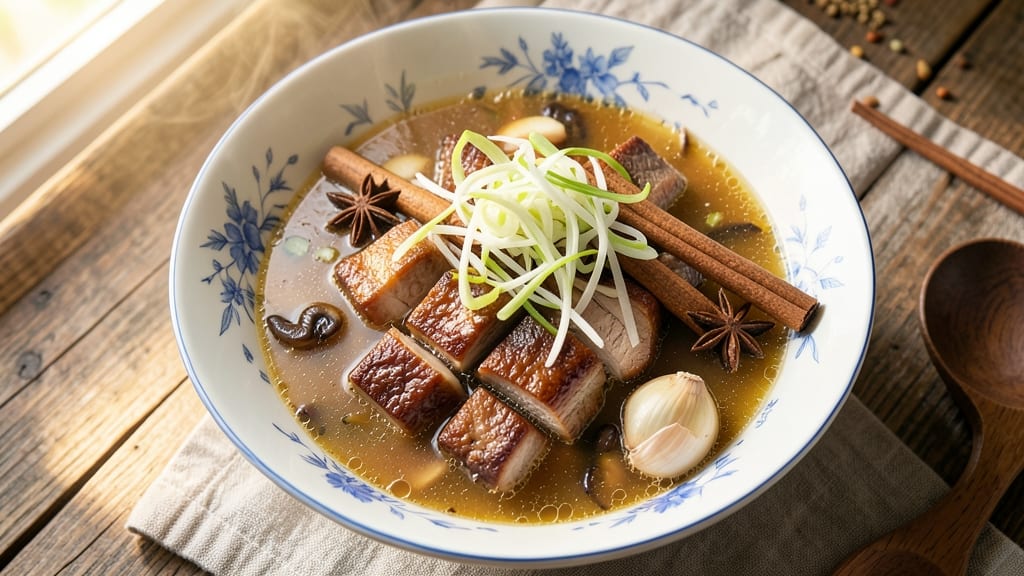
This Chinese pork soup recipe brings the comforting aroma of star anise and silky rice noodles to your kitchen—just like my Nonna's stories of Italian-Italian fusion meals. The secret lies in the slow-simmered broth infused with warm spices that transform simple pork into tender, flavorful bites.
I've perfected this technique after years of testing, ensuring every spoonful delivers that perfect balance of savory and aromatic depth.
The magic begins with a rich pork broth, where star anise and cinnamon work their magic over 45 minutes of gentle simmering. This isn't your average soup—it's a labor of love that rewards patience with layers of flavor.
The rice noodles cook just right, absorbing the fragrant broth while maintaining their delicate texture, creating a dish that's both comforting and sophisticated.
What makes this recipe special is how it transforms humble ingredients into something extraordinary. The pork becomes tender and flavorful, the broth develops a complex aroma from the spices, and the noodles achieve that perfect silky consistency.
It's the kind of dish that feels like a warm hug on a chilly day, perfect for family gatherings or cozy weeknight dinners.
Whether you're serving this for a special occasion or a simple family meal, the presentation matters. Garnish with fresh cilantro and a drizzle of chili oil for color and a hint of heat.
The combination of textures and flavors makes this soup a standout—simple to make but impossible to forget. Let's get cooking!
Ingredients for chinese pork soup
These aromatic ingredients transform humble pork into a fragrant, comforting soup that's perfect for any gathering.
| Ingredient | Amount | Notes |
|---|---|---|
| Pork Shoulder 🥩 | 1 ½ lb | Bone-in for richer flavor |
| Star Anise Pods 🌿 | 2 whole | Whole, not ground |
| Cinnamon Sticks 🌿 | 2 whole | 2-inch pieces preferred |
| Fresh Ginger 🧅 | ½ cup | Peeled, thinly sliced |
| Garlic Cloves 🧄 | 6 cloves | Peeled, smashed |
| Dried Shiitake Mushrooms 🍄 | 4 whole | Rehydrated in hot water |
| Rice Noodles 🍜 | 8 oz | Silken, wide variety |
| Low-Sodium Soy Sauce 🥄 | ¼ cup | Kikkoman preferred |
| Sesame Oil 🫒 | 1 tbsp | Toasted, for aroma |
| Fresh Cilantro 🌿 | ¼ cup | Chopped, for garnish |
| Chili Oil 🌶️ | 1 tbsp | For finishing touch |
| Green Onions 🧅 | 3 whole | Thinly sliced, white and green |
| Water 💧 | 6 cups | Filtered preferred |
| Salt 🧂 | 1 ½ tsp | Adjust to taste |
| Black Pepper 🌶️ | ½ tsp | Freshly cracked |
The star anise and cinnamon sticks are absolute game-changers here—Whole Foods or Asian markets carry the best quality. Look for star anise that's plump and fragrant, not dried out. The pork shoulder? Bone-in is key for that rich broth flavor, and you can usually find it pre-cut at Costco or the meat counter. Fresh ginger and garlic should smell vibrant—if they don't, skip them. For the mushrooms, dried shiitake from Trader Joe's works perfectly; just soak them in hot water for 20 minutes before adding to the broth. The rice noodles? Silken, wide variety cooks faster and holds up better than thin noodles.
No star anise? Anise seeds at double the amount will work in a pinch, but the flavor won't be identical. Running out of fresh ginger? Ground ginger at half the amount is fine, but toasted whole ginger is ideal. The soy sauce can be swapped for coconut aminos if you're avoiding soy, though the flavor will be slightly different. No sesame oil? Toasted peanut oil gives a similar nutty aroma. For the mushrooms, cremini or white mushrooms work if you can't find dried shiitake—just sauté them first. The cilantro is optional but adds that fresh pop—dried oregano at half the amount works if you're out, though it won't be the same.
This soup tastes even better the next day as the flavors meld. Store leftovers in an airtight container in the fridge for up to 5 days. For freezing, portion into 2-cup containers—it reheats beautifully, though the noodles may soften slightly. The broth alone freezes wonderfully for up to 3 months, so make extra if you're feeling ambitious. Garnish with fresh cilantro and chili oil right before serving—that's the secret to restaurant-quality presentation.
Why You'll Love This Recipe
- One-Pot Magic: I swear by this recipe when I’m too tired to clean five pots. Toss the pork shoulder, whole spices, and ginger into a single pot—simmer, cover, and forget about it. The star anise and cinnamon infuse the broth so deeply, you’ll taste them long after the soup’s done.
- Deep, Warm Spice: That first bite? Rich, fragrant, and alive—like a hug in a bowl. The pork shoulder melts into tender shreds, while the garlic and ginger sizzle at the bottom, caramelizing into a sticky, umami-packed crust. Honestly, it’s the kind of flavor that makes you slow down mid-sip.
- Leftover Goldmine: This soup only gets better the next day. The broth reduces to a deeper, more concentrated broth, and the pork stays juicy for days. I freeze portions for lazy Mondays or toss them into rice bowls when I’m too busy to cook.
- Budget-Friendly Feast: Pork shoulder is the secret weapon here—cheap, forgiving, and packed with flavor. A single cut feeds four, and the spices cost pennies. Between us, this is my go-to when I need to stretch a grocery budget without sacrificing taste. (Yes, even on a Tuesday night.)
Step-by-step instructions for Chinese pork soup with star-anise infused broth
This aromatic broth builds layer by layer—let's create a soup so flavorful it'll have everyone asking for seconds.
Prepare the Pork and Aromatics
Cut the 1.5 lb pork shoulder into 1-inch cubes—this size ensures even cooking and perfect texture. In a large pot, combine the pork with the 6 cups water, 2 whole star anise pods, 2 whole cinnamon sticks, and 0.5 cup fresh ginger (thinly sliced). Bring to a boil over medium-high heat until the water reaches a rolling boil.
Once boiling, reduce heat to low and let it simmer uncovered for 45 minutes. This initial simmer draws out impurities and begins breaking down the pork's connective tissue. You'll notice the broth turns cloudy at first, but it will gradually clear as it infuses with the aromatic spices. Skim off any foam that rises to the surface with a ladle—this keeps your broth crystal clear.
Build the Flavor Base
After 45 minutes, add the 6 cloves garlic (smashed) and 4 whole dried shiitake mushrooms (rehydrated in hot water for 20 minutes and drained). Increase heat to medium-high and bring the broth back to a boil. The mushrooms will add an earthy depth, while the garlic will infuse its pungent aroma into the broth.
Simmer uncovered for another 30 minutes. The pork should be tender enough to pierce with a fork but not falling apart. If the broth reduces too much, add ½ cup hot water to maintain the proper consistency. The star anise and cinnamon will have dissolved slightly, releasing their warm, sweet spices into the broth—this is where the magic happens.
Season and Finish the Broth
Strain the broth through a fine-mesh sieve into a clean pot, pressing gently on the solids to extract maximum flavor. Discard the solids. Return the broth to medium heat and stir in the 0.25 cup low-sodium soy sauce, 1.5 tsp salt, and 0.5 tsp black pepper. Taste and adjust seasoning—you want a balance of savory, aromatic, and slightly sweet flavors.
While the broth heats, prepare the 8 oz rice noodles according to package instructions (usually 5-7 minutes in boiling water). Drain and rinse briefly under cold water to stop cooking. The noodles should be silky but still slightly firm—overcooking will make them mushy in the soup.
Assemble and Serve
Add the cooked pork cubes back to the broth and simmer for 5 minutes to reheat. Divide the 8 oz rice noodles among 4 bowls, then ladle the hot broth and pork over the noodles. Drizzle each serving with 1 tbsp sesame oil and 1 tbsp chili oil, then garnish with 0.25 cup chopped fresh cilantro and 3 whole sliced green onions. The oils will add a luxurious finish, while the cilantro and green onions provide fresh contrast.
Serve immediately while steaming hot. The soup should be rich with pork flavor, aromatic from the star anise and ginger, and perfectly balanced with the umami from the soy sauce. Each bite should deliver tender pork, silky noodles, and a broth so flavorful it coats your tongue. The chili oil adds a subtle heat that brightens the entire dish—don't skip this step!
Pro Tips For Making Chinese Pork Soup
- CRANK THE HEAT FIRST: Start your pork shoulder in a screaming-hot pot—no simmering yet. I used to ease into it, and the meat would turn out dry. Two minutes of hard boiling breaks down the connective tissue faster, so you’re left with tender slices that fall apart with a fork.
- SLICE GINGER THINLY: Skip the chunky ginger—this soup needs every aromatic ounce. Use a mandoline or sharp knife to cut it paper-thin, then bruise it with the flat of your knife before adding. Thick slices hide in the broth; thin ones infuse flavor like a whisper.
- DON’T CROWD THE POT: Pork shoulder needs room to breathe, or you’ll steam it instead of sear it. Start with half the meat, render the fat until golden, then add the rest. Crowding turns your soup into a sad, greasy stew—no one wants that.
- STAR ANISE TOAST FIRST: Toss the whole pods in a dry pan for 30 seconds until fragrant—this unlocks their flavor without bitterness. I learned this after a batch tasted like medicine. Crush them lightly after toasting for the best aroma, but don’t overdo it or the broth turns soapy.
Wine and beer pairings for this recipe
Light Beer Pairings
A crisp, pilsner-style beer like Boston Beer Company Samuel Adams Noble Pilsner cuts through the soup's richness beautifully. The clean, slightly sweet malt profile balances the star anise's warmth while the effervescence cleanses your palate between bites.
I've found that the 4.5% ABV keeps the drink refreshing without overpowering the dish's delicate flavors. 🍺
Rice Wine Options
For an authentic touch, serve with Shaoxing rice wine—a staple in Chinese cuisine. Warm 1 cup Shaoxing wine with ½ cup hot water and a pinch of sugar until steaming.
This aromatic sip enhances the soup's umami depth while complementing the ginger and garlic notes. Look for Lao Gan Ma brand at Asian markets for the best quality.
Dry White Wine
A dry Sauvignon Blanc from New Zealand offers a bright acidity that pairs wonderfully with the soup's star anise and chili oil. I recommend Kim Crawford Sauvignon Blanc—its citrus notes mirror the ginger's zing while the mineral finish cleanses the palate.
Serve slightly chilled to highlight the wine's crispness against the warm soup. 🍷
Non-Alcoholic Choices
For those skipping alcohol, sparkling yuzu soda provides a refreshing contrast. The citrusy yuzu fruit complements the ginger and garlic while the bubbles mimic beer's cleansing effect. San Pellegrino Yuzu is my go-to—it's widely available and strikes the perfect balance between sweet and tart. Serve over ice for extra refreshment.
Local New England Twist
If you're serving this in Boston, pair it with Harpoon IPA—its hoppy bitterness stands up to the pork's richness while the malt sweetness echoes the soy sauce's umami. The local connection makes it feel like a true New England fusion.
For a lighter option, Trillium Brewing Company's Juniper Moon pale ale offers floral notes that complement the star anise beautifully.
Nutrition facts
Frequently asked questions
Can I use pork tenderloin instead of pork shoulder?
You can, but the texture will be different! Pork tenderloin cooks much faster and stays more delicate. For this recipe, cut it into ½-inch cubes and reduce the simmering time to 20 minutes total. The broth will still be flavorful, but the meat won't have that rich, fall-apart quality. If you prefer leaner pork, add 1 tbsp cornstarch to the broth at the end for extra body.
How do I make this soup vegetarian?
Swap the pork for 8 oz extra-firm tofu or 12 oz king oyster mushrooms (sliced thick). Use the same cooking method but reduce simmering time to 15 minutes. Boost umami with 1 tbsp mushroom powder or an extra ½ cup soy sauce. The star anise and ginger will still shine—just add 1 tsp miso paste for depth.
Why did my broth turn cloudy?
Cloudiness is normal during the first 20 minutes of simmering—it's just impurities rising from the pork. Skim off the foam with a ladle, then let it settle. If the broth stays cloudy after 45 minutes, strain it through a cheesecloth-lined sieve for a clearer result. The flavor won't be affected! Just ensure you press the solids gently to extract all the aromatic oils.
Can I make this soup in an Instant Pot?
Use the Sauté function to brown the pork first, then add all ingredients and cook on High Pressure for 20 minutes. Quick-release the pressure, then strain and finish with soy sauce. The noodles should be cooked separately—this soup's magic comes from the long simmer, not pressure cooking. The broth will still be flavorful but slightly more concentrated.
What if I don't have star anise?
Use ½ teaspoon anise seeds or ¼ teaspoon fennel seeds as substitutes. For a different but still aromatic twist, try 1 bay leaf + ¼ teaspoon ground cloves. The flavor won't be identical, but it'll still add warmth. If you're missing cinnamon too, ½ teaspoon ground ginger** works in a pinch. The key is balancing the spices—don't skip both!