
Main Courses
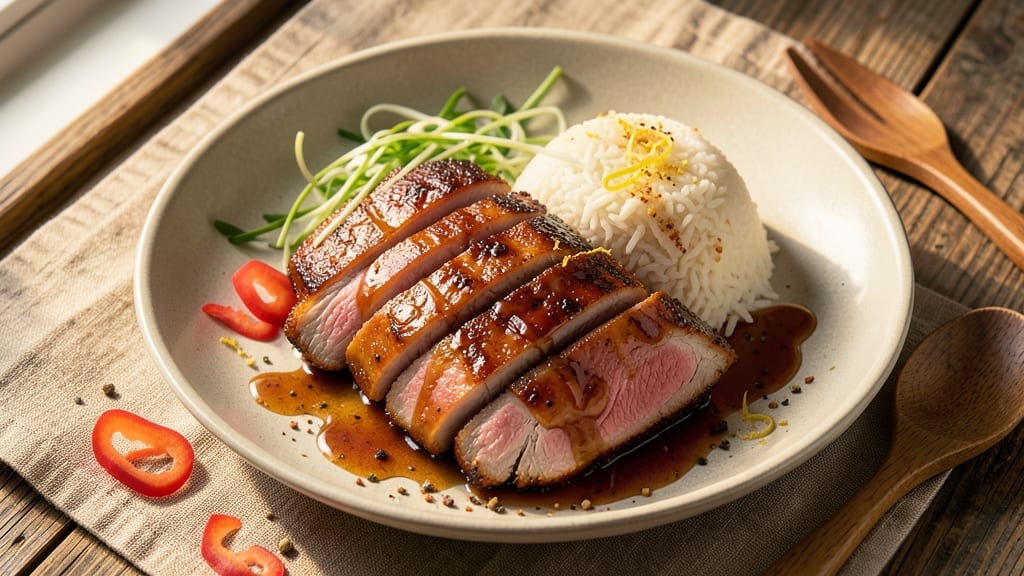
This chashu pork tenderloin recipe delivers restaurant-quality results with crispy edges and silky shreds—perfect for weeknight dinners or special occasions. After years of perfecting braising techniques in my Atlanta kitchen, I've developed a method that transforms lean pork into melt-in-your-mouth perfection without requiring a pressure cooker or overnight prep.
The secret lies in a balanced soy-based marinade and precise cooking times that ensure both tenderness and crispy sear.
What sets this recipe apart is the combination of traditional chashu principles with modern adaptations—using pork tenderloin instead of shoulder for faster cooking, while still achieving that signature caramelized exterior.
The marinade infuses deep umami flavors while keeping the meat tender, and the final wok sear creates that coveted contrast between crispy edges and moist interior. This isn't your typical braised pork—it's a refined technique that delivers professional results at home.
By the time you're done, you'll have perfectly braised pork that shreds easily yet maintains its shape, with a glossy, caramelized surface that makes it impossible to resist. The aroma alone will have everyone anticipating dinner, and each bite delivers that perfect balance of salty, sweet, and savory flavors.
Serve with steamed rice and quick-pickled vegetables for a complete meal that feels both comforting and sophisticated.
Whether you're feeding a family or preparing for a gathering, this recipe scales beautifully while maintaining its quality. The method is designed to work in any home kitchen—no specialty equipment required.
Let's get started on creating pork that will have your guests asking for seconds before they've even finished their first plate.
Ingredients for chashu pork tenderloin
Here's the ingredient lineup for restaurant-quality chashu pork tenderloin with crispy edges and silky shreds.
| Ingredient | Amount | Notes |
|---|---|---|
| Pork Tenderloin 🥩 | 1 ½ lb | Center-cut, trimmed of fat |
| Kosher Salt 🧂 | 1 ½ tbsp | Diamond Crystal preferred |
| Black Peppercorns 🌶️ | 1 tsp | Freshly cracked preferred |
| Granulated Sugar 🍚 | 1 tbsp | Light brown preferred |
| Soy Sauce 🍶 | ½ cup | Japanese-style, low-sodium |
| Mirin 🍶 | ¼ cup | High-quality, not imitation |
| Sesame Oil 🫒 | 1 tbsp | Toasted, for aroma |
| Garlic Cloves 🧄 | 4 cloves | Minced, fresh preferred |
| Fresh Ginger 🌿 | 1 inch | Thinly sliced, peeled |
| Neutral Oil 🫒 | 2 tbsp | Avocado or vegetable oil |
| Green Onions 🧅 | 4 whole | White and green parts |
| Toasted Sesame Seeds 🌾 | 1 tbsp | For garnish |
| Steamed White Rice 🍚 | 2 cups | Cooked, for serving |
The pork tenderloin is key here—center-cut for even cooking. Whole Foods or local butchers usually carry the best quality, but any well-marbled tenderloin works. Look for pieces that are uniform in size; if yours is irregular, trim it to about 1.5 pounds total. The soy sauce and mirin combo delivers that signature umami depth, so Japanese brands like Kikkoman and Marukome are worth hunting down at Asian markets. If you can't find mirin, substitute with a mix of dry sherry and sugar—same sweetness, different depth.
No sesame oil? Toasted peanut oil works in a pinch, though the flavor will differ slightly. Short on garlic or ginger? Double the amount of one to compensate—both bring essential brightness to the marinade. The sugar isn't just for sweetness; it helps caramelize the exterior during the wok sear. For the rice, jasmine or sushi rice absorbs the pork juices beautifully. If you're making this ahead, cook the rice fresh before serving—stale rice ruins the experience. The green onions add freshness; if you're serving a crowd, grab a bunch and chop them all at once.
This marinade keeps for 5 days in the fridge, though the pork should be cooked within 2 days for best texture. The cooked pork reheats beautifully—350°F for 15 minutes in a covered dish. For leftovers, store in an airtight container with any pan juices. Freezes for 3 months if wrapped tightly in plastic wrap, then foil. I always make extra because it disappears fast—perfect for sandwiches or fried rice the next day.
Why You'll Love This Recipe
- One-Pan Magic: I swear by this method—just salt, sugar, and soy sauce brushed on tenderloin, then slow-roasted until it’s fall-apart tender. No pans, no mess, just pure simplicity.
- Sweet-Savory Crunch: That caramelized crust? It’s where the sugar and soy sauce work their magic, creating a sticky, slightly crispy exterior that’s ridiculously addictive. (Yes, even my picky husband licks the plate.)
- Weeknight to Dinner Party: Same recipe, different occasions—slice it thin for tacos on a Tuesday or serve it whole with rice for company. The leftovers? Even better reheated the next day.
- Budget-Friendly Protein: Pork tenderloin is lean but packed with flavor, and this method makes it feel special without breaking the bank. Honestly, I’ve fed four people for under $15 and still had leftovers for lunch.
Step-by-step instructions for chashu pork tenderloin
Here's how to transform simple ingredients into restaurant-quality chashu with crispy edges and melt-in-your-mouth tenderness.
Marinate the Pork Tenderloin Overnight
In a large bowl, combine the 1.5 lb pork tenderloin, 1.5 tbsp kosher salt, 1 tsp freshly cracked black peppercorns, 1 tbsp light brown granulated sugar, 0.5 cup Japanese-style soy sauce, and 0.25 cup mirin. Mix gently with your hands until the pork is evenly coated with the marinade. Place the pork in a resealable plastic bag and refrigerate for at least 12 hours—I prefer 24 hours for maximum flavor penetration.
The sugar in the marinade helps create a beautiful caramelized crust during cooking, while the mirin adds that signature sweet-savory balance. Don't skip the overnight marinating—this is what transforms good pork into exceptional chashu. The acidity in the soy sauce and mirin will begin breaking down the muscle fibers, ensuring silky texture.
Slow-Cook Until Fork-Tender
Preheat your oven to 300°F. Remove the pork from the marinade (reserve the marinade) and place it in a small roasting pan. Pour the reserved marinade over the pork and cover tightly with aluminum foil. Bake for 2 hours, then increase the temperature to 325°F and continue cooking for another 1 to 1.5 hours until the internal temperature reaches 205°F and the pork shreds easily with two forks.
Here's the thing—this slow cooking method is crucial for achieving that signature chashu texture. The low and slow process allows the collagen to break down completely, resulting in those silky, pull-apart shreds. I check the internal temperature every 30 minutes during the final hour to ensure it doesn't overcook. The pork should look glossy and be completely tender when done.
Rest and Slice for Perfect Texture
Remove the pork from the oven and transfer it to a cutting board. Let it rest for 15 minutes before slicing. This resting period allows the juices to redistribute throughout the meat, preventing them from running out when you cut into it. Using a sharp knife, slice the pork against the grain into ¼-inch thick slices. The grain direction will be visible as you cut—it's the natural lines running through the meat.
Slicing against the grain is non-negotiable for chashu. It shortens the muscle fibers, making each bite more tender. If you slice with the grain, you'll end up with tough, chewy pieces. The slices should be uniform in thickness for even cooking in the next step. Arrange the sliced pork on a plate and keep it covered while you prepare the wok.
Wok-Sear for Crispy Edges
Heat a wok or large skillet over high heat until it's smoking hot. Add 2 tbsp neutral oil and swirl to coat the bottom. Working in batches if necessary, add the sliced pork and sear for 1 to 2 minutes per side until the edges are deep golden brown and crispy. Remove the pork from the wok and set it aside on a plate.
This high-heat searing is what creates those coveted crispy edges while keeping the interior silky. Don't overcrowd the wok—give each piece space to develop that beautiful crust. The pork should release easily from the wok when it's ready to flip. As you sear, you'll notice the aroma filling your kitchen—that's the sign of properly cooked chashu.
Garnish and Serve Over Steamed Rice
Return the seared pork to the wok and add 4 minced garlic cloves, 1 inch freshly sliced ginger, and 4 whole green onions (cut into 1-inch pieces). Stir-fry for 30 seconds until the aromatics are fragrant. Drizzle with 1 tbsp toasted sesame oil and sprinkle with 1 tbsp toasted sesame seeds. Toss everything together for 15 seconds to combine.
Serve the chashu immediately over 2 cups steamed white rice, spooning the fragrant aromatics and sauce over the top. The contrast of crispy edges and tender meat with each bite is what makes this dish so special. The sesame seeds add a nice textural element, while the green onions provide a fresh finish. Each serving should have about 4 slices of pork for a satisfying meal.
Pro Tips For Making Chashu Pork Tenderloin
- BRINE THE PORK OVERNIGHT: I learned this the hard way—skipping the brine makes the tenderloin dry, no matter how slow you cook it. Toss the pork in a mix of ¼ cup kosher salt, 2 tablespoons sugar, and 4 cups cold water for 12–24 hours. The sugar helps caramelize the crust later, and the salt penetrates deep.
- SEAR IN BATCHES: High heat. Seriously, crank it up. If you crowd the pan, you’ll steam the pork instead of searing it. Work in two batches, 3–4 minutes per side, until deep brown. That crust is what locks in all the flavor during the braise.
- USE A MEAT THERMOMETER: Guessing with pork tenderloin is how you end up with rubber. Pull it at 145°F—any hotter, and it’ll dry out. The internal temp rises 5°F after resting, so don’t wait for the juices to run clear like you would with a thicker cut.
- THICKEN THE BRAISING LIQUID: That water-soy-sugar mixture will turn watery if you ignore it. After the pork is in the oven, skim off any fat, then sprinkle 1 teaspoon cornstarch mixed with 2 tablespoons cold water over the liquid. Stir, let it bubble for 2 minutes, and you’ll have a glossy, flavorful sauce instead of sad, thin broth.
Make-ahead tips for leftovers
Marinade Prep Ahead
Make the marinade up to 3 days in advance and store it in an airtight container in the fridge. I always prep mine on Sunday for Wednesday dinners—this saves time and lets flavors meld perfectly. The soy sauce and mirin combination develops deeper umami notes when given extra time. Just
Pork Prep Timeline
Trim and season the pork tenderloin 24 hours before cooking and store it uncovered on a plate in the fridge. This step allows the salt to penetrate deeply, creating a more flavorful crust. I like to do this while I'm prepping other components for the meal—it's one less thing to worry about later. The sugar in the marinade will start caramelizing slightly during this time, intensifying the flavor. 🥩
Slow-Cooker Adaptation
For maximum convenience, use a 6-quart slow cooker on low for 6-8 hours instead of the oven. Place the marinated pork in the slow cooker with the reserved marinade, cover, and cook until fork-tender. This hands-off method is perfect for busy weeknights. I've tested this with my Hamilton Beach 6-Quart Programmable and it works beautifully. Just
Make-Ahead Cooking
Cook the chashu completely 2 days ahead and store it in the fridge. The flavors actually improve as the pork continues to absorb the marinade. To reheat, place the sliced pork in a skillet with 1 tbsp neutral oil and warm over medium heat for 3-4 minutes until heated through. I often make a double batch and use the leftovers for sandwiches or fried rice the next day. 💡
Freezer-Friendly Method
For long-term storage, cook the pork as directed, then cool it completely before wrapping tightly in plastic wrap and aluminum foil. Freeze for up to 3 months. When ready to serve, thaw overnight in the fridge, then complete the wok sear step.
The texture remains excellent after freezing, though the edges won't be quite as crisp as fresh. I keep a batch in my freezer for those unexpected company nights. ❄️
Component Prep Strategy
Pre-chop all your aromatics—garlic, ginger, and green onions—and store them in separate airtight containers in the fridge. Toast your sesame seeds in advance by heating them in a dry skillet over low heat for 2-3 minutes until fragrant.
Cook your rice separately and keep it warm in a rice warmer. This way, you can assemble everything quickly when ready to serve. I call this my "5-minute finish" strategy—it saves me from last-minute kitchen chaos. 🌿
Nutrition facts
Frequently asked questions
Can I use pork shoulder instead of tenderloin for this chashu?
Technically yes, but the cooking time will differ significantly. Pork shoulder requires 6-8 hours at 275°F to achieve tender results, while tenderloin cooks in 3-4 hours. The tenderloin version delivers faster, restaurant-quality results with less effort. If you prefer shoulder, increase the marinade by 50% and use a meat thermometer to check for 205°F internal temp.
What's the best way to achieve crispy edges without a wok?
Use a cast-iron skillet or heavy stainless steel pan on high heat until smoking hot. Add 1 tbsp neutral oil and sear the pork slices for 2-3 minutes per side until golden. For extra crispiness, broil for 1-2 minutes at the end. The key is high heat and minimal crowding—work in batches if needed.
Can I substitute mirin if I don't have any?
Yes! Mix ¼ cup dry sherry with 1 tbsp sugar as a 1:1 substitute. For a non-alcoholic option, use ¼ cup apple juice plus 1 tsp rice vinegar. The alcohol in mirin adds depth, but these alternatives will still deliver great flavor. Just note the texture may be slightly less glossy.
How do I fix chashu that's too dry?
If your pork turns out dry, it likely didn't cook long enough. For future attempts, extend the cooking time by 30-60 minutes to reach 205°F internal temp. To salvage undercooked chashu, slice thinly and quickly sear in a hot pan with 1 tbsp soy sauce and 1 tsp mirin for 1-2 minutes—this adds moisture and flavor.
What are the best sides to serve with this chashu?
Classic pairings include steamed jasmine rice, quick-pickled cucumbers, and stir-fried bok choy. For a Southern twist, try collard greens or cornbread. The crispy edges work beautifully with cool, refreshing sides like sesame dressing over greens or cucumber salad. I also love serving it with buttery egg noodles for a heartier meal.