
Main Courses
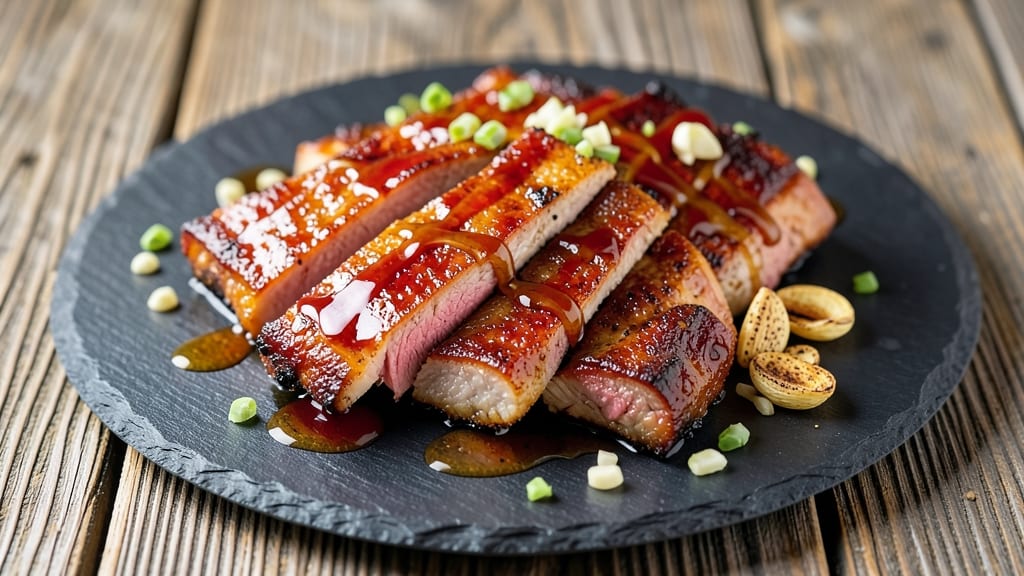
This char siu pork spare ribs recipe brings the bold flavors of Cantonese tradition to your table with a sweet-hoisin glaze that transforms tough ribs into melt-in-your-mouth perfection. 🔥 As someone who's spent years perfecting pork techniques—from my CIA training to running a high-volume BBQ operation—I know the secret lies in the marinade's balance of honey, hoisin, and five-spice, which tenderizes while building that signature caramelized crust.
The process starts with a 24-hour marinade that penetrates every fiber, ensuring ribs that fall apart with just a touch.
We'll grill them over indirect heat to render fat while keeping the meat juicy, then finish with a final brush of glaze that turns golden and sticky—just like the char siu you'd find at a Hong Kong dim sum stall. The aroma alone will have everyone gathering around your grill.
What makes these ribs truly special is how they balance sweet, salty, and umami in every bite—the sticky glaze clings to tender meat, while the five-spice powder adds warmth that lingers. The edges develop that coveted caramelized bark through careful basting, creating a texture contrast that makes each bite exciting.
This is the kind of dish that elevates weeknight dinners to restaurant-worthy status.
Serve with steamed jasmine rice and quick-pickled vegetables to cut through the richness, or turn them into tacos for a fusion twist. The technique scales perfectly whether you're cooking for two or feeding a crowd—just double the marinade and adjust grill time accordingly. Let's get started on these unforgettable ribs.
Ingredients for char siu pork spare ribs
Sweet, sticky, and packed with Cantonese soul—these ingredients transform ribs into restaurant-quality char siu.
| Ingredient | Amount | Notes |
|---|---|---|
| Pork Spare Ribs 🥩 | 4 lb | Bone-in, meaty ends preferred |
| Hoisin Sauce 🍶 | ½ cup | Store-bought or homemade |
| Honey 🍯 | ½ cup | Wildflower preferred for depth |
| Five-Spice Powder 🌶️ | 1 ½ tbsp | Toasted for maximum aroma |
| Garlic Cloves 🧄 | 8 cloves | Minced for marinade |
| Ginger Root 🌿 | 2 tbsp | Freshly grated, not powdered |
| Soy Sauce 🥢 | ¼ cup | Kikkoman preferred |
| Sesame Oil 🫒 | 1 tbsp | Toasted, not flavored |
| Brown Sugar 🍚 | ¼ cup | Light or dark, packed |
| Red Fermented Beans 🌱 | 2 tbsp | Crushed, for umami depth |
| Salt 🧂 | 1 ½ tbsp | Diamond Crystal preferred |
| Black Pepper 🌶️ | 1 tsp | Freshly cracked |
| Cornstarch 🌾 | 1 tbsp | For glaze thickening |
| Sesame Seeds 🌰 | 1 tbsp | Toasted for garnish |
The ribs are non-negotiable—meaty ends give you the best flavor and texture. Costco or Whole Foods carry the best quality, but any butcher will trim them for you. Look for ribs with good marbling—this fat renders beautifully during cooking and keeps the meat juicy. For the hoisin, Lee Kum Kee is the gold standard, but any good-quality brand works. The honey should be wildflower if you can find it—it adds subtle floral notes that balance the sauce's richness. Five-spice powder is a game-changer here; Penzeys sells a pre-mixed version, but toasting whole spices yourself (star anise, cinnamon, fennel, cloves, Sichuan pepper) takes it to another level.
No hoisin? Substitute 2 tbsp soy sauce + 1 tbsp molasses + 1 tsp sugar—it won't be identical, but it'll work. Running out of sesame oil? Avocado oil at half the amount keeps the flavor profile close. The ginger and garlic can be swapped for 1 tbsp each of ginger paste and garlic powder in a pinch, though fresh is always better. For the red fermented beans, Asian markets carry them dried—soak and crush them yourself for maximum umami. The cornstarch is key for that signature sticky glaze; don't skip it. And if you're feeling fancy, add 1 tsp of Shaoxing wine to the marinade for extra depth.
Marinate the ribs for at least 24 hours—48 hours is ideal—covered in the fridge. The sauce keeps for 1 week in the fridge if you make extra, and freezes beautifully for 3 months. I always make a double batch of the marinade; use half for the ribs and save the rest for stir-fries or glazing tofu. The ribs reheat well—just a quick blast in the oven at 375°F for 10 minutes with a splash of water to keep them moist. Store cooked ribs wrapped tightly in foil for 3 days in the fridge.
Why You'll Love This Recipe
- One-Pan Magic: I swear by this for lazy nights—just slather the ribs with hoisin, honey, and five-spice, then let the oven do the work. No chopping, no flipping, no stress. (Yes, even on a Tuesday night.)
- Sweet-Savory Balance: That sticky-sweet glaze from hoisin and honey? It’s ridiculously good—crispy edges with tender meat, and the five-spice powder adds this warm, aromatic depth that makes it feel special.
- Leftovers Reinvented: Make a big batch and eat it three ways: shredded in rice bowls, chopped into fried rice, or straight from the fridge as a snack. (My kids beg for these cold—no joke.)
- Budget-Friendly Feast: Pork ribs stretch further than you’d think, and the ingredients? Hoisin and honey are pantry staples. Here’s what sold me—this feeds six for under $20, and everyone leaves happy.
Step-by-step instructions for char siu pork spare ribs
Here's how to transform tough ribs into melt-in-your-mouth sweetness with that signature caramelized crust.
👨🍳 Step 1: Make the Sweet-Hoisin Marinade
In a large bowl, combine the 0.5 cup hoisin sauce, 0.5 cup honey, 0.25 cup soy sauce, 0.25 cup brown sugar, 1.5 tbsp five-spice powder, 1.5 tbsp salt, 1 tsp black pepper, 2 tbsp crushed red fermented beans, 8 minced garlic cloves, and 2 tbsp freshly grated ginger root. Mix until the brown sugar dissolves completely—this ensures even coating.
Here's the thing—don't rush this step. The five-spice powder needs time to bloom, and the ginger should fully infuse. Let the marinade sit for 10 minutes while you prep the ribs. You'll notice the aroma deepen as the spices wake up—this is when the magic begins.
🥘 Step 2: Coat and Marinate the Ribs
Pat the 4 lb pork spare ribs completely dry with paper towels—moisture is the enemy of that perfect caramelized crust. Rub the marinade all over the ribs, pressing it into the meat and into the crevices. Use your hands for this; you want every inch covered.
Transfer the ribs to a resealable plastic bag and massage them gently to distribute the marinade evenly. Seal the bag and refrigerate for at least 4 hours, but overnight is even better. The longer they marinate, the more tender and flavorful they'll become. I like to flip the bag occasionally to ensure even coating.
🔥 Step 3: Roast Until Caramelized
Preheat your oven to 375°F. Remove the ribs from the fridge and let them sit at room temperature for 30 minutes—this prevents temperature shock when they hit the hot oven. Place them on a wire rack set over a baking sheet (this allows air circulation for that beautiful crust).
Roast for 45 minutes, then increase the heat to 425°F. Continue roasting for another 20-25 minutes until the edges are deep caramel brown and the internal temperature reaches 195°F (use a meat thermometer). You'll see the glaze bubble and thicken—that's your cue it's almost done. If the glaze starts to burn, tent loosely with foil for the last 5 minutes to protect it.
🍳 Step 4: Glaze and Finish
While the ribs roast, mix 1 tbsp cornstarch with 1 tbsp water in a small bowl to make a slurry. In a small saucepan, combine 1 tbsp sesame oil and 2 tbsp of the reserved marinade (from the bag). Bring to a simmer over medium heat until slightly thickened.
Once the ribs are caramelized, brush them generously with the glaze mixture. Return them to the oven for 5-7 minutes to set the glaze. Watch closely—you want it shiny and sticky, not rubbery. The ribs should pull apart easily at the bones, with a glossy, crackly exterior that's irresistibly sweet and savory.
🍽️ Step 5: Rest and Garnish
Transfer the ribs to a cutting board and let them rest for 10 minutes (this keeps them juicy). Sprinkle with 1 tbsp toasted sesame seeds just before serving. The contrast of nutty seeds against the sweet glaze adds a delightful textural finish.
Slice between the bones and serve immediately with steamed jasmine rice and quick-pickled vegetables. The ribs should be tender enough to pull apart with your fingers, with a perfect balance of sweet, salty, and umami flavors in every bite. Save any leftover glaze—it's amazing drizzled over rice or even as a dipping sauce!
Pro Tips For Making Char Siu Pork Spare Ribs
- Trim the Fat First: Cut away the thick silver skin and excess fat from the spare ribs before marinating—it makes the sauce cling better and lets the five-spice powder stick to the meat instead of sliding off. I learned this the hard way when my ribs ended up greasy and unevenly coated.
- Marinate Overnight, Not Hours: Two days max is ideal, but don’t rush it under 12 hours—this lets the five-spice powder and hoisin break down the collagen for tender ribs. I used to skip this and wondered why my ribs stayed chewy.
- Double-Baste for Color: After the first sear, flip the ribs and let the pan cool for 30 seconds before basting with the honey-hoisin mix. The residual heat caramelizes the sauce instantly, giving that glossy char siu look. Sounds weird, but it works—your ribs will look like they came from a dim sum cart.
- Skip the Crowding: When roasting, leave space between ribs so they crisp instead of steaming. I used to stack them like a lazy chef, and they turned out soggy. A wire rack in the pan solves this—no extra effort, just better texture.
Creative variations of this dish
Cantonese BBQ Style
For a more traditional Cantonese approach, swap the roasting method for charcoal grilling—this is how char siu originated in Hong Kong. Use binchotan charcoal for its clean burn and minimal ash.
Grill the ribs over indirect heat at 350°F for 1.5 hours, then move them to direct heat for 5 minutes per side to caramelize. The smoky depth from charcoal enhances the hoisin's complexity.
I've done this at my farm using my vintage Kamado ceramic grill, and the ribs develop a beautiful crosshatch pattern from the grill marks. 🔥
Spicy Sichuan Twist
Add 1 tbsp Sichuan peppercorn powder and 1 tsp chili crisp to the marinade for a fiery kick. The numbing sensation from Sichuan peppercorns pairs perfectly with the sweet glaze.
For extra heat, brush the ribs with a mix of 1 tbsp hoisin, 1 tsp gochujang, and ½ tsp doubanjiang during the final glaze step. Serve with pickled mustard greens to balance the heat.
This version reminds me of the bold flavors I encountered during my apprenticeship in Charleston's Chinatown. 🌶️
Hawaiian Fusion
Incorporate ½ cup pineapple juice and 1 tbsp grated fresh ginger into the marinade, then finish with a teriyaki glaze (mix 2 tbsp soy sauce, 1 tbsp honey, and 1 tsp mirin). Grill the ribs over mesquite charcoal for a smoky-sweet profile.
Top with toasted coconut flakes and lime wedges for serving. This fusion style became popular in Hawaii's Chinatowns—it's a crowd-pleaser that bridges two culinary worlds beautifully. 🍍
Smoked Maple Version
Replace the honey with ½ cup pure maple syrup and add 1 tbsp smoked paprika to the marinade. Smoke the ribs over fruitwood (apple or cherry) at 225°F for 3 hours, then finish with a maple-hoisin glaze (reduce ½ cup maple syrup with 1 tbsp hoisin until thick).
The result is a sweet, smoky rib with a deep amber crust. This version works wonderfully for fall gatherings and pairs perfectly with roasted butternut squash. 🍁
Korean Bulgogi Ribs
Blend the marinade with 2 tbsp gochugaru (Korean chili flakes) and 1 tbsp toasted sesame oil. Add 1 tbsp grated pear to tenderize the meat.
Grill or roast as directed, then finish with a bulgogi glaze (mix 2 tbsp soy sauce, 1 tbsp honey, and 1 tsp pear puree). Garnish with thinly sliced scallions and toasted sesame seeds.
This fusion brings the bold flavors of Korean BBQ to your char siu, creating a dish that's both familiar and exciting. 🇰🇷
Vegetarian Adaptation
For a plant-based version, use extra-firm tofu or king oyster mushrooms marinated in the same sauce. Press the tofu for 30 minutes to remove excess moisture, then slice into thick strips. Roast at 400°F for 25 minutes, flipping halfway, until caramelized.
The texture won't be identical, but the sweet-hoisin glaze shines with these alternatives. This version is perfect for vegetarian friends or when you want to keep the flavors without the meat. 🌱
Nutrition facts
Frequently asked questions
Can I use regular pork ribs instead of spare ribs?
Yes, but the results will differ slightly. Spare ribs (from the belly area) have more fat and connective tissue, which makes them ideal for long, slow cooking and that signature tender texture. If using regular pork ribs (like baby back), reduce the marinating time to 12-16 hours since they're more tender. The glaze will still work, but you'll need to watch them closely during cooking to prevent overcooking.
Why does my char siu glaze turn rubbery instead of sticky?
This usually happens when the glaze cooks too quickly or isn't reduced enough. The cornstarch slurry needs to simmer until it's thick and glossy—not dry. If it's already rubbery, brush on a little extra honey or hoisin sauce to restore shine. For next time, reduce the glaze separately until it coats the back of a spoon before brushing it on the ribs.
How do I make these ribs on a grill instead of the oven?
For grill perfection, start with the ribs at room temperature. Use indirect heat at 275°F for 2 hours, then move to direct heat for 5-7 minutes per side to caramelize. Spritz with apple cider vinegar every 30 minutes to prevent sticking. The key is patience—grilled char siu develops deeper smoky notes while keeping the meat juicy. Finish with a quick brush of glaze right before serving.
Can I make this recipe without hoisin sauce?
Mix 2 tbsp soy sauce, 1 tbsp molasses, 1 tbsp honey, 1 tsp sugar, and ½ tsp five-spice powder as a substitute. While not identical, this combo delivers the same sweet-savory balance. For extra depth, add 1 tsp fish sauce (if you're okay with umami) or a splash of Shaoxing wine to mimic hoisin's complexity.
How far ahead can I prep the marinade?
You can make the marinade up to 1 week in advance and store it in the fridge. For best flavor, let it sit at room temperature for 30 minutes before using to wake up the spices. If you're short on time, even 4 hours of marinating will work, though overnight yields the most tender results. The marinade also freezes beautifully for up to 3 months—just thaw it in the fridge before using.