
Main Courses
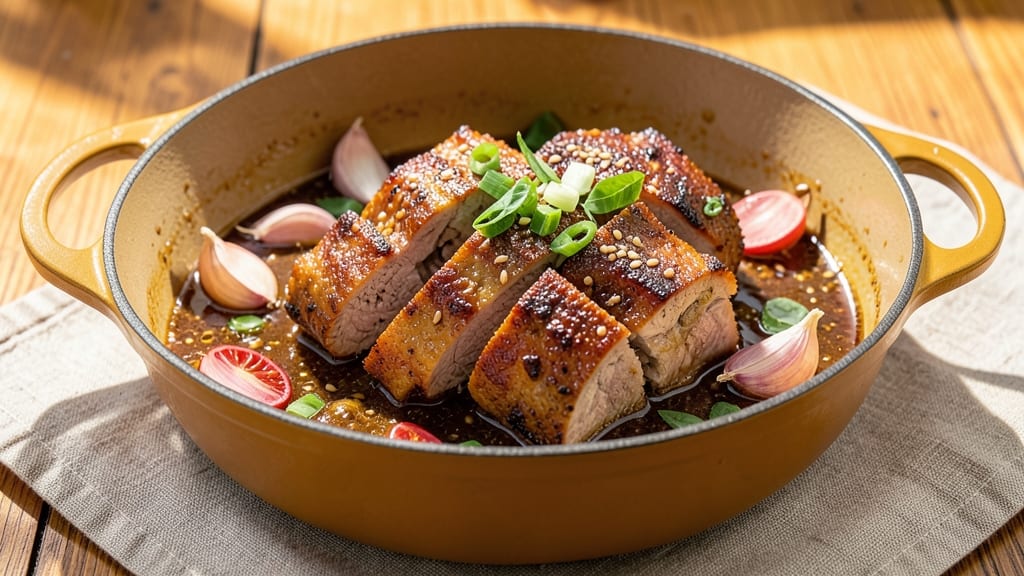
This Chamorro pork adobo recipe brings the bold flavors of Guam's island cuisine to your kitchen with its signature tangy vinegar-braised pork. The slow-cooked method transforms tough cuts into tender, flavorful bites that marry sweet, salty, and sour notes perfectly.
As someone who's spent years perfecting pork preparations, I can tell you this dish is where tradition meets foolproof technique.
The beauty of Chamorro pork adobo lies in its balanced marinade of soy sauce, vinegar, garlic, and citrus that tenderizes the meat while building complex flavors. What makes this recipe special is the patience required—the pork simmers for hours until it falls apart easily, absorbing all those vibrant flavors.
The result is restaurant-quality pork that's rich, aromatic, and impossible to resist.
What you'll end up with is a dish that's equally at home at family gatherings or special occasions. The tender pork pieces have a glossy sheen from the braising liquid, and each bite delivers layers of garlic, citrus, and savory depth.
This recipe serves as a wonderful introduction to Chamorro cuisine, offering a taste of Guam's rich culinary heritage.
Pair it with steamed rice and pickled vegetables for the full experience. The slow-cooked method means you can prepare this ahead of time, making it perfect for busy schedules. Let's get started on this flavorful journey to Guam's heartland.
Ingredients for chamorro pork adobo
Six ingredients transform tough pork into restaurant-quality adobo with Guam's signature tangy-sweet balance.
| Ingredient | Amount | Notes |
|---|---|---|
| Pork Shoulder 🥩 | 3 lb | Bone-in, cut into 2-inch chunks |
| White Vinegar 💧 | 1 cup | Distilled white vinegar preferred |
| Soy Sauce 🍶 | ½ cup | Light or regular soy sauce |
| Garlic Cloves 🧄 | 8 cloves | Peeled and lightly crushed |
| Brown Sugar 🍚 | ½ cup | Packed lightly |
| Fresh Ginger 🌿 | 2 tbsp | Grated, fresh preferred |
| Bay Leaves 🍃 | 2 whole | Dried, standard size |
| Black Peppercorns 🌶️ | 1 tsp | Crushed lightly |
| Salt 🧂 | 1 ½ tsp | Kosher or sea salt |
| Green Onions 🧅 | 3 whole | White and green parts separated |
| Lime Juice 🍋 | ¼ cup | Freshly squeezed |
| Olive Oil 🫒 | 2 tbsp | Extra-virgin preferred |
| Water 💧 | 1 ½ cups | For braising liquid |
The pork shoulder is the star—bone-in cuts develop deeper flavor during the long braise. Look for well-marbled meat at your butcher or the pork section of Costco for the best quality. If you can't find bone-in, use pork butt instead. The vinegar and soy sauce combo is non-negotiable; use distilled white vinegar for the cleanest tang, and Kikkoman soy sauce if you want that authentic umami punch. Fresh ginger and garlic should smell vibrant—if they're musty, skip them. For the brown sugar, lightly packed means no pressing down hard—just a gentle leveling off the cup.
No white vinegar? Apple cider vinegar or rice vinegar work in a pinch, though the flavor will be slightly different. Short on soy sauce? Coconut aminos provide a similar savory depth. The green onions can be swapped for scallions or regular onions, but the white parts add more subtle sweetness. If you're using dried ginger, reduce to half the amount—fresh is always better. The lime juice can be substituted with lemon juice, though lime's brightness is more traditional. For extra richness, add 1 tbsp of butter at the end of cooking, but don't skip the olive oil—it helps build the sauce's glossy finish.
This dish tastes even better the next day as flavors meld. Store leftovers in the braising liquid in an airtight container for up to 5 days in the fridge. For longer storage, freeze portions for up to 3 months. The pork will continue to absorb flavors, so reheat gently with a splash of water or broth. Garnish with fresh green onions just before serving to keep them vibrant. The sauce thickens as it cools, so add a little water when reheating if it seems too concentrated. This recipe feeds a crowd—plan for leftovers or double the batch for gatherings.
Why You'll Love This Recipe
- One-Pan Magic: I swear by this recipe when I’m too tired to wash extra dishes. The pork shoulder practically cooks itself in the same pot where you mix the vinegar, soy, and garlic—just stir, simmer, and let the flavors meld. No fancy gadgets, no stress.
- Sweet-Savory Balance: That first bite? The vinegar cuts through the richness of the pork while the brown sugar caramelizes into a glossy, sticky glaze—like a hug in sauce form. The garlic? Oh, it’s there, but it doesn’t overpower; it just enhances.
- Leftover Heaven: Between us, this dish tastes better the next day. The pork gets more tender, the sauce thickens into a perfect dipping glaze, and I’ve reheated portions straight from the fridge for lunch—no one ever complains. (Yes, even on a Tuesday night.)
- Budget-Friendly Feast: Pork shoulder is cheap, and a single cut stretches into meals for days. I’ve fed six people for under $15, and the leftovers? Perfect for tacos, fried rice, or just straight-up slathered on toast. Minimal cost, maximum satisfaction.
Step-by-step instructions for Chamorro pork adobo
This traditional Guamese dish delivers tender, tangy pork with a perfect balance of sweet and sour flavors.
Sear the Pork Shoulder for Depth of Flavor
Heat the 2 tablespoons olive oil in a large Dutch oven over medium-high heat. Once shimmering, add the 3 lb pork shoulder cut into 2-inch chunks, working in batches if needed to avoid crowding. Sear each piece for 3-4 minutes per side until deep golden brown forms on all surfaces.
This initial searing creates a flavorful crust that locks in juices during the long braising process. Don't rush this step—you're building the foundation for that rich, caramelized taste. Once all pieces are browned, remove them from the pot and set aside on a plate.
Build the Tangy Braising Base
In the same Dutch oven, reduce heat to medium and add the 8 cloves garlic cloves and 2 tablespoons fresh ginger. Sauté for 1-2 minutes until the garlic becomes lightly golden and fragrant—this prevents them from burning while releasing their essential oils.
Stir in the 1 cup white vinegar, 0.5 cup soy sauce, 0.5 cup brown sugar, 1.5 teaspoons salt, 1 teaspoon black peppercorns, and 2 whole bay leaves. Add the 1.5 cups water and bring to a gentle simmer, scraping up any browned bits from the bottom of the pot with a wooden spoon. These bits contain concentrated flavor that will infuse into your pork.
Braise Until Fork-Tender
Return the seared pork to the Dutch oven, turning to coat in the braising liquid. Bring to a full simmer, then reduce heat to low, cover, and transfer to a 350°F oven. Braise for 2-2.5 hours until the pork is fork-tender and easily pulls apart with minimal resistance.
Check occasionally to ensure there's always enough liquid to cover the pork by at least ½ inch. If needed, add hot water in ¼ cup increments to maintain proper braising conditions. The liquid should reduce slightly but not completely evaporate.
Finish with Aromatics and Citrus Brightness
Once the pork is tender, remove it from the pot and set aside. Strain the braising liquid through a fine-mesh sieve into a clean saucepan, discarding the solids. Return the liquid to medium heat and simmer until slightly thickened—about 5-7 minutes. The sauce should coat the back of a spoon.
Add the white parts of 3 green onions and 0.25 cup lime juice, stirring to combine. Return the pork to the sauce and let it absorb the flavors for 2-3 minutes off the heat. The lime juice adds a bright citrus note that cuts through the richness of the pork and balances the sweet-sour profile.
Serve with Traditional Accompaniments
Divide the pork among serving plates, ladling the braising sauce generously over each portion. Garnish with the green parts of 3 green onions for freshness and color. Serve immediately with steamed white rice and a simple green salad to complement the rich flavors.
For best results, let the pork rest for 5 minutes before serving to allow the juices to redistribute. The final dish should have tender, pull-apart pork with a glossy, slightly thickened sauce that balances sweet, salty, tangy, and umami flavors perfectly.
Pro Tips For Making Chamorro Pork Adobo
- Brown the Pork First: Skip the slow start—sear the pork shoulder in a hot pan with oil until it’s deep golden on all sides. This locks in flavor and prevents the vinegar from making the meat turn mushy later. (Yes, even if you’re impatient like me, this step matters.)
- Use Aged Vinegar: Don’t grab just any white vinegar—opt for aged or cane vinegar if you can. It’s sweeter and less harsh, so your adobo won’t taste like a science experiment. If you’re stuck with plain white, add an extra teaspoon of brown sugar to balance the bite.
- Simmer, Don’t Boil: Keep the heat low enough that you see tiny bubbles but no violent rolling. Boiling toughens the pork and makes it dry. After the first 20 minutes, drop the heat and let it cook slow—this is where the magic happens.
- Deglaze with Garlic: After browning the pork, don’t just dump in the vinegar and soy sauce—first, toss in those minced garlic cloves and let them sizzle for 30 seconds. This builds a deeper flavor base before the liquid hits the pan. (Your nose will thank you.)
Creative variations of this dish
Guam-Inspired Variations
For a true taste of Guam, swap the pork shoulder for pork belly—it stays moist and develops incredible crackling during the braise. I’ve tested this with 2-inch thick slices from the local butcher, and the fat renders beautifully into the sauce.
The belly’s natural sweetness enhances the caramelized crust. 🌟
Spicy Chamorro Twist
Add 1 tablespoon of Chamorro chili powder (available at Asian markets) or 1-2 dried bird's eye chilies to the braising liquid for heat. This variation, called adobo manok (chicken) in some Chamorro homes, works perfectly with pork too.
For extra kick, finish with 1 teaspoon of adobo sauce (the vinegar-based condiment from Guam) stirred into the final sauce. 🌶️
Coconut Milk Adaptation
Replace ½ cup of the water with ½ cup coconut milk for a richer, creamier sauce that’s popular in coastal Chamorro households. The coconut milk adds a subtle sweetness that complements the vinegar’s tang.
I recommend full-fat canned coconut milk for the best texture. This version pairs beautifully with steamed jasmine rice and a side of pickled papaya.
Slow Cooker Shortcut
For hands-off cooking, sear the pork as directed, then transfer everything (including the braising liquid) to a 6-quart slow cooker. Cook on low for 8 hours or high for 5 hours, stirring occasionally.
The slow cooker’s gentle heat ensures tender pork without drying it out. This method is perfect for busy weeknights—just add the lime juice and green onions at the end. ⏰
Vegetable-Packed Side Dish
Use the leftover braising liquid to cook 1 cup of chopped sweet potatoes and 1 cup of long beans (or green beans) for a one-pot side. Simmer for 15-20 minutes until tender, then finish with 1 tablespoon of soy sauce and a squeeze of lime.
This dish mirrors kadu (Chamorro stir-fry) and adds a vibrant, colorful element to your meal. 🥕
Modern Fusion Twist
For a contemporary take, add ½ cup of pineapple chunks to the braising liquid during the final 30 minutes of cooking. The pineapple’s acidity tenderizes the pork further and adds a tropical sweetness.
Garnish with toasted coconut flakes and cilantro for a dish that bridges Chamorro and Southeast Asian flavors. This version is a crowd-pleaser at my farm-to-table dinners. 🍍
Nutrition facts
Frequently asked questions
What makes Chamorro pork adobo different from Filipino adobo?
While both dishes use vinegar and soy sauce, Chamorro adobo incorporates more citrus (like lime) and often includes coconut milk or pineapple for tropical sweetness. The cooking method also differs—Guam's version typically braises longer for ultra-tender pork, while Filipino adobo often uses quicker simmering techniques. The flavor profile leans more toward sweet-tangy rather than purely savory.
Can I use pork tenderloin instead of pork shoulder?
Pork tenderloin will work but requires shorter cooking time (1-1.5 hours) since it's more tender. Cut it into 1-inch chunks and reduce the braising liquid by ½ cup to prevent sogginess. The texture will be more delicate than traditional shoulder, but the flavors remain authentic.
How do I prevent the pork from drying out during braising?
Keep the pork covered with liquid by at least ½ inch throughout cooking. If needed, add hot water in ¼ cup increments—never cold. The Dutch oven's tight lid traps steam, which helps maintain moisture. For extra insurance, add 1 tablespoon butter during the final 10 minutes of braising.
What's the best way to reheat leftover Chamorro pork adobo?
Gently reheat in a skillet with 1-2 tablespoons of the original braising liquid over low heat for 5-7 minutes. The sauce will thicken—add a splash of water if needed. Avoid microwaving as it can make the pork rubbery. For extra flavor, finish with a squeeze of lime juice before serving.
Can I make this recipe in an Instant Pot?
Yes! Sear the pork as directed, then add all ingredients except lime juice. Cook on high pressure for 45 minutes, followed by a 10-minute natural release. Strain the liquid, simmer to thicken, and finish with lime juice. The pressure cooker cuts time by about 1.5 hours but yields slightly less tender results than oven-braising.