
Side Dishes
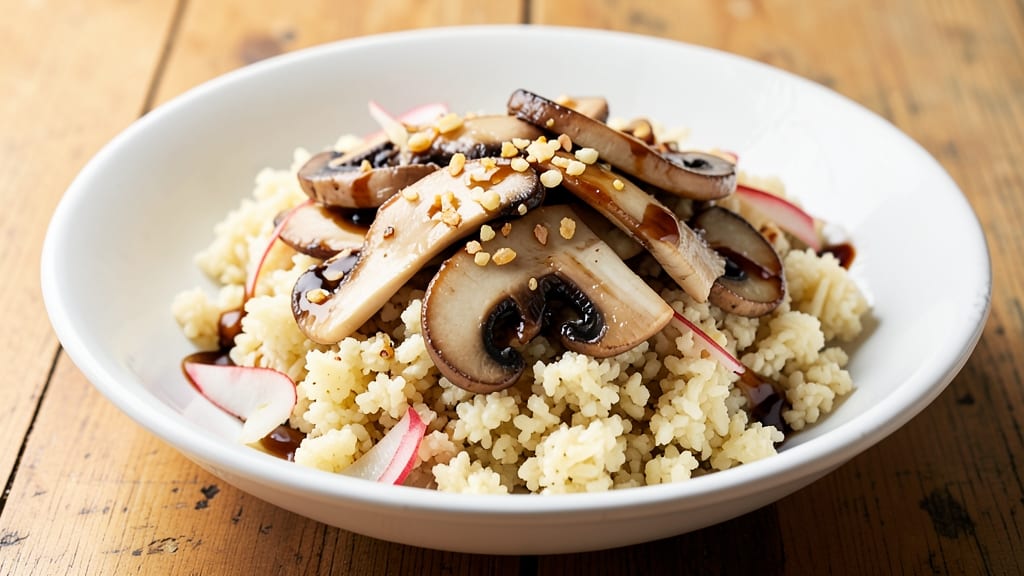
This cauliflower rice and mushroom recipe transforms humble ingredients into a savory, garlic-infused side that rivals restaurant-quality dishes—all in just 20 minutes. The secret lies in perfectly sautéed mushrooms and aromatic garlic that create a satisfying crunch without sacrificing tenderness.
I developed this recipe after realizing how much I missed the texture of traditional rice while seeking lighter, nutrient-dense options.
The result is a versatile dish that works as a standalone side, stir-fry base, or bowl component, with optional protein additions like tofu or tempeh for extra heartiness. The mushrooms develop a rich, umami depth when cooked with garlic and soy sauce, while the cauliflower rice absorbs the flavors beautifully.
This recipe proves that healthy eating doesn’t mean sacrificing taste or texture—just simple technique and quality ingredients.
Ingredients for cauliflower rice and mushroom
Twelve ingredients create restaurant-quality texture and umami in under twenty minutes.
| Ingredient | Amount | Notes |
|---|---|---|
| Fresh Cauliflower Florets 🥬 | 1 lb | Riced with food processor or grater |
| Creamy Shiitake Mushrooms 🍄 | 8 oz | Sliced into even 1/4-inch pieces |
| Garlic Cloves 🧄 | 4 cloves | Minced for aromatic depth |
| Extra-Virgin Olive Oil 🫒 | 2 tbsp | High-quality, fruity variety |
| Low-Sodium Soy Sauce 🥢 | 1 ½ tbsp | Kikkoman preferred for balance |
| Fresh Ginger Root 🌿 | 1 tbsp | Finely grated, aromatic |
| Sesame Oil 🫒 | ½ tbsp | Toasted for nutty aroma |
| Diamond Crystal Kosher Salt 🧂 | ½ tsp | Fine grain for even seasoning |
| Freshly Ground Black Pepper 🌶️ | ¼ tsp | Cracked peppercorns preferred |
| Toasted Sesame Seeds 🌰 | 1 tsp | Dry-toasted for crunch |
| Lemon Juice 🍋 | 1 tsp | Freshly squeezed, bright acidity |
| Fresh Parsley Leaves 🌿 | ¼ cup | Chopped, vibrant green |
| Vegetable Oil 🫒 | 1 tbsp | For high-heat sautéing |
The mushrooms are non-negotiable here—shiitake delivers the richest umami, but cremini or oyster work in a pinch. Whole Foods or Trader Joe's carry pre-sliced shiitake, saving prep time, but fresh is always superior. For the cauliflower, organic heads yield the best texture, though pre-riced cauliflower from the freezer section works for convenience. The garlic should be freshly minced—pre-minced from jars lacks the aromatic punch this dish needs. If you're using frozen cauliflower rice, thaw and pat completely dry before cooking to prevent mushiness.
No shiitake? Cremini or oyster mushrooms provide similar depth, though with slightly different textures. The low-sodium soy sauce is crucial—regular soy can overpower the delicate flavors. For extra umami without soy, mushroom powder or a splash of coconut aminos works beautifully. Fresh ginger is ideal, but if you only have powdered, reduce to one-third the amount. The sesame oil should be toasted—look for it labeled as such in Asian markets. For the parsley, flat-leaf varieties have a more intense flavor than curly, but either works. If you're adding protein, firm tofu or tempeh hold up best to the high-heat sautéing.
Freshly riced cauliflower keeps 3 days in the fridge, but best texture is within 24 hours of processing. Cooked mushrooms reheat beautifully—store in airtight containers with a paper towel to absorb moisture. This dish freezes well for up to 3 months, though texture may soften slightly. For meal prep, cook the mushrooms and cauliflower separately, then combine when reheating. The lemon juice should be added just before serving to maintain its bright acidity. Garnish with sesame seeds and parsley immediately before eating to preserve their freshness.
Why You'll Love This Recipe
- I swear by this trick: buy pre-riced cauliflower (or pulse your florets in a food processor for 10 seconds) and skip the chopping entirely. The shiitake mushrooms just need a quick wipe and slice—no peeling, no fuss. My lazy days thank me every time.
- No-Chop Nightmare: I swear by this trick: buy pre-riced cauliflower (or pulse your florets in a food processor for 10 seconds) and skip the chopping entirely. The shiitake mushrooms just need a quick wipe and slice—no peeling, no fuss. My lazy days thank me every time.
- Umami Bomb: That combo of shiitake mushrooms and low-sodium soy sauce? It’s like a flavor explosion in your mouth. The mushrooms soak up the olive oil and garlic until they’re tender with a crispy edge—no one would guess this is "healthy." Honestly, I’ve had people ask if I used butter.
- Lunchbox Hero: Pack this cold or at room temp—it stays fresh for days. I double the batch on Sundays: half goes in my lunchbox, half becomes tomorrow’s stir-fry base. Add a fried egg or leftover protein, and suddenly you’ve got a meal that’s actually worth bringing to work.
Step-by-step instructions for garlic-infused cauliflower rice with shiitake mushrooms
This method delivers restaurant-quality texture and flavor in record time—crispy edges, tender mushrooms, and aromatic depth.
Prepare the Cauliflower Rice and Aromatics
Begin by processing the 1 lb fresh cauliflower florets in a food processor fitted with the grater attachment, or pulse in a high-speed blender until you achieve rice-sized pieces. Spread the cauliflower rice on a clean kitchen towel and gently pat dry to remove excess moisture—this prevents steaming instead of crisping later.
While the cauliflower dries, finely mince the 4 cloves garlic and grate the 1 tbsp fresh ginger root using a microplane. The garlic should resemble fine sand, and the ginger should yield about 1 teaspoon of fragrant paste. Set these aside in separate small bowls—they'll release their aroma at different stages of cooking.
Sauté Mushrooms and Aromatics
Heat 1 tablespoon vegetable oil in a large nonstick skillet over medium-high heat until shimmering. Add the 8 oz creamy shiitake mushrooms, sliced into even ¼-inch pieces, and cook undisturbed for 3-4 minutes until the edges begin to brown. Stir occasionally to promote even browning—this develops the umami depth we want.
Once the mushrooms release from the pan with gentle nudging, add the minced garlic and ginger. Cook for 30 seconds until fragrant—you should smell sweet garlic and bright ginger immediately. Remove the mushrooms to a bowl and set aside, leaving the aromatic oils in the pan.
Cook the Cauliflower Rice
Return the skillet to medium-high heat and add 1 tablespoon extra-virgin olive oil. When the oil shimmers, add the dried cauliflower rice in a single layer, stirring gently to prevent sticking. Cook undisturbed for 2-3 minutes until the edges begin to crisp slightly. This initial contact with the pan creates that coveted texture.
Add 1.5 tablespoons low-sodium soy sauce, 0.5 teaspoon diamond crystal kosher salt, and 0.25 teaspoon freshly ground black pepper. Stir to coat the cauliflower evenly, then return the mushrooms to the pan. Toss everything together and cook for an additional 3-4 minutes until the cauliflower is tender but still holds its shape.
Finish with Sesame and Garnish
Reduce heat to medium-low and drizzle in 0.5 tablespoon toasted sesame oil. Stir immediately to distribute the oil evenly—this adds nutty depth and helps emulsify the dish. Add 1 teaspoon lemon juice and toss once more to brighten the flavors. The lemon cuts through the richness while enhancing the garlic and ginger notes.
Remove from heat and stir in 1 teaspoon toasted sesame seeds and 0.25 cup chopped fresh parsley leaves. The sesame seeds add a satisfying crunch, while the parsley provides freshness. Taste and adjust seasoning if needed—you may want to add a pinch more salt or a splash of soy sauce for balance. Serve immediately while the cauliflower maintains its crisp-tender texture.
Pro Tips For Making Cauliflower Rice And Mushroom
- CHOP CAULIFLOWER SMALL: Use a food processor or knife to cut florets into rice-sized pieces—no bigger than a pea. Larger chunks turn mushy while cooking, and you’ll end up with a sad, uneven texture. I learned this the hard way after serving a batch where half was still crunchy and half was glue.
- SAUTE MUSHROOMS LOW AND SLOW: Start shiitakes on medium heat with olive oil, then drop the flame to low once they release moisture. High heat makes them bitter and rubbery—you want them tender and creamy, not chewy. After burning three batches, I finally figured out patience pays off here.
- SALT THE CAULIFLOWER RICE FIRST: Toss the raw cauliflower rice with a pinch of salt and let it sit for 5 minutes before cooking. This draws out excess moisture so it crisps instead of steaming into a soggy mess. Sounds weird, but it works—your future self will thank you.
- GARLIC: SMASH DON’T MINCE: Roughly chop garlic cloves and smash them with the flat side of your knife before adding to the pan. This releases more flavor without burning as quickly as minced garlic does. I skip this when I’m lazy, but the dish is noticeably better when I don’t.
Make-ahead tips for this cauliflower rice and mushroom
Prep Ahead Components
I recommend prepping the mushrooms and cauliflower rice separately for maximum freshness. Slice the 8 oz shiitake mushrooms into ¼-inch pieces and store them in an airtight container with a paper towel to absorb moisture.
They'll keep in the fridge for 3 days—perfect for a quick stir-fry later in the week. 🥬
For the cauliflower rice, freshly riced works best, but you can prep it up to 24 hours ahead. Store it in a sealed container with a dry paper towel to prevent sogginess. The key is keeping it as dry as possible before cooking to maintain that crisp texture.
Freezer-Friendly Strategy
This dish freezes beautifully for up to 3 months without losing flavor. Cook the mushrooms and cauliflower rice separately, then store them in individual airtight containers. When reheating, combine them in a skillet with a splash of water or broth to restore moisture and texture.
I find this works best for meal prep lunches during busy weeks. ❄️
Protein Additions
If you're adding protein like firm tofu or tempeh, press and cube it ahead of time. Store in the fridge for up to 3 days before cooking.
For tofu, marinate it in soy sauce and a touch of sesame oil for 30 minutes before adding to the pan—this gives it incredible flavor absorption. Tempeh can be pre-cooked and sliced for quick assembly later.
Flavor Boosters
Prep any fresh garnishes like the toasted sesame seeds and chopped parsley ahead of time. Store them in small jars with airtight lids—they'll keep for 5 days in the fridge.
The lemon juice should be added fresh when serving, but you can zest the lemon ahead and store it in the freezer for up to 2 weeks. 💫
Reheating Secrets
When reheating, use a nonstick skillet over medium heat with 1 tablespoon vegetable oil to restore that crisp texture. Add a splash of water or broth to prevent drying out.
For microwave reheating, cover with a damp paper towel and heat in 1-minute intervals, stirring between each. The goal is to reach 165°F internal temperature without overcooking.
Nutrition facts
Frequently asked questions
Can I use frozen cauliflower rice instead of fresh?
Yes, but you must thaw and dry it thoroughly first! Spread frozen cauliflower rice on a paper towel and pat completely dry to remove excess moisture. This prevents steaming instead of crisping during cooking. For best results, use fresh if possible—it yields a lighter texture.
What's the best way to substitute shiitake mushrooms?
Cremini or oyster mushrooms work beautifully! For a similar texture, use 1:1 substitution by weight. Oyster mushrooms add a slightly sweeter flavor, while cremini mushrooms offer a firmer bite. If using dried mushrooms, rehydrate first and pat dry to avoid excess moisture in your dish.
How do I prevent the cauliflower rice from turning mushy?
Keep it dry and cook it properly! First, pat the cauliflower rice completely dry before cooking. Then, use medium-high heat and cook in batches if needed to avoid overcrowding. Stir frequently and cook just until tender—overcooking leads to mushiness. A nonstick skillet helps prevent sticking.
Can I make this dish ahead of time?
Store cooked components separately in airtight containers for 3 days. Reheat in a skillet with 1 tablespoon oil over medium heat to restore crispness. For longer storage, freeze for up to 3 months. The lemon juice should be added fresh before serving to maintain brightness.
What proteins pair well with this dish?
Firm tofu, tempeh, or shrimp work wonderfully! For tofu, press and cube it, then marinate in soy sauce and sesame oil for 30 minutes before cooking. Tempeh holds up well to high heat, while shrimp cooks in just 2-3 minutes. Add protein at the end to prevent overcooking—it should reach 145°F internal temperature for safety.