
Main Courses
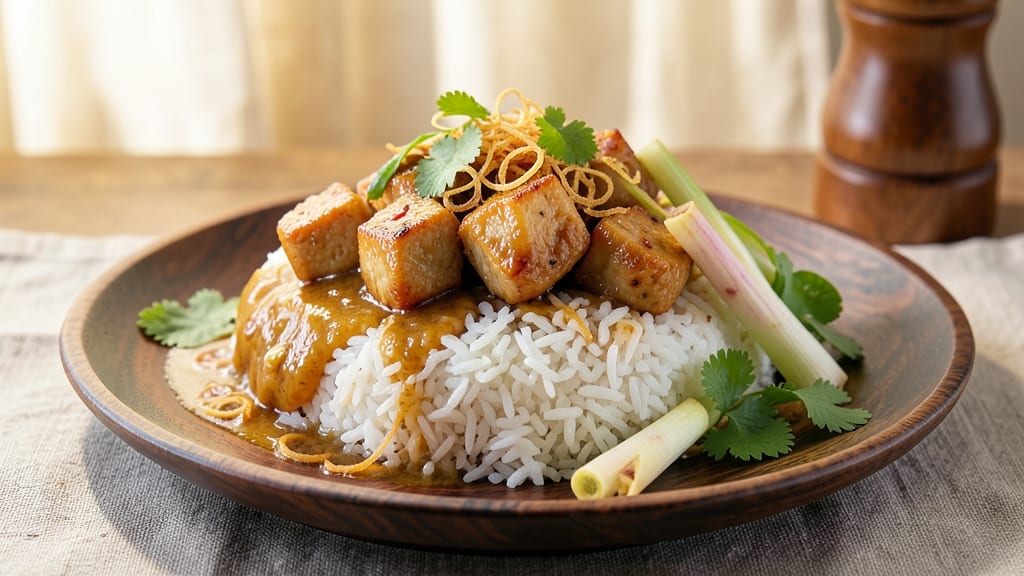
This Cambodian pork and rice recipe brings the aromatic flavors of Southeast Asia to your kitchen with just one pan. The marriage of fragrant lemongrass, creamy coconut milk, and tender pork creates a dish that's both comforting and deeply satisfying.
I've perfected this recipe to deliver restaurant-quality results at home, using traditional techniques that preserve the dish's authentic essence.
The secret lies in the marinade—lemongrass, kaffir lime leaves, and fish sauce infuse the pork with layers of flavor that develop as it cooks. The dish comes together in a single pan, making it both convenient and impressive.
What you'll end up with is succulent pork served over fragrant jasmine rice, bathed in a rich coconut-herb sauce that's balanced between sweet, savory, and tangy.
This recipe is designed to be approachable yet authentic, perfect for weeknight dinners or special occasions. The fragrant aromas will fill your kitchen, while the tender pork and creamy sauce create a meal that feels like a warm embrace.
Pair it with pickled vegetables or a light curry to complete the Cambodian dining experience.
With just a few key ingredients and simple techniques, you'll create a dish that's as nourishing as it is delicious. The beauty of this recipe is in its balance—each component plays its part to create a harmonious whole that's greater than the sum of its parts.
Let's bring the flavors of Cambodia to your table.
Ingredients for cambodian pork and rice
Fragrant lemongrass, creamy coconut milk, and tender pork—just 15 ingredients for a Cambodian feast.
| Ingredient | Amount | Notes |
|---|---|---|
| Boneless Pork Shoulder 🥩 | 1 ½ lb | Cut into 1-inch cubes |
| Lemongrass 🌿 | 1 whole | Bruised and cut into 2-inch pieces |
| Kaffir Lime Leaves 🍃 | 4 pieces | Torn into strips |
| Fish Sauce 🍶 | 3 tbsp | Red Boat preferred |
| Coconut Milk 🥥 | 1 can | Full-fat, 13.5 oz can |
| Jasmine Rice 🍚 | 1 ½ cups | Uncooked, long-grain |
| Garlic Cloves 🧄 | 6 cloves | Minced |
| Galangal 🌿 | 2 tbsp | Grated, or substitute ginger |
| Brown Sugar 🍚 | 2 tbsp | Packed |
| Turmeric Powder 🌶️ | 1 tsp | Freshly ground preferred |
| Salt 🧂 | 1 tsp | Kosher or sea salt |
| Black Pepper 🌶️ | ½ tsp | Freshly ground |
| Vegetable Oil 🫒 | 2 tbsp | For searing pork |
| Lime Juice 🍋 | 2 tbsp | Freshly squeezed |
| Fresh Cilantro 🌿 | ¼ cup | Chopped, for garnish |
Lemongrass and kaffir lime leaves are the heart of this dish. Asian markets carry the best quality—look for vibrant, unbruised stalks and fragrant leaves. If you can't find galangal, ginger works in a pinch, though it's not the same. For fish sauce, Red Boat is the gold standard, but any reputable brand will do. The pork should be well-marbled for tenderness—ask your butcher to cut it into even cubes if they don't already. I always double-check the coconut milk is full-fat; the creaminess makes all the difference here.
No kaffir lime leaves? Lime zest plus a splash of lime juice can mimic some of the aroma. Running short on galangal? Ginger plus a pinch of cardamom adds depth. The brown sugar can be swapped for coconut sugar if you prefer, but don't skip it entirely—the caramelization adds balance. For a quicker version, use pre-minced garlic, but freshly minced releases more flavor. The jasmine rice needs no special treatment—just rinse it well before cooking. If you're short on time, microwaveable jasmine rice works just fine.
This dish tastes even better the next day as flavors meld. Store leftovers in an airtight container for up to 4 days in the fridge. For longer storage, freeze portions for 3 months. I like to make extra rice—it reheats perfectly and keeps for 5 days in the fridge. Garnish with fresh cilantro right before serving to keep it vibrant. The aromas alone will have everyone at the table excited for dinner.
Why You'll Love This Recipe
- One-Pot Magic: I swear by this recipe when I’m too tired to scrub a million dishes—just brown the pork, toss in the lemongrass and lime leaves, add coconut milk and fish sauce, and let it simmer. The rice soaks up all that rich, herby broth like a sponge, and honestly? I haven’t boiled rice separately since I tried this.
- Umami Bomb: That first bite of tender pork with the bright, funky kick from fish sauce and kaffir lime leaves? It’s the kind of flavor that makes you pause mid-chew. The coconut milk softens the edges while the lemongrass lingers like a whisper—savory, citrusy, and impossible to resist.
- Lunchbox Hero: Between us, this is my go-to for meal prep. The pork stays juicy for days, and the rice? Perfectly fluffy every time you reheat it. Pack it in containers, toss it in a bento, or just eat it straight from the pot—it’s always a hit, even with picky eaters (yes, even my teenager).
- Budget Stretch: Pork shoulder is cheap, coconut milk is versatile, and a few stalks of lemongrass last me weeks. I make this when I’m pinching pennies, and somehow, it still feels like a restaurant-worthy meal. Plus, leftovers taste just as good the third day—proof that simple ingredients can go the distance.
Step-by-step instructions for fragrant lemongrass-coconut pork rice
Here's how to create a fragrant one-pan Cambodian feast with tender pork and aromatic rice.
Prepare the Pork and Aromatics
Cut the 1.5 lb boneless pork shoulder into 1-inch cubes and set aside. Using the flat side of a knife or a rolling pin, bruise the whole lemongrass to release its oils, then cut it into 2-inch pieces. Tear the 4 pieces kaffir lime leaves into strips. Grate the 2 tbsp galangal (or ginger if substituting) and mince the 6 cloves garlic.
In a large, heavy-bottomed pot or Dutch oven, heat the 2 tbsp vegetable oil over medium-high heat. Add the pork cubes in a single layer and sear for 3-4 minutes per side until golden brown and cooked through. The pork should release easily from the pan when ready. Remove the pork and set it aside on a plate.
Build the Fragrant Base
In the same pot, reduce the heat to medium and add the 2 tbsp brown sugar, 1 tsp turmeric powder, 1 tsp salt, and 0.5 tsp black pepper. Stir for 30 seconds until the sugar melts slightly and the spices are fragrant. Add the bruised lemongrass, kaffir lime leaves, grated galangal, and minced garlic. Cook for 1-2 minutes until the garlic is golden and the galangal is softened.
Pour in the 3 tbsp fish sauce and stir to combine. Let it simmer for 1 minute to allow the flavors to meld. Then, add the 1 can coconut milk, stirring well to incorporate. Bring the mixture to a gentle simmer and let it cook for 5 minutes to develop the aromatic base.
Cook the Jasmine Rice
Rinse the 1.5 cups jasmine rice under cold water until the water runs clear. Drain well and add it to the pot with the coconut milk mixture. Stir gently to distribute the rice evenly. Bring the mixture to a boil, then reduce the heat to low, cover the pot with a tight-fitting lid, and let it simmer for 15 minutes.
After 15 minutes, carefully check the rice. If it's still slightly undercooked or the liquid hasn't fully absorbed, continue cooking for another 5 minutes. The rice should be tender and the liquid mostly absorbed, with just a slight bit of moisture remaining. If it's too wet, uncover the pot and let it cook for another 2-3 minutes to evaporate the excess liquid.
Finish and Serve
Once the rice is cooked, stir in the 2 tbsp lime juice and mix well. Return the pork to the pot and gently fold it into the rice, coating it evenly with the coconut milk sauce. Let it simmer for another 2-3 minutes to heat the pork through and allow the flavors to meld together.
Remove the pot from heat and let it sit, covered, for 5 minutes. This resting period allows the rice to absorb any remaining moisture and the flavors to settle. Garnish with the 0.25 cup chopped fresh cilantro just before serving. Serve immediately, as the rice and pork are best enjoyed fresh and hot.
Pro Tips For Making Cambodian Pork And Rice
- Sear the Pork First: Get that cast-iron or heavy pan screaming hot before adding the pork shoulder—you want deep golden-brown crust in 3-4 minutes per side. I learned this the hard way after making the mistake of starting slow; that crust locks in flavor when the coconut milk later simmers in. Don’t rush the oil—2 tablespoons is enough to coat the bottom properly.
- Bruise the Lemongrass: Smash those lemongrass stalks with the flat side of your knife before adding them to the pot. This releases the oils and aroma without turning the broth bitter—something that happened to me twice before I figured out why my dish smelled amazing but tasted flat. Aim for 3-4 solid whacks per stalk.
- Strain the Coconut Milk: Unless you’re using ultra-creamy canned coconut milk, strain it through a fine-mesh sieve lined with cheesecloth to remove any grit or excess water. I skip this sometimes, and the texture suffers—especially if you’re serving this over rice. It’s a 2-minute task that makes a real difference in mouthfeel.
- Balance the Fish Sauce: Start with half the fish sauce called for, taste, then add the rest gradually. The first time I dumped it all in, the dish was overpoweringly salty—no amount of rice could save it. Coconut milk mellows things out, but you still need to taste as you go. A squeeze of lime at the end helps too.
Essential equipment for great cambodian pork and rice
Heavy-Bottomed Pot
A 5-6 quart Dutch oven is my go-to for this recipe—its thick base distributes heat evenly, preventing hot spots that can burn the rice or scorch the coconut milk.
I swear by the Le Creuset signature for its durability and even heating, though All-Clad's stainless steel is a great budget alternative. The deep sides also make stirring easier when building the fragrant base. 🔥
Tongs for Searing
Invest in a pair of long-handled tongs (I use OXO Good Grips) to safely handle the hot pork cubes during searing. The extended handles protect your knuckles from the medium-high heat of the pan, while the sturdy grip prevents the pork from slipping.
A meat thermometer (like ThermoWorks Smoke) ensures the pork reaches 145°F internal temperature before removing it.
Rice Measuring Cup
For perfect jasmine rice every time, use a dedicated rice measuring cup (like KitchenAid's 1.5-cup model) to portion the grains accurately. This eliminates guesswork and ensures consistent texture. I also keep a fine-mesh strainer nearby to rinse the rice thoroughly—this removes excess starch that can make the rice gummy.
A timer (set for 15 minutes) prevents overcooking.
Knife & Cutting Board
A sharp 8-inch chef's knife (I prefer Mercer Culinary) and a non-slip cutting board (like Teakha bamboo) are essential for prepping the pork and aromatics efficiently.
The knife should glide through the 1.5 lb pork shoulder to create even 1-inch cubes, while the board's stability prevents accidents when mincing 6 cloves garlic or grating 2 tbsp galangal. A microplane speeds up galangal prep if you're short on time.
Lid for Steaming
A tight-fitting lid (usually included with Dutch ovens) is critical for steaming the rice evenly. If yours doesn't fit snugly, wrap a damp kitchen towel around the edges to create a seal. This traps moisture and steam, ensuring the rice cooks through without drying out.
I also keep a wooden spoon handy to gently stir the rice after 15 minutes of cooking, checking for doneness.
Fish Sauce Dispenser
Fish sauce can be messy, so I use a small squeeze bottle (like OXO's 4-oz version) to measure the 3 tbsp Red Boat fish sauce precisely. This avoids spills and ensures the right balance of umami.
A small bowl nearby catches any drips, and a spoon helps stir the sauce into the coconut milk smoothly. For cleanup, keep paper towels handy—fish sauce stains fast! 🧼
Nutrition facts
Frequently asked questions
Can I substitute chicken or beef for the pork?
While pork is traditional, you can use chicken thighs (bone-in for better texture) or beef chuck in a pinch. For chicken, reduce cooking time by 2-3 minutes per side and use 1 lb instead of 1.5 lb. Beef needs longer searing (5-6 minutes per side) to develop flavor. Adjust fish sauce to 2 tbsp for beef to avoid overpowering the dish.
What if I can't find kaffir lime leaves or galangal?
No problem! For kaffir lime, use lime zest + 1 tsp lime juice and add ½ tsp cardamom for depth. Replace galangal with ginger + ¼ tsp turmeric (the turmeric mimics galangal's earthy notes). The dish will still taste delicious—just slightly different. If you're missing both, increase garlic to 8 cloves for extra aromatic punch.
How do I make this dish vegetarian?
Swap pork for extra-firm tofu (pressed and cubed) or mushrooms (shiitake or oyster). Use 1 lb tofu or 8 oz mushrooms, and increase coconut milk to 1½ cans for creaminess. Add 1 tbsp soy sauce to the marinade instead of fish sauce. The rice cooking method stays exactly the same—just skip the searing step for tofu.
Why does my rice turn out mushy or dry?
Mushy rice usually means overcooking or too much liquid. Always rinse jasmine rice first to remove excess starch, and use a 1:1.25 rice-to-liquid ratio (for 1.5 cups rice, use 1 can + 2 tbsp extra coconut milk). For dry rice, uncover the pot for 1-2 minutes at the end to evaporate moisture. A tight-fitting lid is critical—if yours doesn't seal, wrap a damp towel around the edges.
Can I make this in an Instant Pot or rice cooker?
For an Instant Pot, sear pork first, then add all ingredients except lime juice. Cook on High Pressure for 10 minutes, then natural release 10 minutes. Stir in lime juice and let sit 5 minutes before serving. In a rice cooker, follow the same steps but cook on High for 25 minutes, then switch to Keep Warm for 10 minutes. The rice cooker method requires more monitoring for doneness.