
Soups & Stews
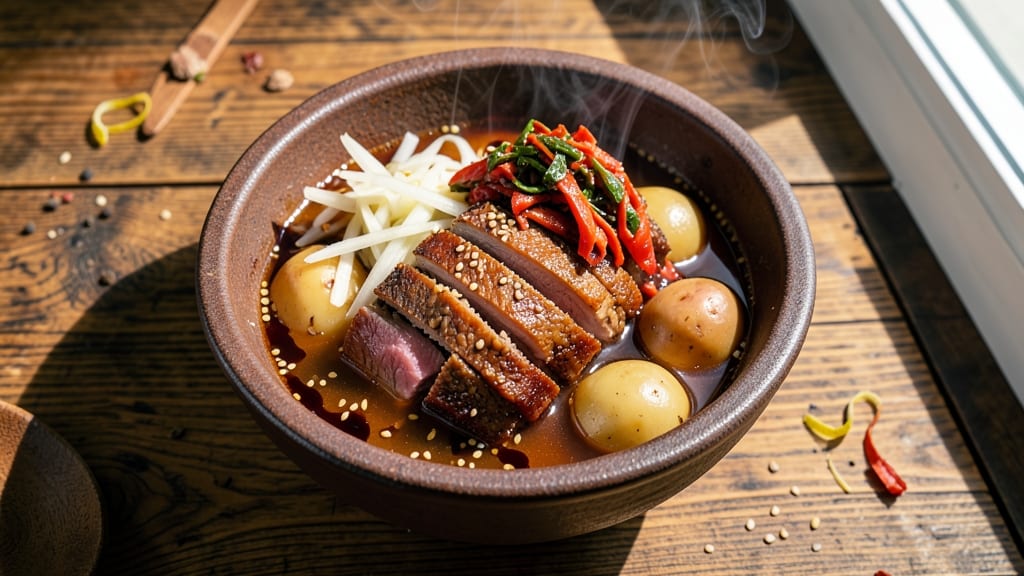
This Busan pork soup recipe delivers the bold, comforting flavors of Korean coastal cuisine right to your kitchen table. 🔥 The secret lies in slow-braising tender pork with fermented kimchi and daikon radish, creating a rich, spicy broth that's impossible to resist.
I first tasted this dish in Busan's bustling markets and knew it deserved a place in every home cook's repertoire.
The beauty of Busan-style pork soup is its perfect balance of heat, umami, and sweetness. We start with fatty pork cuts that melt into the broth, while fermented kimchi adds tangy depth and gochujang brings that signature Busan spice.
Daikon radish and potatoes soak up the flavors beautifully, creating a hearty, satisfying meal that's perfect for chilly evenings.
What makes this recipe truly special is the layering of flavors through slow cooking. The pork develops incredible tenderness while the broth deepens into a velvety, aromatic base. Every spoonful delivers a perfect harmony of spicy, savory, and slightly sweet notes that'll have you reaching for seconds.
Serve this comforting soup with steamed rice to soak up every last drop of that flavorful broth. The combination of textures and temperatures makes it an ideal meal for any season, especially when you need something warming and nourishing. Let's get cooking!
Ingredients for busan pork soup
Bold flavors start with fatty pork and fermented kimchi—this soup is all about rich, spicy comfort.
| Ingredient | Amount | Notes |
|---|---|---|
| Pork Shoulder 🥩 | 2 lb | Bone-in, fatty cuts preferred |
| Daikon Radish 🥕 | 1 ½ lb | Cut into 2-inch chunks |
| Russet Potatoes 🥔 | 1 ½ lb | Peeled, cut into 1-inch cubes |
| Fermented Kimchi 🫑 | 1 ½ cups | With juice, store-bought or homemade |
| Gochujang 🌶️ | ¼ cup | Korean red pepper paste |
| Soy Sauce 🍶 | ½ cup | Korean or Japanese preferred |
| Sesame Oil 🫒 | 1 tbsp | Toasted, for finishing |
| Garlic Cloves 🧄 | 6 cloves | Minced, for depth of flavor |
| Fresh Ginger 🌿 | 2 tbsp | Grated, for aromatic warmth |
| Green Onions 🧅 | ¼ cup | Sliced, for garnish |
| Water 💧 | 8 cups | Or low-sodium broth |
| Salt 🧂 | 1 ½ tsp | Adjust to taste |
| Black Pepper 🌶️ | ½ tsp | Freshly ground |
| Sesame Seeds 🥜 | 1 tbsp | Toasted, for crunch |
| Rice Vinegar 🍶 | 1 tbsp | For brightness |
The pork shoulder is non-negotiable here—bone-in, fatty cuts melt into the broth for maximum flavor. Costco or Korean markets usually have the best cuts, but your local butcher will too. Look for good marbling—it's what makes this soup sing. For kimchi, store-bought is fine (I like the spicy variety), but homemade adds extra depth. The daikon radish? Asian markets often have the freshest, but any grocery store will do. Just avoid the pre-shredded kind—it gets mushy fast.
No gochujang? Mix 2 tbsp sriracha with 1 tbsp soy sauce for a quick substitute. Fresh ginger is ideal, but powdered works at half the amount. Soy sauce? Korean soy sauce (ganjang) adds more depth than regular. The potatoes can be sweet potatoes if you're feeling fancy—they hold up better to long cooking. For extra heat, add a dash of gochugaru (Korean red pepper flakes) at the end. And if you're short on sesame oil, toasted sesame seeds in the broth give similar flavor.
This soup tastes even better the next day—make a double batch and freeze half. The broth keeps for 5 days in the fridge, and the pork stays tender for 3 days if stored properly. For serving, I like to reheat gently on the stove with a splash of water to restore richness. Garnish with sesame seeds and green onions right before serving—they add that fresh pop of color and crunch.
Why You'll Love This Recipe
- One-Pot Magic: I swear by this when I’m too tired to wash dishes. Toss everything—pork, radish, potatoes, kimchi, and gochujang—into one pot, and let it simmer. The pork practically falls apart on its own, and the radish soaks up all that smoky-sweet broth like a sponge.
- Umami Bomb: That first spoonful of broth? Chef’s kiss. The gochujang and fermented kimchi turn this into a flavor party—sweet, spicy, funky, and deep all at once. Honestly, I’ve made it for people who “don’t like spicy,” and they still ask for seconds.
- Leftovers That Don’t Suck: Between us, most soups get sad in the fridge. Not this one. The flavors actually get better the next day—pork more tender, broth richer. I’ll make a big batch on Sunday, and by Wednesday, it’s still my go-to lunch. (Yes, even on a Tuesday night.)
- Budget Feast for Crowds: Pork shoulder is cheap, potatoes stretch forever, and kimchi adds zero cost if you already have it. This feeds four for under $15, and I’ve brought it to potlucks where people cleared their plates and asked for the recipe. Solid move for a stretchy wallet.
Step-by-step instructions for Busan pork soup
This rich, spicy broth comes together with layers of flavor—let's build it step by step!
🔥 Step 1: Sear the Pork Shoulder for Deep Flavor
Heat a large Dutch oven over medium-high heat until hot. Pat the 2 lb pork shoulder dry with paper towels—this helps create that crispy, flavorful crust. Working in batches, sear the pork on all sides until deep golden brown and the fat begins to render, about 5-6 minutes per side. Real talk: don't rush this step. Those browned bits are pure flavor gold.
Once seared, remove the pork and set it aside on a plate. You'll notice the bottom of your pot has a beautiful crust—this is called the "fond," and we're about to turn it into soup magic. Here's the thing—if your pork releases easily from the pan, it's ready. If it sticks, let it cook a bit longer before gently nudging it with a spatula.
🍳 Step 2: Build the Aromatic Base with Radish and Potatoes
In the same Dutch oven, add 1 tbsp sesame oil and let it heat for 30 seconds until shimmering. Add the 1.5 lb daikon radish (cut into 2-inch chunks) and 1.5 lb russet potatoes (1-inch cubes). Stir to coat the vegetables in the oil, then add the 8 cups water and bring to a boil over high heat.
Once boiling, reduce heat to medium-low and let the vegetables simmer for 10 minutes until they begin to soften slightly. This pre-cooking step prevents them from turning mushy later. Here's where it gets fun—add the 6 cloves minced garlic, 2 tbsp grated ginger, 1.5 tsp salt, and 0.5 tsp black pepper. Stir well and let everything simmer together for another 5 minutes to let those aromatics bloom.
🥘 Step 3: Combine and Simmer the Spicy Broth
Return the seared pork shoulder to the pot along with any accumulated juices. Add the 1.5 cups fermented kimchi (with juice), 0.25 cup gochujang, and 0.5 cup soy sauce. Stir gently to combine—you'll see the broth start to deepen in color and develop that signature Busan spice profile. Bring everything back to a gentle simmer over medium heat.
Partially cover the pot and let it simmer for 1.5 hours until the pork is fork-tender and the broth has thickened slightly. Here's the crucial part: skim off any foam that rises to the surface during the first 30 minutes of simmering. This ensures a clear, clean broth. The pork is done when it pulls apart easily with two forks—no need to wait for it to fall off the bone just yet.
⏰ Step 4: Finish with Brightness and Crunch
Once the pork is tender, remove it from the pot and set it aside. Strain the broth through a fine-mesh sieve into a clean pot, pressing gently on the vegetables to extract all the flavor. Return the broth to the heat and add 1 tbsp rice vinegar. Simmer for 5 minutes to let the acidity brighten all the flavors.
Shred the pork using two forks and return it to the broth. Stir in the 1 tbsp toasted sesame seeds and 0.25 cup sliced green onions. Taste and adjust the seasoning—you might need a bit more salt or gochujang to balance the flavors. This is your moment to make it perfect for your taste. Serve immediately with steamed rice and extra kimchi on the side for dipping!
Pro Tips For Making Busan Pork Soup
- SEAR THE PORK FIRST: Skip the slow start—get that pork shoulder screaming hot in a dry pot for 5-6 minutes per side before adding liquid. The crust locks in flavor and keeps the meat from turning mushy later. (Yes, it’ll look charred at first, but that’s the point.)
- PEEL AND SLICE DAIKON THIN: Busan pork soup isn’t a potato stew—thinly sliced daikon (about ¼-inch) cooks faster and soaks up the broth better. Skip the thick chunks unless you want a watery mess. (I learned this the hard way after staring at a pot of half-raw radish.)
- ADD GOCHUJANG LAST: Stir in the gochujang with the kimchi in the final 5 minutes, not at the start. The heat and acidity mellow out if you let them simmer too long, and you’ll end up with a muddy, bitter broth instead of that signature tangy depth.
- USE POTATOES FOR THICKNESS: Toss in a couple of halved russet potatoes (peeled, 2-inch chunks) early—they’ll break down and thicken the broth naturally. No need for cornstarch unless you’re in a rush. (Your future self will thank you for skipping the slurry.)
Make-ahead tips for busan pork soup
Prep Ahead Strategy
Busan pork soup tastes even better the next day, so I always make a double batch—freeze half for later. The broth keeps for 5 days in the fridge, while the pork stays tender for 3 days if stored properly in an airtight container.
I like to portion it into quart-sized freezer bags with 1-inch headspace to prevent freezer burn. 🥶
Freezing for Later
Freeze the broth and pork separately for best results. The broth can handle 3 months in the freezer, while the pork stays flavorful for 2 months. When ready to eat, thaw overnight in the fridge, then reheat gently on the stove with ½ cup water to restore richness.
Never microwave—it turns the broth rubbery. 💧
Make-Ahead Components
Prep the kimchi, garlic, and ginger ahead and store them in small jars in the fridge. The daikon radish and potatoes can be pre-cut and stored in water for up to 2 days to prevent browning.
Even the pork shoulder can be seared and refrigerated for 1 day before finishing the soup—just add 10 minutes to the simmering time. ⏰
Reheating Like a Pro
For the best texture, reheat the soup on the stove over medium-low heat for 10-15 minutes. Add ¼ cup water or broth if it looks too thick. If using frozen pork, let it thaw completely first—never reheat frozen meat directly.
Stir in toasted sesame seeds and green onions just before serving to keep them crisp. 🔥
Storage Containers
Use glass Pyrex containers with tight-sealing lids for fridge storage—they keep flavors fresher than plastic. For freezing, quart-sized freezer bags work best because they stack neatly and thaw faster.
Label everything with the date so you don’t lose track of how long it’s been stored. I swear by Mason jars for single servings—they’re perfect for meal prep. ✨
Garnish Fresh
Always add sesame seeds and green onions right before serving—they provide that fresh crunch and bright color. If making ahead, store these separately and add them just before eating.
The rice vinegar should also be added fresh to keep the flavors bright and tangy. Trust me, this little touch makes all the difference! 🌿
Nutrition facts
Frequently asked questions
Can I use lean pork instead of fatty cuts for Busan pork soup?
I don't recommend it! The fat from pork shoulder is what creates that rich, velvety broth. Lean cuts like tenderloin won't render enough fat to build the same depth of flavor. If you're set on using lean pork, add 1-2 tablespoons of neutral oil to the pot during searing to compensate for the missing fat.
How can I make this soup less spicy for kids or sensitive eaters?
Start by reducing the gochujang to 1 tablespoon instead of ¼ cup, and skip the kimchi juice. For extra mildness, strain the broth after simmering to remove some of the spice particles. You can also serve the kimchi and gochujang on the side so everyone can add their own heat level.
What's the best way to store leftovers without making the broth watery?
Store the broth and pork separately in airtight containers in the fridge. The broth will keep for 5 days while the pork stays tender for 3 days. When reheating, combine them over medium-low heat with ¼ cup water to restore richness. Never microwave—it breaks down the broth's texture.
Can I substitute daikon radish with another vegetable?
While daikon radish gives the soup its signature sweetness and texture, you can use turnips or parsnips as substitutes. For a different flavor profile, try carrots or celery root, but they'll make the broth slightly sweeter. The key is to choose vegetables that hold up well during long simmering—avoid delicate varieties like zucchini.
How do I know when the pork is fully cooked in Busan pork soup?
The pork is done when it reaches an internal temperature of 195°F and pulls apart easily with two forks. For best results, use a meat thermometer. The pork should be fork-tender but not falling apart completely—it'll continue to break down as it sits in the broth. If you prefer shredded pork, cook it until it reaches 203°F.