
Soups & Stews
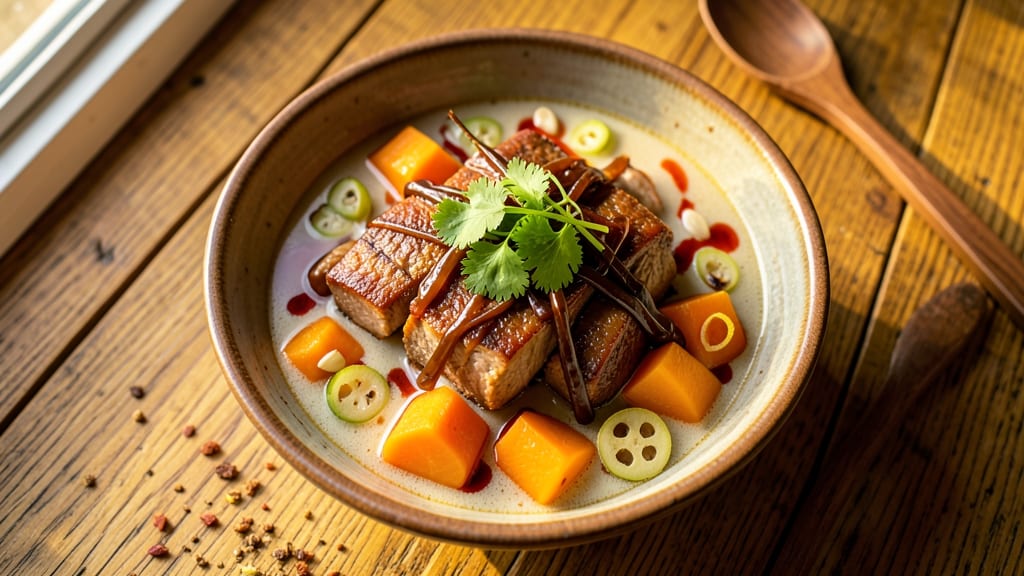
This Burmese pumpkin pork stew delivers the kind of deep, aromatic complexity that transforms a simple meal into a cultural experience. 🌟 The secret lies in the five-spice blend and coconut milk base, which create layers of earthy warmth that linger long after the last bite.
After years of perfecting this dish in my kitchen, I've developed a method that balances sweet pumpkin with tender pork and aromatic herbs—each element playing its part in harmony.
The magic begins with marinating the pork in tamarind and garlic, which infuses the meat with tangy depth before it simmers for hours in coconut milk and pumpkin. This slow-cooking process ensures the pork becomes fall-apart tender while absorbing the rich, spiced broth.
The five-spice blend—star anise, cinnamon, cloves, fennel, and cardamom—adds a warm, slightly sweet complexity that defines Burmese cuisine.
By the time the stew reaches its peak, you'll have a velvety, fragrant broth with tender pork and pumpkin that's perfectly balanced—sweet, savory, and subtly spiced. The aroma alone will transport you to the streets of Yangon, where this dish is a staple in local homes.
Serve it with steamed jasmine rice to soak up every last drop of that rich, coconut-infused sauce.
This recipe isn't just about the flavors—it's about the technique. The slow simmering develops depth, while the spices bloom gradually, creating a dish that tastes even better the next day.
Whether you're cooking for a gathering or simply craving something comforting and authentic, this stew delivers restaurant-quality results at home. Let's get started.
Ingredients for burmese pumpkin pork stew
The aromatic heart of Burmese cuisine in your pot—just 15 ingredients for deep, velvety flavor.
| Ingredient | Amount | Notes |
|---|---|---|
| Pork Shoulder 🥩 | 1 ½ lb | Bone-in for richer flavor |
| Pumpkin (Cubed) 🎃 | 2 cups | Fresh or canned, peeled |
| Coconut Milk 🥥 | 1 can | Full-fat, 13.5 oz can |
| Tamarind Paste 🍯 | 2 tbsp | Or 1 tbsp tamarind concentrate |
| Garlic Cloves 🧄 | 6 cloves | Minced for marinade |
| Galangal 🌿 | 1 piece | 3-inch, peeled and sliced |
| Five-Spice Blend 🌶️ | 1 tbsp | Star anise, cinnamon, cloves, fennel, cardamom |
| Fish Sauce 💧 | 1 tbsp | Red Boat preferred |
| Sugar 🍚 | 1 tbsp | Brown sugar preferred |
| Kaffir Lime Leaves 🍋 | 2 whole | Or 1 tsp lime zest |
| Green Curry Paste 🌶️ | 1 tbsp | Mae Ploy brand ideal |
| Fresh Cilantro 🌿 | ¼ cup | Chopped for garnish |
| Salt 🧂 | 1 ½ tsp | Kosher or sea salt |
| Black Pepper 🌶️ | ½ tsp | Freshly ground |
| Jasmine Rice 🍚 | 1 ½ cups | For serving |
The pork shoulder is non-negotiable here—bone-in delivers that rich, meaty depth. Grab Costco's pre-cut pork shoulder if you're short on time, but ask for thick-cut slices at your butcher if you're feeling fancy. For the galangal, Asian markets are your best bet—look for firm, pale yellow rhizomes with no mold. If you can't find it, ginger at half the amount works in a pinch, though it won't be identical. The coconut milk? Full-fat only—the richness is essential for that creamy texture. I always buy two cans and keep one in the freezer for next time.
No tamarind paste? Lemon juice plus 1 tsp sugar mimics the tang, though it won't be exactly the same. The five-spice blend is where the magic happens—Penzeys or Spicewalla sell pre-mixed Burmese blends, but you can DIY with star anise, cinnamon, cloves, fennel, and cardamom (toasted whole for 30 seconds first). Fish sauce adds umami depth, and Red Boat is the gold standard, but Squanido is a solid backup. For the kaffir lime leaves, Trader Joe's sells them fresh in the freezer section—game changer if you're new to this. The green curry paste can be swapped for red curry paste if that's what you've got, but stick to Mae Ploy for authentic flavor.
This stew tastes even better the next day—plan ahead. Store in an airtight container for up to 5 days in the fridge, or freeze portions for 3 months. The rice? Cook it the night before and reheat with a splash of water—steamed jasmine rice is traditional, but basmati works too. For extra richness, stir in a spoonful of the cooking liquid when serving. The pork should be fall-apart tender, so if it's not quite there, simmer another 20 minutes with a splash of water. Trust the process—patience is key.
Why You'll Love This Recipe
- One-Pot Magic: I swear by this recipe when I’m too tired to wash dishes. Toss everything—pork, pumpkin, coconut milk—into one pot, and let the tamarind and garlic work their magic while you sip tea. No chopping boards to clear, no pans to scrub. Just pure, satisfying simplicity.
- Tamarind Tang Magic: Between us, tamarind paste is the secret weapon here. It cuts through the richness of the pork and coconut milk, giving this stew that bright, almost citrusy punch. The first time I tasted it, I nearly licked the spoon clean—no exaggeration.
- Leftovers That Beg for More: This stew tastes even better the next day, which is perfect because it’s basically a flavor bomb. I’ll make a big batch on Sunday, and by Wednesday, my coworkers are already asking for seconds. It reheats like a dream, too—no dry or rubbery bits.
- Budget-Friendly Feast: Pork shoulder is cheap, pumpkin lasts forever, and coconut milk stretches richly. A single batch feeds four, and I’ve stretched it to five with rice if I’m feeling extra generous. Honestly, it’s the kind of recipe that makes grocery day feel like a win.
Step-by-step instructions for Burmese pumpkin pork stew
This rich, aromatic stew comes together with layers of flavor—let's build it methodically.
🍳 Step 1: Sear the Pork Shoulder for Deep Flavor
Heat a heavy pot or Dutch oven over medium-high heat until hot. Pat the 1.5 lb pork shoulder dry with paper towels—this ensures a good sear. Add the pork and sear on all sides for 8-10 minutes until deeply browned. You want that crust to form; it's the foundation of flavor.
Here's the thing—don't rush this step. Let the pork develop color before moving it. If it releases easily from the pan, it's ready. Remove the pork and set it aside on a plate. You'll notice the pan has beautiful browned bits—these are packed with flavor that will dissolve into the sauce later.
👨🍳 Step 2: Build the Aromatic Base
In the same pot, add 1 tablespoon green curry paste and stir for 30 seconds until fragrant. This releases the oils and spices. Add the 6 cloves minced garlic cloves and 1 piece sliced galangal, cooking for another 1-2 minutes until the raw garlic smell disappears. Galangal has a peppery kick—it's essential for that authentic Burmese depth.
Next, add 1 tablespoon five-spice blend, 1 tablespoon sugar, and 1.5 teaspoons salt. Stir for 30 seconds to toast the spices—you'll see them dance and smell their warm, earthy aroma. This is where the complex flavors start developing. Don't walk away; spices burn quickly.
🍳 Step 3: Simmer the Stew with Pumpkin and Coconut
Pour in 1 can coconut milk and scrape up all those browned bits from the bottom of the pot. Add 2 cups cubed pumpkin, 2 whole kaffir lime leaves, and 1 tablespoon fish sauce. Bring to a gentle simmer over medium-low heat. Here's the critical part: keep it at a steady simmer, not a rolling boil—you want the pumpkin to absorb the flavors, not break apart.
Return the pork shoulder to the pot, making sure it's mostly submerged in the liquid. Add 2 tablespoons tamarind paste and 0.5 teaspoon black pepper. Cover and simmer for 1 hour to 1 hour 15 minutes until the pork is fork-tender. You'll know it's ready when the meat pulls apart easily and the pumpkin is tender but still holds its shape.
🥘 Step 4: Finish with Fresh Herbs and Adjust Seasoning
Remove the pork and shred it using two forks right in the pot. Discard the kaffir lime leaves. Stir in 0.25 cup chopped fresh cilantro and taste the stew. This is your moment to adjust seasoning—add a splash more fish sauce if it needs more umami, or a pinch of salt if it's too mild. The cilantro brightens everything up and adds freshness.
Simmer uncovered for another 5-7 minutes to reduce the sauce slightly and let the flavors meld. You want a rich, velvety consistency that coats the back of a spoon. If it's too thick, add a splash of water or coconut milk to reach your desired texture. The stew should be fragrant with notes of coconut, tamarind's tang, and the warm spices.
🍽️ Step 5: Serve with Jasmine Rice
Ladle the stew over 1.5 cups cooked jasmine rice and garnish with additional cilantro if desired. The rice should be fluffy and slightly sticky to soak up all those delicious juices. This dish is best served immediately while the pork is still tender and the aromas are at their peak.
Real talk: the flavors improve overnight, so if you can, let it sit for a few hours or even refrigerate and reheat gently. The pork will only get more tender, and the sauce will develop even more depth. Serve with a simple cucumber salad or steamed greens to balance the richness.
Pro Tips For Making Burmese Pumpkin Pork Stew
- BROWN THE PORK FIRST: I learned this the hard way—skipping the sear means your stew will taste like a sad, watery version of itself. Get that pork shoulder blistering in a hot pan with oil until it’s deep golden, not just pink. The Maillard reaction here isn’t optional; it’s what makes the tamarind and coconut milk sing later.
- PEEL THE PUMPKIN RIGHT: Sounds weird, but it works: don’t just chop raw pumpkin into the pot. Peel it first—yes, even if it’s organic—and cut it into 2-inch cubes. The skin stays tough and weirdly bitter, and you’ll spend the next hour fishing for it. Also, parboil the cubes for 3 minutes if you’re impatient; they’ll soften faster without turning to mush.
- DILUTE THE TAMARIND: Tamarind paste is sticky, clumpy, and stubborn. Mix it with 2 tablespoons of warm water before adding it to the pot—this guarantees it dissolves smoothly. I used to dump it in dry and end up with strange, undissolved lumps in my stew. Trust me, the texture difference is night and day.
- LOW AND SLOW WINS: After burning three batches, I finally figured out the temperature sweet spot: simmer this stew at a gentle bubble, not a rolling boil. High heat turns the coconut milk grainy and the pork rubbery. Cover it halfway and let it work—about 1.5 hours—while you do something else. Patience here makes all the difference.
Perfect pairings for this dish
Rice Pairings
Jasmine rice is the traditional choice for this stew, with its delicate floral aroma and slightly sticky texture that soaks up every drop of the rich coconut sauce. I recommend cooking 1.5 cups uncooked jasmine rice (about 3 cups cooked) to serve with the stew.
For extra authenticity, use a rice cooker and add a pinch of salt to the water—this enhances the rice's natural fragrance. 🍚
For a heartier option, try thai-style jasmine rice with a splash of coconut milk mixed into the cooking water. This adds a subtle creaminess that complements the stew's flavors perfectly.
If you're short on time, brown rice works too—just increase cooking time by 20 minutes and use 1.75 cups uncooked for the same serving size.
Vegetable Sides
A light, refreshing side balances the stew's richness. I love serving steamed bok choy with a sprinkle of toasted sesame seeds—the crisp-tender greens cut through the coconut cream beautifully.
For a crunchier option, try quick-pickled cucumbers with rice vinegar, sugar, and red pepper flakes. The tangy, crisp contrast makes each bite more vibrant.
Another favorite is blanched green beans tossed with garlic, lime juice, and crushed peanuts. The nuts add a satisfying crunch while the lime brightens the dish.
For a more substantial side, roasted sweet potatoes with turmeric and cumin provide earthy sweetness that pairs wonderfully with the pumpkin in the stew.
Beverage Pairings
Burmese beer like Myanmar Beer or Bagan Beer is the perfect match—its crisp, slightly malty profile complements the stew's coconut and spice notes. For a non-alcoholic option, try jasmine tea with lemon or ginger-infused iced tea. The tea's floral notes enhance the dish's aromatic complexity without overpowering it. 🍺
If you prefer wine, a light Riesling with its citrus and mineral notes works beautifully. The acidity cuts through the coconut richness, while the fruitiness echoes the tamarind's tang. For something stronger, a dry sherry adds depth and pairs exceptionally well with the five-spice blend's warm undertones.
Garnishes That Elevate
Fresh cilantro leaves are a must—add them just before serving to brighten the dish with their citrusy freshness. For extra flair, sprinkle toasted coconut flakes on top, which adds a subtle sweetness and texture contrast.
I also love a drizzle of chili oil for those who enjoy a bit of heat—just 1 teaspoon adds a smoky kick that enhances the overall flavor profile.
Another pro tip: serve with lime wedges on the side. A squeeze of fresh lime juice right before eating balances the rich coconut and spices, making each bite feel fresh and vibrant. For a more elegant touch, garnish with edible flowers like nasturtiums—their peppery notes complement the dish beautifully.
Nutrition facts
Frequently asked questions
Can I substitute regular ginger for galangal in this recipe?
Yes, but expect some flavor differences. Use half the amount of ginger (about 1.5 inches grated) since galangal is more aromatic and peppery. For the most authentic taste, though, track down fresh galangal at an Asian market—it's worth the effort for that signature Burmese warmth.
How do I know when the pork is fully tender?
The pork should easily pull apart with two forks—no need for a meat thermometer, though 195°F is ideal. Look for the meat to separate cleanly and the juices to run clear. If it's still tough after 1 hour 30 minutes, add ¼ cup water and simmer another 20 minutes covered.
What if I don't have tamarind paste?
Make a quick substitute with 1 tbsp lemon juice + 1 tsp sugar—it won't be identical but will add tang. For best results, use 1 tbsp tamarind concentrate (available in Asian markets) or even ½ cup pomegranate molasses (thinned with water). The tamarind's unique sour-sweet balance is key to authentic flavor.
Can I make this stew in a slow cooker?
Sear the pork first, then transfer everything to the slow cooker. Cook on low for 6-7 hours or high for 4-5 hours. The slow cooker's gentle heat enhances the pork's tenderness and lets flavors meld beautifully. Just add ¼ cup water if the sauce gets too thick during cooking.
Why does my stew taste too sweet?
This usually happens when the sugar or coconut milk overpowers the other flavors. Balance it by adding ½ tsp fish sauce for umami depth or 1 tsp lime juice to brighten. For future batches, reduce the sugar to ½ tbsp and taste as you go—Burmese cooking relies on subtle sweetness, not overpowering it.