
Main Courses
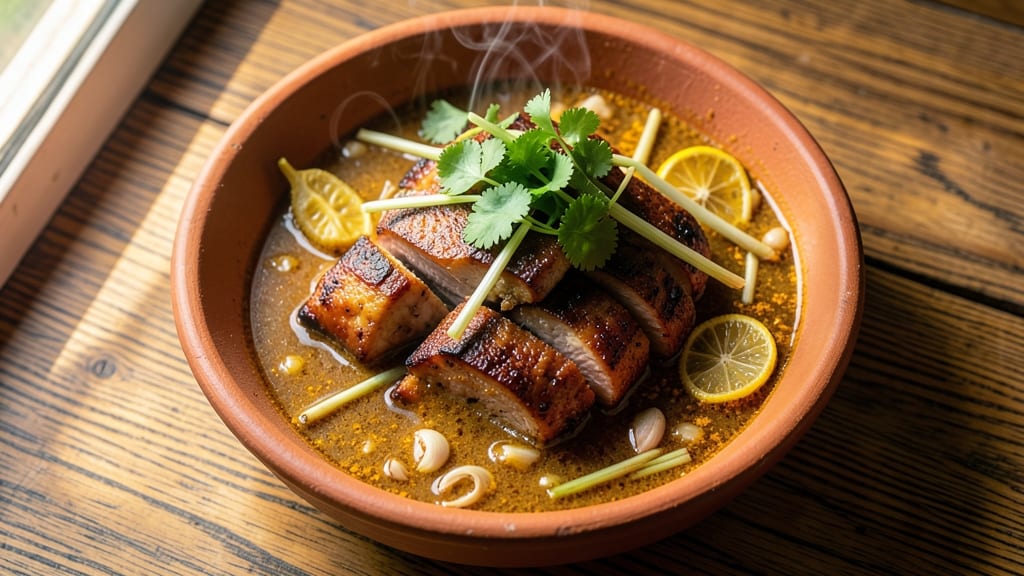
This Burmese pork curry recipe brings the aromatic streets of Yangon to your kitchen with its signature turmeric-lemongrass depth and tender pork. After years of perfecting this dish—first in Charleston kitchens, then on my farm—I’ve distilled the essentials: slow-simmered spices, galangal’s citrusy bite, and tamarind’s tangy backbone.
The key isn’t just the spices, but how they meld—layered over hours, not minutes—into a sauce that’s both complex and comforting.
The magic starts with the pork, cut into bite-sized pieces and seared until golden before the spices even join. This creates a foundational crust that holds up to the long simmer, while the lemongrass and galangal infuse the oil with their bright, herbal notes.
Traditional Burmese technique calls for balancing sweet, sour, and heat—here, tamarind delivers the tang, turmeric the earthy warmth, and a touch of chili the subtle kick. The result? A curry that’s rich enough to stand alone but light enough to pair beautifully with jasmine rice or crisp pickled vegetables.
What you’ll end up with is a dish that tastes like home—deeply fragrant, tender, and layered with flavor in every spoonful. The pork falls apart effortlessly, the sauce clings to it like a second skin, and the aroma alone will have everyone gathering at the table.
This isn’t just a recipe; it’s a taste of tradition, adapted for home cooks who crave restaurant-quality depth without the fuss. Let’s get cooking.
For those who love to experiment, I’ve included notes on modern twists—like swapping coconut milk for a creamier texture or adding a splash of fish sauce for umami—but the heart of this dish stays true to its roots.
Serve it with steamed rice, a side of quick-pickled radishes, and you’ve got a meal that’s as satisfying as it is impressive. Here’s how to make it.
Ingredients for burmese pork curry
The aromatic heart of this curry starts with fresh galangal and lemongrass—find them at Asian markets or well-stocked grocers.
| Ingredient | Amount | Notes |
|---|---|---|
| Pork Shoulder 🥩 | 1 ½ lb | Cut into 1-inch pieces |
| Lemongrass Stalks 🌿 | 4 whole | Bruised, bottom 3 inches only |
| Galangal 🍃 | 1 piece | About 3 oz, peeled |
| Garlic Cloves 🧄 | 6 cloves | Peeled, lightly crushed |
| Shallots 🧅 | 4 whole | Peeled, halved lengthwise |
| Turmeric Powder 🌶️ | 1 tbsp | Freshly ground preferred |
| Ground Coriander 🌿 | 1 tbsp | Freshly toasted for aroma |
| Tamarind Paste 🍋 | 2 tbsp | Or 1 tbsp tamarind concentrate |
| Coconut Milk 🥥 | 13 ½ oz | Full-fat canned coconut milk |
| Red Curry Paste 🌶️ | 2 tbsp | Store-bought or homemade |
| Bird's Eye Chilis 🔥 | 2 whole | Seeds removed for less heat |
| Fish Sauce 🍶 | 1 tbsp | Red Boat preferred |
| Palm Sugar 🍯 | 1 tbsp | Or light brown sugar |
| Vegetable Oil 🫒 | ¼ cup | For searing pork |
| Salt 🧂 | 1 tsp | Kosher or sea salt |
Galangal and lemongrass are the soul of this dish. Asian markets have the freshest—look for galangal with tight, pale knobs and lemongrass that's still vibrant green. If you can't find galangal, ginger at half the amount works in a pinch, though it won't be identical. The pork should be well-marbled for tenderness—Costco or butcher shops often have great cuts. Bruise the lemongrass with the side of your knife to release those citrusy oils without chopping. For the tamarind, Thai Kitchen brand is reliable if you can't find fresh pods.
No coconut milk? Full-fat Greek yogurt thinned with water gives a similar richness, though the texture will differ. Swapping out fish sauce? Soy sauce plus a dash of sugar mimics some of the umami. The red curry paste is non-negotiable for that signature depth—Maesri or Mae Ploy are my go-tos. For heat control, remove chili seeds before adding them to the pot. Palm sugar is ideal, but light brown sugar dissolves just as well. If your curry paste is too spicy, balance it with a splash more coconut milk.
This curry tastes even better the next day as flavors meld. Store in an airtight container in the fridge for up to 4 days—the sauce will thicken slightly, so stir in a splash of water when reheating. Freezes beautifully for 3 months—portion into containers so you can grab a ready meal. The aromatics (lemongrass, galangal) can be prepped ahead and refrigerated for 3 days before cooking. For extra convenience, make a double batch and freeze half—it reheats like a dream.
Why You'll Love This Recipe
- One-Pot Magic: I swear by this curry—just toss everything into a single pot, and let the pork shoulder melt into tender perfection while the galangal and lemongrass work their aromatics. No fancy techniques, no last-minute shopping runs; it’s all about that slow simmer where the flavors marry effortlessly.
- Citrusy Heat Bang: Between us, the galangal and lemongrass give this curry a bright, almost citrusy kick that lingers without overpowering. The pork shoulder stays juicy, and the garlic-shallot base? That’s the secret—it builds layers of warmth that make you want to eat it straight from the pot.
- Leftovers That Shine: This curry tastes better the next day, honestly. The flavors deepen, and reheating it is a breeze—just a splash of water, a quick stir, and boom, dinner’s saved. I make double batches on Sundays because my freezer (and my family) thank me later.
- Budget-Friendly Feast: Pork shoulder is affordable, and the aromatics stretch across multiple meals. Use the extra curry for rice bowls, sandwiches, or even a quick stir-fry—it’s the kind of dish that turns one ingredient into three meals without breaking the bank. Plus, the galangal and lemongrass last forever if you freeze them.
Step-by-step instructions for Burmese pork curry
Here's how to build layers of aromatic depth that make this curry truly special.
Prepare the Aromatic Base
Heat the 0.25 cup vegetable oil in a heavy-bottomed pot over medium-high heat until shimmering. Add the 1.5 lb pork shoulder cut into 1-inch pieces and sear for 5-6 minutes, stirring occasionally, until the meat develops a golden-brown crust. This step is crucial—it locks in flavors and prevents dryness later.
Remove the pork and set it aside. In the same pot, add the bottom 3 inches of 4 whole lemongrass stalks (bruised by banging with a knife handle) and the 1 piece peeled galangal. Cook for 2 minutes until fragrant. Add the 6 peeled garlic cloves and 4 halved shallots, cooking for another 2 minutes until softened and golden.
Build the Spice Foundation
Lower the heat to medium and stir in the 1 tbsp turmeric powder and 1 tbsp ground coriander, toasting for 30 seconds until the spices release their aroma. Add the 2 tbsp tamarind paste and 2 tbsp red curry paste, stirring constantly for 1 minute to fully incorporate. This is where the magic happens—the spices meld into a cohesive base.
Pour in the 13.5 oz coconut milk, scraping up any browned bits from the bottom of the pot. Add the 2 whole seeded bird's eye chilis and bring to a gentle simmer. Let it cook uncovered for 5 minutes to allow the flavors to develop and the coconut milk to slightly reduce.
Simmer the Pork to Tender Perfection
Return the seared pork to the pot, along with any accumulated juices. Add the 1 tbsp fish sauce and 1 tbsp palm sugar, stirring to combine. Bring to a gentle simmer, then reduce heat to low. Cover and cook for 1 hour, stirring occasionally, until the pork is fork-tender and easily pulls apart.
If the sauce becomes too thick, add 2-3 tablespoons of water to maintain the right consistency. The curry should coat the back of a spoon but still be saucy enough to spoon over rice. Taste and adjust seasoning with the 1 tsp salt if needed—this is your final flavor checkpoint.
Finish with Fragrant Depth
Once the pork is tender, increase heat to medium and simmer uncovered for 10-15 minutes to let the sauce reduce slightly and intensify in flavor. The curry should smell rich and complex—lemongrass, galangal, and spices working together in harmony.
Remove from heat and let it rest for 5 minutes before serving. This resting period allows the flavors to fully meld and the pork to absorb the aromatic sauce. Serve hot over steamed jasmine rice, garnished with fresh cilantro if desired.
Pro Tips For Making Burmese Pork Curry
- CHAR THE GALANGAL FIRST: I learned this the hard way—when you toss galangal in whole, it just sits there like a sad, undercooked log. Instead, slice it thin (about ¼-inch) and fry it in the same oil as your garlic and shallots until it’s fragrant and just starting to brown. That’s when it releases its actual flavor, not just its ghost.
- SALT THE PORK TWICE: First, salt the pork shoulder the night before—generously, like you’re trying to pickle it. Then, right before searing, pat it dry and hit it with another light coat of salt. The first round tenderizes; the second ensures it doesn’t taste bland after hours of simmering. (Yes, even if you’re impatient like me.)
- STIR THE CURRY LOW AND SLOW: After the initial sear, the real magic happens when you reduce the heat to a bare simmer and let the curry work itself out. If you keep it too hot, the lemongrass will turn bitter and the pork will toughen. I know, I know—you’re eager to eat it now. But give it 45 minutes of steady, gentle bubbling. The flavors will marry, and the pork will fall apart like it’s been begging to.
- USE FROZEN GALANGAL WHEN FRESH ISN’T AN OPTION: Does it look weird? Yes. Does it work? Every single time. Frozen galangal stays potent longer than fresh, and it’s easier to slice thinly without wasting half the root to mold. Just thaw it first—no need to defrost overnight, a quick soak in warm water for 10 minutes does the trick. Your curry won’t know the difference.
Essential equipment for this dish
Heavy-Bottomed Pot
This isn't just any pot—you need a heavy-bottomed Dutch oven or stainless steel pot to handle the long simmer without scorching. I swear by my All-Clad 5-quart Dutch oven for this recipe, but a Le Creuset works too.
The key is even heat distribution so your aromatics cook properly without burning. If you're on a budget, a Calphalon stainless steel pot does the job beautifully. 🔥
High-Quality Knife
A sharp 8-inch chef's knife is essential for prepping galangal, lemongrass, and shallots efficiently. I use my Wüsthof Classic for everything—it glides through galangal like butter. For the pork, a cleaver helps chop through the connective tissue quickly.
If you're new to knives, invest in a Victorinox Fibrox—it's affordable and holds its edge well.
Measuring Tools
Precision matters with spices and liquids. Use a digital kitchen scale for tamarind paste and palm sugar to avoid guesswork. For liquids, a liquid measuring cup with clear markings ensures you get the exact 13.5 oz of coconut milk.
A spice scoop (like the OXO Good Grips) helps measure 1 tbsp turmeric and 1 tbsp coriander accurately—no more eyeballing!
Immersion Blender (Optional)
If you're making this curry from scratch with whole spices, an immersion blender (like the Ninja CB101) saves time blending the paste directly in the pot. Skip this if using store-bought curry paste, but it's a game-changer for homemade versions.
I use mine to blend galangal, lemongrass, and shallots into a smooth paste before adding other spices. ⚡
Tongs for Pork
Tongs are better than a fork for handling the pork—you won't pierce the meat, which keeps it juicier. Look for stainless steel tongs with a 12-inch reach (like Merax) to easily pull pork from the pot. They're also great for stirring the curry without splashing. Trust me, this small upgrade makes a big difference in texture.
Lid with Handle
A tight-fitting lid with a sturdy handle (like the one that comes with Dutch ovens) is critical for the hour-long simmer. It traps steam to tenderize the pork and concentrate flavors.
If your lid doesn't fit snugly, add a silicone pot lid (like OXO Good Grips) to create an airtight seal. Pro tip: Place a wooden spoon across the lid handle to prevent burns when lifting.
Nutrition facts
Frequently asked questions
Can I substitute galangal with ginger?
Yes, but expect a different flavor profile. Use half the amount of ginger (about 1.5 oz) since it's milder. Galangal has a citrusy, piney aroma that ginger can't fully replicate, but it works in a pinch. For authenticity, try to find fresh galangal at Asian markets—it's worth the search!
How do I make this curry less spicy?
Remove the seeds and membranes from the bird's eye chilis before adding them to the pot. For extra mildness, reduce the number to just 1 chili or omit it entirely. If the curry still has heat, stir in 1-2 extra tablespoons of coconut milk to dilute the spice. Taste as you go!
What's the best way to store leftovers?
Let the curry cool completely, then transfer to an airtight container. It keeps well in the fridge for 4 days—the flavors actually deepen overnight! For longer storage, freeze portions for up to 3 months. Reheat gently on the stove with a splash of water to restore moisture.
Can I use chicken instead of pork?
Swap the pork for 1.5 lb boneless chicken thighs (they stay juicier than breasts). Cut into 1-inch pieces and sear until golden before adding to the curry. Reduce the simmering time to 25-30 minutes—chicken cooks faster than pork. The technique remains identical!
Why does my curry taste bland?
Most likely, the spices didn't toast enough or the simmer wasn't long enough. Always toast turmeric and coriander for 30 seconds to release their aroma. For depth, add 1 extra tbsp fish sauce or a pinch of salt at the end. Let it rest 5 minutes before tasting—the flavors meld during this time.