
Soups & Stews
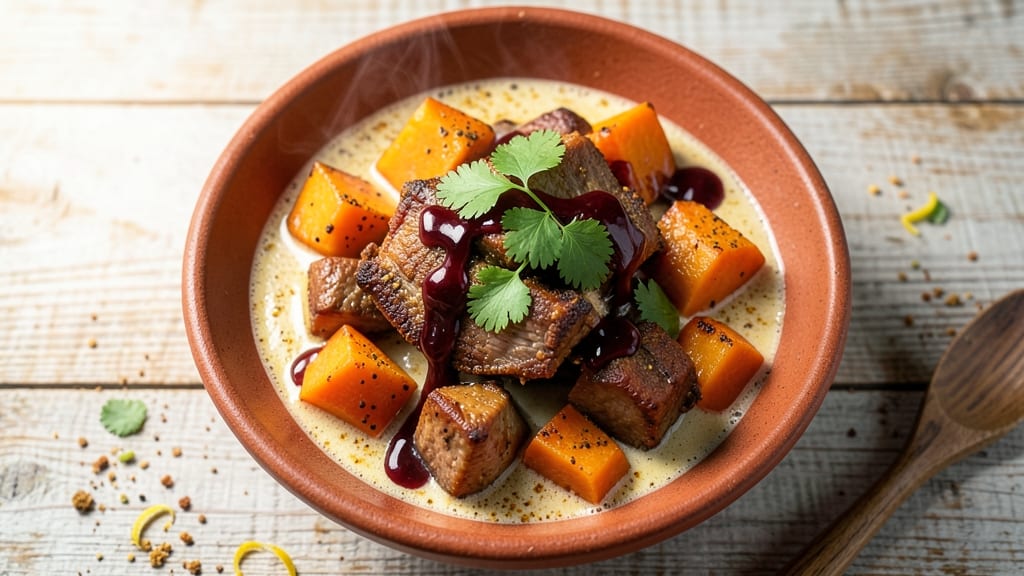
This Burma Superstar Pumpkin Pork Stew brings the rich, aromatic soul of Myanmar to your kitchen with every spoonful. 🌟 After years of refining techniques from my time in Charleston's culinary scene, I've perfected a balance of earthy spices, tender pork, and velvety coconut milk that transforms humble ingredients into something extraordinary.
The secret lies in slow-cooking the pork until it falls apart while caramelizing the pumpkin to create a naturally sweet contrast to the savory broth.
What makes this recipe truly special is the Burmese spice blend—tamarind, turmeric, and lemongrass—that infuses the stew with layers of complex flavor. Unlike many fusion dishes, this recipe stays true to its roots while making it accessible for home cooks.
The coconut milk not only adds creaminess but also bridges the gap between the bold spices and tender meat, creating harmony in every bite.
The result is a deeply satisfying stew where perfectly tender pork shares the pot with sweet, caramelized pumpkin pieces floating in a fragrant, spiced broth.
The aroma alone will transport you to bustling street markets in Yangon, but the taste proves you don't need to travel to experience authentic Burmese comfort food. This is the kind of dish that improves with time—better the next day as all the flavors meld together.
Serve it with steamed jasmine rice to soak up every last drop of that rich, spiced coconut broth. The contrast of the fluffy rice against the hearty stew makes each bite even more satisfying.
Whether you're feeding a family or treating yourself to a special meal, this recipe delivers restaurant-quality results with minimal fuss.
Ingredients for burma superstar pumpkin pork stew
Earthy spices, tender pork, and velvety coconut milk transform simple ingredients into a Burmese masterpiece.
| Ingredient | Amount | Notes |
|---|---|---|
| Pork Shoulder 🥩 | 1 ½ lb | Bone-in for flavor, cut into 1-inch cubes |
| Pumpkin 🎃 | 2 cups | Cubed, skin removed, 1-inch pieces |
| Coconut Milk 🥥 | 1 can | Full-fat, 13.5 oz can, unsweetened |
| Tamarind Paste 🍯 | 2 tbsp | Adjust for tartness preference |
| Turmeric Powder 🌿 | 1 tsp | Freshly ground preferred |
| Ground Cumin 🌿 | 1 tsp | Toasted for deeper aroma |
| Ground Coriander 🌿 | 1 tsp | Freshly ground preferred |
| Lemongrass 🌿 | 3 stems | Bruised, cut into 2-inch pieces |
| Galangal 🍋 | 1 piece | Substitute ginger if unavailable |
| Garlic Cloves 🧄 | 6 cloves | Minced for aromatic base |
| Shallots 🧅 | 3 whole | Minced, or substitute red onion |
| Fish Sauce 🍶 | 2 tbsp | Red Boat preferred |
| Brown Sugar 🍚 | 2 tbsp | Light or dark preferred |
| Salt 🧂 | 1 ½ tsp | Kosher or sea salt |
| Black Pepper 🌶️ | ½ tsp | Freshly ground preferred |
The pork shoulder is non-negotiable here—bone-in for maximum flavor. Butcher shops often have it pre-cut for stews, but if you're buying a whole shoulder, ask for the bone-in section. Galangal can be tricky to find, but Asian markets usually stock it fresh. If you can't locate it, ginger works in a pinch (use half the amount). Lemongrass is worth hunting down for that bright, citrusy aroma—Trader Joe's carries it year-round. For the tamarind, I always grab the paste in tubes—no mess, and it keeps for months. The Red Boat fish sauce is a splurge, but honestly, it makes all the difference in that umami depth.
No galangal? Ginger plus a pinch of cardamom mimics its peppery kick. Short on lemongrass? Lime zest plus a splash of lime juice adds brightness. The tamarind paste can be swapped for lime juice (use half the amount), but you'll lose that signature Burmese tang. For the pumpkin, sugar pie pumpkin works best—it's sweeter and holds its shape. If you're using butternut, roast it first to caramelize the edges. The coconut milk? Full-fat only—anything less and the stew loses its luscious texture. And if you're wondering about the fish sauce, yes, it's essential for that savory backbone.
This stew tastes even better the next day as all the flavors meld together. Store leftovers in the fridge for up to 5 days, or freeze for 3 months. I like to portion it into containers with a scoop of jasmine rice—ready for quick lunches. The broth reduces slightly overnight, so if you're serving a crowd, consider making it in a Dutch oven. And if you have extra time, let it simmer uncovered for the last 30 minutes to concentrate those amazing aromas.
Why You'll Love This Recipe
- One-Pot Magic: I swear by this—just toss everything into one pot, and the pork practically melts into tender perfection while the pumpkin soaks up all the rich coconut and tamarind flavors. No chopping marathons, no last-minute stress.
- Tamarind Tang Magic: That tangy tamarind paste? It’s the secret weapon here. It cuts through the richness of the coconut milk and pork, giving this stew a bright, complex finish that keeps you reaching for seconds.
- Weeknight to Dinner Party: Make a big batch on Sunday, and you’ve got a hearty stew for lunches all week. Or—here’s the secret—serve it with steamed jasmine rice and crispy fried shallots for a restaurant-worthy meal that still feels effortless.
- Pork on a Budget: Pork shoulder is cheap, but it turns into something luxurious here. The slow simmer makes it fall apart, and the coconut milk stretches every bite into something satisfying without breaking the bank. Leftovers? Even better the next day.
Step-by-step instructions for burma superstar pumpkin pork stew
This aromatic stew brings together rich pork, velvety coconut, and earthy spices in perfect harmony.
🍳 Step 1: Sear the Pork Shoulder for Deep Flavor
Heat a large Dutch oven over medium-high heat and add the 1.5 lb pork shoulder cubes in a single layer. Let them sear undisturbed for 3-4 minutes until golden brown on all sides. This step develops a rich crust that forms the flavor base of your stew.
I press down gently on the pork with a spatula during the first minute—this prevents it from curling and ensures even contact with the pan. Once browned on all sides, transfer the pork to a plate and set aside temporarily. Don't drain the rendered fat; it's packed with flavor that will infuse your stew.
👨🍳 Step 2: Build the Aromatic Spice Base
In the same Dutch oven, add the 3 stems lemongrass (bruised) and 1 piece galangal (peeled and sliced). Cook for 2 minutes until fragrant, then add the 3 whole shallots and 6 cloves garlic cloves. Sauté for another 3-4 minutes until the shallots soften and become translucent.
Here's where it gets fragrant—stir in the 1 tsp ground cumin, 1 tsp ground coriander, and 1 tsp turmeric powder. Cook for 30 seconds just until you can smell those warm spices wafting through your kitchen. This aromatic base forms the heart of your stew's complex flavor profile.
🍳 Step 3: Simmer the Stew with Pumpkin and Coconut
Return the seared pork to the Dutch oven. Add the 2 cups pumpkin cubes, 1 can coconut milk, 2 tbsp tamarind paste, 2 tbsp fish sauce, 2 tbsp brown sugar, 1.5 tsp salt, and 0.5 tsp black pepper. Stir everything together until the tamarind paste dissolves completely.
Bring the mixture to a gentle simmer over medium-low heat. Here's the thing—you want a slow, steady simmer, not a rolling boil. Cover the pot and let it cook for 45-50 minutes until the pork is fork-tender and falls apart easily. The pumpkin should be soft but still hold its shape slightly. If the stew reduces too much, add a splash of water or coconut milk to maintain the perfect consistency.
⏰ Step 4: Finish and Adjust Seasoning
Once the pork is tender, taste the stew and adjust the seasoning if needed. I usually add a bit more fish sauce for umami depth or a touch of brown sugar to balance any tartness from the tamarind. The stew should be rich, slightly sweet, and tangy with a perfect balance of all the spices.
Let the stew sit off the heat for 5-10 minutes before serving. This resting time allows the flavors to meld together beautifully. Serve it hot with steamed jasmine rice to soak up all that delicious coconut-pumpkin goodness. The aroma alone will make your kitchen smell like a Burmese street food stall!
Pro Tips For Making Burma Superstar Pumpkin Pork Stew
- Sear the Pork First: I learned this the hard way—skipping the sear means bland pork. Brown the shoulder in batches over medium-high heat until deep golden, about 5-6 minutes per side. The crust locks in flavor and prevents the meat from turning rubbery later, especially when it’s submerged in coconut milk.
- Cut Pumpkin Small: Big chunks won’t soften evenly. Slice the pumpkin into 1-inch cubes (skin on for texture, but peel if you prefer) so they cook through in the same time as the pork. I used to leave them too thick, and they’d turn mushy while the pork stayed tough.
- Dissolve Tamarind Paste: Tamarind paste is stubborn—don’t just toss it in. Mix it with 2 tablespoons of warm water first, then whisk it into the coconut milk before adding it to the pot. This ensures it blends smoothly and doesn’t clump, giving you that signature tangy depth without graininess.
- Simmer Low and Slow: After the initial sear and sauté, drop the heat to a gentle simmer—no boiling. Cover the pot and let it cook at 180°F (80°C) for at least 2 hours. Rushing it makes the pork dry, and the pumpkin turns mealy. Patience here is everything.
Flavor customization for these flavors
Sweet-Savory Balance
Adjust the sweetness by modifying the brown sugar—start with 1 tbsp if you prefer less sweetness, or increase to 3 tbsp for a richer caramelized depth. For extra tang, add 1 tsp lime zest or an extra ½ tbsp tamarind paste.
I often balance my stew with 1 tsp fish sauce if I want more umami without extra sweetness. 🌶️
Spice Level Control
For milder heat, reduce the fish sauce to 1 tbsp and add ½ tsp honey to mellow the flavors. If you want more kick, swap ½ tbsp fish sauce for 1 tsp sambal oelek or ½ tsp chili flakes.
I keep a small bowl of red pepper flakes nearby to let guests adjust their own heat level at the table.
Creamy vs. Light Texture
For a richer, creamier stew, stir in ¼ cup heavy cream or ¼ cup coconut cream during the final 10 minutes of cooking. To lighten the texture, add ½ cup low-sodium chicken broth and simmer uncovered for 15 minutes to reduce slightly.
I’ve also blended 1 cup of the stew and returned it to the pot for a velvety consistency.
Vegetable Variations
Swap the pumpkin for 2 cups butternut squash cubes (roast first for caramelization) or 2 cups sweet potato chunks for a deeper earthiness. Add 1 cup kale or spinach in the last 10 minutes to wilt into the stew.
I once used 1 cup shredded cabbage and 1 carrot julienned for extra texture and color.
Protein Swaps
Replace pork with 1.5 lb chicken thighs (bone-in for flavor) or 1 lb firm tofu** (pressed and cubed) for a vegetarian option. For seafood lovers, use 1 lb shrimp or white fish chunks, adding them only in the last 10 minutes to avoid overcooking.
I’ve also made this with 1 lb mushrooms for a meaty, umami-rich alternative.
Herb & Garnish Ideas
Finish with fresh cilantro or Thai basil for brightness, or lime wedges for a citrusy pop. A drizzle of chili oil or toasted sesame oil adds aromatic depth. I love serving this with crispy fried shallots sprinkled on top for crunch. 🌿
Nutrition facts
Frequently asked questions
Can I substitute regular pumpkin for sugar pie pumpkin in this recipe?
You can use regular canned pumpkin, but sugar pie pumpkin is ideal because it's sweeter and holds its shape better during cooking. For canned pumpkin, choose pure pumpkin (not pumpkin pie filling) and reduce the brown sugar to 1 tbsp since canned versions are often sweeter. If using butternut squash, roast it first to caramelize the edges for deeper flavor.
How do I find galangal if my local store doesn't carry it?
Galangal is the secret ingredient that gives this stew its authentic Burmese flavor! If unavailable, substitute with 1 tbsp fresh ginger plus ½ tsp cardamom. For a closer match, look for galangal in Asian markets (fresh or jarred) or order it online. The ginger-cardamom combo won't be identical but still delivers that warm, peppery depth.
Can I make this stew in a slow cooker or Instant Pot?
For a slow cooker, sear the pork first, then transfer everything to the pot and cook on low for 6-7 hours or high for 3-4 hours. For an Instant Pot, use the "Sauté" function to sear the pork, then cook on high pressure for 25 minutes followed by a 10-minute natural release. The Instant Pot version finishes faster but may need extra coconut milk to reach the right consistency.
What's the best way to reheat leftovers without making the stew watery?
Reheat gently on the stovetop over low heat with the lid slightly ajar to prevent steam buildup. If using the microwave, cover with a damp paper towel and heat in 30-second intervals, stirring between each. Never reheat to a boil—this breaks down the coconut milk and makes the stew separate. For best results, reheat only what you'll serve immediately.
How do I adjust the spice level for picky eaters?
For milder heat, reduce the fish sauce to 1 tbsp and add ½ tsp honey to balance the flavors. If you want to keep the umami without spice, use 1 tbsp soy sauce instead. For extra safety, serve with plain rice and let everyone add their own chili flakes or sambal oelek at the table.