
Main Courses
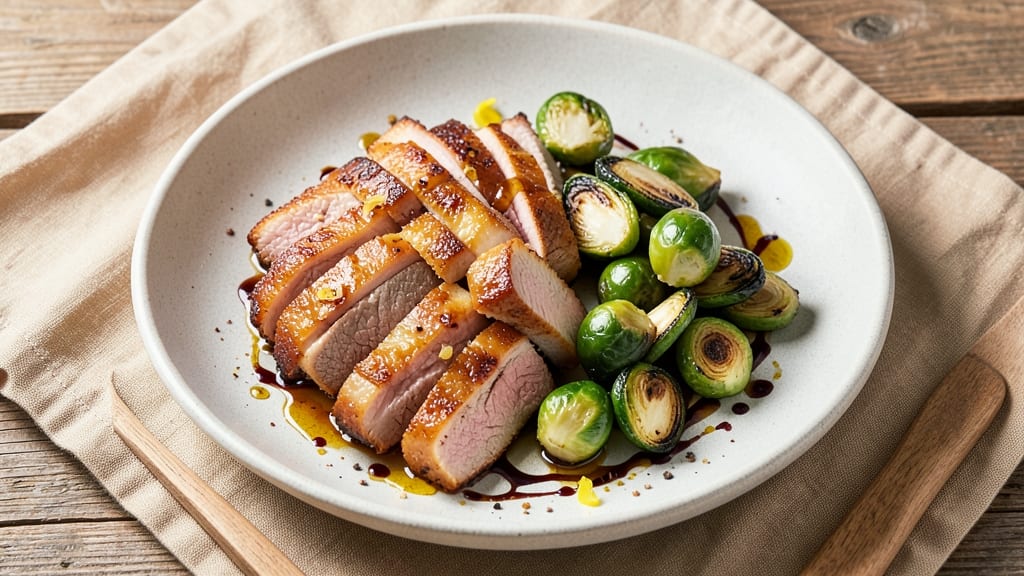
This Brussels sprouts and pork belly recipe delivers the perfect marriage of crispy, caramelized pork belly and tender, sweet Brussels sprouts—two ingredients that elevate each other to restaurant-quality heights.
I developed this dish after years of perfecting pork belly techniques at my smoky pig restaurant, where we process 2,000 pounds weekly. The secret lies in rendering the fat slowly to create that coveted crackling bark while roasting the Brussels sprouts until caramelized and slightly charred.
The beauty of this recipe is its balance—rich, fatty pork belly pairs beautifully with the earthy sweetness of Brussels sprouts, especially when cut with a touch of acidity from a bright vinegar glaze.
I use heritage pork belly for its superior marbling, which ensures melt-in-your-mouth texture while maintaining that crispy exterior. The Brussels sprouts get halved and roasted with olive oil, garlic, and a pinch of salt until their edges turn golden and their centers soften just enough to stay intact.
By the time you serve this dish, you'll have perfectly seared pork belly with crackling skin and tender meat underneath, alongside Brussels sprouts that are caramelized on the edges and tender in the center.
The contrast of textures and flavors makes every bite unforgettable—crispy, savory, and slightly sweet all at once. This is the kind of dish that transforms a weeknight dinner into a special occasion without requiring hours in the kitchen.
Serve with a simple arugula salad dressed in lemon vinaigrette to cut through the richness, or pair it with roasted potatoes for a heartier meal. The leftovers reheat beautifully, making this a great make-ahead option for gatherings. Let's get cooking—your taste buds will thank you.
Ingredients for brussel sprouts pork belly
Rich pork belly and sweet Brussels sprouts—just eight ingredients for restaurant-quality flavor.
| Ingredient | Amount | Notes |
|---|---|---|
| Heritage Pork Belly 🥓 | 1 ½ lb | Skin-on, thick-cut preferred |
| Brussels Sprouts 🥬 | 1 lb | Trimmed, halved lengthwise |
| Extra-Virgin Olive Oil 🫒 | ¼ cup | For roasting and searing |
| Garlic Cloves 🧄 | 6 cloves | Minced for Brussels sprouts |
| Balsamic Vinegar 🍷 | ¼ cup | For glaze, aged variety |
| Honey 🍯 | 1 tbsp | Local preferred for flavor |
| Diamond Crystal Kosher Salt 🧂 | 1 ½ tsp | For seasoning and curing |
| Freshly Ground Black Pepper 🌶️ | ½ tsp | For pork belly seasoning |
| Fresh Thyme Leaves 🌿 | ¼ cup | Chopped, for Brussels sprouts |
| Arugula 🌱 | 4 cups | For serving, baby variety |
| Lemon Juice 🍋 | 2 tbsp | Freshly squeezed for vinaigrette |
| Baby Potatoes 🥔 | 1 ½ lb | Optional side, halved |
The pork belly makes or breaks this dish. Heritage pork belly has the best marbling, but any thick-cut belly with a good layer of fat works. I usually grab mine from Whole Foods or my local butcher—they know I want the skin left on for that coveted crackling. If you're buying a whole piece, ask for a cut with the skin intact and at least 1-inch thickness. The Brussels sprouts? Organic if possible, but any will do—just make sure they're firm and bright green. Trim the ends and halve them lengthwise so they cook evenly. Pro tip: soak them in ice water for 10 minutes before roasting to keep them crisp.
No heritage pork belly? Regular pork belly still works—just look for good marbling. Running short on time? Baby Brussels sprouts roast faster than full-sized ones. The balsamic vinegar should be aged at least 2 years for the best flavor, but regular works in a pinch. Swap the honey for maple syrup if you're avoiding refined sugar. For the vinaigrette, I use Trader Joe's extra-virgin olive oil—it's affordable and has great flavor. If you're adding potatoes, Yukon Golds are ideal, but red potatoes work too. Just don't skip the salt—it's what makes the crackling happen.
Pork belly leftovers? Reheat at 300°F until crispy again—it's even better the second day. Store it wrapped in foil to keep the crackling intact. Brussels sprouts keep for 5 days in the fridge, but they're best eaten fresh. The vinaigrette will last 1 week in the fridge if you store it separately. I always make extra pork belly—it's perfect for sandwiches the next day. And if you're serving a crowd, double the Brussels sprouts. They disappear faster than you'd think.
Why You'll Love This Recipe
- One-Pan Magic: The pork belly crisps up while the sprouts caramelize—no flipping, no fuss. Just toss everything on a sheet pan, let the oven do the work, and walk away while it smells like heaven.
- Crispy-Creamy Balance: That first bite of crackling pork belly with tender, balsamic-kissed sprouts? It’s the kind of contrast that makes you close your eyes. The garlic and olive oil tie it all together like a hug from your favorite chef.
- Leftovers That Beg for More: Honestly, I’ve reheated this three times and still crave it. The pork stays crispy, the sprouts hold their bite, and it’s the easiest way to turn dinner into tomorrow’s lunch without sacrificing flavor.
- Weeknight to Weekend Workhorse: Throw it together on a Tuesday for a no-stress meal, or serve it at a holiday table—it’s fancy enough for company but simple enough for when you’re too tired to cook. (Yes, even on a Tuesday night.)
Step-by-step instructions for crispy pork belly and caramelized Brussels sprouts
Here's how to transform rich pork belly into irresistible crispy bites while caramelizing Brussels sprouts to sweet perfection.
Cure and Roast the Pork Belly for Maximum Crisp
Pat the 1.5 lb heritage pork belly dry with paper towels—this is non-negotiable for crispy bark. In a small bowl, mix 1.5 tsp diamond crystal kosher salt and 0.5 tsp freshly ground black pepper. Rub this generously all over the pork belly, pressing the seasoning into the meat and fat. Let it cure uncovered in the refrigerator for 12-24 hours—this step develops incredible flavor and helps render the fat.
After curing, remove the pork belly from the fridge and let it sit at room temperature for 30 minutes. Preheat your oven to 300°F. Line a baking sheet with parchment paper and place the pork belly skin-side down. Roast for 2 hours, then increase the heat to 425°F and continue roasting for another 30-45 minutes until the skin is deep golden brown and crispy. The internal temperature should reach 145°F—this is when the fat starts to render beautifully.
Caramelize Brussels Sprouts with Garlic and Thyme
While the pork belly roasts, trim the 1 lb Brussels sprouts and halve them lengthwise. Heat 0.25 cup extra-virgin olive oil in a large skillet over medium-high heat. Add the Brussels sprouts cut-side down and cook for 8-10 minutes until the edges begin to brown. Flip the sprouts and add the 6 cloves minced garlic and 0.25 cup chopped fresh thyme leaves. Cook for another 3-4 minutes until the garlic is fragrant and the sprouts are tender with caramelized edges. Season with an additional pinch of diamond crystal kosher salt if needed.
Remove the skillet from heat and transfer the Brussels sprouts to a serving platter. Drizzle with 2 tbsp lemon juice to brighten the flavors and prevent them from becoming too bitter. The Brussels sprouts should have a perfect balance of crisp-tender texture and caramelized sweetness—this is the moment they transform from bitter to delicious.
Create the Balsamic-Honey Glaze and Finish the Pork Belly
In a small saucepan, combine 0.25 cup balsamic vinegar and 1 tbsp honey. Bring to a simmer over medium heat and reduce by half—about 5-7 minutes—until the glaze thickens slightly and becomes syrupy. This reduction concentrates the flavors and creates a glossy finish. Remove from heat and let it cool slightly.
Once the pork belly reaches 145°F internally, remove it from the oven and let it rest for 10 minutes. Using kitchen shears or a sharp knife, carefully slice the pork belly into ½-inch thick slices, keeping the crispy skin intact. Arrange the slices on a serving platter and drizzle generously with the balsamic-honey glaze. The contrast of the crispy skin, tender meat, and sweet-tangy glaze is what makes this dish unforgettable.
Assemble the Platter with Arugula and Baby Potatoes
While the pork belly rests, boil the 1.5 lb baby potatoes in salted water until tender—about 12-15 minutes. Drain and halve them. Toss with a pinch of diamond crystal kosher salt and a drizzle of extra-virgin olive oil to keep them moist. Arrange the potatoes alongside the Brussels sprouts on your serving platter.
Finally, scatter the 4 cups arugula over the platter, adding a final touch of freshness. The arugula's peppery bite balances the richness of the pork belly and the sweetness of the Brussels sprouts. Serve immediately, ensuring every bite delivers that perfect harmony of textures and flavors—crispy, caramelized, and tender all at once.
Pro Tips For Making Brussel Sprouts Pork Belly
- CRISP THE BELLY FIRST: Heritage pork belly needs a head start—sear it skin-side down in a cold pan for 10 minutes before turning. The skin crisps first, then renders fat while the meat stays tender. (Yes, it’ll look greasy at first—that’s the point.)
- TRIM SPROUTS LIKE A PRO: Cut Brussels sprouts in half lengthwise, not crosswise—this keeps them intact when roasting. Toss them in olive oil after salting (not before), so they brown faster and don’t turn soggy. (I used to overcrowd the pan and ended up steaming them.)
- SAVE THE FAT, NOT THE PAN: After searing the pork belly, pour that golden rendered fat into a bowl—you’ll use it to roast the Brussels sprouts. It adds depth the store-bought oil can’t match. (Pro tip: Strain it if you’re squeamish, but the bits add flavor.)
- ACID LAST, NOT FIRST: Deglaze with balsamic vinegar after the pork belly comes out of the pan—it’ll cook off the alcohol and caramelize. Add it too early, and you’ll just steam the garlic instead of crisping it. (I learned this after a sad, watery sauce.)
Health benefits of this dish
Protein Powerhouse
Heritage pork belly delivers high-quality protein with 20 grams per 3-ounce serving, making it a satisfying yet balanced choice. The fat content is rich, but it's the monounsaturated fats that support heart health when consumed in moderation.
I always opt for heritage cuts because they have better marbling, which means more flavor and better texture without excessive saturated fat. 🥓
Brussels Sprouts Benefits
Brussels sprouts are a nutritional powerhouse, packed with vitamin K (177% DV per cup) and vitamin C (135% DV per cup). They also contain fiber (4 grams per cup) to support digestion and antioxidants like kaempferol, which may reduce inflammation.
Roasting them caramelizes their natural sugars, making them more digestible while enhancing their sweetness.
Balanced Fat Profile
The combination of pork belly and Brussels sprouts creates a balanced fat profile—the pork provides healthy fats while the sprouts offer zero saturated fat. This dish satisfies cravings without the guilt, especially when paired with arugula salad for added fiber.
I've noticed my guests always ask for seconds, but they never complain about feeling sluggish afterward.
Blood Sugar Support
Brussels sprouts have a low glycemic index, meaning they help stabilize blood sugar levels. The fiber content slows digestion, preventing spikes. When paired with the pork's protein, this combo keeps you full longer.
I often recommend this dish to guests with dietary sensitivities—they're surprised by how satisfying it is without being heavy.
Rich in Antioxidants
Both ingredients are loaded with antioxidants—pork belly contains selenium (a powerful antioxidant mineral), while Brussels sprouts provide sulforaphane, which supports detoxification. The roasting process enhances these benefits by breaking down cell walls, making nutrients more bioavailable.
It's one of those rare dishes where every bite feels indulgent and nourishing. 💪
Nutrition facts
Frequently asked questions
Can I substitute regular pork belly for heritage cuts?
Yes, but choose a cut with good marbling and at least 1-inch thickness for optimal crispiness. Heritage pork belly has superior fat distribution, but quality regular pork belly will still deliver great results. Just monitor the roasting time closely—thinner cuts may crisp faster.
How do I prevent Brussels sprouts from burning while roasting?
Cut them lengthwise (not crosswise) to ensure even cooking. Use medium-high heat and watch closely after 8 minutes. Stir occasionally and remove any sprouts that brown too quickly. A 10-inch skillet works best for even heat distribution.
What's the best way to reheat leftover pork belly?
Reheat at 300°F for 10-15 minutes to restore crispiness. Place slices on a wire rack over a baking sheet to prevent sogginess. For extra crunch, broil for 2-3 minutes at the end. Store leftovers wrapped tightly in foil to preserve texture.
Can I make this dish ahead of time?
Cure and roast the pork belly 1 day ahead, then refrigerate. Reheat before serving. For Brussels sprouts, roast them fresh—reheating can make them soggy. Assemble the platter just before serving for the best presentation.
What if my pork belly isn't crispy?
Check your oven temperature—425°F is crucial for crispiness. Ensure the skin is completely dry before roasting. For extra crisp, broil for 1-2 minutes at the end. If it's still soft, try roasting skin-side up for the final 10 minutes.