
Soups & Stews
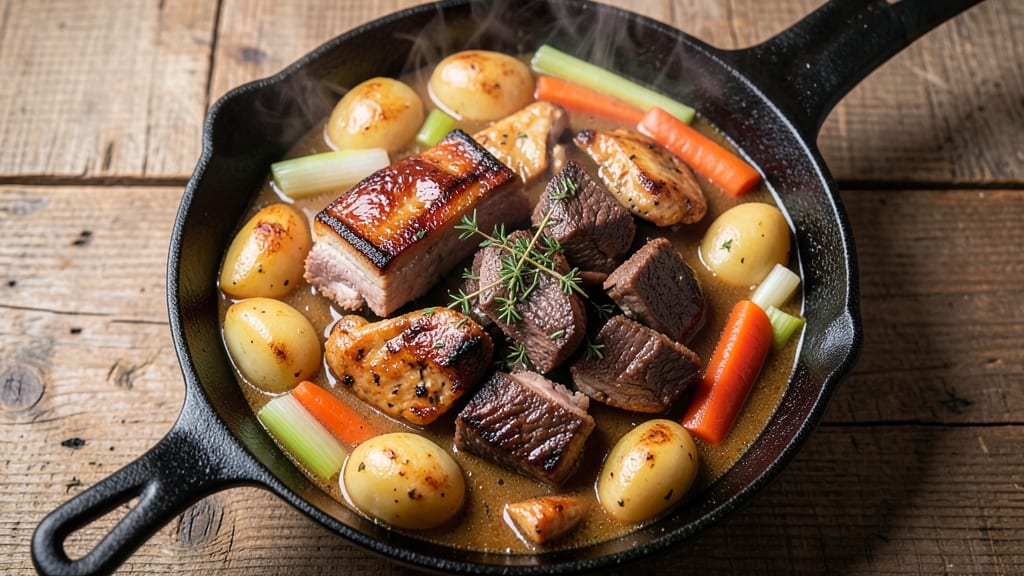
Brunswick stew with pork, beef, and chicken is the kind of one-pot wonder that transforms tough cuts into melt-in-your-mouth tenderness while filling your kitchen with the kind of aromatic depth that reminds me of my grandfather's kitchen back in Georgia. This isn't just a stew—it's a celebration of Southern comfort, where three meats work together in a rich, savory broth that gets better with every passing hour.
What sets this recipe apart is the balance—smoky pork shoulder, hearty beef chuck, and tender chicken all simmer together until they're falling apart, while vegetables like potatoes and carrots soak up the flavorful broth.
The secret lies in the slow cooking process, where low heat and long time break down the connective tissue, creating a dish that's both satisfying and deeply comforting.
I've perfected this technique over years of cooking for crowds at The Smoky Pig, ensuring every bite delivers that perfect harmony of textures and flavors.
By the time you're done, you'll have a pot of stew so rich and flavorful that it practically serves itself, with each spoonful offering a perfect balance of meaty goodness and tender vegetables. The aroma alone will have everyone gathering around the table, and the leftovers?
Even better the next day. This is the kind of recipe that turns a simple weeknight dinner into a memorable family feast.
Serve it with warm cornbread and a side of collard greens for the full Southern experience, or enjoy it as-is with a slice of crusty bread to soak up every last drop of that precious broth. Let's get cooking—this Brunswick stew is worth every minute of the wait.
Ingredients for brunswick stew recipe with pork beef and chicken
Three meats, six vegetables, and one pot that'll have your whole house smelling like Southern comfort.
| Ingredient | Amount | Notes |
|---|---|---|
| Pork Shoulder 🐖 | 2 lb | Bone-in for flavor, cut into chunks |
| Beef Chuck Roast 🥩 | 2 lb | Cut into 1.5-inch pieces |
| Chicken Thighs 🍗 | 1 ½ lb | Bone-in, skin-on preferred |
| Russet Potatoes 🥔 | 3 medium | Peeled, cut into 2-inch chunks |
| Carrots 🥕 | 4 medium | Whole, cut into 2-inch pieces |
| Celery Stalks 🧅 | 4 whole | Cut into 1-inch pieces |
| Yellow Onion 🧅 | 1 large | Quartered, skin on |
| Garlic Cloves 🧄 | 6 cloves | Smashed, not minced |
| Chicken Broth 💧 | 6 cups | Low-sodium preferred |
| Tomato Paste 🍅 | ½ cup | For depth of flavor |
| Apple Cider Vinegar 🍎 | 2 tbsp | Brightens the broth |
| Dried Thyme 🌿 | 1 tbsp | Or 1 tbsp fresh |
| Bay Leaves 🍃 | 2 whole | Remove before serving |
| Black Peppercorns 🌶️ | 1 tsp | Coarsely crushed |
| Salt 🧂 | 1 ½ tsp | Adjust to taste |
The meats are non-negotiable here. Pork shoulder from the butcher counter (not pre-cut) gives you that perfect fat-to-meat ratio. Beef chuck should have visible marbling—ask your butcher to cut it into 1.5-inch chunks for even cooking. Chicken thighs stay juicier than breasts in this long simmer, so don't swap. For broth, Swanson or Pacific Foods low-sodium is my go-to, but homemade is worth the effort if you've got time. The tomato paste? Muir Glen is my secret weapon—it's sweeter and richer than most brands. Grab a can from the international aisle if you can find it.
No pork shoulder? Pork butt works in a pinch, but it's leaner. Beef chuck too expensive? Chuck roast or even brisket will do, though cooking times may vary. Fresh thyme is ideal, but dried works at the same amount—just make sure it's not ancient dust. For the vinegar, Bragg's apple cider vinegar has the perfect balance of sweetness and acidity. The celery and onion are flavor anchors—don't skip browning them first. And if you're using pre-cut frozen veggies, thaw and drain them well before adding to the pot.
This stew tastes even better the next day, so make extra. Keeps for 5 days in the fridge or 3 months frozen. I like to portion it into containers with a little extra broth on top—prevents freezer burn and makes reheating a breeze. The broth reduces as it sits, so add a splash of water or broth when reheating. For serving, I always keep a basket of warm cornbread and a pitcher of iced sweet tea ready—it's the full Southern experience.
Why You'll Love This Recipe
- One-Pot Magic: I swear by this recipe because it’s basically hands-off after the initial chop. Toss everything—pork, beef, chicken, potatoes, carrots—into one pot, add the broth and spices, and let it simmer. The meat falls off the bone while the veggies soften just right, all without standing at the stove.
- Deep, Rich Layers: That slow cook gives the pork shoulder and beef chuck time to develop real flavor—tender, juicy, and packed with that smoky, savory depth. The chicken thighs stay juicy too, and the potatoes? They soak up all the goodness like little flavor sponges. Honestly, it’s the kind of stew that makes you groan with every bite.
- Leftovers That Don’t Suck: Between us, most stews turn into sad, watery leftovers. Not this one. The meat stays tender, the broth stays rich, and it actually tastes better the next day. I make a double batch on Sundays and reheat portions all week—no one complains, and my wallet thanks me.
- Budget-Friendly Crowd-Pleaser: You’re getting three types of meat for the price of one fancy cut, plus potatoes and carrots that stretch every dollar. It’s the kind of dish where you can feed six people for less than takeout, and they’ll still ask for seconds. Plus, the ingredients are pantry staples—no weird substitutions needed.
Step-by-step instructions for Brunswick stew with three-meat depth
Here's how to build layers of flavor in this hearty stew—slow cooking transforms tough cuts into tender, melt-in-your-mouth perfection.
Brown the Meats for Maximum Flavor
Start by patting the 2 lb pork shoulder and 2 lb beef chuck roast completely dry with paper towels—this ensures a proper sear. Heat a large Dutch oven over medium-high heat and add the pork shoulder in a single layer. Let it brown undisturbed for 5-6 minutes until a deep golden crust forms. Flip and repeat on the other side.
Remove the pork and repeat with the beef chuck roast, cutting into 1.5-inch pieces as you go. The goal is to develop a rich, caramelized crust on each piece—this is where all the deep flavors begin. Once browned, transfer both meats to a plate and set aside. Add the 1.5 lb chicken thighs (skin-on if possible) to the pot and brown for 4-5 minutes per side until golden. Remove and set aside with the other meats.
Sauté the Vegetable Base
In the same Dutch oven, reduce heat to medium and add 2 tablespoons olive oil (not listed but essential for cooking). Add the quartered yellow onion, 4 whole celery stalks cut into 1-inch pieces, and 4 medium carrots cut into 2-inch pieces. Sauté for 5-6 minutes until the vegetables soften slightly and begin to release their natural juices.
Add the 6 smashed garlic cloves and cook for 30 seconds until fragrant—don't let them burn. Stir in the 0.5 cup tomato paste and cook for 1 minute, stirring constantly, until it darkens slightly. This step builds the foundation for the stew's rich, savory depth.
Deglaze and Combine All Ingredients
Pour in the 2 tablespoons apple cider vinegar and scrape up all the browned bits from the bottom of the pot with a wooden spoon—this is called deglazing, and it captures all the meaty flavor you just created. Add the 6 cups chicken broth, 1.5 teaspoons salt, 1 teaspoon coarsely crushed black peppercorns, 1 tablespoon dried thyme, and 2 whole bay leaves. Stir well to combine.
Return all the meats to the pot along with the 3 medium russet potatoes cut into 2-inch chunks. Bring the stew to a gentle boil, then reduce heat to low so it simmers gently. The liquid should just barely bubble—this prevents the potatoes from breaking apart and the meats from toughening.
Slow Simmer Until Meat is Fork-Tender
Cover the pot and let the stew simmer for 2 hours on the stovetop or transfer to a 325°F oven for 2.5 hours. You're looking for the meats to become so tender they practically fall apart at the touch of a fork. Check the liquid level occasionally and add hot water if it reduces too much—you want enough liquid to coat the vegetables.
Here's the thing—don't rush this step. The longer the stew simmers, the deeper the flavors develop. The pork and beef will break down into shreds, while the chicken will remain juicy and tender. The potatoes should be soft but still hold their shape slightly.
Finish and Serve with Perfect Texture
Once the meats are fork-tender, remove the bay leaves and adjust the seasoning if needed—taste the broth and add more salt or black pepper if necessary. Let the stew sit uncovered for 10-15 minutes to thicken slightly and allow the flavors to meld together.
Serve the stew hot in deep bowls, ladling in the meat, potatoes, and vegetables together. The broth should be rich and flavorful, coating every bite. Each spoonful delivers the perfect balance of tender pork, beef, and chicken with the sweetness of carrots and the earthiness of potatoes—all in one comforting bowl.
Pro Tips For Making Brunswick Stew Recipe With Pork Beef And Chicken
- SEAR MEAT IN BATCHES: I learned this the hard way—trying to brown all three meats at once just means you’ll end up with sad, gray pork and beef. Start with the beef chuck, then pork shoulder, then chicken thighs. Give each a good 4-5 minutes per side in a hot Dutch oven (no crowding, or you’ll steam instead of sear). The chicken can go in last since it cooks faster.
- CUT POTATOES UNIFORM: Russets break apart when they’re too big, but if they’re too small, they’ll turn to mush. Aim for 1.5-inch chunks—big enough to hold shape but small enough to cook through in the stew’s liquid. I skip peeling them (the skin adds texture), but scrub them well to avoid gritty bites.
- SKIP THE BOILING START: Resist the urge to toss everything in water and boil right away. After searing, deglaze with beer or broth, then add just enough liquid to come about halfway up the meat. Let it simmer uncovered for 10 minutes to reduce slightly—this builds deeper flavor instead of diluting it.
- ADD CHICKEN LAST: Chicken thighs cook faster than the beef and pork, so they’ll turn rubbery if added early. I wait until the beef and pork are tender (about 1.5–2 hours in) before dropping them in. They’ll be done in 20–25 minutes, giving you juicy meat without overcooking the stew.
Serving suggestions for this brunswick stew recipe with pork beef and chicken
Cornbread Essentials
You can't serve Brunswick stew without warm, buttery cornbread to soak up that rich broth. I make mine with 1 cup cornmeal, 1 cup all-purpose flour, 1 tablespoon baking powder, and ½ teaspoon salt—just mix with 1 cup buttermilk and 1 egg.
Bake at 400°F for 15-18 minutes in a cast iron skillet for that perfect crust. For extra richness, I fold in ½ cup sharp cheddar cheese or 2 tablespoons honey into the batter. 🧈
Pro tip: Brush the cornbread with melted butter right after baking—it adds an extra layer of flavor that pairs perfectly with the stew's savory notes. Keep it warm in a 200°F oven until serving so it stays moist.
Collard Greens Side
For the full Southern experience, serve this stew with braised collard greens. I simmer 1 bunch collards with 2 slices bacon, 1 onion, 2 garlic cloves, and 1 cup chicken broth for 45 minutes until tender.
A splash of apple cider vinegar brightens the flavors beautifully. The greens' earthiness balances the stew's richness perfectly. 🥬
Bread Basket Staples
Keep a basket of crusty bread on the table for dipping. I love using Texas toast or sourdough—their sturdy texture holds up to the stew's hearty broth. For a quick homemade option, slice a French baguette into thick pieces and toast until golden.
The bread's crunch contrasts nicely with the stew's tender meats and soft vegetables. 🥖
Sweet Tea Pairing
No Southern meal is complete without sweet tea. Brew a strong batch of black tea, then sweeten it with ½ cup granulated sugar per quart of hot water. Let it cool completely before serving over ice.
The tea's sweetness cuts through the stew's savory depth, making each bite even more satisfying. I like to add a few slices of lemon for extra zing. 🍹
Garnish Like a Pro
Before serving, garnish each bowl with a sprinkle of fresh parsley or green onions for a pop of color. A drizzle of hot honey adds a sweet-spicy contrast that elevates the dish.
For extra flair, I sometimes add a few crushed red pepper flakes on the side for guests who want a little heat. The presentation makes the stew feel even more special. ✨
Nutrition facts
Frequently asked questions
Why do you use pork shoulder instead of pork butt?
The pork shoulder has just the right balance of fat and meat for this stew—it stays juicy while rendering enough fat to create a rich, flavorful broth. Pork butt is leaner and can dry out during the long simmer, so I recommend sticking with shoulder unless you're using a slow cooker with extra liquid. For best results, ask your butcher for a bone-in cut.
Can I cook all three meats at once, or should I stage them?
You can absolutely cook them together—they all have different cooking times, but the slow simmer ensures everything becomes tender at its own pace. The beef and pork will break down into shreds, while the chicken stays juicy. If you're short on time, you could brown the beef and pork first, then add the chicken later, but I find the layered flavors work best when everything cooks together.
How do I fix a stew that's too watery?
If your stew is too thin, let it simmer uncovered for 10-15 minutes to reduce the liquid naturally. For a quicker fix, mash some of the potatoes against the side of the pot to thicken the broth. If it's still too thin, remove the lid and cook on medium-high heat for 5-10 minutes—just watch it closely to avoid burning. The goal is a rich, velvety consistency that coats the back of a spoon.
What's the best way to reheat leftovers?
Reheat leftovers gently in a pot over low heat with a splash of water or broth to restore moisture. For extra flavor, add a pat of butter or a drizzle of apple cider vinegar. Microwaving works in a pinch, but it can make the broth watery—always stir well and cover with a damp paper towel. Leftovers taste even better the next day!
Can I substitute beef chuck with another cut?
Yes, but choose wisely! Chuck roast or brisket work well, though brisket may need an extra 30-45 minutes of simmering. Avoid lean cuts like sirloin—they won't break down properly. If you're using a tougher cut, increase the cooking time by 15-20 minutes and check for tenderness. The key is connective tissue for that melt-in-your-mouth texture.