
Soups & Stews
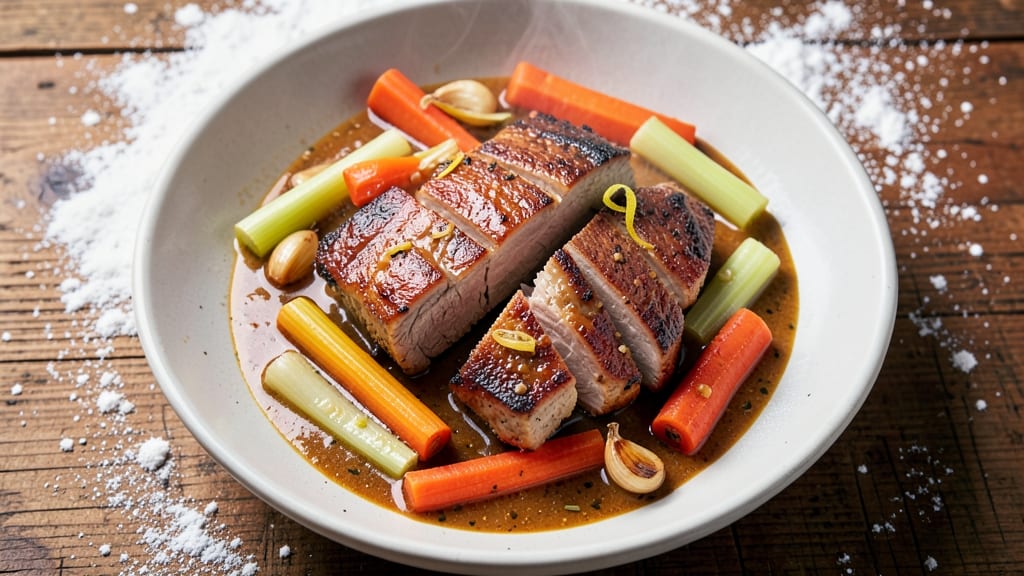
This brown stew pork chops recipe transforms simple ingredients into a restaurant-worthy dish with deep, caramelized flavors and crispy celery crowns. 🔥 The secret lies in properly browning the pork chops before stewing—creating that essential crust that holds up through hours of slow cooking.
I've perfected this technique over years of working with heritage pork, and it never fails to impress. What sets this recipe apart is the balance of textures: tender yet firm pork chops, crispy celery crowns that add crunch, and a rich, velvety sauce that coats every bite.
The slow simmering process develops complex flavors while keeping the meat perfectly tender. This isn't your average pork chop recipe—it's a showstopper that works as a hearty main course or elegant dinner.
By the time you're done, you'll have perfectly browned pork chops with crispy edges and moist centers, all swimming in a deeply flavorful stew. The celery crowns add a sophisticated touch that elevates the dish from ordinary to extraordinary. The aroma alone will have everyone gathering at the table.
Pair with creamy mashed potatoes or crusty bread to soak up every last bit of that delicious sauce. Here's how to make it happen in your own kitchen.
Ingredients for brown stew pork chops
Heritage pork chops and aromatic vegetables create this deeply flavorful stew with crispy crowns.
| Ingredient | Amount | Notes |
|---|---|---|
| Bone-In Pork Chops 🥩 | 4 whole | Heritage pork, 1-inch thick |
| Celery Stalk 🧅 | 2 whole | Large, for crowns |
| Yellow Onion 🧅 | 1 whole | Yellow or red |
| Carrot 🥕 | 2 whole | Medium, peeled |
| Garlic Cloves 🧄 | 4 cloves | Fresh, smashed |
| All-Purpose Flour 🌾 | ½ cup | For dredging |
| Dijon Mustard 🍯 | 1 tbsp | High-quality |
| Dry Red Wine 🍷 | ½ cup | Bold, like Cabernet |
| Beef Broth 💧 | 1 ½ cups | Low-sodium preferred |
| Tomato Paste 🍅 | 2 tbsp | Smooth, not chunky |
| Fresh Thyme 🌿 | ¼ cup | Leaves only |
| Fresh Rosemary 🌿 | ⅛ cup | Finely chopped |
| Olive Oil 🫒 | ¼ cup | Extra-virgin |
| Salt 🧂 | 1 ½ tsp | Kosher or sea |
| Black Pepper 🌶️ | ½ tsp | Freshly ground |
The bone-in pork chops are non-negotiable for this recipe—the bone adds depth of flavor and keeps the meat moist during slow cooking. Look for heritage pork if possible, as it has better marbling and texture. Local butchers often carry these cuts, or check the fresh meat section at Whole Foods. The chops should be about 1-inch thick—thinner ones will overcook. For the celery crowns, choose large, straight stalks with vibrant green tops; the crispy edges are what make this dish special. If you can't find heritage pork, bone-in center-cut chops work well too, just trim any excess fat.
No red wine? Dry sherry or beef broth with a splash of balsamic vinegar works in a pinch. Fresh thyme and rosemary are ideal, but dried works at half the amount if that's what you have. The tomato paste can be swapped for 1/4 cup crushed tomatoes if you prefer a smoother sauce. For the celery crowns, cut them into 1-inch thick rounds—the wider the cut, the crispier they'll be. The flour is just for dredging, but if you're watching carbs, you can skip it entirely. The key to crispy celery crowns is high heat when browning them, so don't rush this step.
Store any leftover pork chops and sauce in an airtight container for up to 3 days in the fridge, though it's best enjoyed fresh. The celery crowns lose crispiness quickly, so eat them within 2 days or freeze them separately. This dish reheats beautifully—simmer on low heat for 10-15 minutes until everything is heated through. The flavors actually improve the next day as the sauce melds, so consider making it ahead if possible. For a quick weeknight meal, double the batch and freeze half for later.
Why You'll Love This Recipe
- One-Pan Magic: I swear by this recipe when I’m too tired to scrub pots—just sear the pork chops, toss in chopped celery, onion, and carrot, then let the slow simmer do the work. That bone-in magic renders flavor into the pan, so you end up with tender meat and a rich sauce without lifting a finger after the initial chop.
- Deep Umami Bomb: The caramelized onion and garlic cloves? They’re the secret weapon here. When you brown the pork chops first, the crust locks in all that savory goodness, then melts into the stew with the celery and carrots for a depth that’s ridiculously satisfying. Honestly, the first bite makes me forget I’m not at a fancy restaurant.
- Weeknight Workhorse: This is my go-to when I need to feed the family fast but still want something hearty. Double the recipe, and you’ve got Monday’s dinner and Tuesday’s lunch covered—just reheat and serve. (Yes, even on a Tuesday night.) The bone-in chops stay juicy, and the veggies soften perfectly, so it’s foolproof for busy schedules.
- Budget-Friendly Luxury: Bone-in pork chops stretch further than you’d think, and the veggies—celery, onion, carrot—are pantry staples that add bulk without breaking the bank. I’ll be real: it’s the kind of meal where I feel like I’m treating myself, but the grocery bill doesn’t scream in protest. Plus, leftovers reheat like a dream, so you’re basically getting two meals for the price of one.
Step-by-step instructions for brown stew pork chops
Master the art of deep-roasted flavor with these bone-in pork chops—crispy edges and tender meat every time.
🔥 Step 1: Create Crispy Celery Crowns and Build the Base
Start by cutting the 2 whole celery stalks into ½-inch thick rounds, keeping the core intact for dramatic crowns. Heat 2 tablespoons of the 0.25 cup olive oil in a large Dutch oven over medium-high heat until shimmering. Add the celery crowns and cook for 8-10 minutes, stirring occasionally, until deeply golden and crispy.
Remove the celery and set aside. In the same pot, add 2 tablespoons of the remaining olive oil and cook the 1 whole yellow onion, diced, and 2 whole carrots, cut into ½-inch pieces, for 5-6 minutes until softened. Add the 4 smashed garlic cloves and cook for 30 seconds until fragrant—this forms the aromatic foundation.
🍳 Step 2: Sear the Pork Chops for Maximum Flavor
Pat the 4 whole bone-in pork chops dry with paper towels—this is critical for crispy skin. Season both sides generously with 1 teaspoon salt and ¼ teaspoon black pepper. Heat 2 tablespoons olive oil in a separate skillet over medium-high heat until smoking hot.
Sear the pork chops for 3-4 minutes per side until deep golden brown with crispy edges. Don't move them during the first minute—this ensures a perfect crust. Transfer the chops to a plate and tent with foil to keep warm. The residual heat will carry them to 145°F internal temp.
🥘 Step 3: Develop the Rich Red Wine Sauce
Return the Dutch oven with vegetables to medium heat and stir in the 2 tablespoons tomato paste, cooking for 1 minute to deepen the flavor. Deglaze with the 0.5 cup dry red wine, scraping up all the browned bits from the bottom—this is where the magic happens. Simmer for 3-4 minutes until reduced by half.
Add the 1.5 cups beef broth, 1 tablespoon Dijon mustard, 0.25 cup fresh thyme, and 0.125 cup fresh rosemary. Bring to a gentle simmer, then reduce heat to low and let it bubble for 10 minutes to meld the flavors. Season with remaining ½ teaspoon salt and ¼ teaspoon black pepper.
🔪 Step 4: Finish the Pork Chops and Combine
Return the seared pork chops to the Dutch oven, bone-side down, and spoon the sauce over them. Cover and simmer on low heat for 15-20 minutes, basting occasionally, until the meat reaches 145°F internal temperature and is fork-tender. The bones should release easily when tested.
Remove the pork chops and let them rest for 5 minutes before slicing. Skim excess fat from the sauce if needed, then return the chops to the pot to warm through for 2 minutes. The celery crowns should be crispy again—serve them alongside the chops for that restaurant-worthy presentation.
Pro Tips For Making Brown Stew Pork Chops
- SEAR THE CHOPS FIRST: Hit those bone-in pork chops with a screaming-hot pan—no crowding—and let them develop a deep brown crust before touching them with anything else. I learned this the hard way after making stews where the meat tasted more like it was poached than seared, and trust me, you’ll taste the difference when that crust melts into the sauce later.
- CHOP VEGETABLES UNIFORM: Cut your celery, onion, and carrot into roughly ½-inch pieces—no smaller, no larger. The onions and celery should soften quickly, while the carrots hold their shape. I used to eyeball it, but inconsistent sizes mean some veggies turn to mush while others stay stubbornly crunchy.
- DON’T RUSH THE BROWNING: Let the onions and garlic cook low and slow until they’re a deep golden color, not just softened. This step builds flavor—skip it, and your stew will taste like it’s missing something. I know, it takes longer, but it’s the thing that matters most for depth.
- USE THE BONE’S RENDERED FAT: After searing the pork chops, leave the drippings in the pot—don’t wipe them out. That fat is liquid gold for flavor, and it’ll help create a richer sauce. I used to dump it, thinking it was just grease, but now I save it like it’s the last drop of good whiskey.
Common mistakes when making this dish
Skipping the Sear
This is the #1 mistake I see with stewed pork chops—skipping the initial sear. When you skip browning, you lose that deep, caramelized crust that holds up through hours of cooking. The Maillard reaction creates complex flavors that infuse into the sauce.
I always sear my chops until they're deep golden brown—this takes about 3-4 minutes per side in a smoking-hot pan. If your chops look pale after cooking, they'll end up tough and flavorless. 🔥
Overcrowding the Pan
Never cook all four pork chops at once in the same pan. When you overcrowd, the temperature drops, and the chops steam instead of sear. This leads to soggy, unevenly cooked meat. I use a separate skillet for searing and only cook 2 chops at a time.
The pan should be hot enough that a drop of water sizzles immediately when added. If you're using a Dutch oven, sear them in batches to maintain that perfect crust.
Using Thin Chops
Thin pork chops (less than ¾-inch thick) will overcook and turn rubbery in stews. I always specify 1-inch thick chops because they hold up better to the long cooking time. If you can only find thinner chops, pound them gently to an even thickness before cooking.
The bone helps keep them moist, but without enough meat, they'll dry out. Check your butcher for proper cuts—they'll usually trim them to the right thickness for you.
Rushing the Stewing Process
Pork chops need time to tenderize in the stew—don't rush the simmering. I see people pull them out too soon, resulting in chewy meat. The chops should cook until they reach 145°F internal temperature, which typically takes 15-20 minutes after returning them to the pot.
The bones should release easily when tested with a fork. If you're impatient, you'll end up with meat that's still tough in the center. Patience here makes all the difference.
Skimming the Fat Too Aggressively
While it's good to skim some fat from the surface, don't remove all of it. The fat helps carry flavor and keeps the sauce from becoming too thin. I only skim what rises to the top during the final simmering.
If you remove too much, the sauce will separate and lose its richness. The remaining fat in the sauce should be about 1-2 tablespoons—just enough to add depth without making the dish greasy.
Over-Salting the Sauce
Seasoning the sauce properly is tricky—too much salt can ruin the dish. I add most of the salt during the initial seasoning of the chops, then only add a pinch to the sauce at the end. Taste as you go!
The wine and broth already contain some salt, so you might not need any additional. If you're unsure, it's better to add a little at a time rather than overdoing it. The celery crowns and herbs also contribute to the overall flavor balance, so don't overcompensate with extra salt. 💡
Nutrition facts
Frequently asked questions
Why do you recommend bone-in pork chops for this recipe?
The bone adds incredible depth of flavor and helps keep the meat moist during slow cooking. Heritage pork bones infuse the sauce with rich, savory notes that you just can't get with boneless cuts. Plus, the bone naturally regulates cooking time—it takes longer to heat than the meat, preventing overcooking.
Can I substitute bone-in pork chops with boneless?
You can, but the texture and flavor won't be the same. Boneless chops will cook faster and may dry out during the long stewing process. If you must use them, look for 1-inch thick cuts and reduce the stewing time by 5-7 minutes. The sauce will still be delicious, but you'll lose that beautiful bone marrow flavor.
How do I keep the celery crowns crispy when reheating leftovers?
Reheat the chops and sauce separately—only warm the sauce to 165°F while keeping the celery crowns out of the liquid. For extra crispiness, toast them fresh in a dry pan over medium-high heat for 2-3 minutes before serving. Store them in an airtight container with a paper towel underneath to absorb moisture.
What's the best way to serve this dish for a dinner party?
Slice the pork chops against the grain and arrange them on a platter with the crispy celery crowns scattered around. Serve with creamy mashed potatoes or buttery egg noodles to soak up the sauce. Garnish with fresh parsley and a drizzle of extra red wine reduction for an elegant presentation. The rich flavors pair beautifully with a bold red wine like Cabernet Sauvignon.
Can I make this recipe in a slow cooker?
Yes, but with adjustments. Sear the chops first as directed, then transfer everything to the slow cooker. Cook on low for 6-7 hours or high for 3-4 hours. The celery crowns won't stay as crispy, but you can toast them fresh before serving. The slow cooker method is perfect for busy weeknights when you want to come home to a fully cooked meal.