
Side Dishes
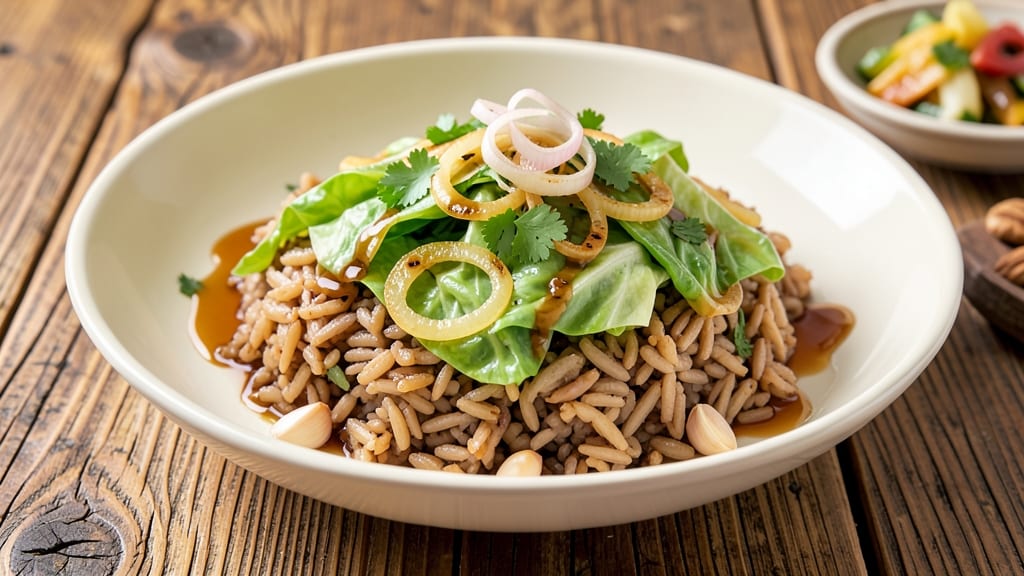
This brown rice and cabbage recipe transforms simple ingredients into a hearty, nutty side dish with satisfying texture and balanced flavors. The secret lies in perfectly browned rice and tender cabbage sautéed with aromatic garlic and ginger, creating a dish that's both comforting and nutritious.
What makes this recipe special is how the nutty brown rice complements the slightly sweet, crisp-tender cabbage, making it a complete vegetarian meal or a perfect side for proteins.
Ready in just 30 minutes, this recipe delivers restaurant-quality results with minimal effort. The cabbage develops a beautiful caramelized edge while staying crisp, and the brown rice absorbs the savory seasonings for a satisfying bite.
Whether served as a standalone dish or paired with grilled meats, this combination is foolproof and packed with flavor—ideal for weeknight dinners or meal prep. The best part? Every component comes together in one pot, keeping cleanup simple.
Ingredients for brown rice and cabbage
Simple ingredients that deliver restaurant-quality texture and flavor in one pot.
| Ingredient | Amount | Notes |
|---|---|---|
| Long-Grain Brown Rice 🌾 | 1 cup | Uncooked, rinsed thoroughly |
| Green Cabbage 🥬 | 1 whole | Medium head, cored and sliced |
| Yellow Onion 🧅 | 1 whole | Medium, thinly sliced |
| Garlic Cloves 🧄 | 3 cloves | Fresh, minced finely |
| Fresh Ginger 🌿 | 1 inch | Thinly sliced, peeled |
| Vegetable Broth 💧 | 2 cups | Low-sodium preferred |
| Extra-Virgin Olive Oil 🫒 | 2 tbsp | For high heat sautéing |
| Soy Sauce 🍶 | 1 tbsp | For umami depth |
| Sesame Oil 🫒 | 1 tsp | Toasted, for finishing |
| Diamond Crystal Kosher Salt 🧂 | 1 ½ tsp | Adjust to taste |
| Freshly Ground Black Pepper 🌶️ | ½ tsp | For seasoning |
| Toasted Sesame Seeds 🌱 | 1 tbsp | For garnish |
The cabbage is the star here—look for heads with crisp, vibrant outer leaves and a firm core. Green or purple varieties both work, but avoid any with yellowing or wilted spots. For the brown rice, jasmine or short-grain varieties from Whole Foods or Trader Joe's add extra nuttiness, but any long-grain brown rice will do. Fresh ginger is essential for that bright, zesty kick; peel and slice it just before cooking to preserve its potency. The vegetable broth should be low-sodium to avoid over-salting the dish, and homemade or high-quality store-bought brands like Pacific Foods or Imagine are ideal.
No sesame oil? Toasted peanut oil or light olive oil works in a pinch, though the flavor will differ slightly. Substitute soy sauce with tamari or coconut aminos for a gluten-free option, though the umami depth may be slightly reduced. If you can't find fresh ginger, ground ginger at half the amount will work, but the texture and freshness won't be the same. For the cabbage, red cabbage or bok choy can be swapped in, though cooking times may vary. The sesame seeds can be omitted if you're avoiding nuts, but they add a delightful crunch and visual appeal—store-bought toasted seeds from the bulk section are a convenient shortcut.
Rice keeps best in an airtight container in the fridge for 4-5 days, while cooked cabbage can be stored separately for 3-4 days. For meal prep, combine the rice and cabbage in one container—just reheat gently with a splash of water to restore moisture. The dish reheats beautifully, though the cabbage may soften slightly. Freeze portions for up to 3 months by storing in airtight containers; thaw overnight in the fridge before reheating. The sesame oil should be stored in a cool, dark place to prevent rancidity, and used within 6 months of opening.
Why You'll Love This Recipe
- No Chopping Chaos: I swear by this one—just slice the onion and ginger into thin coins, mince the garlic, and chop the cabbage into wedges (no need to shred). The rice handles itself while the cabbage softens in the same pan, so I’m done faster than I am while scrolling through my phone.
- Umami-Packed Bite: That crisp-tender cabbage with the nutty brown rice? It’s a flavor marriage made in heaven. The ginger and garlic caramelize just enough to give it this warm, slightly spicy edge—like a cozy hug in a bowl. (Yes, even on a Tuesday night.)
- Meal Prep MVP: Between us, this is my go-to for lunches all week. Cook a big batch of rice, toss in the cabbage mix, and it stays fresh for days. Pack it cold or reheat it—it’s just as good the third time around. My daughter picks out the cabbage first, but still asks for seconds.
- Budget-Friendly Staple: Honestly, this recipe uses ingredients that are always on sale. Brown rice lasts forever, cabbage is dirt cheap, and onions/garlic/ginger? You’ll have them anyway. I feed four people for under $10, and we’re all happy—no takeout in sight.
Step-by-step instructions for savory cabbage sautéed with nutty rice bites
This method delivers perfectly nutty brown rice and tender cabbage with balanced umami flavors.
Prepare the Brown Rice for Optimal Texture
Rinse the 1 cup of long-grain brown rice under cold water until the water runs clear. This removes excess starch that can make the rice gummy. Transfer the rinsed rice to a medium saucepan and add the 2 cups of vegetable broth. Bring to a boil over medium-high heat.
Once boiling, reduce heat to low and cover with a tight-fitting lid. Let it simmer for 40-45 minutes without lifting the lid. The rice is done when all liquid is absorbed and the grains are tender with a slight bite. Avoid peeking—steam escape causes uneven cooking. If the rice seems dry before 40 minutes, add 2 tablespoons of water and continue cooking.
Sauté Aromatics and Cabbage Until Tender-Crisp
While the rice cooks, heat 1 tablespoon of the extra-virgin olive oil in a large skillet over medium heat. Add the thinly sliced yellow onion and cook for 5-6 minutes until softened and golden. Add the minced garlic cloves and thinly sliced ginger, cooking for 30 seconds until fragrant—this prevents bitter flavors.
Push the aromatics to one side of the pan and add the remaining 1 tablespoon of olive oil. Add the sliced green cabbage in batches, stirring to coat evenly. Cook for 10-12 minutes until the cabbage is tender but still retains a slight crispness. Season with 1 teaspoon of the diamond crystal kosher salt and ¼ teaspoon of the freshly ground black pepper during the last 2 minutes of cooking.
Combine Rice and Cabbage for Perfect Balance
Transfer the cooked brown rice to the skillet with the cabbage. Stir gently to combine, adding 1 tablespoon of soy sauce and ½ teaspoon of the remaining kosher salt. Cook for 2-3 minutes over medium heat until everything is evenly heated and the flavors meld. The rice should absorb the cabbage's moisture while maintaining its texture.
Taste and adjust seasoning—add more soy sauce if needed for umami depth. Remove from heat and drizzle with 1 teaspoon of sesame oil, tossing gently to coat. This finishing step adds nutty aroma and balances the dish's flavors. Garnish with the toasted sesame seeds just before serving to add texture contrast.
Pro Tips For Making Brown Rice And Cabbage
- SOAK THE RICE: I learned this the hard way—skipping the soak means your brown rice will either stay rock-hard or turn to mush. Rinse it first, then let it sit in warm water for at least 30 minutes (or overnight if you’re patient). The texture difference is night and day, especially when paired with the cabbage’s crunch.
- SAUTE GINGER LOW: After burning three batches, I finally figured out that fresh ginger needs gentle love. Once you add it with the garlic, keep the heat low—just until it’s fragrant, not brown. High heat turns it bitter, and you’ll taste it in every bite of that cabbage.
- SHRED CABBAGE THIN: Thick slices of cabbage stay stubbornly crisp no matter how long you cook them. Take the time to slice it paper-thin—almost like coleslaw—so it softens evenly and absorbs the flavors. Yes, it’s tedious, but your dish will thank you.
- USE A LITTLE BUTTER: This isn’t the prettiest method, but it works: Toss the cooked rice with a pat of butter (about 1 tablespoon) before mixing in the cabbage. The fat coats the grains, making them glossy and preventing that dry, grainy texture that ruins so many rice dishes.
Storing and reheating your leftovers
Refrigerator Storage
Store your brown rice and cabbage in airtight containers within 2 hours of cooking to preserve freshness. I use glass Pyrex containers with snap-on lids—they keep moisture locked in while preventing soggy texture.
Keep the dish refrigerated at 40°F or below for up to 5 days, though the cabbage may soften slightly after 3 days. For best results, store the rice and cabbage separately if prepping ahead, then combine when reheating. 🌿
Freezer-Friendly Tips
Freeze portions in quart-sized freezer bags for up to 3 months—leave ½-inch headspace to prevent expansion cracks. I like using heavy-duty Ziploc bags because they’re stackable. Label with dates and thaw overnight in the fridge before reheating.
The rice holds up better than the cabbage long-term, so I freeze them separately if possible. For extra insurance, add a paper towel between layers to absorb excess moisture. ❄️
Stovetop Reheating
My go-to method is stovetop reheating—it restores the cabbage’s crisp-tender texture better than microwaving. Add 2 tablespoons of water or vegetable broth to the pan, then heat over medium-low for 5-7 minutes, stirring occasionally.
Cover with a lid to trap steam and prevent drying. Taste and adjust seasoning—you’ll likely need ½ teaspoon more soy sauce to revive the umami. 🔥
Microwave Shortcuts
For quick meals, microwave in 1-minute intervals on 50% power, stirring between each interval. Cover with a damp paper towel to prevent drying. Add 1 tablespoon water if the mixture looks too dry.
This method works best within 3 days of storage, as the cabbage loses its crispness faster when microwaved. For extra flavor, finish with a drizzle of sesame oil and a sprinkle of toasted sesame seeds.
Meal Prep Pro Tips
Double the recipe and store components separately for 3-4 days of easy lunches. Cook the rice and cabbage separately, then assemble fresh portions when ready to eat. I like keeping the sesame oil and seeds in small jars on the side—just add them when serving for maximum freshness.
For variety, swap in red cabbage or bok choy when prepping ahead. 💡
Reviving Texture
If your reheated cabbage turns mushy, don’t toss it! Toss with 1 teaspoon toasted sesame oil and a pinch of kosher salt, then pan-fry for 2-3 minutes over medium heat to restore crispness.
This trick works wonders for reviving soggy greens while adding depth of flavor. For extra crunch, stir in ½ cup shredded carrots or thinly sliced scallions at the end. ✨
Nutrition facts
Frequently asked questions
Can I substitute white rice for brown rice in this recipe?
While you can use white rice, the texture and flavor will differ significantly. Brown rice adds a nutty depth and chewy bite that complements the cabbage beautifully. If you must use white rice, reduce cooking time to 15-18 minutes and avoid rinsing it beforehand—this keeps the grains separate and prevents mushiness. The dish will be lighter but less hearty.
What’s the best way to make the cabbage extra crispy?
For maximum crisp-tenderness, slice the cabbage thinly and cook it in batches over medium-high heat until the edges just begin to brown. Stir frequently to prevent overcooking. Adding ½ teaspoon sugar to the cabbage while sautéing helps caramelize the edges, while a splash of rice vinegar at the end brightens the flavor. Serve immediately for the best texture!
Can I add protein to this vegetarian dish?
Toss in ½ cup crumbled tofu or 1 cup cooked chickpeas during the final 3 minutes of cooking to absorb the flavors. For extra richness, stir in 1 tablespoon peanut butter or ½ cup shredded coconut at the end. If using meat, brown ½ pound ground turkey or chicken thighs first, then proceed with the recipe.
Why does my brown rice turn out mushy?
Mushy rice usually happens from overcooking or insufficient rinsing. Always rinse brown rice until the water runs clear to remove excess starch. Use a 1:2 rice-to-liquid ratio (like in this recipe) and cook at a steady simmer—never boil vigorously. If the rice seems dry before 40 minutes, add 2 tablespoons water and cover tightly. Avoid lifting the lid while cooking!
How can I make this dish spicier?
Add ½ teaspoon red pepper flakes or 1 teaspoon gochujang (Korean chili paste) when combining the rice and cabbage. For heat with depth, stir in 1 tablespoon sriracha or ½ teaspoon cayenne pepper at the end. Balance the spice with a drizzle of honey or maple syrup if needed—just ½ teaspoon enhances sweetness without overpowering.