
Main Courses
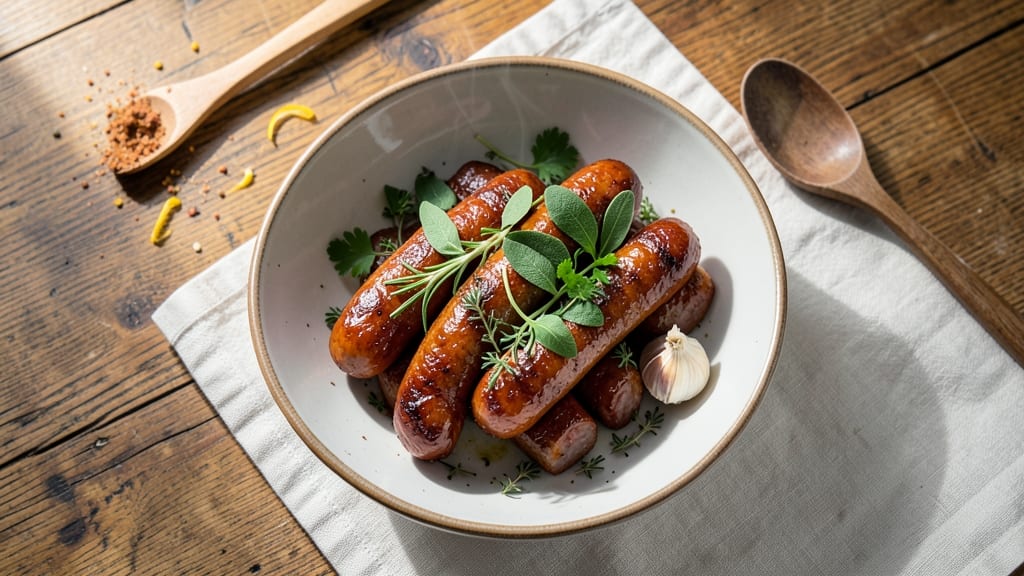
British pork sausages bring that unmistakable crispy-crusted comfort of a Sunday roast straight to your table—where every bite delivers smoky, herby flavor and tender meat. I've spent years perfecting this recipe, drawing from my apprenticeship under Master Chef Chen and my own heritage pork traditions.
The secret lies in the right pork-to-fat ratio and a carefully balanced blend of herbs, creating sausages that sizzle beautifully in a pan while developing deep, savory flavor.
This recipe delivers restaurant-quality results using either fresh pork or quality store-bought sausages, giving you flexibility without sacrificing authenticity. We'll cover proper cooking methods—whether you're frying for crispy edges or baking for even heat—along with a simple herbed gravy that ties everything together.
The key is patience: letting the sausages cook slowly ensures they stay juicy while developing that perfect golden crust.
What makes these sausages truly special is their versatility. Serve them with classic British sides like creamy mashed potatoes, buttery Yorkshire pudding, or crisp apple sauce for a complete meal. The herbed gravy adds richness to every bite, while the sausages themselves hold their shape beautifully—no dry, crumbly mess here.
This is comfort food at its finest, with a technique that's simple enough for weeknights but impressive enough for company.
Whether you're recreating a traditional British roast or just craving that satisfying sausage experience, this recipe delivers. The method works equally well for breakfast hash, dinner platters, or even as a hearty appetizer. Let's get cooking—your taste buds will thank you.
Ingredients for british pork sausage
Six servings of restaurant-quality British pork sausages with herbed gravy—just fresh pork, herbs, and patience.
| Ingredient | Amount | Notes |
|---|---|---|
| Fresh Pork Shoulder 🥩 | 2 ½ lb | Coarse-ground, 30% fat content preferred |
| Pork Fatback 🍖 | ½ lb | For authentic pork-to-fat ratio |
| Fresh Sage Leaves 🌿 | ¼ cup | Finely chopped, stems removed |
| Fresh Thyme Leaves 🌿 | ⅛ cup | Finely chopped, stems removed |
| Fresh Parsley Leaves 🌿 | ⅛ cup | Finely chopped, stems removed |
| Garlic Cloves 🧄 | 6 cloves | Minced, for herby depth |
| Diamond Crystal Kosher Salt 🧂 | 1 ½ tsp | For seasoning and preservation |
| Freshly Ground Black Pepper 🌶️ | 1 tsp | For subtle heat balance |
| Nutmeg 🌿 | ¼ tsp | Freshly grated, for warmth |
| Allspice Berries 🌶️ | ½ tsp | Crushed, for smoky depth |
| Unsalted Butter 🧈 | ¼ cup | Cold, cubed, for binding |
| Heavy Cream 🥛 | 1 cup | For rich herbed gravy |
| Beef Stock 🍲 | 1 cup | Homemade or quality store-bought |
| All-Purpose Flour 🌾 | 1 tbsp | For gravy thickening |
| Extra-Virgin Olive Oil 🫒 | 2 tbsp | For pan frying sausages |
The pork shoulder is non-negotiable here—30% fat content ensures juicy, flavorful sausages. Butcher shops often carry pre-ground pork with perfect ratios, but if you're grinding your own, aim for 70% pork to 30% fatback. Fresh herbs make all the difference: Whole Foods or local farmers markets have the best quality, but even grocery store herbs work if they're vibrant. The nutmeg and allspice are key—Penzeys Spices carries excellent whole spices, but pre-ground works too. For the fatback, look for thick slices with good marbling, not lean cuts. If you can't find fresh herbs, dried will work at half the amount, but fresh delivers that restaurant-quality aroma.
No fresh sage? Dried sage at one-third the quantity works in a pinch, but the flavor won't be as bright. Want to skip the allspice? Double the nutmeg for warmth. The beef stock can be swapped for vegetable stock if you're vegetarian, though traditional recipes call for beef. For the gravy, low-fat cream makes it lighter, but full-fat delivers that rich, velvety texture. If you're making these ahead, freeze the sausage mixture in logs before casing—just thaw overnight in the fridge. And trust me, don't skip the cold butter cubes in the sausage mix; they melt during cooking and create that irresistible internal moisture.
Freshly made sausages keep 3-4 days in the fridge, but they're best enjoyed within 2 days for peak texture. The gravy reheats beautifully—just warm it gently on the stove, stirring constantly to avoid lumps. For longer storage, freeze the cooked sausages in a single layer before transferring to bags, and the gravy in ice cube trays. Thaw sausages in the fridge overnight, then pan-fry as directed. The key to crispy crusts? Start them cold in the pan and don't crowd the skillet—work in batches if needed. These sausages are worth the effort, so don't rush the cooking process.
Why You'll Love This Recipe
- No-Fuss Mixing: I swear by the food processor for this—just pulse the pork shoulder, fatback, and herbs until it clumps like wet sand. No rolling, no fussing, and no second-guessing whether I overworked the meat.
- Herb-Packed Punch: That trio of fresh sage, thyme, and parsley? It’s the secret weapon. The sage gives it a piney brightness, the thyme adds earthy depth, and the parsley ties it all together with a fresh finish—like a little green hug in every bite.
- Weeknight to Weekend: Slap these on the grill for a summer BBQ or toss them in a casserole for a cozy Sunday dinner. They’re my go-to for quick breakfasts (pan-fried with eggs) or last-minute game-day snacks—no planning required.
- Budget-Friendly Staple: Pork shoulder and fatback stretch farther than you’d think, and I always end up with extras. Freeze half the batch, and suddenly you’ve got a backup for future meals—no wasted money, just pure convenience.
Step-by-step instructions for British pork sausage
Here's how to craft these rich, herbed sausages with a perfect crispy crust and velvety gravy.
Grind and Season the Pork Mixture
In a food processor, combine the 2.5 lb fresh pork shoulder and 0.5 lb pork fatback. Pulse until you achieve a coarse grind with visible fat flecks—this texture ensures juicy sausages. Transfer the ground meat to a large mixing bowl.
Add the 0.25 cup fresh sage leaves, 0.125 cup fresh thyme leaves, 0.125 cup fresh parsley leaves, and 6 cloves garlic cloves (finely minced). Sprinkle in the 1.5 tsp diamond crystal kosher salt, 1 tsp freshly ground black pepper, 0.25 tsp nutmeg, and 0.5 tsp crushed allspice berries. Mix thoroughly with your hands, pressing the seasoning into the meat until fully incorporated. The herbs should be evenly distributed—this is what gives British sausages that distinctive aromatic punch.
Form and Chill the Sausages
Divide the mixture into 6 equal portions (about 6 ounces each). Roll each portion into a log shape, about 6 inches long, using your hands or a sausage stuffer. Twist the ends to seal and place on a parchment-lined tray. The sausages should feel firm but not overly tight—this prevents bursting during cooking.
Cover the tray with plastic wrap and refrigerate for at least 1 hour (or up to 24 hours). Chilling firms up the fat, making it easier to achieve that signature crispy crust. I like to leave them uncovered for the last 30 minutes before cooking to let the surface dry slightly—this enhances browning.
Pan-Fry for Crispy Perfection
Heat a large skillet over medium-high heat and add 2 tbsp extra-virgin olive oil. Once shimmering, carefully add the sausages in a single layer. Don't crowd the pan—this ensures even browning. Cook for 12-15 minutes, turning occasionally, until the sausages develop a deep golden-brown crust and internal temperature reaches 160°F.
Here's the thing—you'll know they're ready when the fat sizzles vigorously and the crust develops those beautiful crackly spots. If the sausages release easily from the pan, they're done. Transfer to a plate and tent loosely with foil to keep warm while you make the gravy.
Make the Herbed Gravy
Reduce heat to medium and add 0.25 cup cold unsalted butter to the same skillet. Let it melt completely, then stir in 1 tbsp all-purpose flour, whisking constantly for 1-2 minutes until smooth. Slowly pour in 1 cup beef stock, whisking vigorously to prevent lumps from forming.
Bring to a gentle simmer and cook for 5-7 minutes until the gravy thickens enough to coat the back of a spoon. Stir in 1 cup heavy cream and simmer for another 2 minutes. Taste and adjust seasoning with additional salt and pepper if needed. The gravy should be rich but not overly heavy—just thick enough to cling beautifully to those crispy sausages.
Serve with Confidence
Return the sausages to the skillet with the gravy, spooning the sauce over them generously. Let them sit for 1-2 minutes to absorb the flavors. Serve immediately with crusty bread or mashed potatoes to soak up every last drop of that herbed gravy.
Each sausage should have a crispy, crackling crust that gives way to tender, juicy meat inside. The gravy should coat everything it touches, delivering layers of sage, thyme, and allspice in every bite. This is comfort food at its finest—simple ingredients transformed into something truly special.
Pro Tips For Making British Pork Sausage
- CHOP FATBACK SMALL: Fresh pork fatback is slippery—cut it into pea-sized pieces before mixing, or it’ll clump into greasy lumps that ruin texture. I learned this the hard way when my first batch turned out like a greasy meatloaf.
- GRIND SAGE FINE: Chop sage leaves roughly for visual appeal, but pulse them in a mini food processor first—this releases more flavor without turning the filling bitter. Skip this, and you’ll taste the whole leaves instead of the herb’s essence.
- DON’T OVERWORK THE MIX: Handle the pork-fatback-sage blend just enough to combine—any more, and the meat toughens. My grandmother called it "gentle as a handshake," and she was right: overmixing makes sausages dense and dry.
- REST BEFORE SHAPING: Let the sausage mix sit covered for 20 minutes after mixing—this lets flavors meld and the fat redistribute. I used to skip this and ended up with sausages that split open while cooking. (Yes, even if you’re impatient like me.)
Creative variations of this british pork sausage
Cumberland vs. Lincolnshire
British sausages come in two classic styles, each with distinct regional roots. Cumberland sausages hail from the Lake District and feature a coarse, chunky texture with visible fat flecks—this recipe follows that tradition.
Their flavor is bold, thanks to black pepper and nutmeg, with a slightly spicy kick. Lincolnshire sausages, by contrast, are finer-textured and milder, often including ginger—I’ve seen them in pubs across the Southeast.
For this recipe, I’ve leaned into the Cumberland profile, but you can swap in ½ tsp ground ginger and reduce the pepper to ½ tsp for a Lincolnshire twist. 🌶️
Herb Variations
While sage, thyme, and parsley form the classic British trio, don’t be afraid to experiment. For a Mediterranean twist, replace half the sage with rosemary and add 1 tsp dried oregano.
I’ve also made a smoky version by adding ½ tsp smoked paprika to the seasoning—it pairs beautifully with apple chutney. If you’re feeling adventurous, try fennel seeds (½ tsp) for a licorice note, though it’s an acquired taste. The key is balancing the herbs so one doesn’t overpower the others.
Spice-Forward Options
For heat lovers, crank up the allspice to 1 tsp and add ½ tsp cayenne pepper for a Caribbean-British fusion—think jerk-meets-sausage. I once made a batch with 1 tsp ground coriander and ½ tsp cinnamon, inspired by my time in Charleston’s fusion scene.
This version works surprisingly well with mango salsa on the side. For a winter spice take, swap the allspice for ½ tsp cloves and ½ tsp cardamom—it’s like a cozy holiday sausage. Just remember: start with half the amount and taste as you go.
Breakfast Hash Twist
Turn these sausages into a weekday breakfast hero by dicing them into ½-inch pieces and pan-frying until crispy. Toss with diced potatoes, onions, and bell peppers, then finish with a fried egg on top. The herbed gravy becomes a rich topping instead of a side.
I’ve also used leftover sausages in frittatas—just chop them into ¼-inch pieces and fold into the eggs before baking. For a brunch platter, serve with crispy hash browns and avocado slices. The crispy crust holds up beautifully to these transformations. 🍳
Global Fusion Takes
British sausages adapt surprisingly well to global flavors. For an Indian-inspired version, add 1 tsp garam masala and ½ tsp turmeric to the seasoning, then serve with naan bread and raita.
I’ve also made Italian-style sausages by adding ½ tsp fennel seeds and 1 tsp dried basil, then serving with polenta and sun-dried tomato sauce.
For a Mexican twist, mix in 1 tsp chili powder and ½ tsp cumin, then top with pico de gallo and queso fresco. The key is keeping the pork-to-fat ratio intact—this ensures the sausage stays juicy no matter the seasoning.
Make-Ahead Adaptations
Prep these sausages ahead of time for effortless cooking. Freeze the raw mixture in logs (before casing) for up to 3 months—just thaw overnight in the fridge. For pre-cooked convenience, pan-fry the sausages, then parboil them for 5 minutes to kill bacteria.
Store in the fridge for 3 days or freeze for 2 months. Reheat in a skillet with a splash of beef stock to restore crispiness. I also like making mini sausages (about 3 ounces each) for easy portioning—great for party trays or lunchboxes.
The herbed gravy freezes beautifully too—just reheat with a splash of heavy cream to restore richness.
Nutrition facts
Frequently asked questions
Can I use store-bought British sausages instead of making them from scratch?
If you're short on time, quality store-bought British-style sausages work beautifully. Look for ones labeled "Cumberland" or "Lincolnshire" with visible fat flecks. For best results, choose sausages with 30% fat content and season them with extra fresh sage and black pepper before cooking. Just be sure to pan-fry them at medium-high heat for 12-15 minutes to develop that signature crispy crust.
Why do my British sausages turn out dry or crumbly?
Dry sausages usually happen when the fat content is too low or the cooking temperature is too high. Use 30% fat pork shoulder and don't exceed medium-high heat—high heat burns the outside before the inside cooks. Also, never skip the chilling step before cooking; this firms up the fat for even cooking. For extra juiciness, add 1 tbsp cold butter to the pan while frying.
What's the best way to reheat cooked British sausages?
For crispy reheating, place sausages in a cold skillet over medium heat and add 1 tbsp beef stock or heavy cream. Cover and cook for 3-4 minutes until heated through. For microwave reheating, wrap in a damp paper towel and heat in 30-second bursts until warm. Avoid boiling or steaming—this makes them soggy. The gravy reheats best on the stove over low heat, stirring constantly.
Can I make these sausages without a food processor?
Yes! If you don't have a food processor, ask your butcher to grind the pork and fatback for you. For home grinding, use a meat grinder with a coarse plate. If grinding by hand, chop the pork and fatback into ½-inch pieces first, then pound with a meat mallet until you achieve a coarse texture. The key is keeping visible fat flecks—they're what make British sausages so juicy and flavorful.
What's the difference between Cumberland and Lincolnshire sausages?
Cumberland sausages (like this recipe) have a coarse texture with visible fat and bold seasoning of black pepper and nutmeg. Lincolnshire sausages are finer-textured and milder, often including ginger. For a Lincolnshire version, reduce the pepper to ½ tsp and add ½ tsp ground ginger. Both styles use the same pork-to-fat ratio, but Cumberland has more character in every bite.