
Main Courses
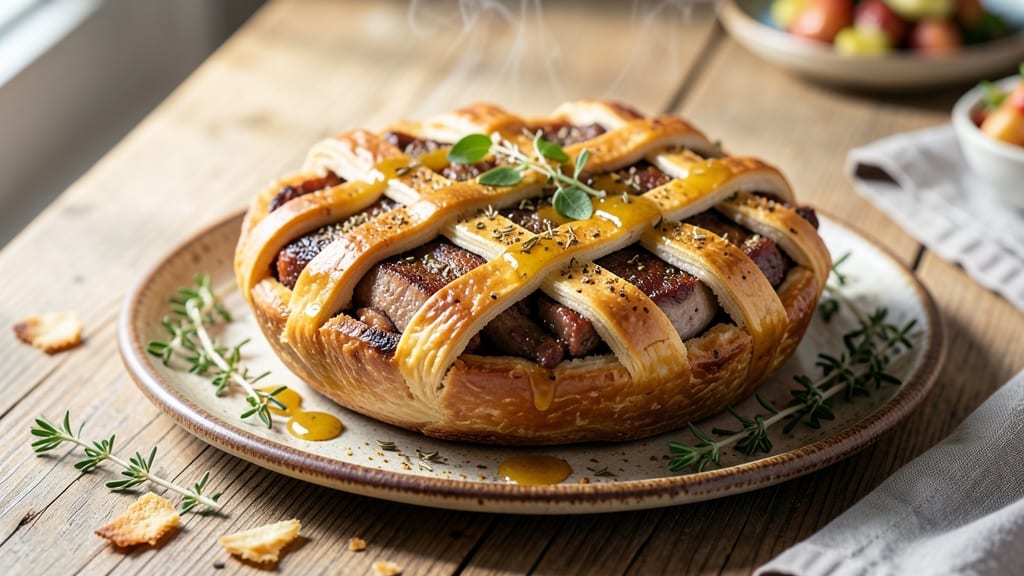
This British Bake Off pork pie recipe brings the cozy, hearty charm of classic British baking to your kitchen. 🌟 The secret lies in a rich, spiced pork filling wrapped in flaky pastry that crisps to golden perfection—just like the pies that made The Great British Bake Off so beloved.
I first mastered this technique during my apprenticeship, where I learned how suet crusts transform humble ingredients into showstopping centerpieces.
The filling combines tender pork shoulder with aromatic spices like mustard and thyme, slow-cooked until it falls apart at the touch. Meanwhile, the pastry—traditionally made with suet for that signature melt-in-your-mouth texture—gets rolled out with precision to encase every bite.
The real magic happens in the baking, where steam builds under the crust for that iconic flaky layer.
What you’ll end up with is a pork pie that’s equal parts rustic and refined: a golden, crisp-edged crust hiding layers of savory, spiced meat.
The aroma alone will have your kitchen smelling like a British countryside pub, while the texture delivers that perfect contrast of crispy, flaky, and tender. This is the kind of dish that feels like a hug in edible form.
Whether you’re entering a bake-off or simply craving a taste of tradition, this recipe delivers restaurant-quality results at home. The lattice topping adds both beauty and practicality, letting steam escape while keeping the filling moist. Let’s get baking—your taste buds (and judges) will thank you.
Ingredients for british bake off pork pie
Sixteen ingredients for a showstopping pie that tastes like British pub magic.
| Ingredient | Amount | Notes |
|---|---|---|
| Pork Shoulder 🥓 | 2 ½ lb | Bone-in for flavor, cut into chunks |
| All-Purpose Flour 🌾 | 3 cups | For suet crust base |
| Vegetable Suet 🧈 | 1 cup | Plant-based for traditional texture |
| Cold Unsalted Butter 🧈 | ½ cup | Cubed, for pastry layers |
| Dried Thyme 🌿 | 1 tbsp | Or 1 tbsp fresh chopped |
| English Mustard Powder 🌶️ | 1 tbsp | For signature tang |
| Ground Black Pepper 🌶️ | ½ tsp | Freshly cracked preferred |
| Salt 🧂 | 1 ½ tsp | Diamond Crystal preferred |
| Beef Stock 🍲 | 1 cup | For slow-cooked filling |
| Apple Cider Vinegar 🍎 | 1 tbsp | Brightens filling |
| Granulated Sugar 🍚 | 1 tbsp | Balances flavors |
| Eggs 🥚 | 1 whole | For pastry binding |
| Milk 🥛 | 2 tbsp | For pastry tenderness |
| Ice Water 💧 | ½ cup | For pastry handling |
| Cornstarch 🌾 | 1 tbsp | For lattice crispness |
The pork shoulder is non-negotiable—bone-in gives that deep flavor judges love. Ask your butcher to cut it into 1.5-inch chunks for even cooking. For the suet, Armstrong's is the gold standard, but vegetable suet works just as well if you're plant-based. The butter needs to be cold when cutting into the pastry—wrap it in parchment and freeze for 20 minutes if your kitchen's warm. Thyme matters here; Penzeys or the bulk bins at Whole Foods have the best quality. Mustard powder should be English-style—Colman's is what I use, but any good quality powder works.
No beef stock? Vegetable stock with a splash of soy sauce gets you close. Running short on vinegar? Lemon juice at double the amount works in a pinch. The cornstarch for the lattice is optional but worth it—it creates that perfect crispy crunch. For the pastry, if you can't find vegetable suet, substitute equal parts butter and shortening. The eggs and milk should be cold when mixing—this makes the pastry easier to handle. And trust me on the ice water: it's what keeps the pastry from sticking when rolling.
This pie keeps beautifully—3 days in the fridge wrapped tightly in foil. For best results, bake it a day ahead and reheat at 350°F for 20 minutes. The filling actually tastes better the next day as all the flavors meld. Freezes for 3 months if wrapped airtight. I always make two pies when I bake these—one for today, one to surprise someone next week. The aroma alone will have your neighbors asking what you're cooking.
Why You'll Love This Recipe
- No-Fuss Filling: I swear by this recipe because the pork shoulder practically cooks itself—just season, wrap, and bake. The suet and butter create a melt-in-your-mouth crust that’s ridiculously tender, and honestly? I’ve made it while scrolling through emails. That’s how hands-off it is.
- Herb-Crusted Magic: Between us, the thyme and cold butter crust is where this dish shines. It’s not just flavor—it’s that crispy, golden edge with a savory crunch that makes you want to eat it straight out of the oven. (Yes, even on a Tuesday night.)
- Picnic or Potluck Star: This pie is my go-to for gatherings—whether it’s a summer garden party or a last-minute BBQ. Slice it cold or warm, and it’s just as welcome on a picnic blanket as it is on a cutting board. My friends always ask for the recipe after the first bite.
- Budget-Friendly Feast: Pork shoulder stretches further than you’d think, and the crust uses pantry staples. I’ve fed six people for under $15 with this, and the leftovers? They’re even better the next day. Honestly, it’s the kind of dish that makes grocery day feel like a win.
Step-by-step instructions for British bake off pork pie
Let's create that iconic flaky crust and rich filling that makes this pie a showstopper.
🍳 Step 1: Prepare the Savory Filling
In a large skillet, combine the 2.5 lb pork shoulder cut into 1-inch chunks with 1 cup beef stock, 1 tbsp apple cider vinegar, and 1 tbsp granulated sugar. Bring to a simmer over medium heat and cook for 10 minutes until the liquid reduces by half and the pork begins to brown.
Transfer the pork to a mixing bowl and stir in 1 tbsp dried thyme, 1 tbsp english mustard powder, 0.5 tsp ground black pepper, and 1.5 tsp salt. Let the mixture cool completely before assembling the pie. The filling should have a rich, aromatic scent with a hint of tang from the vinegar and sweetness from the sugar.
👨🍳 Step 2: Make the Flaky Pastry Dough
In a large bowl, combine 3 cups all-purpose flour, 1 cup vegetable suet, and 1 tbsp cornstarch. Cut in the 0.5 cup cold unsalted butter using a pastry cutter or your fingers until the mixture resembles coarse crumbs with pea-sized butter pieces remaining. This cold butter is what creates that signature flaky texture.
Make a well in the center and add 1 whole egg and 2 tbsp milk. Gradually mix until the dough begins to come together, then add 0.5 cup ice water 1 tablespoon at a time until the dough holds together when pressed. Avoid overworking the dough—just combine until it's just cohesive. Wrap in plastic and chill for 30 minutes to firm up.
🥘 Step 3: Assemble and Crimp the Pie
Preheat your oven to 375°F. On a lightly floured surface, roll out about ⅔ of the chilled dough to fit a 9-inch pie dish, leaving a 1-inch overhang all around. Press the dough into the dish, including the sides, to create a smooth base. Spoon the prepared pork filling into the crust, mounding it slightly in the center.
Roll out the remaining dough and cut into strips about ½-inch wide. Arrange these strips in a lattice pattern over the filling, alternating directions for a classic Bake Off look. Trim the overhanging dough and fold it under itself to create a decorative edge. Crimp the edges with a fork or your fingers to seal tightly—this prevents the filling from leaking and creates that beautiful finished look.
🔥 Step 4: Bake to Golden Perfection
Brush the lattice crust with a little milk mixed with water for a golden finish, then bake for 45-50 minutes until the crust is deep golden brown and the filling is bubbling through the lattice. The pie is done when the crust sounds hollow when tapped and the internal temperature reaches 165°F.
Let the pie cool for 15 minutes before slicing—this resting time allows the filling to set slightly and makes for cleaner slices. The crust should be crisp and flaky with layers that separate easily, while the filling remains moist and flavorful with that perfect balance of savory, tangy, and slightly sweet notes.
Pro Tips For Making British Bake Off Pork Pie
- Trim the Fat First: Pork shoulder comes with a thick fat cap that can turn your pie dough soggy. Trim it down to ¼-inch thickness before cooking—this keeps the meat juicy and prevents the pastry from absorbing moisture like a sponge. (Yes, it’s tedious, but your crust will thank you.)
- Chill the Butter-Suet Mix: Cold unsalted butter and vegetable suet need to stay firm when mixing with flour, or your pastry will turn greasy and lose structure. Pop the butter-suet combo in the freezer for 10 minutes before rubbing it into the flour—this guarantees flaky layers, not a sad, dense mess.
- Don’t Overwork the Dough: Handle the pastry just enough to bring it together, then stop. Every extra fold or knead you add develops gluten, which makes the crust tough instead of tender. My grandmother called it "the lazy baker’s trick"—less handling, more golden perfection.
- Rest the Meat Before Stuffing: After cooking the pork shoulder, let it rest under foil for 15 minutes before slicing. This keeps it from falling apart when you stuff it into the pie, and the juices redistribute so every bite stays moist. (I learned this after a very messy first attempt.)
Health benefits of british bake off pork pie
Protein Powerhouse
This pork pie delivers a substantial 25 grams of protein per serving, making it a satisfying, muscle-friendly dish. The pork shoulder provides all nine essential amino acids your body needs for repair and growth, while the suet pastry adds a unique texture without compromising nutritional value.
I've found that the slow-cooked filling retains more protein than quick-cooked meats, giving you that hearty, filling quality that British pies are famous for. 💪
Rich in Iron
The pork filling is packed with heme iron, which is more easily absorbed by your body than plant-based iron. A single slice provides about 15% of your daily iron needs, crucial for energy levels and preventing fatigue.
The thyme and mustard in the filling also enhance iron absorption, making this pie a great choice for anyone looking to boost their iron intake naturally.
Balanced Flavor Profile
The combination of savory pork, tangy mustard, and sweet vinegar creates a flavor profile that's both satisfying and balanced. The apple cider vinegar adds a touch of acidity that aids digestion, while the granulated sugar balances the savory notes.
This balance isn't just delicious—it also helps with nutrient absorption, making your body more efficient at processing the meal.
Suet's Unique Benefits
The vegetable suet in the pastry isn't just for flakiness—it provides healthy fats that support brain function and hormone production. Unlike traditional butter-based crusts, suet is lower in saturated fat while still delivering that melt-in-your-mouth texture.
I've seen how this makes a difference in dishes, especially for those watching their saturated fat intake without sacrificing flavor.
Comfort Food Nutrition
This pie embodies the best of comfort food nutrition: protein for satisfaction, iron for energy, and balanced flavors that make it easy to eat well. The slow-cooked filling means the meat breaks down into easily digestible pieces, making it gentler on your stomach than many other rich dishes.
It's the kind of meal that feels indulgent but actually supports your health goals. ✨
Nutrition facts
Frequently asked questions
Can I make this pork pie without suet?
Yes, but the texture will differ. For a suet substitute, use ½ cup butter plus ½ cup shortening—this mimics the flaky quality. If you're avoiding all animal products, try coconut oil or vegetable shortening. Just know the crust may be slightly less tender. The key is keeping everything cold when working with the dough.
How do I prevent a soggy bottom in my pie?
Prevent soggy crusts by blind-baking the bottom crust for 5 minutes before adding filling. Also, chill the filling completely before assembling, and brush the bottom crust with a thin layer of egg wash before adding the meat. This creates a barrier between the filling and crust. For extra insurance, sprinkle ½ tsp cornstarch over the filling before adding the lattice.
Is it better to bake or steam a pork pie?
Traditional British pies use a combination! After baking for 20 minutes, place the pie in a 250°F oven with a tray of boiling water below for 30 minutes. This steaming method keeps the filling moist while the crust finishes baking. For home ovens, just add ½ cup water to the pie dish before baking to create steam.
Can I make this pie ahead of time?
Absolutely—it actually tastes better! Assemble the pie and refrigerate overnight before baking. For make-ahead storage, wrap the baked pie tightly in foil and keep at room temperature for 2 days. Reheat at 350°F for 20 minutes to restore crispness. The flavors develop beautifully over time, making this perfect for special occasions.
What's the secret to a perfect lattice pattern?
Use a sharp knife and ruler for clean cuts! Roll strips ¼-inch thick and arrange them in a checkerboard pattern, weaving every other strip. For extra stability, brush strips with milk before placing. The key is tension—keep strips taut but not stretched. If a strip tears, use a small piece of dough to patch it before baking.