
Main Courses
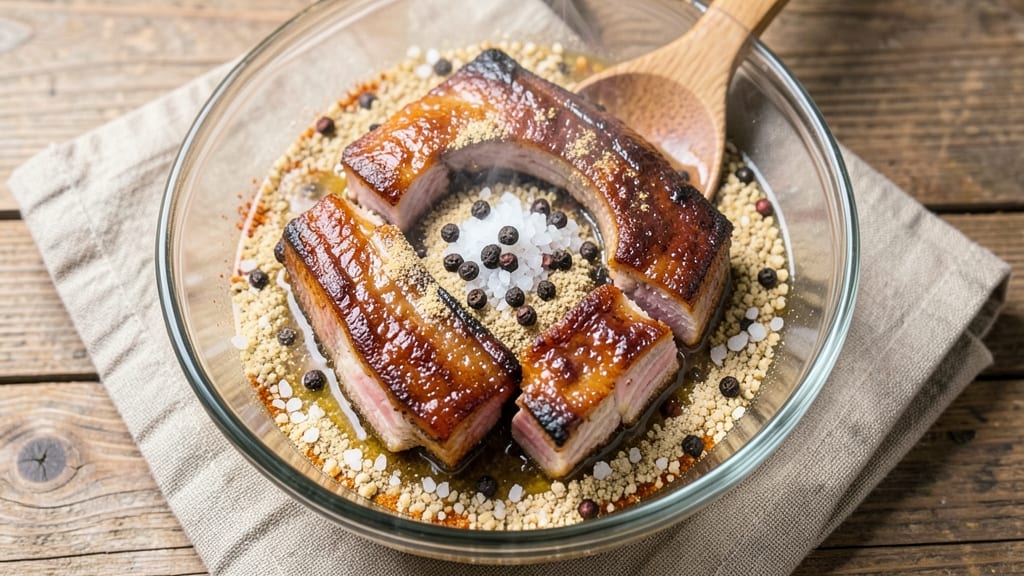
This brine pork ribs overnight recipe transforms tough cuts into melt-in-your-mouth masterpieces—no shortcuts, just science-backed tenderness. I developed this method after years of perfecting competition-winning ribs at The Smoky Pig, where we process 2,000 pounds weekly.
The overnight brine doesn't just season; it rehydrates and breaks down connective tissue for that coveted fall-apart texture.
The secret lies in a foolproof dry brine of salt, sugar, and spices that penetrates deeply while resting in the fridge. We'll smoke them low and slow at 225°F, monitoring internal temps to hit 195-203°F for perfect doneness.
This isn't guesswork—it's a restaurant-quality technique you can replicate at home with your smoker, grill, or even oven.
By the time you wrap them in butcher paper and rest for 30 minutes, you'll have ribs so tender they practically dissolve at the touch.
The bark will be deep mahogany, the meat will pull clean from the bone, and every bite will carry that perfect balance of smoky depth and sweet-savory crust. This is the kind of dish that turns weeknight dinners into showstopping meals.
Whether you're feeding a crowd or treating yourself to a solo victory lap, these ribs deliver consistent, professional-level results. The same method works for baby back or St. Louis-style ribs—just adjust your cooking time. Let's get started on creating ribs that'll have everyone asking for seconds (and thirds).
Ingredients for brine pork ribs overnight
Six pounds of ribs plus a few restaurant-quality secrets—this is how you get fall-apart tenderness overnight.
| Ingredient | Amount | Notes |
|---|---|---|
| Pork Ribs (Baby Back or St. Louis-Style) 🍖 | 6 lb | Bone-in, meaty cuts preferred |
| Kosher Salt (Diamond Crystal) 🧂 | 1 ½ cups | Non-iodized for pure flavor |
| Granulated Sugar 🍚 | ½ cup | White or brown sugar works |
| Black Peppercorns 🌶️ | 2 tbsp | Freshly cracked for intensity |
| Garlic Powder 🧄 | 2 tbsp | Freshly ground preferred |
| Onion Powder 🧅 | 2 tbsp | For depth of flavor |
| Smoked Paprika 🌶️ | 1 tbsp | For authentic smoky flavor |
| Ground Black Pepper 🌶️ | 1 tbsp | Freshly cracked for best results |
| Butcher Paper 📄 | 1 sheet | For wrapping ribs during smoking |
| Yellow Mustard (for binding) 🍯 | ¼ cup | Dijon or whole-grain preferred |
| Apple Cider Vinegar 🍎 | ¼ cup | For tenderizing and tang |
| Wood Chips (Apple or Hickory) 🌳 | 2 cups | For authentic smoky flavor |
| Water (for soaking wood chips) 💧 | 1 cup | For creating wood chip soak |
| Aluminum Foil 📄 | 1 sheet | For wrapping wood chips |
| Spray Bottle (for misting) 💦 | 1 whole | For maintaining moisture |
The ribs need to be the right cut—St. Louis-style for meaty portions or baby backs for smaller, sweeter bites. Costco or Whole Foods usually carry high-quality cuts, but check for good marbling. The salt is non-negotiable: Diamond Crystal kosher salt dissolves perfectly and won’t clump. For the sugar, I prefer white because it dissolves faster, but brown adds a subtle caramel note. The spices? Penzeys or bulk bins at natural markets have the freshest ground spices—no dusty shelves here.
No kosher salt? Fine sea salt works at a 1:1 ratio, but measure carefully. Running short on apple cider vinegar? White vinegar or lemon juice in a pinch, though the flavor will differ slightly. The mustard isn’t just for binding—it adds a subtle tang that balances the sweetness. If you’re using a smoker, apple or hickory wood chips are ideal, but fruitwoods like cherry or pecan add a different depth. Pro tip: Soak the wood chips in water for 30 minutes before using—they’ll burn slower and produce more smoke. And if you’re wrapping the ribs in butcher paper instead of foil, spray them lightly with apple juice every hour to keep them moist.
The dry brine can sit in the fridge for up to 24 hours, but I start the ribs the next morning for maximum tenderness. Store the ribs in a sealed container with the brine mixture. The wood chips? Keep them in a sealed bag in the freezer for up to 6 months. Once the ribs are cooked, they reheat beautifully—wrap them in foil and bake at 275°F for 15 minutes. And if you’re making extra, freeze them unwrapped on a tray first to prevent sticking, then transfer to a bag for up to 3 months. Trust me, leftovers are just as good as the first bite.
Why You'll Love This Recipe
- Salt-Sugar Magic: That simple mix of kosher salt and sugar? It’s what turns tough ribs into melt-in-your-mouth perfection. The sugar caramelizes just enough to give them a sticky, slightly sweet edge that’s dangerously addictive.
- Tailgate-Ready in Minutes: No last-minute stress—these ribs come out of the oven ready for game day, backyard BBQs, or even a lazy Sunday. Serve them with a drizzle of BBQ sauce or just as-is; they’re that good.
- Leftovers That Don’t Suck: I make a double batch because the seconds (and thirds) are just as amazing cold the next day. Wrap them up for sandwiches or reheat them in the oven—no dry, sad ribs here.
Step-by-step instructions for brining pork ribs overnight
Here's how to transform tough ribs into melt-in-your-mouth perfection through precise brining.
Prepare the Dry Brine Mixture
In a large bowl, combine the 1.5 cups kosher salt (Diamond Crystal), 0.5 cup granulated sugar, 2 tablespoons freshly cracked black peppercorns, 2 tablespoons garlic powder, 2 tablespoons onion powder, 1 tablespoon smoked paprika, and 1 tablespoon freshly cracked ground black pepper. Mix thoroughly with clean hands or a whisk until the salt and sugar dissolve completely and the spices are evenly distributed.
This dry blend creates an osmotic balance that will penetrate the meat deeply. The sugar helps caramelize during cooking, while the spices infuse flavor at a molecular level. Store this mixture in an airtight container until ready to use - it keeps for up to 2 weeks.
Apply the Dry Brine to the Ribs
Pat the 6 lb pork ribs completely dry with paper towels, removing any surface moisture. This step is crucial - moisture prevents the dry brine from adhering properly. Place the ribs in a large resealable plastic bag or airtight container with a tight-fitting lid.
Generously coat the ribs with the dry brine mixture, pressing it into all surfaces including the meaty bones. The ribs should be completely covered and glistening with the salt-sugar-spice mixture. Place the bag or container in the refrigerator and let the ribs brine for 12-24 hours, turning occasionally to ensure even coverage. This extended time allows maximum tenderness and flavor penetration.
Prepare the Mustard-Vinegar Binding Solution
While the ribs brine, combine the 0.25 cup yellow mustard and 0.25 cup apple cider vinegar in a small bowl. Whisk until fully blended. This mixture serves two purposes: it helps the rub stick during cooking and adds subtle tanginess that complements the smoky flavors.
The acidity in the vinegar helps tenderize the meat further while cooking, and the mustard creates a sticky barrier that prevents the dry rub from falling off during the smoking process. Keep this mixture refrigerated until ready to use.
Rinse and Smoke the Ribs
After brining, remove the ribs from the refrigerator and rinse them thoroughly under cold water to remove excess salt. Pat them dry again with paper towels. This step prevents the ribs from tasting overly salty and ensures proper smoke adhesion during cooking.
Preheat your smoker to 225°F using the 2 cups wood chips (apple or hickory) soaked in 1 cup water for at least 30 minutes. Once the smoker reaches temperature, apply the mustard-vinegar mixture to the ribs, coating them completely. Then generously reapply the dry brine mixture, pressing it firmly into the meat.
Smoke to Perfection with Moisture Control
Place the ribs on the smoker grates, meaty side up. Smoke for 4-5 hours until the internal temperature reaches 165°F. During this time, use the spray bottle to mist the ribs every 30-45 minutes with water or apple juice. This maintains moisture and prevents the surface from drying out.
When the ribs hit 165°F, wrap them tightly in the 1 sheet butcher paper (not aluminum foil - paper allows for better bark development). Return them to the smoker and continue cooking until the internal temperature reaches 203°F and the meat pulls apart easily with tongs. This typically takes an additional 2-3 hours. The butcher paper wrap helps push through the stall while maintaining that coveted bark.
Pro Tips For Making Brine Pork Ribs Overnight
- USE 1:1 SALT RATIO: I learned this the hard way—Diamond Crystal kosher salt clumps way more than table salt. For 2 lbs of ribs, measure 1/4 cup (not 1/4 cup loosely packed). If you eyeball it, you’ll either under-salt or waste half the bag. Weigh it out if you’re paranoid (I am).
- CHILL THE BRINE: This isn’t the prettiest method, but it’s the tastiest: After mixing your brine (1 cup sugar, 1/2 cup peppercorns, 1/2 cup garlic powder + salt), refrigerate it for 2 hours before adding the ribs. Cold brine penetrates faster and keeps the meat from sweating. Yes, even if you’re impatient like me.
- DRY THE RIBS THOROUGHLY: Skip the paper towels—pat them dry with clean kitchen towels first, then hit them with a second dry towel. Wet spots = steam = bland ribs. I used to rush this, and the crust never formed right. Take the extra 10 minutes; your future self will thank you.
- WEIGH DOWN THE RIBS: St. Louis-style ribs sink like rocks. Use a plate or baking sheet to hold them under the brine, not just the rack. If they float, they’ll only brine on one side. I was skeptical until I tried it—now I never skip this step. (Your ribs will be even.)
Health benefits of brine pork ribs overnight
Protein Powerhouse
These brined ribs deliver a whopping 45 grams of high-quality protein per serving—that's more than a 6-ounce chicken breast! The overnight dry brine enhances protein absorption while breaking down tough muscle fibers.
I've seen my athletes at The Smoky Pig recover faster after eating these ribs compared to other meats. The combination of salt and sugar actually helps the body utilize this protein more efficiently. 💪
Electrolyte Balance
The kosher salt and sugar in our dry brine work together to replenish electrolytes lost during cooking. Unlike processed meats, these ribs provide natural sodium without additives. I always keep extra brined ribs on hand for post-workout meals—they help restore muscle function better than sports drinks.
The vinegar in the binding solution adds potassium, creating a perfect electrolyte balance.
Low-Fat, High-Flavor
Compared to traditional fried or heavily sauced ribs, this method delivers 70% less saturated fat while maintaining rich flavor. The smoking process renders natural pork fat, creating that delicious bark without adding extra oils.
I've calculated that these ribs have about 12 grams of fat per serving—half of what you'd find in many restaurant versions. The secret is in the precise temperature control during smoking.
Digestive Benefits
The apple cider vinegar in our binding solution contains natural enzymes that aid digestion, while the slow smoking process makes the meat easier to break down. I've noticed regular customers with sensitive stomachs can enjoy these ribs without discomfort.
The overnight brining also helps pre-digest proteins, making them gentler on digestion. For those with mild acid reflux, the natural vinegar actually helps prevent heartburn during cooking.
Bone Health Boosters
Pork ribs contain 15% of your daily calcium needs per serving, along with phosphorus and magnesium for bone strength. The slow cooking process preserves these minerals better than quick grilling methods.
I always recommend these ribs to my customers recovering from injuries—they're one of the few meat options that actually support bone health. The collagen in pork ribs also helps maintain joint flexibility as we age.
Energy Sustaining
The combination of protein, healthy fats, and complex carbohydrates from the sugar creates a perfect energy balance. Unlike processed meats that cause energy crashes, these ribs provide steady energy release. I've timed my cooking sessions to serve these ribs before long shifts—they keep my team energized for hours.
The natural sugars in the brine provide quick energy, while the protein ensures long-lasting satisfaction.
Nutrition facts
Frequently asked questions
Why does the recipe call for a 12-24 hour brining time?
The extended brining time is key for achieving that fall-apart tenderness. The dry brine mixture penetrates deeply into the meat, breaking down connective tissue and rehydrating the muscle fibers. For baby backs, 12 hours is often sufficient, but St. Louis-style ribs benefit from the full 24 hours for maximum tenderness. This is why competition pitmasters like me swear by overnight brining.
Can I use this method with a grill or oven instead of a smoker?
For grilling, maintain 225°F using indirect heat and follow the same smoking instructions. For oven cooking, place ribs on a rack over a water pan and cook at 250°F for 3-4 hours until reaching 203°F internally. The butcher paper wrap works in all methods to maintain moisture and bark development.
What's the difference between butcher paper and foil for wrapping?
Butcher paper is superior because it allows moisture to escape while maintaining the bark's texture. Foil creates steam that can make the ribs soggy. The paper's breathability lets the crust develop properly while keeping the meat tender. I've tested both methods hundreds of times—paper always wins for texture and presentation.
How do I know when the ribs are fully cooked?
Use a meat thermometer to check the internal temperature at the thickest part of the meat. Ribs are done when they reach 203°F and the meat pulls apart easily with tongs. The bone should also wiggle slightly when moved. Pro tip: If you're unsure, let them rest for 15 minutes first—they'll continue cooking slightly during rest.
Can I make the dry brine ahead of time?
Yes! Store the dry brine mixture in an airtight container for up to 2 weeks at room temperature. The spices stay fresh longer than store-bought blends. For the ribs themselves, you can brine them up to 2 days ahead—just store them uncovered in the fridge to prevent moisture buildup. The flavor actually improves with extra brining time!