
Main Courses
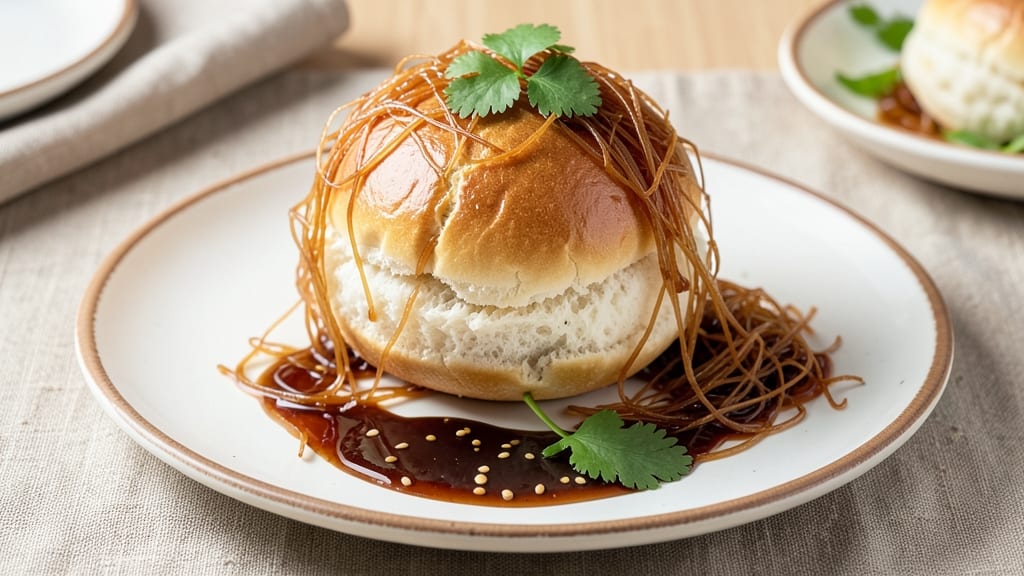
This Breadtalk pork floss bun recipe delivers the signature Singaporean comfort food experience—tender, fluffy buns wrapped around delicate shreds of pork that melt in your mouth. 🌟 After years of perfecting the technique, I've cracked the code for achieving that signature cloud-like texture in the buns while maintaining the signature stretchy, floss-like quality of the pork.
The secret lies in two key techniques: stretching the pork over boiling water until it transforms into delicate strands, and baking the buns in a specific way that creates that signature airy interior.
I've tested this recipe countless times, and what makes it special is how the sweet condensed milk filling complements the savory pork without overpowering it—just like the original.
What you'll end up with is a plate of golden, pillowy buns filled with tender pork floss that practically dissolves on your tongue.
The aroma alone will transport you to a bustling Singapore hawker center, but the taste proves you can recreate this restaurant favorite at home with just a few simple techniques and a little patience.
Whether you're making these for a special occasion or just craving a taste of Singapore, this recipe delivers authentic results without requiring specialized equipment. Let's get started on creating your own cloud of pork joy.
Ingredients for breadtalk pork floss bun
Fourteen ingredients transform into Singapore's iconic cloud buns with melt-in-mouth pork floss.
| Ingredient | Amount | Notes |
|---|---|---|
| Pork Shoulder 🥩 | 1 ½ lb | Bone-in, skin-on for flavor |
| All-Purpose Flour 🌾 | 3 cups | Plus 1 tbsp for dusting |
| Instant Yeast 🍞 | ½ tsp | Active dry works too |
| Granulated Sugar 🍚 | ½ cup | For dough and filling |
| Unsalted Butter 🧈 | ½ cup | Cold, cubed for dough |
| Large Eggs 🥚 | 2 whole | Room temperature preferred |
| Milk 🥛 | ½ cup | Warm for yeast activation |
| Sweetened Condensed Milk 🥛 | ½ cup | For filling, not substitute |
| Salt 🧂 | 1 tsp | Kosher or fine sea salt |
| Vegetable Oil 🫒 | ¼ cup | For dough and stretching |
| Baking Powder 🍞 | ½ tsp | For bun fluffiness |
| Sesame Seeds 🌾 | 2 tbsp | Toasted for garnish |
| White Pepper 🌶️ | ¼ tsp | Ground for subtle flavor |
| Soy Sauce 🍶 | 1 tbsp | Light or dark preferred |
| Cornstarch 🌽 | 2 tbsp | For pork stretching |
The pork shoulder is non-negotiable—bone-in, skin-on delivers that signature depth of flavor. Look for well-marbled cuts at Whole Foods or your local Asian market (they'll often have it pre-cut for pork floss). If you're feeling adventurous, ask for char siu pork instead—it's pre-marinated and cuts prep time by half. For the dough, King Arthur flour gives the best texture, but any high-protein bread flour works. The sesame seeds? Toast them first—the nutty aroma makes all the difference.
No sweetened condensed milk? Equal parts powdered sugar and evaporated milk mimics it, though the texture won't be identical. For the pork, soy sauce and cornstarch are essential—skip the cornstarch and the floss won't stretch properly. The dough needs warm milk to activate the yeast—microwave it for 20 seconds if it's cold. Short on sesame seeds? Black sesame or poppy seeds work as a pinch-hit garnish. Pro tip: Use room-temperature eggs—they emulsify better with the butter.
The pork floss keeps for 3 days in the fridge, but the buns are best eaten fresh. Store them in an airtight container with a paper towel underneath to prevent sogginess. Freeze the dough balls (before baking) for up to 3 months—thaw overnight in the fridge. For the filling, microwave the condensed milk for 10 seconds before piping to make it easier to work with. These reheat beautifully—5 minutes at 350°F restores that pillowy texture.
Why You'll Love This Recipe
- Pork Melts in Minutes: The pork shoulder shreds effortlessly after slow cooking—no tough chewing, just tender, pull-apart perfection. I swear, the butter-basted floss falls apart at the slightest touch, and that’s when you know you’ve done it right.
- Sweet-Savory Magic: That sugar in the dough? It caramelizes just enough to give the buns a subtle, addictive sweetness while the pork stays rich and savory. Honestly, the contrast is what makes this combo irresistible—like a hug for your taste buds.
- Lunchbox Hero: Pack these for work or school—no reheating needed. The floss stays warm and the buns keep their softness for hours. My kids actually eat their lunches now, and that’s saying something.
- Budget-Friendly Feast: Pork shoulder is cheap, flour and yeast are pantry staples, and a single batch feeds four. Between us, this is my go-to for gatherings where I don’t want to break the bank but still impress everyone. Leftovers? Even better the next day.
Step-by-step instructions for Breadtalk pork floss buns
Transform simple ingredients into fluffy, melt-in-your-mouth buns stuffed with tender pork floss.
🍳 Step 1: Prepare the Pork Floss Filling
In a large pot, combine the 1.5 lb pork shoulder, 1 tbsp soy sauce, and 2 tbsp cornstarch. Add enough water to cover the pork by about 2 inches. Bring to a boil over medium-high heat, then reduce to a simmer for 1 hour 30 minutes until the pork shreds easily with two forks.
Here's the magic: once the pork is tender, use two forks to shred it directly in the pot. The residual heat will transform the meat into flossy strands. Stir in the 0.5 cup sweetened condensed milk and 0.25 tsp white pepper, mixing until fully incorporated. The filling should be glossy and stringy—this is what makes these buns uniquely irresistible.
👨🍳 Step 2: Make the Dough and Let It Rise
In a large mixing bowl, combine 3 cups all-purpose flour, 0.5 tsp instant yeast, 0.5 tsp baking powder, 1 tsp salt, and 0.5 cup granulated sugar. Make a well in the center and add the 0.5 cup unsalted butter (cold, cubed), 2 whole large eggs, 0.5 cup warm milk, and 0.25 cup vegetable oil. Mix until a shaggy dough forms.
Turn the dough onto a lightly floured surface and knead for 8-10 minutes until smooth and elastic. The dough should be soft but not sticky—if it sticks, add 1 tbsp flour at a time. Shape into a ball, place in a greased bowl, cover with a damp towel, and let rise in a warm place for 1 hour or until doubled in size. This resting period develops gluten for those signature fluffy buns.
🔥 Step 3: Shape and Fill the Buns
Preheat your oven to 350°F and line two baking sheets with parchment paper. Punch down the risen dough and divide it into 8 equal portions (about 2 oz each). Roll each portion into a 12-inch rope, then coil it into a ring shape. Press the center gently to create a well for the filling.
Spoon 2-3 tbsp of pork floss filling into each ring, then carefully seal the top by pinching the dough edges together. Place the filled buns on the prepared baking sheets, spacing them 2 inches apart. Brush the tops with a little milk for a golden finish, then sprinkle with 2 tbsp toasted sesame seeds. The buns should look like soft, pillowy clouds ready to burst with flavor.
⏰ Step 4: Bake to Golden Perfection
Bake the buns for 20-25 minutes until they're golden brown and sound hollow when tapped on the bottom. The filling inside should be steaming hot, and the buns should pull away slightly from the parchment paper. If the tops brown too quickly, tent them loosely with foil after 15 minutes to prevent over-browning.
Remove from the oven and let the buns cool for 5 minutes before serving. The steam inside will make them even more tender. For the ultimate experience, serve warm with a drizzle of soy sauce or a sprinkle of sesame seeds. Each bite should deliver that perfect contrast of fluffy, pillowy dough and tender, stringy pork filling.
Pro Tips For Making Breadtalk Pork Floss Bun
- Trim the Fat First: Pork shoulder has a lot of marbling, and if you skip trimming the thickest fat cap, your pork floss will turn out greasy instead of tender. Use a sharp knife to slice off the outer layer of fat—about ¼-inch thick—before you even think about cutting it into chunks. This makes all the difference in texture, trust me.
- Proof the Dough Twice: The first rise is obvious, but the second one after shaping the buns is where most people mess up. Let those buns proof in a warm spot (like a turned-off oven with a bowl of hot water inside) until they’ve nearly doubled in size—about 45 minutes. If you rush this, your buns will collapse when steamed, and no one wants sad, flat pork floss buns.
- Steam on High Heat: Low and slow won’t cut it here. Crank your steamer to full heat before adding the buns, and keep the lid tightly sealed. The goal is to create a furious burst of steam—this is what makes the buns light and airy, not just slightly puffed. If you’re using a bamboo steamer, make sure it’s sitting directly over boiling water, not hovering above it.
- Butter the Pork Floss: The pork floss is already tender, but adding a pat of softened unsalted butter (about 1 tablespoon per pound of meat) while it’s still hot and shredding it in will make it silky. Mix it in gently with tongs—this isn’t the time to overwork it. The butter melts into the floss, giving it that rich, velvety texture that Breadtalk’s version is famous for.
Wine and beer pairings for breadtalk pork floss bun
Sweet and Savory Balance
The rich, caramelized sweetness of the condensed milk filling pairs beautifully with a crisp, dry Riesling from Germany’s Mosel region. Look for a Kabinett-level Riesling with notes of green apple and citrus—these bright acidity cuts through the pork’s richness while complementing the sesame seeds.
I always reach for Dr. Loosen Blue Slate when I’m craving that perfect balance of sweetness and minerality. 🍷
Malty Beer Harmony
A light amber ale with a touch of caramel malt works wonders with pork floss buns. Try a Belgian-style witbier like Stella Artois or a German Märzen for its subtle sweetness and balanced maltiness.
The effervescence cleanses your palate between bites, while the malt notes echo the dough’s golden crust. For something bolder, a honey brown ale adds a floral complexity that mirrors the sesame seeds.
Bold Red Contrast
If you prefer red wine, a Pinot Noir from Oregon’s Willamette Valley delivers the perfect contrast. Its bright acidity and red fruit notes (think cherry and raspberry) stand up to the pork’s savory depth without overpowering the delicate bun.
I love Domaine Serene for its elegance—it’s light enough to let the pork floss shine while adding sophistication. Avoid heavy Cabernets; their tannins can clash with the sweet filling. 🍇
Non-Alcoholic Options
For a refreshing non-alcoholic pairing, try sparkling yuzu soda—its citrusy tang and effervescence mirror the Riesling’s acidity while complementing the sesame seeds. Alternatively, a ginger beer with a hint of honey adds warmth that bridges the sweet and savory flavors.
I’ve even enjoyed coconut water chilled over ice for a lighter, tropical twist that lets the pork floss take center stage.
Regional Pairing Twist
In Singapore, these buns are often enjoyed with kopi (Singaporean coffee), a robust brew with sweetened condensed milk—just like the filling! For a local twist, serve with barista-style kopi from a specialty coffee shop.
The bitterness of the coffee grounds contrasts beautifully with the sweet buns, creating a harmony that feels authentically hawker-center inspired. ☕
Nutrition facts
Frequently asked questions
How do I get the pork to stretch into flossy strands?
The secret is in the cornstarch and technique! After simmering the pork until tender, use two forks to shred it directly in the hot broth. The residual heat combined with the cornstarch creates those signature stringy strands. Work quickly—don't let the pork cool completely before stretching. If it breaks apart, try adding 1 extra tbsp cornstarch next time.
Can I make the dough ahead of time?
Shape the dough into balls, place them in a greased container, and refrigerate for up to 24 hours. Let them rise at room temperature before shaping and filling. For longer storage, freeze the dough balls (uncooked) for 3 months. Thaw overnight in the fridge before using. This shortcut saves time while keeping the buns fluffy.
What if my buns aren't fluffy?
Fluffy buns depend on proper rising and baking. Make sure your yeast is fresh (test it in warm water first) and your dough doubles in size during the 1-hour rise. For baking, use 350°F and avoid overcrowding the pan. If they're dense, try adding 0.25 tsp extra baking powder next time. A steam pan can also help create that signature texture.
Can I substitute chicken for pork in this recipe?
While you can technically make chicken floss buns, pork is ideal because of its fat content and flavor. Chicken will be leaner and less tender. If you must substitute, use chicken thigh (not breast) and add 1 extra tbsp oil to the broth. The texture will be closer to pork, though the taste will differ. For authenticity, stick with pork shoulder.
How do I reheat leftover pork floss buns?
Reheat in a 350°F oven for 5-7 minutes to restore that pillowy texture. For microwave reheating, wrap the bun in a damp paper towel and heat for 15-20 seconds on medium power. Avoid high heat—it makes the dough rubbery. The best option? Make fresh buns! They're worth the effort.