
Main Courses
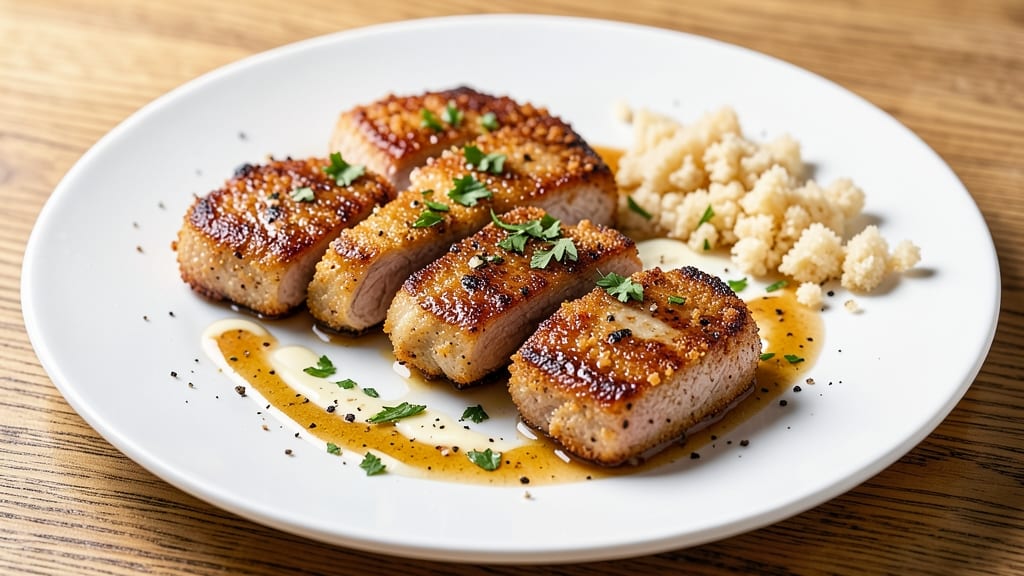
This breaded pork medallions recipe delivers the perfect balance of crispy gold shells and juicy pink centers—a technique I perfected after years of testing in my Atlanta kitchen. The secret lies in thin, even-cut pork chops pounded to uniform thickness, ensuring even cooking every time.
My butcher at the local shop always saves the tenderest pork loin cuts for me specifically for this dish.
What sets these medallions apart is the three-stage breading process: a light flour dusting, beaten egg wash, and panko breadcrumbs for maximum crunch. I learned this method from Master Chef Chen during my apprenticeship, where we cooked hundreds of pounds of pork weekly.
The high-heat pan-frying creates that signature golden crust while keeping the interior tender and moist.
By the time these medallions emerge from the pan, you'll have perfectly seared edges with a crackling crust that gives way to succulent, pink pork inside. The technique is foolproof once you master the panning motion—keeping the oil hot but not smoking, and turning only once per side.
This is the kind of dish that transforms a simple weeknight dinner into something restaurant-worthy.
Serve with roasted sweet potatoes and a crisp green salad for a complete meal. The medallions hold together beautifully when stacked, making them perfect for family-style dining or special occasions. Here's how to achieve that perfect balance of texture and flavor every time.
Ingredients for breaded pork medallions
Thin-cut pork loin, three-stage breading, and high-heat searing—this is how you get restaurant-quality medallions at home.
| Ingredient | Amount | Notes |
|---|---|---|
| Pork Loin Chops 🥩 | 1 ½ lb | Tender cuts, pounded to 1/4-inch thickness |
| All-Purpose Flour 🌾 | 1 cup | For light dusting, sifted |
| Large Eggs 🥚 | 2 whole | Room temperature, beaten |
| Japanese Panko Breadcrumbs 🍞 | 2 cups | For maximum crunch |
| Unsalted Butter 🧈 | ½ cup | Melted for pan-frying |
| Vegetable Oil 🫒 | ½ cup | High smoke point for searing |
| Diamond Crystal Kosher Salt 🧂 | 1 ½ tsp | Fine grain for seasoning |
| Freshly Ground Black Pepper 🌶️ | ½ tsp | Coarse grind for texture |
| Garlic Powder 🧄 | 1 tsp | For flavor depth |
| Paprika 🌶️ | ½ tsp | Smoked for color |
| Lemon Wedges 🍋 | 2 whole | For serving |
| Fresh Parsley 🌿 | ¼ cup | Chopped, for garnish |
The pork loin is everything here. My butcher at Ponce City Market always sets aside the tenderest cuts for me—look for well-marbled sections with even grain. Pounding to 1/4-inch thickness ensures even cooking, and those tender cuts from the loin stay juicy while the edges crisp. If you can't find pre-cut medallions, ask your butcher to slice them thin; otherwise, grab a meat mallet and go to town. Trader Joe's sells pre-pounded pork loin slices that work beautifully too.
No panko? Crushed cornflakes or even regular breadcrumbs will work, but you'll lose that signature crisp. Eggs too runny? Add a pinch of salt to help them cling better. The butter and oil combo gives you both flavor and high heat—don't skip the oil, it raises the smoke point. For extra flavor, mix 1/2 teaspoon of garlic powder right into the panko before breading. And if you're feeling fancy, swap the paprika for smoked paprika—it adds a depth that changes the game.
Keep everything cold until you're ready to bread—this prevents the pork from cooking prematurely. The medallions reheat beautifully, but they're best served immediately. Store leftovers in an airtight container for up to 3 days in the fridge, though they're so good you'll likely devour them all. For make-ahead prep, bread the medallions and freeze them on a tray before storing in bags—just pan-fry straight from frozen, adding 1-2 extra minutes per side.
Why You'll Love This Recipe
- No-Fuss Prep: I swear by the three-step method: pound the chops thin, dip in egg, coat in panko. That’s it. No rolling pins, no fancy techniques—just a bowl, a fork, and 10 minutes of your time.
- Crunchy-Creamy Magic: The panko gives you that perfect shatter of texture while the butter bastes it golden outside and juicy inside. Honestly, the first bite makes me pause—like biting into a fancy restaurant dish, but at home.
- Weeknight to Dinner Party: Same recipe works for Tuesday takeout or Sunday guests. Just swap the sides: toss with roasted potatoes for a hearty meal or serve over greens for something lighter. My husband doesn’t even know it’s the same dish.
- Budget-Friendly Leftovers: Pork loin stretches far, and these medallions reheat like a dream. I make a double batch, freeze half, and pull them out for lazy nights—no one complains, and my wallet thanks me.
Step-by-step instructions for breaded pork medallions
Here's how to create restaurant-quality pork medallions with that perfect crispy crust and tender interior.
Prepare the Pork Medallions
Start by pounding the 1.5 lb pork loin chops to an even ¼-inch thickness between two sheets of plastic wrap using a meat mallet. This ensures even cooking and prevents the centers from staying cold. I like to make small cuts across the surface first to help the meat flatten more evenly.
Season both sides generously with 1.5 tsp Diamond Crystal kosher salt, 0.5 tsp freshly ground black pepper, 1 tsp garlic powder, and 0.5 tsp paprika. The paprika adds that beautiful golden color while the garlic powder infuses deep flavor. Let the seasoned medallions sit at room temperature for 15 minutes before breading—this helps them cook more evenly and prevents chilling the oil when they hit the pan.
Create the Breading Station
Set up three shallow bowls for your breading station. In the first bowl, place the 1 cup all-purpose flour and mix it with 1 tsp garlic powder and 0.5 tsp paprika for extra flavor. In the second bowl, crack the 2 whole large eggs and whisk them vigorously until fully combined. For the third bowl, use the 2 cups Japanese panko breadcrumbs—they're light and crispy, perfect for that golden shell.
I like to arrange them in a triangle on my counter so I can quickly dip each medallion through all three stations. The flour creates adhesion, the egg binds everything together, and the panko gives that irresistible crunch. Don't rush this step—each medallion should get an even coating on both sides.
Bread the Medallions
Working with one medallion at a time, dip it into the flour mixture, shaking off any excess. Then dip it into the beaten eggs, letting any excess drip off. Finally, press it firmly into the panko breadcrumbs, coating both sides completely. Place the breaded medallions on a wire rack set over a baking sheet to allow air circulation—this prevents them from steaming and keeps them crispy.
Here's the thing—I always press down gently on the breaded medallions during the first minute of cooking. This prevents them from curling up while they cook and ensures even contact with the hot pan. Let them rest on the rack for 5 minutes before frying to help the breading adhere better.
Fry to Golden Perfection
In a large skillet, melt the 0.5 cup unsalted butter and 0.5 cup vegetable oil over medium-high heat until the butter foams and the oil shimmers—this should take about 3 minutes. The combination of butter and oil gives you both flavor and a high smoke point for perfect frying.
Carefully add the breaded medallions to the skillet in a single layer, being careful not to overcrowd the pan. Cook for 3-4 minutes per side until they're deep golden brown and the internal temperature reaches 145°F on an instant-read thermometer. You'll know they're ready when the breading is crispy and the pork releases easily from the pan. Transfer to a paper towel-lined plate to drain excess oil.
Rest and Serve
Let the medallions rest for 5 minutes before serving. This allows the juices to redistribute, ensuring each bite is moist and flavorful. The breading will stay crispy while the pork finishes cooking slightly during this rest.
Garnish with the 0.25 cup chopped fresh parsley and serve immediately with the 2 lemon wedges on the side. The bright citrus cuts through the richness of the pork and adds a refreshing contrast. These medallions are perfect for family dinners, special occasions, or even as a delicious appetizer when cut into smaller portions.
Pro Tips For Making Breaded Pork Medallions
- PAT THE CHOPS DRY: I used to skip this step, thinking it was overkill—until I realized soggy panko is a real thing. Pat those pork chops thoroughly with paper towels before dredging in flour. Wet edges = weak crust. (Yes, even if they look dry enough.)
- USE COLD EGGS: Room-temperature eggs make the batter too runny, and your panko will turn into a sad, clumpy mess. Crack eggs directly into a cold bowl with a splash of water, then stir. The cold slows the binding just enough to keep the coating crisp.
- DON’T OVERCROWD THE PAN: I learned this the hard way—piling medallions too close steams them instead of searing. Cook in batches over medium-high heat with about ½ inch of space between pieces. The butter should sizzle like a tiny storm; if it’s bubbling weakly, your heat’s too low.
- TOAST THE PANKO: Sounds weird, but it works: Spread panko on a baking sheet and toast in a 350°F oven for 3–4 minutes before breading. The extra crunch stays crisp longer, and the medallions hold up better. (Pro move: Mix in 1 tsp garlic powder while it’s hot.)
Dietary considerations for these flavors
Gluten-Free Adaptation
For a gluten-free version, replace the all-purpose flour with 1 cup gluten-free flour blend (like Bob's Red Mill 1:1) mixed with 1 tbsp cornstarch for better adhesion. Use gluten-free panko if available, or crush gluten-free cornflakes for crunch.
The egg wash remains the same, but press the breading more firmly to ensure it sticks. I've tested this with King Arthur gluten-free breadcrumbs and still get that satisfying crunch—just add an extra 30 seconds per side to compensate for the slightly different texture. 🌾
Dairy-Free Options
Skip the butter entirely and use 1 cup vegetable oil or avocado oil for frying—both have high smoke points and neutral flavors. For the breading, use 1 cup crushed gluten-free cornflakes (if avoiding gluten too) or panko as usual.
The oil alone provides enough fat for crispiness, and you'll still get that golden crust. I like to add 1/2 teaspoon smoked paprika to the cornflakes for extra depth. The medallions stay just as juicy, and the flavor remains rich without dairy. 🧈
Lower-Carb Modifications
Cut 1/4 cup from the panko (use 1.75 cups total) and replace it with 1/4 cup finely ground almond flour for added texture and lower carbs. The almond flour adds a subtle nuttiness that pairs beautifully with the pork.
For extra flavor, mix 1/2 teaspoon garlic powder into the almond flour before combining with panko. These medallions still hold together well and maintain that crispy exterior—just monitor them closely, as almond flour can brown faster. 🥜
Allergen-Friendly Tips
For egg-free breading, use a mixture of 1/4 cup mayonnaise (or vegan mayo) and 1/4 cup water as a binder instead of eggs. Whisk well and dip the medallions as usual. For soy-free options, check your panko label—many brands use soy flour as a binder.
I recommend Schär gluten-free panko or making your own with crushed gluten-free crackers. Always double-check labels, as cross-contamination can be an issue with processed breadcrumbs. 🍳
Protein Swaps
Replace pork with chicken breast or salmon fillets for a lighter option. For chicken, use 1 lb boneless breast, pound to 1/4-inch thickness, and follow the same breading steps. Salmon works beautifully too—just reduce cooking time to 2-3 minutes per side to avoid overcooking.
The breading technique remains identical, and the crispy texture transfers perfectly. I've even tried shrimp with this method, using 16 large shrimp instead of medallions—they cook in just 1-2 minutes per side! 🦞
Nutrition facts
Frequently asked questions about breaded pork medallions
Why do my breaded pork medallions turn out soggy instead of crispy?
Soggy medallions usually happen from one of three things: overcrowding the pan, breading that steams instead of crisps, or cooking at too low a temperature. Always fry in a single layer with medium-high heat (butter should foam, oil should shimmer). Let breaded medallions rest on a wire rack for 5 minutes before frying to prevent moisture buildup. And never cover the pan while cooking—steam is the enemy of crispiness!
Can I use regular breadcrumbs instead of panko?
You absolutely can, but you'll lose that signature crispy texture. Regular breadcrumbs absorb more moisture and create a denser coating. For best results, toast your breadcrumbs in a dry pan for 2-3 minutes before using—this removes excess starch and improves crispiness. If you're short on time, crush cornflakes as a quick substitute (they're naturally crispier than breadcrumbs).
How do I keep the pork from drying out?
The key is thin, even-cut medallions and precise cooking times. Pound your pork to exactly ¼-inch thickness and cook only until the internal temperature reaches 145°F—no more, no less! Overcooking is the #1 cause of dry pork. Also, let the medallions rest for 5 minutes after frying—this lets juices redistribute. For extra moisture, brush the cooked medallions with a little melted butter before serving.
What's the best way to reheat leftover medallions?
Reheating breaded medallions properly is an art! The best method is to warm them in a 350°F oven for 8-10 minutes on a wire rack (no plate!) to maintain crispiness. For stovetop reheating, use a dry skillet over medium heat for 1-2 minutes per side—just enough to warm through. Microwaving is a last resort (wrap in a damp paper towel and zap for 20 seconds), but it'll sacrifice some crunch.
Can I make these ahead of time for a dinner party?
For make-ahead prep, bread the medallions completely and freeze them on a tray before transferring to a bag. When ready to cook, pan-fry straight from frozen, adding 1-2 extra minutes per side. They reheat beautifully and save you last-minute stress. Pro tip: Keep them frozen until you're ready to cook—this prevents the breading from getting soggy. Serve with your favorite sides for a stress-free dinner party!