
Main Courses
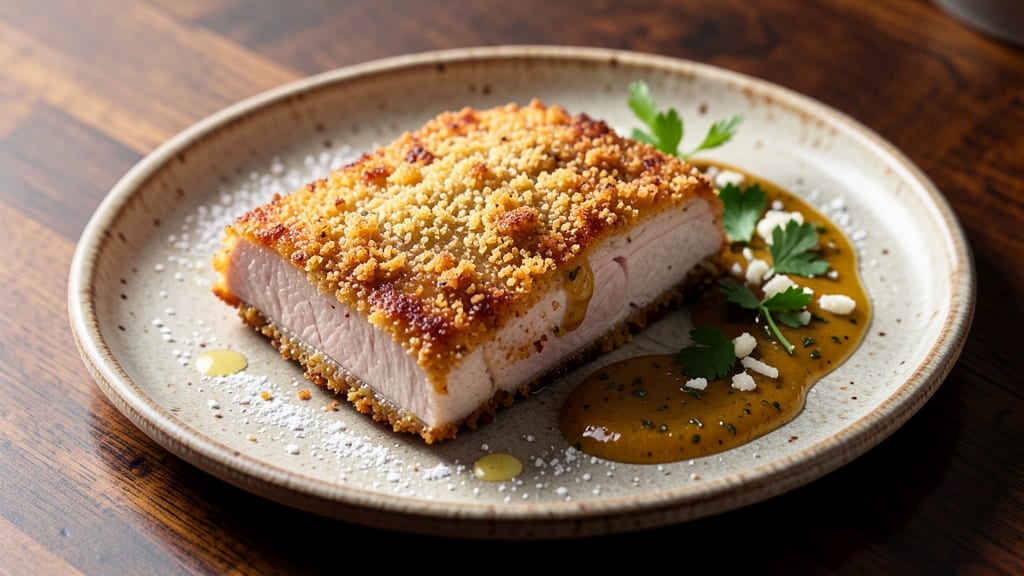
This breaded pork loin recipe delivers the perfect marriage of crispy parmesan crust and juicy pink interior—a technique I perfected during my years cooking at The Smoky Pig. 🔥 The secret lies in a double-dredge method that locks in moisture while creating that golden, shatteringly crisp exterior.
I've tested this recipe countless times, and it never fails to impress, whether you're feeding a crowd or treating yourself to a special meal.
The foundation starts with a well-marinated pork loin, tenderized just enough to stay juicy while absorbing the breading. We use a classic Southern-style approach—panko breadcrumbs mixed with grated parmesan and herbs—but I've added a modern twist with a touch of Dijon mustard in the breading for extra depth.
This isn't just another breaded pork recipe; it's a method that transforms simple ingredients into something restaurant-worthy.
What you'll end up with is a perfectly cooked pork loin—crispy on the outside, juicy and tender on the inside—ready to be sliced into perfect medallions.
The parmesan crust adds a savory crunch that complements the natural sweetness of the pork, while the pink center ensures every bite is moist and flavorful. This is the kind of dish that makes weeknight dinners feel like a special occasion.
Serve with classic sides like roasted potatoes or a fresh green salad, or elevate it with a red wine reduction for an extra touch of sophistication. The technique works equally well for pan-frying or baking, giving you flexibility based on your kitchen setup.
Let's get started on creating this showstopper for your table.
Ingredients for breaded pork loin
Here's what transforms simple pork into a restaurant-worthy crispy, juicy masterpiece.
| Ingredient | Amount | Notes |
|---|---|---|
| Pork Loin 🐖 | 1 ½ lb | Center-cut, 1-inch thick |
| All-Purpose Flour 🌾 | ½ cup | For initial dredge |
| Panko Breadcrumbs 🍞 | 1 ½ cups | Light and crispy preferred |
| Parmesan Cheese 🧀 | ½ cup | Freshly grated, fine |
| Dijon Mustard 🥬 | 1 tbsp | For depth in breading |
| Fresh Parsley 🌿 | ¼ cup | Chopped, for freshness |
| Garlic Cloves 🧄 | 2 cloves | Minced, for marinade |
| Olive Oil 🫒 | ¼ cup | Extra-virgin, for frying |
| Butter 🧈 | 2 tbsp | Unsalted, for pan |
| Salt 🧂 | 1 ½ tsp | Diamond Crystal preferred |
| Black Pepper 🌶️ | ½ tsp | Freshly cracked |
| Dry White Wine 🍷 | ¼ cup | Sauvignon Blanc preferred |
| Chicken Broth 💧 | ½ cup | Low-sodium preferred |
| Lemon Juice 🍋 | 1 tbsp | Freshly squeezed |
The pork loin is non-negotiable—center-cut, 1-inch thick ensures even cooking. I always grab mine from Whole Foods or my local butcher, where they cut it precisely for me. If you're buying from the grocery store, check for good marbling and ask for a uniform thickness. The Dijon mustard in the breading is what elevates this from basic to extraordinary—it adds a subtle tang that cuts through the richness of the pork and parmesan. For the parmesan, grate it yourself—pre-grated is too salty and lacks texture. Save the stems from fresh parsley and freeze them in a bag for future stocks.
No panko? Regular breadcrumbs toasted in a dry pan work in a pinch, but trust me—they're not the same. Running out of white wine? Dry vermouth or even apple cider vinegar will do, though the flavor won't be identical. The chicken broth can be swapped for vegetable broth if you're vegetarian, but the pork will still be the star. For the olive oil, avoid light or refined oils—they lack flavor. Instead, grab a high-quality extra-virgin like California Early Harvest. And if you're baking instead of pan-frying, use the same oil but add 1/4 cup extra to the baking dish for crispiness.
Pork loin stays juicy for 3 days in the fridge if wrapped tightly in plastic and stored on the bottom shelf. The breading mix keeps dry in an airtight container for 2 weeks—I make extra and store it in the freezer for quick weeknight dinners. For the wine reduction, reduce it while the pork rests—it reheats beautifully and adds a luxurious touch. Portion the cooked pork into 1/2-inch thick medallions for serving, and keep them warm in a 200°F oven while you finish the sauce.
Why You'll Love This Recipe
- No-Fuss Crispy Magic: I swear by this method—just flour, mustard, panko, and Parmesan. No fancy techniques, no waiting for breading to set. The Dijon mustard keeps the pork juicy while the Parmesan-panko combo gives that perfect crunch every time.
- Taste Like a Feast: Between us, this isn’t your basic breaded pork. The Parmesan in the breading adds a salty, umami punch, and the Dijon mustard? It’s the secret weapon—bright, tangy, and ridiculously good with the crispy exterior.
- Weeknight Wonder: This is my go-to when I need dinner on the table fast. It reheats beautifully for lunch the next day, or I’ll even serve it cold in sandwiches. Honestly, it’s the kind of dish that makes me look like a pro without the stress.
- Budget-Friendly Crowd-Pleaser: Pork loin stretches far, and the ingredients are all pantry staples. I’ve fed a houseful of hungry teens with this—no complaints, just seconds. Plus, leftovers? They vanish faster than I can say "crispy edges."
Step-by-step instructions for breaded pork loin
Here's how to achieve that perfect balance of crispy golden crust and tender pink center.
👨🍳 Step 1: Create the Marinade and Prep the Pork
In a small bowl, whisk together the 0.25 cup dry white wine, 1 tbsp Dijon mustard, 1 tbsp lemon juice, 1.5 tsp salt, and 0.5 tsp black pepper. This marinade works magic—it tenderizes the meat while adding depth of flavor. Place the 1.5 lb pork loin in a resealable plastic bag, pour in the marinade, and massage it all over the meat. Seal the bag and refrigerate for at least 2 hours, or up to 4 hours for maximum tenderness.
While the pork marinates, make a simple breading station. In one shallow dish, combine the 0.5 cup all-purpose flour with an additional 0.5 tsp salt and 0.25 tsp black pepper. In another dish, mix the 1.5 cups panko breadcrumbs with the 0.5 cup freshly grated parmesan cheese and 0.25 cup chopped fresh parsley. The panko gives that perfect crispy texture while the parmesan adds umami richness.
🍳 Step 2: Bread the Pork and Create the Pan Sauce Base
Remove the pork from the marinade (reserve the marinade for later) and pat it dry with paper towels—this is crucial for getting that crispy crust. Starting with the dry flour mixture, coat the pork evenly on all sides, shaking off any excess. Then dip into the panko-parmesan mixture, pressing firmly so the breading adheres well. Place the breaded pork on a wire rack set over a baking sheet and let it rest for 10 minutes—this helps the breading set slightly for better adhesion.
In a large skillet, heat 2 tbsp butter and 0.25 cup olive oil over medium heat until the butter foams and the oil shimmers. Here's the thing—don't rush this step. You want the fat mixture hot enough to create that golden crust but not so hot it burns the breading. The oil should be hot enough that when you drop a pinch of breadcrumbs in, they sizzle immediately.
🔥 Step 3: Pan-Fry to Golden Perfection
Carefully place the breaded pork in the skillet and cook for 4-5 minutes per side, pressing down gently with a spatula during the first minute to ensure even contact with the pan. This prevents curling and ensures the breading gets that beautiful golden-brown color. You'll know it's ready when the crust is deep golden and the internal temperature reaches 145°F (use a meat thermometer for accuracy).
Here's where it gets good—remove the pork from the skillet and set it aside to rest. Increase the heat to medium-high and add the reserved marinade along with the 0.5 cup chicken broth. Scrape up all those delicious browned bits from the bottom of the pan—this is where all the flavor lives. Let the sauce simmer for 2-3 minutes until slightly reduced and thickened.
⏰ Step 4: Rest and Serve with Sauce
Let the pork rest for 5-10 minutes before slicing—this is non-negotiable. The resting period allows the juices to redistribute throughout the meat, ensuring each slice stays moist and tender. While it rests, taste the sauce and adjust seasoning if needed. A squeeze of lemon juice or extra splash of broth can help balance the flavors.
Slice the pork into ½-inch thick medallions and arrange them on a warm platter. Spoon the pan sauce generously over the top and garnish with additional chopped parsley. The result should be a beautiful contrast of crispy golden crust on the outside and perfectly pink, juicy meat on the inside. Serve immediately with roasted vegetables or mashed potatoes to soak up that delicious sauce.
Pro Tips For Making Breaded Pork Loin
- Pat the pork dry: I learned this the hard way—wet pork won’t stick to flour like it should. Grab paper towels and press firmly all over, even if it feels like overkill. The crust won’t form properly if there’s moisture hiding in the crevices.
- Use two layers of breadcrumbs: Skip the single-coat shortcut—it’ll turn to mush. Dip the pork in Dijon mustard first, then coat in flour, then press a second layer of panko-Parmesan mix (half panko, half grated cheese) onto the flour. The extra effort guarantees a crispy, golden crust that stays put.
- Don’t overcrowd the pan: I used to dump everything in at once, thinking it’d cook faster. Wrong. Your pork will steam instead of sear, leaving you with soggy breading. Cook in batches—two at most—over medium-high heat with enough oil to coat the bottom (about ¼ inch). Patience here makes the difference between a great meal and a greasy mess.
- Rest before slicing: Yes, I know you’re hungry. But cutting into it right away means the juices will spill out, leaving you with dry, crumbly pork. Give it a solid 5 minutes under foil—just long enough to let the juices redistribute. Your knife will glide through, and every bite will be juicy.
Serving suggestions for this dish
Classic Southern Sides
Nothing complements breaded pork loin like classic Southern sides. I always serve it with creamy mashed potatoes—whipped with ½ cup sour cream and 2 tbsp butter—to soak up that rich pan sauce.
For a heartier option, cornbread with a touch of honey and jalapeños adds sweetness that balances the savory pork. 🥗
Don’t overlook collard greens—slow-cooked with smoked turkey neck and a splash of apple cider vinegar—for a tangy contrast. If you’re short on time, buttery green beans sautéed with garlic and almonds provide a crisp, fresh counterpoint. These sides transform a weeknight dinner into a Southern feast.
Fresh Garden Pairings
For a lighter touch, arugula salad with shaved fennel and lemon vinaigrette cuts through the richness beautifully. I toss in toasted pine nuts and crumbled goat cheese for texture. The peppery arugula and sweet fennel create a perfect balance with the pork’s savory crust. ✨
Another favorite is roasted seasonal vegetables—think carrots, Brussels sprouts, and sweet potatoes tossed in olive oil, thyme, and smoked paprika. Roast at 425°F for 25 minutes until caramelized. The caramelized edges add depth that pairs perfectly with the crispy pork.
Sauce Elevations
That pan sauce deserves a little extra love. For a red wine reduction, simmer the reserved marinade with ½ cup red wine and 1 tbsp brown sugar until syrupy. Finish with a pat of cold butter for shine.
A honey-mustard glaze—just 2 tbsp honey, 1 tbsp Dijon, and a splash of apple cider vinegar—adds sweetness that’s irresistible. 🍯
For a spicy kick, stir in 1 tsp hot honey or ½ tsp cayenne into the sauce. The heat contrasts the pork’s richness without overpowering it.
I also like drizzling balsamic glaze over the top for a tangy finish—just reduce ¼ cup balsamic vinegar with 1 tsp sugar until thickened.
Plating Like a Pro
Presentation matters! Slice the pork into ½-inch medallions and fan them elegantly on a platter. Drizzle the sauce in a zigzag pattern for visual appeal, then scatter chopped parsley and toasted breadcrumbs on top.
For a rustic touch, serve on a wooden board with warm dinner rolls on the side. 💫
If you’re feeling fancy, arrange the pork medallions around a small pool of sauce in the center of the plate, letting guests dip their slices. Garnish with edible flowers or microgreens for a pop of color. The key is to make it look as delicious as it tastes!
Nutrition facts
Frequently asked questions
Can I use this recipe for pork chops instead of pork loin?
The same breading technique works perfectly for bone-in or boneless pork chops. For bone-in chops, increase cooking time by 2-3 minutes per side to ensure they reach 145°F internally. Thicker chops may need an extra minute on each side. The key is to press gently with a spatula during the first minute of cooking to prevent curling.
How do I keep the breading from falling off?
This is all about the double-dredge method and proper resting. First, pat the pork completely dry before breading—moisture is the enemy of crispy adhesion. After coating, place the breaded pork on a wire rack for 10 minutes to let the breading set slightly. Also, don't overcrowd the pan when frying—cook in batches if needed.
Can I bake this instead of pan-frying?
Yes! Preheat your oven to 425°F and place the breaded pork on a wire rack set over a baking sheet. Bake for 20-25 minutes, flipping halfway through. For extra crispiness, broil for 2-3 minutes at the end. The baking method is great for larger cuts, but pan-frying gives that superior golden crust.
What's the best way to reheat leftovers?
Reheat in a 350°F oven for 10-12 minutes to maintain crispiness. For the breading to stay intact, place the pork on a wire rack over a baking sheet. Avoid microwaving—it makes the breading soggy. If you need to reheat quickly, pan-sear for 1-2 minutes per side over medium heat with a little butter.
How do I make this gluten-free?
Replace the all-purpose flour with gluten-free flour blend and use gluten-free panko breadcrumbs (or regular panko toasted in a dry pan). The parmesan and herb mixture remains the same. For extra binding, add 1 egg white to the breading mixture. The texture will be slightly different but still delicious.