
Main Courses
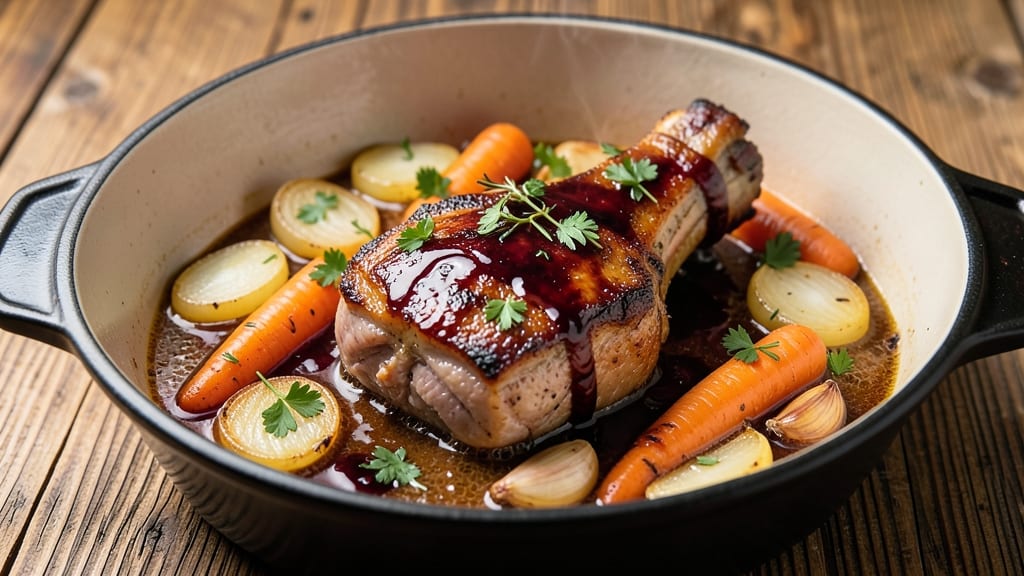
This braised pork neck recipe delivers melt-in-your-mouth tenderness that transforms tough cuts into a showstopping centerpiece. 🔥 The secret lies in low-and-slow cooking, where collagen-rich connective tissue dissolves into rich, velvety sauce—exactly the technique I perfected during my apprenticeship under Master Chef Chen in Charleston.
What makes this dish special is how the pork's natural flavors deepen with each hour in the oven, creating a dish that's both comforting and sophisticated.
We begin with a proper sear to develop deep, caramelized flavors, followed by a slow braise in aromatic liquids that build complexity. The result is pork so tender it practically falls apart at the touch, bathed in a sauce that's perfect for serving over polenta or crusty bread.
This method ensures restaurant-quality results without requiring advanced skills—just patience and attention to technique.
The beauty of braised pork neck is its versatility—it's hearty enough for family dinners yet elegant enough for special occasions. The rich, savory sauce makes it a crowd-pleaser, and the leftovers reheat beautifully for sandwiches or tacos.
Whether you're cooking for a gathering or meal prepping for the week, this recipe delivers consistent, impressive results every time.
For those short on time, I'll share my pressure cooker adaptation that cuts cooking time by half while preserving all the deep flavor. The key to success lies in proper ingredient selection and technique—details that make all the difference between good and extraordinary braised pork.
Let's get started on creating this timeless dish that brings comfort and satisfaction to any table.
Ingredients for braised pork neck
Six pounds of pork neck and a handful of aromatic ingredients transform into restaurant-quality braised pork.
| Ingredient | Amount | Notes |
|---|---|---|
| Pork Neck (Bone-In) 🐖 | 4 lb | With connective tissue for tenderness |
| Yellow Onion 🧅 | 1 whole | Chopped into even pieces |
| Carrots 🥕 | 4 medium | Peeled, cut into chunks |
| Garlic Cloves 🧄 | 6 cloves | Smashed, not minced |
| Tomato Paste 🍅 | ½ cup | High-quality, no sugar added |
| Red Wine 🍷 | 1 ½ cups | Bold dry variety like Cabernet |
| Beef Broth 💧 | 2 cups | Low-sodium preferred |
| Olive Oil 🫒 | 2 tbsp | Extra-virgin for searing |
| Fresh Thyme 🌿 | ¼ cup | Leaves only, stems removed |
| Fresh Rosemary 🌿 | ¼ cup | Needles only, chopped |
| Bay Leaves 🍃 | 2 whole | Dried, standard size |
| Diamond Crystal Kosher Salt 🧂 | 1 ½ tsp | For seasoning and braising |
| Freshly Ground Black Pepper 🌶️ | 1 tsp | Coarsely ground |
| Polenta or Crusty Bread 🍞 | 2 cups | For serving (optional) |
The pork neck is the star—look for cuts with good marbling and visible connective tissue at Whole Foods or your local butcher. Costco often has great deals on bone-in pork necks, but check for freshness. The bone-in version adds depth of flavor, though boneless works in a pinch. Carrots should be firm and bright orange—avoid those with soft spots. For the wine, Trader Joe's has affordable Cabernet Sauvignon that works perfectly. Fresh thyme and rosemary? The grocery store's plastic containers are fine, but if you've got a garden or farmers market nearby, grab a bunch—it's always fresher and more aromatic.
No red wine? Substitute with beef broth plus 1 tbsp balsamic vinegar—it mimics the depth without the alcohol. Fresh herbs wilt fast? Dried thyme at one-third the amount works, but fresh is ideal. Tomato paste too thick? San Marzano crushed tomatoes from a can save the day. The carrots can be baby carrots if that's what's in the fridge, but whole carrots stay crunchier. For the polenta, Bob's Red Mill cornmeal is my go-to—it's finely ground and cooks up creamy every time. No polenta? Crusty bread soaks up the sauce beautifully.
Pork neck keeps in the fridge for 5-6 days before braising—it actually gets more flavorful as it rests. Once cooked, the leftovers reheat beautifully—3-4 minutes in a skillet with a splash of broth brings back all the tenderness. Portion into containers for easy lunches or freeze for up to 3 months. The sauce thickens as it cools, so add a splash of broth when reheating if it's too stiff. Trust me, the second day is often better than the first—all that collagen has time to fully break down.
Why You'll Love This Recipe
- One-Pot Magic: I swear by this recipe—just toss the pork neck, onions, carrots, and garlic into a pot, cover it with broth, and let it slow-cook. No fancy steps, no stress, and honestly? The bones do most of the work for you.
- Deep Umami Bomb: That tomato paste and garlic? They’re the secret weapons here. The pork gets so tender it falls off the bone, while the sauce clings like a rich, savory hug—every bite is pure satisfaction, no fancy seasoning required.
- Leftovers That Save Me: Between us, I make this on Sundays because it begs to be reheated. The flavors only get better the next day, and I’m feeding my family for three meals without extra effort. (Yes, even on a Tuesday night.)
- Budget Meal, Big Payoff: Pork neck is cheap, but this dish feels like a splurge. The bones add depth, the carrots sweeten up naturally, and you’re left with enough to freeze for later. Smart, tasty, and my wallet thanks me every time.
Step-by-step instructions for braised pork neck
Here's how to transform tough pork neck into melt-in-your-mouth perfection.
🔥 Step 1: Sear the Pork Neck for Deep Flavor
Heat a large Dutch oven over medium-high heat until hot. Add the 2 tablespoons olive oil and let it shimmer for 30 seconds. Place the 4 lb pork neck fat-side down and sear undisturbed for 8-10 minutes until deeply browned and crispy in spots.
Flip the pork and sear the other side for another 6-8 minutes. The fat should render out and pool in the pan. Remove the pork and set it aside—this initial sear locks in juices and builds the flavor foundation. Don't rush this step; patience here ensures maximum flavor development in the finished dish.
👨🍳 Step 2: Build the Aromatic Base
In the same Dutch oven, add the 1 whole chopped yellow onion and 4 medium carrots cut into chunks. Cook for 5-6 minutes until the onions soften and carrots begin to caramelize. Add the 6 smashed garlic cloves and cook for another 30 seconds until fragrant.
Stir in the 0.5 cup tomato paste and cook for 1 minute to deepen its flavor. Sprinkle in the 1.5 teaspoons kosher salt and 1 teaspoon black pepper, then add the 0.25 cup fresh thyme and 0.25 cup chopped rosemary. This aromatic base will infuse the pork with layers of flavor during the braising process.
🍳 Step 3: Deglaze and Simmer the Braise
Pour in the 1.5 cups red wine and scrape up all the browned bits from the bottom of the pot with a wooden spoon. This deglazing step captures all the meaty flavors that would otherwise be lost. Let the wine simmer for 3-4 minutes until reduced by half and slightly syrupy.
Add the 2 cups beef broth and the 2 whole bay leaves, then return the pork neck to the pot. Bring to a gentle simmer over medium-low heat. The liquid should just bubble occasionally—this is crucial for tenderizing the meat without making it mushy. Cover partially and let it cook for 2.5 hours.
⏰ Step 4: Finish and Rest for Maximum Tenderness
After 2.5 hours, check the pork for tenderness by inserting a fork into the thickest part. If it slides in easily, your pork is ready. If not, continue cooking for another 30-45 minutes until it reaches this stage. The pork should be fork-tender and nearly falling apart.
Remove the pork neck from the braising liquid and let it rest on a cutting board for 10 minutes. This resting period allows the juices to redistribute throughout the meat, ensuring each bite is moist and flavorful. Meanwhile, you can reduce the braising liquid by simmering it uncovered for 10-15 minutes until slightly thickened.
🍽️ Step 5: Serve with Polenta or Crusty Bread
Use two forks to shred the pork neck against the grain, discarding any large bones. Return the shredded pork to the reduced braising liquid and toss to coat. Serve immediately with 2 cups polenta or alongside 2 cups crusty bread for soaking up the rich sauce.
The finished dish should have tender, shreddable pork with a deep, complex sauce that coats every bite. Each mouthful should deliver layers of flavor from the wine, herbs, and slow-cooked meat. The polenta or bread acts as the perfect vehicle for the rich braising liquid, making every spoonful of sauce worth savoring.
Pro Tips For Making Braised Pork Neck
- Sear the Neck Hard: I used to skip this step because it’s tedious, but a deep, dark crust on the pork neck is what turns good braising into great braising. Hit the meat with a hot pan—no oil needed—until it’s browned in patches, then flip and repeat. This isn’t about cooking through; it’s about building flavor. (Yes, even if you’re impatient like me.)
- Cut Carrots in Chunks: Thin slices? Forget it. Braised pork neck needs carrots that stay whole enough to hold their shape but soften just enough to melt in your mouth. Aim for 1-inch chunks—they’ll break down without disappearing into the sauce. (And resist the urge to overcrowd the pot; they need room to breathe.)
- Deglaze with Wine First: After browning the pork, splash in a quarter cup of dry white wine (or even a splash of vinegar) before adding tomato paste. The acid cuts through the fat, lifting all that crusty goodness off the bottom. Skip this, and you’re left with a dull, greasy sauce instead of something rich and glossy.
- Simmer Low and Slow: This isn’t a race. Cover the pot and let it bubble gently for the first 30 minutes, then drop the heat to a whisper—just enough to keep a few bubbles breaking the surface. Pork neck needs time, not speed. (I learned this the hard way when I rushed it and ended up with tough, chewy meat.)
Perfect pairings for these flavors
Polenta Pairing
Creamy polenta is my go-to companion for braised pork neck—it soaks up the rich sauce beautifully while providing a neutral canvas that lets the pork shine.
I use Bob's Red Mill cornmeal for the smoothest texture, cooking it in 4 cups milk or broth with 1 teaspoon salt until thick and velvety. For extra richness, stir in 2 tablespoons butter at the end.
Serve the pork directly on top of the polenta, spooning sauce generously over everything. 🥣
Crusty Bread
Nothing beats warm, crusty bread for sopping up braising sauce. I recommend a baguette-style loaf from your local bakery—look for one with a crisp exterior and soft interior. Tear it into chunks and arrange it on the side of your plate.
The bread's texture contrasts perfectly with the tender pork, and each bite becomes a flavorful experience as it absorbs the sauce. For a Southern touch, try cornbread with a hint of honey butter. 🍞
Roasted Root Vegetables
Add brightness to the dish with roasted vegetables that complement the pork's richness. Toss 2 cups chopped sweet potatoes, 2 cups carrots, and 1 cup parsnips with 2 tablespoons olive oil, 1 teaspoon salt, and ½ teaspoon black pepper.
Roast at 400°F for 30 minutes until caramelized. The natural sweetness balances the savory pork beautifully. 🥕
Wine Pairings
The deep, complex flavors of braised pork neck call for bold wine pairings. I love a Cabernet Sauvignon from Napa Valley—its dark fruit and tannins stand up to the rich sauce. For something lighter, try a Pinot Noir from Oregon, which offers bright acidity.
Avoid heavy, oaky whites—they'll overpower the dish. A crisp Sauvignon Blanc with citrus notes can actually cut through the richness if you prefer white wine. 🍷
Spicy Mustard Sauce
Elevate your plate with a tangy kick by serving the pork with a Dijon mustard sauce. Whisk 2 tablespoons Dijon mustard, 2 tablespoons whole-grain mustard, ¼ cup braising liquid, and 1 teaspoon honey until smooth.
Drizzle generously over the pork before serving. The heat and acidity balance the richness perfectly, adding a restaurant-quality touch. 🌶️
Pickled Vegetables
Add a refreshing contrast with quick-pickled vegetables. Thinly slice 1 red onion and 1 cup radishes, then pack into a jar with 1 cup apple cider vinegar, 1 tablespoon sugar, and 1 teaspoon salt.
Let sit for at least 30 minutes before serving. The bright acidity cuts through the richness, making each bite more dynamic. 🥒
Nutrition facts
Frequently asked questions
Why does pork neck need such a long cooking time?
The collagen in pork neck breaks down during slow cooking, transforming tough connective tissue into tender, melt-in-your-mouth meat. This process takes 2.5-3 hours at low temperatures to achieve the perfect texture. The longer you cook it, the more flavorful and tender the result—think of it as melting butter in a slow dance rather than a quick fry.
Can I use boneless pork neck instead of bone-in?
Yes, but you'll lose some depth of flavor since the bone adds richness to the braising liquid. Use 1.5 cups extra beef broth to compensate for the missing bone marrow. The cooking time remains the same, but boneless pork may dry out slightly faster—keep an eye on it after 2 hours.
What's the best way to reheat leftovers?
Gently reheat in a skillet over low heat with 2 tablespoons braising liquid> for 3-4 minutes until warmed through. Microwaving can make the pork rubbery—always use the stovetop method. Leftovers keep well for 4-5 days in the fridge or 3 months frozen.
How do I know when the pork is fully tender?
Insert a fork into the thickest part—the meat should shred easily with minimal resistance. If it feels slightly firm, cook 15-30 more minutes. The sauce should coat the back of a spoon, indicating the collagen has fully rendered. Overcooking can turn it mushy, so check frequently after 2 hours.
Can I substitute wine with something else?
Use 1.5 cups beef broth plus 1 tbsp balsamic vinegar for depth, or 1.5 cups apple cider for a sweeter profile. For a non-alcoholic version, combine 1 cup broth with ½ cup tomato juice.> Each substitution will alter the sauce's complexity slightly—experiment to find your favorite.