
Main Courses
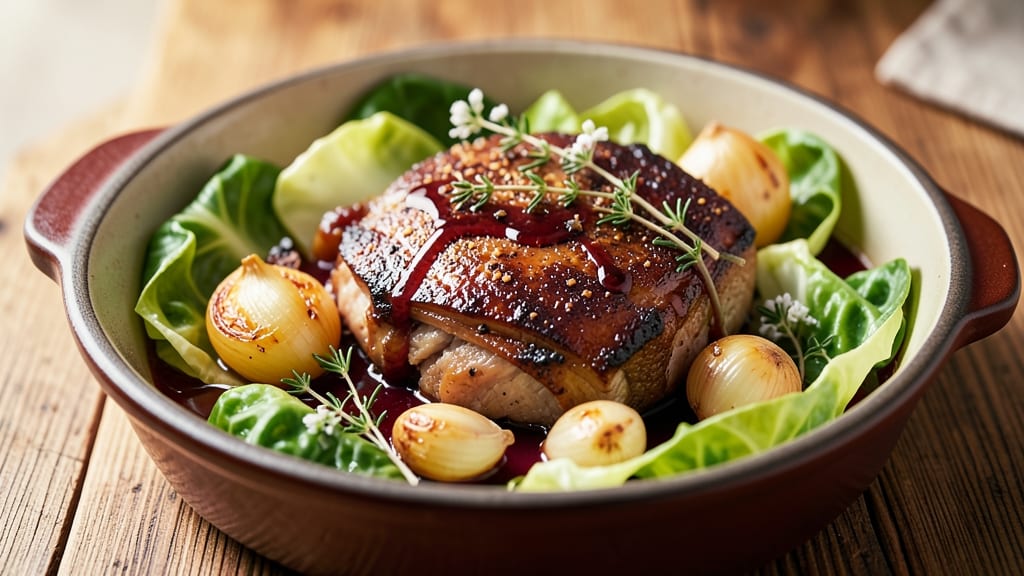
This braised pork and cabbage recipe delivers the kind of deep, comforting flavors that turn weeknight dinners into special occasions. 🔥 The secret lies in slow-simmering pork shoulder with cabbage until it becomes fork-tender, while a tangy vinegar base adds complexity that elevates this classic dish.
I first perfected this technique during my apprenticeship in Charleston, where braised pork was a weekly tradition in the kitchen.
The process starts with searing pork chops in a Dutch oven until golden, then building layers of flavor with onions, garlic, and thyme before adding cabbage and a rich braising liquid. This method transforms tough cuts into melt-in-your-mouth perfection while preserving the cabbage's satisfying crunch.
The long, gentle simmer develops a sauce that's rich yet balanced by the vinegar's brightness—a technique I've refined over years of cooking for crowds at The Smoky Pig.
What you'll end up with is a dish that's hearty enough for a family dinner but elegant enough for company. The pork falls apart with each bite, the cabbage stays crisp-tender, and the sauce clings to every forkful.
It's the kind of meal that tastes even better the next day, making it perfect for meal prep or holiday gatherings.
Serve with crusty bread to soak up every last bit of that flavorful sauce, or alongside mashed potatoes for a complete meal. The beauty of this recipe is its versatility—it works equally well on the stovetop or in the oven, and the flavors only deepen with time. Let's get cooking!
Ingredients for braised pork and cabbage
Pantry staples meet rustic tradition—this dish transforms simple ingredients into restaurant-quality comfort.
| Ingredient | Amount | Notes |
|---|---|---|
| Pork Shoulder (Boston Butt) 🥩 | 3 lb | Bone-in preferred, cut into 1.5-inch cubes |
| Green Cabbage 🥬 | 1 ½ lb | Green or purple, cut into wedges |
| Yellow Onion 🧅 | 2 whole | Medium size, sliced into half-moons |
| Garlic Cloves 🧄 | 6 cloves | Fresh, peeled and smashed |
| Fresh Thyme 🌿 | ¼ cup | Stems removed, leaves chopped |
| Apple Cider Vinegar 🍏 | ½ cup | Unfiltered preferred for depth |
| Beef Broth 💧 | 2 cups | Low-sodium preferred, homemade or quality store-bought |
| Olive Oil 🫒 | ¼ cup | Extra-virgin for searing |
| Kosher Salt 🧂 | 1 ½ tsp | Diamond Crystal preferred |
| Ground Black Pepper 🌶️ | 1 tsp | Freshly ground for best flavor |
| Brown Sugar 🍯 | 2 tbsp | Light or dark, packed |
| Bay Leaves 🌿 | 2 whole | Dried, standard size |
| Crusty Bread 🍞 | 1 loaf | For serving, optional but recommended |
The pork shoulder is your star player. Look for bone-in cuts at the butcher counter—they stay juicier during the long braise. Whole Foods or local meat markets often carry excellent options, or check the grocery store's pre-cut section for convenience. If you can't find bone-in, bone-in pork chops work too. The cabbage should be firm and crisp—avoid any with wilted outer leaves. Fresh thyme is ideal, but if you're using dried, cut the amount to one-third. For vinegar, Bragg or Texas Pete add authentic tang without overpowering.
No beef broth? Chicken broth works fine—just add a splash of soy sauce for depth. Running short on apple cider vinegar? Red wine vinegar or balsamic both work, but adjust to taste. The brown sugar can be swapped for honey or maple syrup if preferred. If you're missing the bay leaves, dried oregano at half the amount gives a similar earthy note. For the bread, any crusty loaf will do—sourdough or a good baguette from the bakery section are perfect. No crusty bread? Dinner rolls or even cornbread soak up the sauce beautifully.
This dish tastes even better the next day—plan ahead. Store leftovers in the fridge for up to 5 days, covered tightly. For longer storage, freeze portions for 3 months. Reheat gently on the stovetop with a splash of water or broth to restore moisture. The cabbage will soften further but remains tender. For meal prep, double the recipe and freeze half—perfect for lazy weeknights. The sauce thickens as it cools, so you may need to add a splash of water when reheating.
Why You'll Love This Recipe
- One-Pan Magic: I swear by this—just chop the cabbage, sear the pork, and let it slow-cook while I do laundry. The onions caramelize right in the same pot, so no extra cleanup.
- Deep Umami Bomb: That pork shoulder? It gets so tender it falls apart, and the thyme-infused garlic sauce clings to every bite. Honestly, the smell alone makes my kitchen feel like a cozy restaurant.
- Leftovers That Beg: Between us, this dish tastes better the next day. I make a double batch on Sundays, and by Wednesday, my family’s already asking for seconds—no takeout needed.
- Budget Stretch: Pork shoulder is cheap, cabbage lasts forever, and you’re not wasting anything. I’ve fed six people for under $15, and everyone leaves happy (and full).
Step-by-step instructions for braised pork and cabbage
This method delivers melt-in-your-mouth pork and tender cabbage with deep, tangy flavors.
🔥 Step 1: Sear the Pork Shoulder for Maximum Flavor
Heat the 0.25 cup olive oil in a large Dutch oven over medium-high heat until shimmering. Add the 3 lb pork shoulder cut into 1.5-inch cubes, working in batches if needed to avoid crowding. Sear for 3-4 minutes per side until deeply golden brown with crisp edges.
Here's the thing—don't rush this step. You want that Maillard reaction happening on every surface of the pork. I press down gently on the cubes during the first minute to prevent curling, which ensures even contact with the pan. Once all pieces are golden, transfer them to a plate and set aside.
👨🍳 Step 2: Build the Aromatic Base
In the same Dutch oven, add the 2 whole yellow onion sliced into half-moons and cook for 5 minutes until softened and beginning to caramelize. Add the 6 cloves garlic and cook for 30 seconds until fragrant—don't let it burn, or you'll get bitter flavors.
Stir in the 0.25 cup fresh thyme and cook for another 30 seconds until the thyme releases its aroma. This aromatic base forms the flavor foundation for your braise. I always add the thyme last so it doesn't burn before the onions and garlic get a chance to develop their sweetness.
🍳 Step 3: Deglaze and Simmer the Braise
Pour in the 0.5 cup apple cider vinegar and scrape up all those browned bits from the bottom of the pan—this is where all the concentrated flavor lives. Let it simmer for 2 minutes until the vinegar reduces by half and the liquid takes on a glossy sheen.
Add the 2 cups beef broth, 1.5 tsp kosher salt, 1 tsp ground black pepper, 2 tbsp brown sugar, and 2 whole bay leaves. Return the pork to the pot, along with any accumulated juices. Bring to a gentle simmer over medium-low heat—you're looking for small bubbles that break occasionally, not a rolling boil.
🥘 Step 4: Braise Until Fork-Tender
Cover the Dutch oven and transfer to a 300°F oven. Here's where patience pays off—braise for 3-4 hours until the pork is fork-tender. I check for doneness by inserting a fork into the thickest piece—it should slide in easily with no resistance.
About 1 hour before the pork is done, add the 1.5 lb green cabbage cut into wedges to the pot. The cabbage will cook in the rich pork braising liquid, absorbing all those incredible flavors. If the liquid reduces too much before the cabbage is tender, add 1-2 tablespoons water to maintain the proper consistency.
⏰ Step 5: Rest and Serve
Once the pork is fork-tender, remove the bay leaves and transfer the pork and cabbage to a serving platter. Tent loosely with foil and let rest for 10 minutes. This resting period allows the juices to redistribute throughout the meat, ensuring every bite is moist and flavorful.
Serve the braised pork and cabbage with warm 1 loaf crusty bread for soaking up the delicious braising liquid. The finished dish should have tender, falling-apart pork with perfectly tender cabbage and a sauce that's rich, tangy, and just thick enough to coat the back of a spoon.
Pro Tips For Making Braised Pork And Cabbage
- SEAR THE PORK FIRST: High heat for 6-8 minutes until deep brown—this isn’t optional. I used to skip it, and the pork stayed bland and watery. The crust locks in flavor as it braises, so don’t rush it, even if you’re impatient.
- CUT CABBAGE IN EVEN PIECES: No smaller than 2 inches, no larger than 3—consistency matters. I learned this after one batch where the outer leaves stayed crunchy while the center turned mushy. Big pieces soften evenly; tiny ones burn.
- DON’T CROWD THE PAN: Start with a single layer of onions and garlic, then add pork. After browning, push everything to one side and deglaze with a splash of liquid—this keeps the pork from steaming instead of caramelizing. Yes, it takes longer, but it’s worth it.
- ADD CABBAGE LAST: Wait until the pork is halfway braised—about 1.5 hours in—before tossing in the cabbage. It absorbs flavors better and won’t turn to mush if you dump it in too early. (I know, I know—you’re eager, but trust the process.)
Flavor customization for this braised pork and cabbage
Tangy-Sweet Balance
Adjust the vinegar-to-sugar ratio to suit your taste. For extra tang, add 1 tbsp more apple cider vinegar and reduce brown sugar to 1 tbsp. For a sweeter profile, swap the vinegar for ½ cup red wine and increase sugar to 3 tbsp.
I often use honey or maple syrup instead of sugar for a deeper caramelization—just 2 tbsp works beautifully. 🍯
Herb Variations
Swap thyme for rosemary or sage for a different herbal profile. Use ½ tsp dried rosemary (or 1 tbsp fresh) and add it with the onions. For a smoky twist, add 1 tsp smoked paprika when deglazing with vinegar.
My go-to is a mix of thyme and rosemary—just halve the thyme amount and add ½ tsp dried rosemary.
Spicy Kick Options
Add heat with ½ tsp cayenne pepper during the deglazing step for a slow-building warmth. For a more complex spice blend, combine ½ tsp cayenne, ½ tsp ground cumin, and ¼ tsp ground coriander when adding the broth.
I love adding 2 slices of jalapeño (seeds removed) during the final hour of braising—they infuse the sauce with subtle heat without overpowering.
Umami Boosters
Deepening the umami flavor is key to next-level braising. Add 1 tbsp soy sauce or 1 tsp fish sauce when deglazing, or stir in 2 tbsp Worcestershire sauce with the broth. For a richer base, use 1 cup chicken broth + 1 cup beef broth instead of all beef.
My secret weapon? A 1-ounce piece of Parmesan rind added during the final hour—it melts into the sauce, adding incredible depth. 🧀
Regional Twists
For a Southern BBQ-inspired version, add 1 tbsp hot sauce (like Crystal or Texas Pete) and 1 tsp smoked salt when seasoning. In Charleston-style, I sometimes add ½ cup peach preserves with the vinegar for a sweet-tart contrast.
For a German-inspired twist, swap the vinegar for ½ cup beer (like Dortmunder Export) and add 1 tsp caraway seeds during the braise.
Vegetable Swaps
Replace cabbage with 1 lb sauerkraut (drained) for a tangy, fermented twist—add it during the final hour. For a heartier dish, include 1 lb carrots and 1 lb potatoes, sliced and added with the cabbage.
My favorite variation? ½ lb Brussels sprouts halved and added with the cabbage—they hold their shape while absorbing the sauce beautifully. 🥕
Nutrition facts
Frequently asked questions
Can I use pork chops instead of pork shoulder?
Yes, but you'll need to adjust the cooking time. Bone-in pork chops (about 1-inch thick) will cook faster—aim for 2-2.5 hours in the braise instead of 3-4 hours. For boneless chops, reduce to 1.5-2 hours since they cook more quickly. The key is to monitor for tenderness rather than time.
Why does my cabbage turn mushy?
Mushy cabbage usually means it cooked too long in the liquid. Add cabbage only during the final 1 hour of braising, not at the start. If using pre-cut cabbage, trim any wilted outer leaves and cut into slightly larger wedges—they'll stay firmer. For extra texture, add cabbage 30 minutes before serving.
Can I make this in a slow cooker?
Brown the pork first in a skillet, then transfer everything (except cabbage) to the slow cooker. Cook on Low for 7-8 hours or High for 4-5 hours. Add cabbage during the last 1 hour of cooking. The slow cooker version needs slightly more liquid—add 1 extra cup of broth to prevent drying out.
What's the best way to reheat leftovers?
Reheat gently on the stovetop over medium-low heat with 2-3 tablespoons of water or broth to restore moisture. Cover and simmer for 10-15 minutes, stirring occasionally. For microwave reheating, cover with a damp paper towel and heat in 1-minute intervals until warmed through. The sauce will thicken when cooled, so add liquid as needed.
Can I substitute red wine for the vinegar?
Yes, but reduce the amount by half. Use ¼ cup red wine instead of ½ cup vinegar and add 1 tsp extra sugar to balance the acidity. Dry red wines like Cabernet Sauvignon or Merlot work best. The alcohol will cook off during braising, leaving behind rich fruit notes that complement the pork beautifully.