
Main Courses
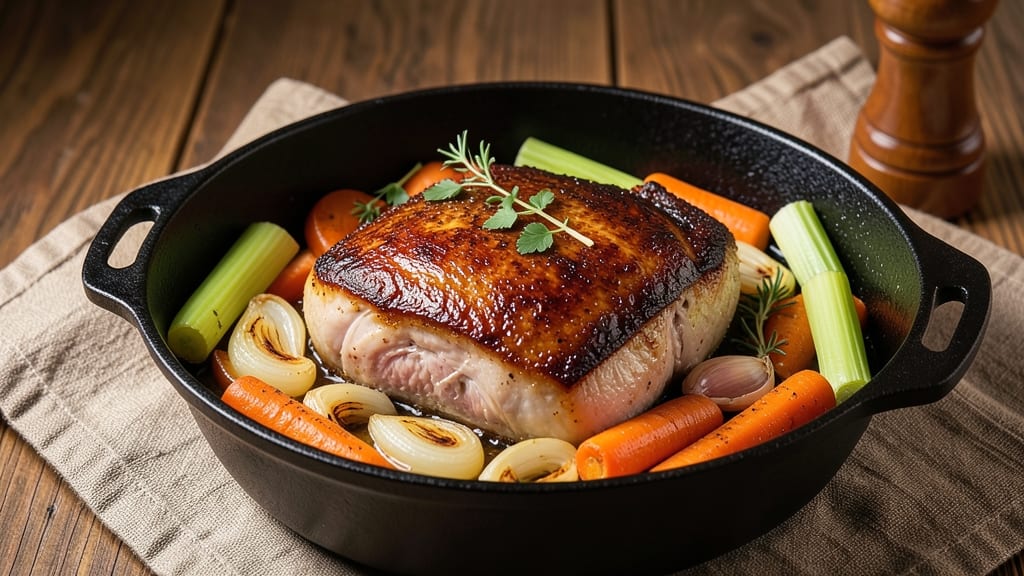
This boneless pork roast recipe in a Dutch oven transforms tough cuts into melt-in-your-mouth tenderness with a golden, caramelized crust. After years of perfecting this method—first in Charleston kitchens, then on my farm—I’ve finally cracked the code for restaurant-quality results at home.
The secret lies in slow braising, where the Dutch oven’s heavy cast iron locks in moisture while building deep, savory flavors.
What sets this recipe apart is the balance of high-heat searing followed by low-and-slow braising, a technique I learned from Master Chef Chen.
You’ll start with a deep brown crust from the Dutch oven’s even heat distribution, then let the pork simmer in its own juices until it practically falls apart.
This method works best with pork shoulder or butt, cuts I source directly from my heritage pigs—though any boneless pork roast will do. The result? Tender shreds that cling to every tooth, with a crust so crisp it rivals competition-style pulled pork.
By the time you’re done, you’ll have a dish that’s rich, deeply flavorful, and effortlessly impressive—perfect for feeding a crowd or meal prepping for the week. The Dutch oven ensures even cooking and minimal cleanup, while the slow braise develops complex flavors that store-bought versions can’t match.
This is the kind of pork dish that turns weeknight dinners into special occasions, no matter the day.
Serve it on buttered buns with tangy coleslaw, piled high on cornbread, or even as a filling for tacos. The leftovers reheat beautifully, making it a practical choice for busy weeks. Here’s how to make it—just like I do in my Atlanta kitchen, but with half the effort.
Ingredients for boneless pork roast recipe dutch oven
Pantry staples meet farm-fresh pork for melt-in-your-mouth Dutch oven magic.
| Ingredient | Amount | Notes |
|---|---|---|
| Boneless Pork Roast 🐖 | 4 lb | Pork shoulder or butt preferred |
| Yellow Onion 🧅 | 1 whole | Chopped into 1/2-inch pieces |
| Carrots 🥕 | 4 whole | Cut into 1-inch chunks |
| Celery Stalks 🥬 | 3 whole | Chopped into 1/2-inch pieces |
| Garlic Cloves 🧄 | 6 cloves | Smashed, not minced |
| Dutch Oven 🍲 | 1 whole | 5-7 quart capacity preferred |
| Olive Oil 🫒 | ¼ cup | Extra-virgin for high heat |
| Dried Thyme 🌿 | 1 tbsp | Or 1 tbsp fresh thyme leaves |
| Dried Rosemary 🌿 | 1 tsp | Crushed between fingers |
| Salt 🧂 | 1 ½ tbsp | Kosher or sea salt |
| Black Peppercorns 🌶️ | 1 tsp | Freshly cracked |
| Apple Cider Vinegar 🍏 | ¼ cup | For tangy depth |
| Beef Broth 💧 | 2 cups | Low-sodium preferred |
| Honey 🍯 | 2 tbsp | For caramelized crust |
| Cornstarch 🌾 | 1 tbsp | For thickening sauce |
The pork cut matters most here—pork shoulder or butt from a trusted butcher (I use Atlanta's Heritage Farms) delivers the best texture. Look for good marbling, not too lean, which ensures juiciness. If you're buying pre-cut boneless roast, 4 lbs is perfect for 6 servings. The Dutch oven? Any heavy cast iron will work, but a 5-7 quart size gives you room to sear properly. For the aromatics, fresh thyme and rosemary from the grocery store's herb section (not the sad plastic containers) make all the difference—just crush the rosemary stems to release their oils. If you're in a pinch, dried works at half the amount, but fresh is worth the splurge.
No apple cider vinegar? Red wine vinegar or balsamic works in a bind, though it'll change the flavor profile slightly. Short on beef broth? Chicken broth with an extra pinch of soy sauce gets you close. The honey is non-negotiable for that caramelized crust—local raw honey from farmers markets has deeper flavor, but store-bought works fine. For the cornstarch, arrowroot powder is a 1:1 swap, though it thickens slightly differently. And if you're worried about the pork being too fatty, pat it dry with paper towels before searing to get that perfect crust. Trust me on that step—it makes all the difference.
This dish tastes even better the next day, so double the batch if you can. Store leftovers in the fridge for 4-5 days or freeze for 3 months—it reheats beautifully. For serving, I like to keep the juices warm in a small saucepan with a splash of broth, then drizzle over the pork. The Dutch oven keeps everything hot while you're serving, so no extra dishes to wash. And if you've got extra broth after cooking, save it for soups or gravies—it's packed with flavor.
Why You'll Love This Recipe
- I’ll be real: boneless pork roast is cheaper than bone-in, and the veggies stretch every dollar. Plus, the Dutch oven’s slow cook turns tougher cuts into tender, juicy perfection without breaking the bank. It’s my go-to when I need to feed a crowd without stressing.
- One-Pot Magic: I swear by this recipe because it’s all in the Dutch oven—no extra pans, no messy transfers. Just chop the onion, carrots, and celery into big chunks (seriously, no need to be precise), toss them in with the pork, and let the garlic and herbs work their flavor spell while you do whatever else life throws at you.
- Garlic Bomb: Between us, that garlic-infused oil clinging to the pork? Chef’s kiss. The slow cook in the Dutch oven melts the aromatics right into the meat, giving it this deep, savory richness that makes even the simplest slice taste like a restaurant-worthy bite.
- Leftovers That Don’t Suck: Honestly, this recipe makes so much more than you’ll eat in one sitting—and the leftovers are just as good. Shred the pork for tacos, sandwiches, or even loaded baked potatoes the next day. (Yes, even on a Tuesday night.)
Step-by-step instructions for Dutch oven pork roast
Here's how to transform a simple pork roast into melt-in-your-mouth tender shreds with a golden crust.
Sear the Pork Roast for Maximum Flavor
Heat the Dutch oven over medium-high heat until it's hot. Add the 0.25 cup olive oil and swirl to coat the bottom. Place the 4 lb boneless pork roast in the pan, fat-side down if applicable, and sear for 5 minutes without moving it. You'll see a deep golden crust forming - this is where all the flavor starts.
Flip the roast and sear the other side for another 5 minutes. The goal is to create a rich, caramelized crust that will eventually break down into tender shreds. Press down gently on the roast during the first minute of searing - this prevents it from curling and ensures even contact with the pan. Once both sides are beautifully browned, remove the roast and set it aside on a plate.
Build the Aromatic Base
In the same Dutch oven, add the chopped 1 whole yellow onion, 4 whole carrots, and 3 whole celery stalks. Cook for 5 minutes until the vegetables begin to soften and release their natural juices. Add the 6 smashed garlic cloves and cook for another 30 seconds until fragrant - you should smell that wonderful aromatic punch developing.
Sprinkle in the 1 tbsp dried thyme and 1 tsp crushed dried rosemary, stirring to coat the vegetables. Cook for 30 seconds until the spices are toasted and their aromas are fully released. This aromatic base forms the flavor foundation for your entire dish, so don't rush this step.
Create the Braising Liquid
Pour in the 0.25 cup apple cider vinegar and scrape up any browned bits from the bottom of the pan. These bits, called fond, are packed with flavor that will dissolve into your braising liquid. Add the 2 cups beef broth and bring the mixture to a gentle simmer over medium heat.
Stir in the 2 tbsp honey and let it dissolve completely. The honey will add a subtle sweetness that balances the tangy vinegar and enhances the overall flavor profile. Return the pork roast to the Dutch oven, placing it on top of the vegetables. The roast should be mostly submerged in the liquid, but that's okay - it will cook through evenly.
Slow Braise Until Fork-Tender
Cover the Dutch oven with its lid and transfer it to a preheated 325°F oven. Braise for 2.5 to 3 hours, until the pork is fork-tender. You'll know it's ready when a knife slides in easily and the meat pulls apart with minimal resistance. The vegetables should also be tender but still holding their shape.
About 30 minutes before the pork is done, check the liquid level. If it's reduced too much, add ½ cup water to maintain adequate moisture for braising. The pork should be submerged enough that it doesn't dry out during the cooking process, but it's okay if it's not completely covered.
Thicken the Sauce and Finish
Once the pork is fork-tender, remove it from the Dutch oven and place it on a cutting board. Tent loosely with foil to keep warm. In a small bowl, whisk together the 1 tbsp cornstarch with 2 tablespoons water to create a slurry. Slowly pour this mixture into the braising liquid in the Dutch oven while stirring constantly.
Return the Dutch oven to medium heat and simmer for 3-5 minutes until the sauce thickens to a glossy consistency that coats the back of a spoon. Taste and adjust seasoning with the 1.5 tbsp salt and 1 tsp black peppercorns if needed. The sauce should be rich, flavorful, and perfectly balanced between sweet, tangy, and savory notes.
Pro Tips For Making Boneless Pork Roast Recipe Dutch Oven
- SEAR FIRST, THEN SLOW: I learned this the hard way—rushing the sear and jumping straight to low heat leaves you with bland, gray pork. Get that Dutch oven screaming hot (medium-high, not simmering) and let the pork develop a crust for 4-5 minutes per side before adding liquid. That crust locks in flavor and keeps it juicy—trust me, your future self will notice.
- CHOP VEGETABLES UNEVENLY: No, I’m not suggesting chaos. Cut carrots and celery into 1.5-inch chunks, but leave some onion pieces slightly larger than others. The uneven sizes mean they cook at different rates, so you’re not left with a mushy, watery pot after 2 hours. (Yes, even if it looks messy at first.)
- DON’T SKIP THE FAT CAP: That white stuff rendering off the pork? Save it. After searing, spoon the melted fat off the pork and drizzle it over the veggies before adding broth. It adds richness without extra oil, and you won’t believe how much it elevates the whole dish. (I used to toss it—now I hoard it like gold.)
- USE COLD BROTH: Pour cold liquid over the seared pork and veggies, not hot. This prevents a sudden temperature spike that can shock the meat and cause it to release juices too early. Start with room-temp broth, but if you’re impatient (like me), just chill it for 10 minutes in the fridge first. The pork stays tender, and you avoid that sad, watery pot.
Best sauces and condiments for this recipe
Apple Cider Glaze
This tangy-sweet glaze elevates your pork roast to next-level restaurant quality. Simmer ½ cup apple cider vinegar, ¼ cup honey, and 1 tbsp brown sugar in a small saucepan until reduced by half (5-7 minutes).
Brush generously over the pork during the last 30 minutes of braising for a sticky, caramelized finish. I like to add ½ tsp cinnamon for warmth—it pairs beautifully with the pork's savory depth. 🍏
Smoky Chipotle Sauce
For a Southwestern twist, blend ½ cup beef broth, 1 chipotle pepper in adobo, 1 tbsp tomato paste, and 1 tsp ground cumin until smooth. Pour this into the Dutch oven during the final 30 minutes of braising.
The smoky heat cuts through the pork's richness while adding complexity. Garnish with chopped cilantro before serving—it adds a fresh contrast that balances the sauce's boldness. 🌶️
Creamy Horseradish Sauce
Whisk together ½ cup sour cream, 2 tbsp prepared horseradish cream, 1 tbsp Dijon mustard, and 1 tsp lemon juice for a creamy, spicy accompaniment. Serve on the side or drizzle lightly over shredded pork.
The horseradish's peppery kick cleanses the palate between bites, making this a perfect pairing for hearty pork dishes. I often double this recipe to have leftovers for sandwiches. ✨
Classic Brown Gravy
Use the pork's braising liquid to make a rich, velvety gravy. After removing the pork, strain the liquid through a fine-mesh sieve into a saucepan. Whisk in 1 tbsp cornstarch mixed with 2 tbsp cold water and simmer until thickened.
Season with salt and black pepper to taste. This gravy soaks up perfectly in pulled pork sandwiches or alongside mashed potatoes. It's the ultimate comfort food sauce. 🥄
Sweet and Spicy BBQ Sauce
Combine ½ cup ketchup, 2 tbsp molasses, 1 tbsp smoked paprika, 1 tsp cayenne pepper, and 1 tsp garlic powder in a saucepan. Simmer for 10 minutes until thickened.
Brush over the pork during the last 45 minutes of cooking for a sticky, sweet-spicy glaze. This sauce works especially well if you're serving the pork on buns for sandwiches. 🔥
Nutrition facts
Frequently asked questions
Can I use a different cut of pork besides shoulder or butt?
While pork shoulder or butt is ideal for this Dutch oven recipe, you can use pork loin if you adjust the cooking time. Loin is leaner and cooks faster (1.5-2 hours at 325°F), but it won't shred as easily. For best results, keep the cut consistent with the recipe's intended texture—shoulder/butt delivers that signature pulled pork experience.
Why does my Dutch oven pork roast turn out dry?
Overcooking or insufficient liquid are the most common culprits. Always maintain a ½-inch liquid level above the pork during braising, and never exceed 325°F—higher temps dry it out. Also, avoid lifting the lid frequently, which releases steam and moisture. For extra insurance, add ½ cup water if the liquid reduces too much during cooking.
Can I make this recipe on the stovetop instead of the oven?
Yes, but with adjustments! After searing, cover the Dutch oven and simmer on low heat for 2.5-3 hours, adding water as needed to maintain liquid. The stovetop method works best if you have a lid that fits snugly—uneven heat distribution can lead to dry spots. For best results, use the oven for even cooking, but the stovetop is a great backup.
How do I store and reheat leftovers?
Store in an airtight container in the fridge for 4-5 days or freeze for 3 months. To reheat, place the pork in a skillet with 1-2 tbsp broth or water, cover, and warm on low heat until heated through (10-15 minutes). For crispy texture, broil for 2-3 minutes at the end. The sauce reheats well too—just warm it separately.
What's the best way to serve this pork roast?
For a classic Southern meal, serve on buttered brioche buns with tangy coleslaw and pickles. It also works beautifully on cornbread or over mashed potatoes. The smoky chipotle sauce or creamy horseradish sauce from the dynamic content section add great contrast. For a lighter option, try it in tacos with avocado and lime.