
Main Courses
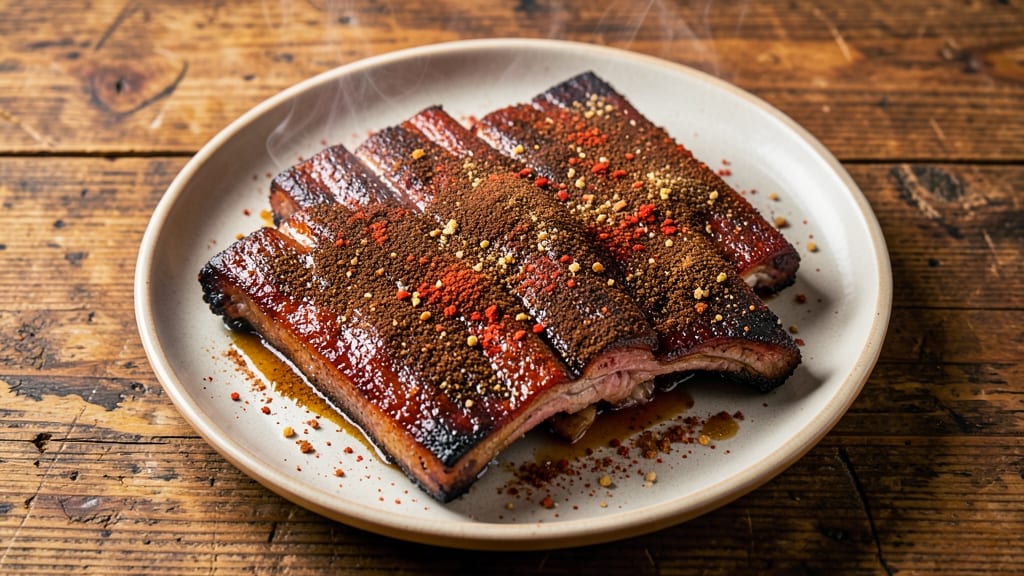
Boneless pork ribs on the smoker deliver restaurant-quality tenderness without the fuss of bones—just pure, smoky meat that falls apart at the touch. I perfected this technique after years of competing in the Southeast BBQ circuit, where judges demand both flavor and precision.
The secret lies in a two-stage cook that builds bark while keeping the meat juicy inside.
Start with a dry rub of bold spices—paprika, brown sugar, and smoked paprika—that creates that signature smoky crust, while a 325°F low-and-slow smoke ensures the meat stays tender. I use apple wood for a subtle sweetness that pairs perfectly with the pork’s natural richness.
The key? Patience—these ribs need 5-6 hours to reach 203°F internal temp, where collagen breaks down into melt-in-your-mouth perfection.
What you’ll end up with is fall-apart ribs that are crispy on the outside, juicy on the inside, and infused with that unmistakable smoker aroma. The bark develops early, locking in moisture while creating texture that’s impossible to resist.
Serve with classic BBQ sides—coleslaw, baked beans, or cornbread—to complete the meal.
This recipe works equally well for weeknight dinners or tailgate gatherings, scaling easily from a small batch to a crowd. The beauty of boneless ribs is their versatility—wrap them in tortillas, pile them high on buns, or serve family-style. Here’s how to smoke them like a pro.
Ingredients for boneless pork ribs smoker
Smoky, tender ribs start with these bold flavors and precise ingredients—no shortcuts needed.
| Ingredient | Amount | Notes |
|---|---|---|
| Boneless Pork Ribs 🥓 | 3 lb | Thick-cut, trimmed of excess fat |
| Smoked Paprika 🌶️ | ½ cup | For deep smoky flavor |
| Brown Sugar 🍚 | ¼ cup | Light or dark variety |
| Paprika 🌶️ | 2 tbsp | Sweet or hot, not smoked |
| Garlic Powder 🧄 | 1 tbsp | Freshly ground preferred |
| Onion Powder 🧅 | 1 tbsp | For balanced sweetness |
| Black Pepper 🌶️ | 1 tbsp | Freshly cracked for heat |
| Kosher Salt 🧂 | 1 tbsp | Diamond Crystal preferred |
| Apple Wood Chips 🌳 | 2 lb | Unsoaked, for subtle sweetness |
| Yellow Mustard 🍯 | 2 tbsp | For initial coating |
| Apple Cider Vinegar 🍎 | 2 tbsp | For tenderizing |
| Olive Oil 🫒 | 2 tbsp | Light coating for bark |
The ribs are the star, so thick-cut boneless pork ribs are non-negotiable—thinner cuts dry out. Most butchers sell them pre-trimmed, but if you're buying whole, trim excess fat to 1/4-inch thickness for even cooking. I source mine from local farms or the meat counter at Whole Foods, where they're consistently high-quality. Look for good marbling—those little white streaks mean juicier meat. The apple wood chips should be fresh, not dusty, and unsoaked for best smoke flavor. Traeger and Weber both sell quality chips if you can't find them at the grocery store.
No smoked paprika? Substitute 1 tbsp regular paprika plus 1 tsp liquid smoke—just don't overdo it. Running short on brown sugar? White sugar works fine, though it won't caramelize as nicely. The yellow mustard and apple cider vinegar combo tenderizes the meat—skip it if you're using a marinade, but don't skip both. For the rub, I always toast the spices in a dry pan for 30 seconds to deepen the flavor. Want extra bark? Add 1 tbsp cornstarch to the rub. The olive oil is key for that crispy crust—use light olive oil, not extra-virgin, so it doesn't overpower the smoky flavor.
These ribs reheat beautifully—just 10 minutes at 300°F with a splash of apple juice to keep them moist. Store cooked ribs in the fridge for 4 days wrapped tightly in foil, or freeze for 3 months in airtight containers. For leftovers, I like to shred them into tacos or sandwiches—add a little BBQ sauce to revive the smoky flavor. The rub keeps well in an airtight container for 3 months, so make extra for future smokes. If you're prepping ahead, pat the ribs dry and refrigerate uncovered for 1-2 hours before smoking to help the bark form faster.
Why You'll Love This Recipe
- Smoke in Minutes: I swear, these ribs are done faster than my coffee brews—just toss them in the smoker with that smoky paprika mix, and you’re talking two hours max (set it and forget it). No brining, no fussing, no waiting around like some fancy dry rubs demand.
- Sweet-Smoky Magic: That combo of brown sugar and smoked paprika? It’s like a hug for your taste buds—caramelized edges, tender meat, and a deep, woodsy warmth that sticks with you. Honestly, my picky-eater husband asks for seconds, and he never does that.
- Tailgate or Taco Night: Between us, these ribs are my secret weapon for game days or when I’m craving tacos. Shred them for nachos, chop them into sandwiches, or serve them whole with a cold beer—no leftovers go to waste, and they’re way cheaper than takeout.
- Budget-Friendly Leftovers: A pound of ribs feeds four, and they taste just as good reheated as they do fresh. I’ll be real: I often make extra just to freeze portions for lazy Mondays. Smoked paprika and garlic powder are dirt cheap, too—this recipe won’t break the bank.
Step-by-step instructions for smoked boneless pork ribs
Here's how to transform tough boneless pork ribs into melt-in-your-mouth tenderness using your smoker.
Prepare the Ribs for Maximum Flavor
Start by patting the 3 lb boneless pork ribs completely dry with paper towels—this ensures a better bark later. In a small bowl, whisk together the 0.5 cup smoked paprika, 0.25 cup brown sugar, 2 tbsp paprika, 1 tbsp garlic powder, 1 tbsp onion powder, 1 tbsp black pepper, and 1 tbsp kosher salt. This dry rub is the foundation of your flavor profile, so don't skip mixing it thoroughly.
Next, create a wet coating by combining 2 tbsp yellow mustard and 2 tbsp apple cider vinegar in another small bowl. The acidity in the vinegar helps tenderize the meat while the mustard adds a subtle tang. Brush this mixture evenly over all sides of the ribs, then generously apply the dry rub, pressing it into the meat so it adheres well. Let the ribs sit at room temperature for 30 minutes before smoking—this allows the rub to penetrate and the meat to cook more evenly.
Set Up Your Smoker for Low and Slow Cooking
While the ribs rest, prepare your smoker by adding 2 lb apple wood chips to the smoker box or chip tray. Apple wood provides a subtle sweetness that pairs perfectly with pork. Light the chips according to your smoker's instructions and let them burn until you see clean, blue smoke (not thick white smoke) emerging from the chimney. Preheat your smoker to 225°F—this low temperature is crucial for achieving tender, fall-apart ribs without drying them out.
Once the smoker reaches temperature, place the ribs on the grill grates, fat-side up if there's any remaining fat cap. The ribs should be positioned perpendicular to the direction of the smoke flow for even exposure. Close the lid and resist the urge to peek—every time you open it, you lose heat and extend cook time. This is where patience pays off for tender results.
Smoke Until Fork-Tender
Smoke the ribs undisturbed for 4 to 5 hours, maintaining a consistent 225°F temperature. You'll know they're ready when they reach an internal temperature of 195-203°F at the thickest point and a meat thermometer inserted into the center comes out clean with no resistance. The ribs should be fork-tender, pulling apart easily when tested gently. This is the sweet spot for maximum tenderness without falling apart.
During the last 30 minutes of cooking, you can optionally spritz the ribs with a mixture of equal parts apple juice and apple cider vinegar every 45 minutes if they begin to dry out. This helps maintain moisture and prevents a tough exterior. The ribs should have a beautiful mahogany bark on the outside and a pink, juicy interior when sliced.
Rest and Serve
Once the ribs reach the perfect internal temperature, remove them from the smoker and transfer to a cutting board. Tent loosely with aluminum foil and let them rest for 15 to 20 minutes. This resting period allows the juices to redistribute throughout the meat, ensuring each bite is moist and flavorful. Don't skip this step—it's what transforms good ribs into exceptional ribs.
Slice the ribs against the grain into ½-inch thick portions and serve immediately. The exterior should be crispy with a dark bark, while the interior remains tender and juicy. Pair with classic barbecue sides like coleslaw or cornbread to complete the meal. The apple wood smoke will give your ribs a subtle sweetness that complements the savory rub perfectly.
Pro Tips For Making Boneless Pork Ribs Smoker
- Trim the Fat First: Boneless pork ribs still have fat layers—scrape them off before smoking. I learned this the hard way when my ribs turned greasy instead of crispy. A quick knife run takes 2 minutes and makes all the difference for that dry-rub stick.
- Mix Dry Rub Wet: Sprinkle a teaspoon of apple cider vinegar or water into your smoked paprika-brown sugar mix before applying. It helps the spices cling and caramelize faster—no more rubbing falling off mid-smoke.
- Skip the Crowding: Pile ribs too close? They’ll steam instead of smoke. Leave 1-inch gaps between them on the rack, even if it means two batches. Trust me, the second batch will taste just as good.
- Wrap at 160°F: Don’t wrap too early—wait until the internal temp hits 160°F. After burning three batches of overcooked ribs, I finally realized: foil at 160°F locks in moisture without turning them into mush. (Yes, even if you’re impatient like me.)
Pro cooking tips for perfect results
Smoke Temperature Control
Maintaining a steady 225°F is non-negotiable for tender ribs. I use a Traeger Pellet Grill with its built-in temperature controller, but if you're using charcoal, add chunks every 45 minutes to maintain heat. For gas smokers, I recommend the Weber Smokey Mountain—it holds temperature like a dream.
The key is patience: fluctuations above 250°F will dry out the meat, while dropping below 200°F extends cook time unnecessarily. 🌡️
Bark Development Tricks
For that coveted mahogany bark, start with a dry rub application—press it hard into the meat so it sticks. After 2 hours on the smoker, I flip the ribs and increase the heat to 275°F for 30 minutes to crisp the bark.
Pro tip: Spritz with equal parts apple juice and apple cider vinegar every 45 minutes during the last hour to keep the surface moist while building crust. The vinegar also cuts through the sweetness of the rub.
Internal Temp Matters
Use a meat thermometer with a 1-inch probe—insert it into the thickest part of the ribs, avoiding bone if there were any remnants. The perfect temp is 203°F (probe pulls out cleanly with no resistance).
I’ve seen beginners pull ribs at 190°F—they’ll be tough. The collagen breaks down between 195-203°F, turning connective tissue into gelatin that keeps the meat juicy. 💡
Resting Like a Pro
Never skip the 15-20 minute rest after removing ribs from the smoker. Tent loosely with foil and place on a wire rack over a baking sheet to catch drippings. This lets juices redistribute—skipping it means dry, stringy meat.
I’ve learned this the hard way: once, I sliced ribs immediately and served them to a crowd. The feedback? “Chewy.” Never again. 🥗
Wood Choice Matters
Apple wood is my go-to for pork, but don’t dismiss cherry or hickory if you prefer a bolder flavor. Avoid mesquite—it overpowers pork’s natural sweetness.
For extra depth, I add ½ cup apple wood chips to the smoker box at the 3-hour mark, which adds a final layer of smoke flavor without drying the ribs. Always use unsoaked chips—they burn cleaner and produce better smoke.
Equipment Shortcuts
No fancy smoker? A charcoal grill with a water pan works in a pinch. Fill a disposable aluminum pan with water, place it on one side, and add charcoal to the other. The steam helps maintain moisture.
For temperature control, I use a $20 laser thermometer aimed at the grill grates. It’s not as precise as a probe, but it keeps me in the 225-250°F range. 🔥
Nutrition facts
Frequently asked questions
Can I use boneless pork ribs from the store for this recipe?
Yes, but look for thick-cut boneless pork ribs (at least 1-inch thick) from quality butchers or specialty stores. Pre-cut store ribs are often too thin and dry out faster. I recommend asking your butcher for pork loin back ribs—they're perfect for this recipe. If you can't find them, pork shoulder cut into rib-sized pieces works too.
What if my smoker doesn't stay at 225°F consistently?
Temperature fluctuations are common with charcoal smokers. For gas smokers, use the Weber Smokey Mountain model—it maintains temperature beautifully. With charcoal, add 10-12 fresh coals every 45 minutes and keep a water pan nearby to help stabilize heat. If your smoker keeps dropping below 200°F, try adding a reflector screen to retain heat. Patience is key—these ribs need time to reach 203°F for perfect tenderness.
Can I make this recipe without a smoker?
Use a charcoal grill with indirect heat—place ribs on one side and coals on the other with a water pan in between. For oven cooking, bake at 275°F for 4-5 hours with foil on, then finish uncovered at 325°F for 30 minutes to crisp the bark. The key is low-and-slow cooking—just monitor the internal temp closely. For extra smoke flavor, add wood chips to the grill or place them on a foil packet near the coals.
How do I know when the ribs are done?
Use a meat thermometer—insert it into the thickest part of the ribs (avoiding bone if any remains). They're done at 203°F internal temp, where the probe pulls out cleanly with no resistance. The ribs should also be fork-tender, pulling apart easily. If they're not quite there at 5 hours, keep smoking them until they reach 203°F. Never pull them before this temp—they'll be tough.
Can I make this recipe ahead of time?
Yes! Cooked ribs reheat beautifully. Store them wrapped tightly in foil in the fridge for 4 days or freeze for 3 months. To reheat, wrap them in fresh foil and bake at 300°F for 10-15 minutes, or warm in a 250°F oven for 20 minutes with a splash of apple juice to keep them moist. For leftovers, I love shredding them into tacos or sandwiches—just add a little BBQ sauce to revive the smoky flavor.