
Main Courses
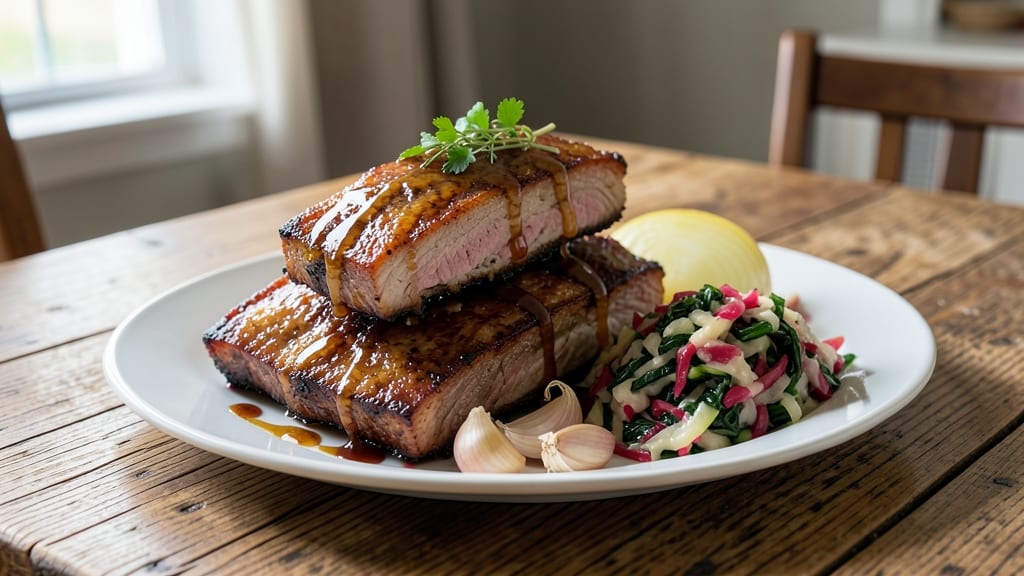
This boneless pork ribs and sauerkraut recipe delivers the perfect balance of tender, caramelized meat and tangy fermented crunch—exactly what I serve at The Smoky Pig when we want to highlight pork's natural sweetness.
The secret lies in slow-braising the ribs until they're fork-tender while developing a crispy, golden crust that locks in all those smoky flavors.
My farm-raised heritage pork ribs (Gloucestershire Old Spots, naturally) transform into melt-in-your-mouth perfection when paired with the sharp, probiotic-rich bite of sauerkraut—it's the kind of dish that feels both rustic and refined.
The beauty of this recipe is its simplicity: just a few core ingredients—pork ribs, sauerkraut, onions, and a touch of mustard—come together in one pot, creating layers of flavor that build with every bite.
I developed this technique during a particularly busy week when I needed a dish that could feed a crowd without sacrificing quality, and it's been a staple ever since.
The slow cooking process (about 2 hours) ensures the meat stays juicy, while the sauerkraut adds a bright acidity that cuts through the richness.
What you'll end up with is a dish that's rich and satisfying yet balanced—tender pork ribs with crispy edges, caramelized onions, and sauerkraut that's been gently warmed to soften its texture without losing its signature tang.
The aroma alone will have everyone gathering around the table, and the first bite delivers that perfect harmony of sweet, smoky, and tangy. This is comfort food at its finest, but with the kind of technique that makes it feel special.
Serve it family-style with crusty bread to soak up every last bit of the braising liquid, or plate it individually with a sprinkle of fresh dill for a touch of brightness.
The leftovers? Even better the next day, as the flavors continue to meld. Let's get cooking—this is the kind of dish that turns weeknight dinners into memorable meals.
Ingredients for boneless pork ribs and sauerkraut
Heritage pork ribs, tangy sauerkraut, and simple pantry staples transform into restaurant-quality comfort food.
| Ingredient | Amount | Notes |
|---|---|---|
| Boneless Pork Ribs 🥓 | 3 lb | Heritage pork preferred, cut into 2-inch pieces |
| Sauerkraut 🥬 | 2 cups | Unopened jar preferred, drained |
| Yellow Onions 🧅 | 2 large | Sliced into 1/4-inch rounds |
| Dijon Mustard 🍯 | 2 tbsp | High-quality, not powdered |
| Apple Cider Vinegar 🍏 | ¼ cup | For tangy depth |
| Garlic Cloves 🧄 | 4 cloves | Minced for aromatic base |
| Fresh Thyme 🌿 | ¼ cup | Leaves only, chopped |
| Bay Leaves 🌿 | 2 whole | For subtle earthiness |
| Beef Broth 💧 | 1 ½ cups | Low-sodium preferred |
| Brown Sugar 🍚 | 2 tbsp | Lightly packed |
| Olive Oil 🫒 | 2 tbsp | For searing ribs |
| Salt 🧂 | 1 ½ tsp | Kosher or sea salt |
| Black Pepper 🌶️ | ½ tsp | Freshly ground |
| Fresh Dill 🌿 | 0.1 cup | Chopped for garnish |
The pork ribs are everything here. Heritage pork like Gloucestershire Old Spots has more marbling and flavor, but any boneless pork ribs will work. Look for ribs with good fat cap—this creates that crispy crust we're after. Costco or local butchers usually carry the best cuts. If you can't find heritage pork, regular pork ribs still deliver great results, just slightly less rich. The ribs should be about 2 inches thick for even cooking—cut them yourself if they're too large from the package. Don't skip trimming excess fat, but leave some for flavor.
Sauerkraut is non-negotiable for that probiotic tang, but if you're in a pinch, store-bought sauerkraut from the refrigerated section works fine (just check for no added vinegar). The onions? Yellow onions caramelize best, but red onions add color if you're feeling fancy. No fresh thyme? Dried thyme at one-third the amount gets you close. The Dijon mustard matters—Maille or Whole Foods brand have the best balance of tang and smoothness. For the vinegar, apple cider adds depth, but white vinegar or red wine vinegar work in a squeeze.
This dish tastes even better the next day as flavors meld. Store leftovers in the fridge for up to 4 days, or freeze for 3 months—the ribs stay tender when reheated gently. I always make a double batch because it disappears fast. The braising liquid? Save it for gravy or soup stock—it's packed with flavor. For serving, crusty bread (like a baguette) soaks up all the delicious juices perfectly. Garnish with fresh dill right before serving—it adds that final bright note.
Why You'll Love This Recipe
- One-Pan Magic: I swear by this recipe because it’s all about minimal cleanup. Sear the ribs, toss in the sauerkraut and onions, and let the vinegar and mustard work their tangy magic—no extra pots, no fuss. Just one pan, one spatula, and you’re done.
- Tangy Crunch Perfection: The combo of caramelized onions and sauerkraut’s sharp bite with the ribs’ tender richness? It’s like a flavor party in your mouth. That apple cider vinegar glaze ties everything together—sweet, tangy, and just a little smoky.
- Weeknight or Potluck Star: Make it for yourself on a Tuesday or double the batch for a holiday spread. The ribs stay juicy, the sauerkraut adds texture, and it reheats like a dream. Honestly, I’ve served this at BBQs, game nights, and lazy Sundays—it never disappoints.
- Budget-Friendly Leftovers: Pork ribs stretch far here, and sauerkraut’s cheap but packs flavor. Leftovers? Even better. The next day, the ribs get more tender, and the sauce clings to everything—perfect for sandwiches or a quick stir-fry. My wallet and my freezer thank me.
Step-by-step instructions for braised boneless pork ribs with sauerkraut
Here's how to create tender ribs with a crispy top and tangy sauerkraut—every bite delivers perfect texture and flavor.
Sear the Ribs for Maximum Flavor
Pat the 3 lb boneless pork ribs dry with paper towels—this ensures a proper sear. Heat 2 tablespoons olive oil in a heavy Dutch oven over medium-high heat until shimmering. Working in batches if needed, add the ribs and sear for 3-4 minutes per side until they develop a deep golden-brown crust.
Real talk: Don't crowd the pan or the temperature will drop. You want that crust to form before you add liquid. Once browned, transfer the ribs to a plate and set aside. You'll notice the pan will look empty, but those browned bits are pure flavor—don't scrape them out yet.
Build the Aromatic Base
In the same Dutch oven, add 2 large yellow onions (sliced) and cook for 5-6 minutes until softened and lightly caramelized. Add 4 cloves garlic cloves (minced) and cook for another 30 seconds until fragrant. Stir in 0.25 cup fresh thyme and 2 whole bay leaves, letting them toast for 1 minute—this releases their essential oils for maximum flavor.
Here's where the magic starts: Pour in 0.25 cup apple cider vinegar and scrape up all those browned bits from the bottom of the pan. The vinegar will deglaze and create a glossy, tangy foundation for your braise. Let it simmer for 2-3 minutes until reduced by half—this concentrates the flavors.
Combine and Braise Until Tender
Return the seared ribs to the Dutch oven. In a small bowl, whisk together 2 tablespoons Dijon mustard, 2 tablespoons brown sugar, 1.5 teaspoons salt, and 0.5 teaspoon black pepper. Pour this mixture over the ribs, coating them evenly. Stir in 2 cups sauerkraut (drained) and 1.5 cups beef broth, making sure everything is well combined.
Bring the mixture to a gentle simmer, then cover and transfer to a preheated 325°F oven. Braise for 1 hour 45 minutes until the ribs are fork-tender and the sauce has thickened. You'll know it's done when the ribs pull apart easily with minimal resistance and the sauce coats the back of a spoon.
Finish with Crispy Top and Fresh Herbs
Remove the lid and increase oven temperature to 425°F. Return the ribs to the oven for 10-15 minutes until the sauce thickens and forms a golden-brown crust on top. This crispy layer adds texture contrast that makes this dish special. Watch carefully—it happens quickly.
Once the top is beautifully browned, remove from the oven and let rest for 10 minutes before serving. Sprinkle with 0.1 cup chopped fresh dill just before serving. The dill adds a bright finish that cuts through the richness of the pork and tang of the sauerkraut. Serve with crusty bread to soak up every last bit of that delicious sauce.
Pro Tips For Making Boneless Pork Ribs And Sauerkraut
- Sear the Ribs First: I learned this the hard way—skipping the sear means flavorless ribs. Pat them dry, hit a screaming-hot pan with oil, and cook until deep golden brown on all sides. That crust locks in juices and stands up to the tangy sauerkraut.
- Drain and Rinse the Sauerkraut: The liquid in sauerkraut is great for pickling, not for this dish. Drain it in a colander, then rinse briefly under cold water to cut the sharpness. This balances the dish without muting the mustard’s kick—trust me, it matters.
- Don’t Crowd the Pan: Pork ribs release their own juices when cooking, and if you pile them in, they’ll steam instead of brown. Work in batches if needed—golden, crispy edges are worth the extra minute.
- Deglaze with Vinegar Early: After searing the onions, splash in 2 tablespoons of apple cider vinegar right away. It dissolves the browned bits (flavor bombs) and preps the sauce to marry with the mustard later. Skip this, and you’re missing depth.
Pro cooking tips for perfect results
Dutch Oven Mastery
Your Dutch oven is the secret weapon here—I swear by my Lodge 5.5-quart with lid for even heat distribution. Preheat it in the oven for 10 minutes at 325°F before adding ingredients to ensure even cooking. The heavy cast iron retains heat beautifully, creating that perfect crust on the ribs.
If you don't have a Dutch oven, a heavy oven-safe pot with a tight lid works, but monitor the temperature more closely. 🔥
Timing the Braise
Braising time varies slightly based on your oven's accuracy. I test doneness by inserting a meat thermometer into the thickest part of the ribs—203°F internal temperature guarantees tender perfection.
If your ribs aren't quite there after 1 hour 45 minutes, add ¼ cup beef broth and cover for another 20 minutes. The key is patience: rushing leads to dry meat, while proper timing delivers melt-in-your-mouth texture.
Crispy Top Technique
That golden-brown crust isn't just for show—it's what locks in moisture and adds texture contrast. When you increase the heat to 425°F, the residual moisture in the sauce will caramelize beautifully.
For extra insurance, sprinkle 1 tablespoon brown sugar over the top just before the final broiling step. Watch closely during those last 10-15 minutes—it happens fast!
Sauerkraut Prep
Draining your sauerkraut thoroughly prevents a watery braise. I like to rinse it briefly under cold water to remove any loose debris, then pat it completely dry with paper towels. For extra flavor, I sometimes add 1 teaspoon caraway seeds when I drain it—it's a nod to my German heritage.
The probiotics in sauerkraut also help tenderize the pork as it braises, creating that perfect marriage of textures. 💫
Heritage Pork Advantage
If you can source it, heritage pork ribs like Gloucestershire Old Spots make all the difference. Their higher fat content creates that irresistible crispy crust while keeping the meat juicy. I raise my own pigs, but if you're buying store-bought, look for ribs with a good fat cap.
Regular pork ribs still work beautifully—they just need that extra 15 minutes of braising time to reach the same tenderness.
Leftovers Hack
This dish actually tastes better the next day as flavors meld together. Store leftovers in an airtight container with any remaining braising liquid. To reheat, cover with foil and warm in a 300°F oven for 20-25 minutes.
The slow reheating prevents drying out. I always make double batches because this disappears faster than you can say "crusty bread." For extra richness, stir in 1 tablespoon butter when reheating—trust me, it's worth it. 💡
Nutrition facts
Frequently asked questions
Why does this recipe use boneless pork ribs instead of bone-in?
Boneless pork ribs cook faster and more evenly, making them perfect for this braised dish. They also eliminate the need to worry about bone-in meat drying out or requiring longer cooking times. The meat stays incredibly tender while developing that signature crispy crust. Plus, they're easier to serve—no picking around bones at the table!
Can I substitute sauerkraut with another fermented vegetable?
While sauerkraut is ideal for its tangy, probiotic-rich flavor, you could use kimchi (for a spicier kick) or pickled red cabbage in a pinch. Just reduce the cooking time by 10-15 minutes since these alternatives are often softer. The key is maintaining that bright acidity to balance the rich pork.
How do I prevent the ribs from becoming dry during braising?
Never skip the sear—it creates a flavor barrier that locks in juices. Keep the oven at a steady 325°F and avoid peeking under the lid (every time you open it, you lose heat and moisture). If the sauce reduces too quickly, add ¼ cup beef broth to maintain liquid. The 10-minute rest before serving is crucial too—it lets juices redistribute.
What's the best way to reheat leftovers without drying them out?
Cover the dish with foil and warm in a 300°F oven for 20-25 minutes. For extra richness, stir in 1 tablespoon butter or a splash of beef broth. Microwaving is possible but risks drying—if you must, use the defrost setting and cover with a damp paper towel. The flavors actually deepen overnight, so leftovers are often better!
Can I make this dish in a slow cooker?
Yes! Sear the ribs first, then combine everything in your slow cooker on Low for 6-7 hours or High for 3-4 hours. Skip the final crispy-top step—just sprinkle with dill before serving. The texture will be more tender than crispy, but still delicious. For best results, use a 6-quart slow cooker to avoid overflowing.